Valentine’s Day origin hardly romantic

How did our current Valentine’s Day celebration come about? As with many of our favorite holidays, there are dark and murky tales surrounding its origins.

Not-so-lovely beginnings

One school of thought is that the Valentine’s Day holiday originated with the Roman fest of Lupercalia, held February 13 – 15, which included fertility rites.

Another possible explanation is that Roman Emperor Claudius II executed two men, both named Valentine, on February 14th back in
different years during the 3rd century. The martyred men were recognized by the Catholic Church with sainthood and thus the recognition of St. Valentine’s Day.

Yet another interpretation says that a jailed priest named Valentine was in love with his jailor’s daughter, and sent her a letter before he was beheaded. The Feast of Saint Valentine was recognized by Pope Gelasius in 496 A.D.

Through the years, Valentine’s Day evolved into a celebration
of love. The first mention of this is in Chaucer’s late 14th century poem, “The Parliament of Fowls.” Shakespeare mentions St. Valentine’s Day in A Midsummer’s Night’s Dream and Hamlet.

Heartfelt cards 

While Valentine’s Day cards were previously imported from Europe, in the mid1800’s, Esther Howland of Worcester, MA started designing and selling Valentines domestically, and is credited with starting the Valentine’s Day card industry in the United States.

By the late 1800s, cards were mass-produced, and by 1916, Hallmark began producing them. According to the Greeting Card
Association, with nearly 150 million Valentine’s cards sent each year — not including kids’ classroom cards—it’s the second largest card-giving occasion, Christmas ranking number one.

Cupid 

Perhaps you are familiar with Sam Cooke’s 1961 hit, “Cupid,” which begins:

“Cupid, draw back your bow And let your arrow go Straight to my lover’s heart for me…”

Bows, arrows, and a flying cherub, how did they become symbols of Valentine’s Day?

Cupid is known as the god of affection. In Greek mythology,
he was known as Eros, the son of Aphrodite, the goddess of love and beauty. In Roman mythology, he was the son of her counterpart, Venus, but in a chubby- cheeked, child-like form.

While our Valentine depiction of him is shooting arrows to pierce the heart and make someone fall in love, legend has it he might carry two arrows, one golden arrow with a sharp tip to make people
fall in love, the other a blunt lead arrow to make someone fall out of love. Ouch!

Those sweet Valentine’s Day treats
Heart-shaped boxes of chocolate, or pink and red M&Ms, are among the most popular candies to give and get for Valentine’s Day, but what about those little candy hearts or conversation hearts, as
they’re known?

Their story dates back to 1847, to Boston pharmacist Oliver Chase’s candy machine invention that rolled lozenge dough into wafers, ultimately known as Necco wafers (an acronym for the New England Confectionary Company).

Supposedly inspired by the growing market for Valentines, in 1866, his brother, using vegetable dye, found a way to print words on candy. The iconic little heart shapes weren’t made until 1902, however.

Wishing you a sweet Valentine’s Day!
The storied history of a South Florida-born Black baseball team

On December 16, 2020, Major League Baseball (MLB) officially designated the Negro Leagues as “Major League.” By doing this, MLB “ensures that future generations will remember the approximately 3400 players of the Negro Leagues during this period as Major League-caliber players.” MLB continued by stating, “the statistics and records of these players will become a part of MLB’s history.”

MLB and the Elias Sports Bureau (the primary source of statistics for ESPN, Comcast Sportsnet, Turner Sports, NFL Network, Sunday Night Football, Monday Night Football,Thursday Night Football,  league and media websites, and dozens of broadcasters of MLB, NBA, NFL, NHL, and MLS telecasts) have begun a review process to determine the full scope of this designation’s ramifications on statistics and records.

This means Miami’s first MLB team is not the Marlins. Instead, South Florida was the birthplace of another illustrious “Major League” team, founded as the Miami Giants in 1936.

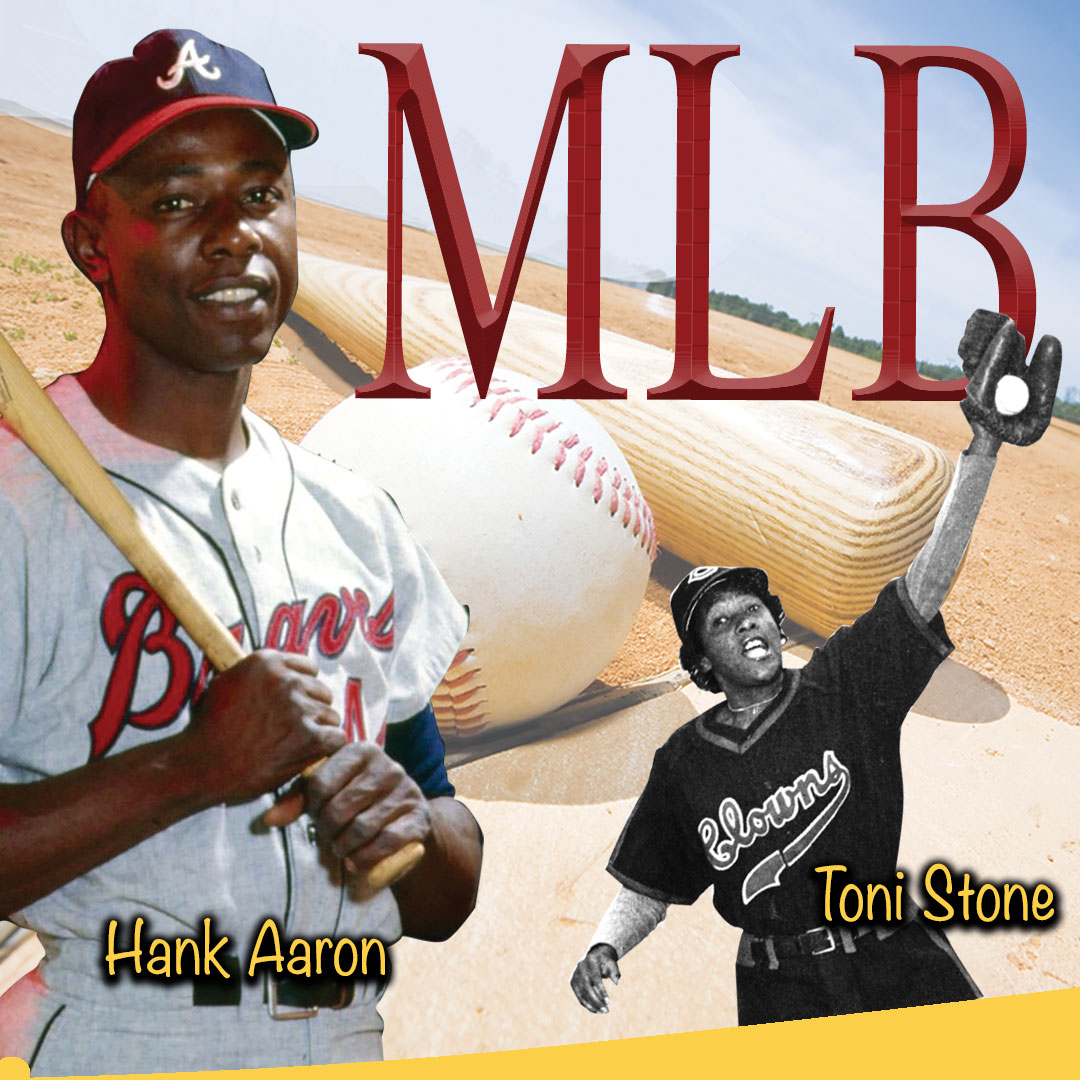
The team will see among its alumni many names baseball fans would recognize today – Hank Aaron, all-time MLB home-run record holder till it was broken in 2007 by Barry Bonds, and Satchel Paige,  the Hall of Fame pitcher. Also, the first female professional baseball player, Toni Stone, was on the team. All their history will now be incorporated into the story of MLB.

Unfortunately the owners, looking for a publicity stunt, decided to cash in on a faraway conflict. As Italian dictator Mussolini, in a prelude to World War II, invaded Ethiopia in 1935, the team was renamed to the Ethiopian Clowns.

The team owners appear to have borrowed from the headlines of local black newspapers, which often featured sympathetic headlines to the Ethiopian plight. The team’s Ethiopia reference was seen by some as the exploitation of black sympathy, which encouraged some Negro league owners to oppose adding the Clowns to their ranks.

Homestead Giants (playing in Pittsburg) co-owner C. Posey, for example, wrote in his weekly Courier column in 1942 that sportswriters would “always feel disgusted at Syd [the Clowns owner] for… capitalizing on the rape of Ethiopia when that country was in distress.” In the Afro-American, the longest- running black weekly newspaper in the US, E.B. Rea took a different view, calling the move to block the Clowns “as funny as the Clowns themselves.” “If so many were paying to see them joke and jest, how much more ardently would they turn out to see them play Negro American competition?”

The Clowns were known for their antics. The box scores featured King Tut, Abbadaba, Tarzan, Ulysses Grant Greene, Wahoo, Goose Tatum, Highpockets West, Peanuts Nyassas, and Haile Selassie, emperor of Ethiopia.

At the same time, the Clowns were also known as a first-rate baseball team. Legendary pitcher Satchel Paige, playing on a visiting team in 1939, described the team as, “fast-fielding, hard-hitting” and “one of the greatest clubs [he] has ever played against.” Exactly what all baseball teams aspire to be remembered for.

The Clowns won the Negro American League championships in 1950, 1951, 1952, and 1954.

The Clowns name stayed with the team through its transition to the Indianapolis Clowns, where it signed a 17-year-old shortstop and cleanup hitter with the nickname “Porkchop,” because of his fondness for them.

“Porkchop”, aka, Hank Aaron, played three months for the Clowns before being purchased by the Boston Braves for $10,000, but it had an impact on him.

“Everything I learned [from the Clowns] got me ready for the big leagues,” Aaron said in an interview with mlb.com. “I honestly believe that I wouldn’t have gotten to the big leagues as quickly as I did if I hadn’t even played those few months with the Clowns.”

The team left the Negro American League in 1955 to pursue a full-time barnstorming schedule (like the Harlem Globetrotters). You can get a taste of their antics if you have seen the 1976 movie “The Bingo Long Traveling All-Stars & Motor Kings”, starring James Earl Jones, Richard Pryor, and Billy Dee Williams. The movie is loosely based on the barnstorming Clowns.

On August 16, 2020, the Florida Marlins honored the first South Florida Major League team by donning the Miami Giants uniform on the 100th anniversary of the Negro League’s founding. They played against the Braves, long time home to the “Hammerin’ Hank”, who outgrew his earlier Clown nickname.

The Marlins did not quite channel the “fast-fielding, hard-hitting” Clowns, by losing 4-0 to the Braves.

RIP Hank Aaron, one of baseball’s greatest, died at 86.

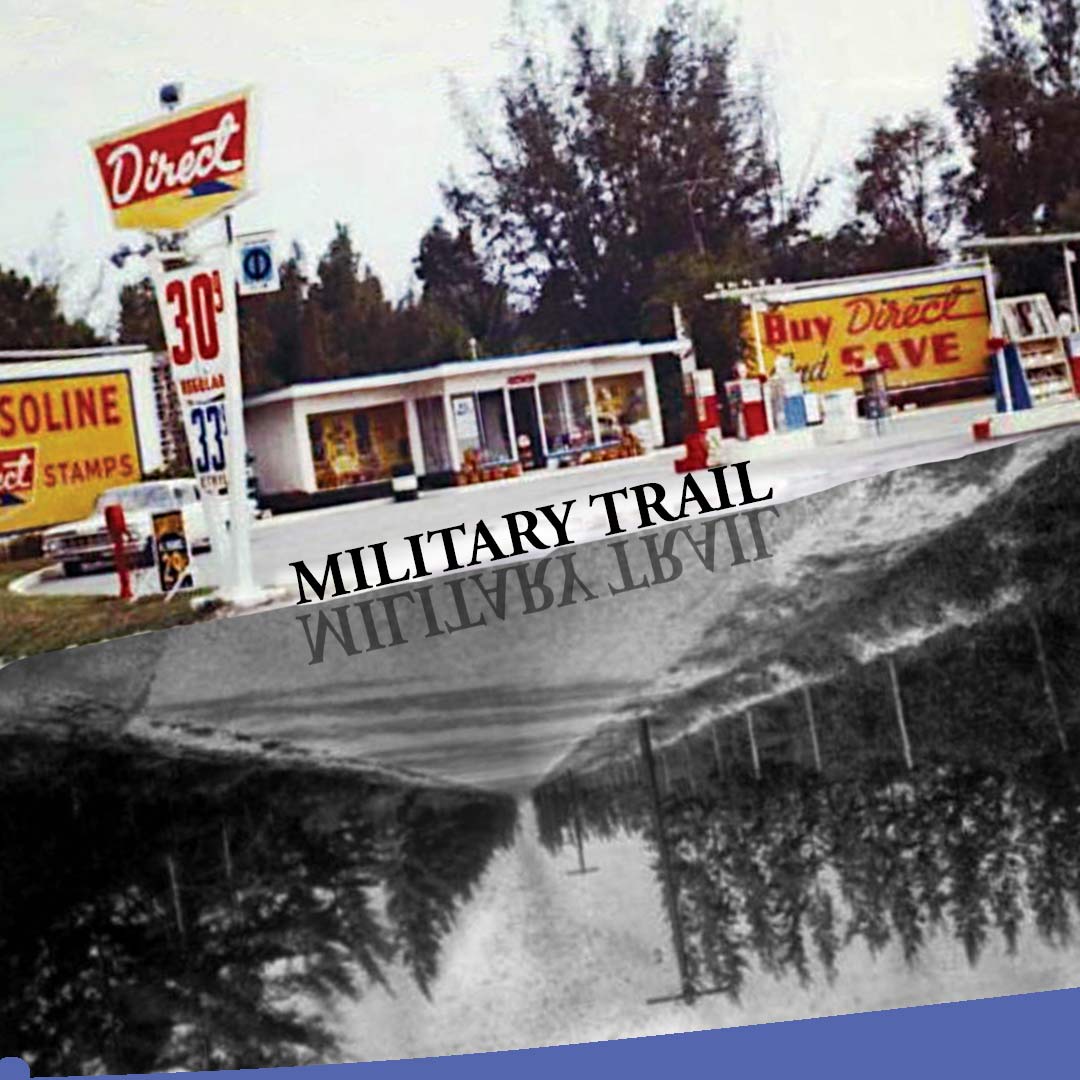
From dirt supply line to six lanes of bustle and business

Drivers regularly travel roadways like “telegraph road” or “post road” without giving the names a second thought. Yet, road names often have historical roots with interesting stories behind them. South Florida’s Military Trail is one with a history older than Florida’s statehood.

Today’s Military Trail is a 46-mile, north and south, commuter route running from Jupiter to Pompano Beach, teeming with modern development and prone to congestion. It’s a far cry from its origins as a trail blazed by Tennessee and Missouri military volunteers during the Second Seminole War (1835- 1842).

Well before Florida became a U.S. territory in 1821, the Seminole people were being driven out by settlers moving into their homeland. Conflicts naturally ensued, eventually leading to the three Seminole Wars between 1817 and 1858.

The second war erupted after the U.S. government tried to forcefully remove all Seminoles from Florida.

Seminoles were adept at guerrilla warfare and used their knowledge of the Everglades to their advantage. Outnumbered and outgunned, however, by 1842, according to britannica.com, “some 3,000 to 4,000 Seminoles had been resettled, and only a few hundred remained. The Armed Occupation Act of 1842 promoted white settlement in Florida and the Second Seminole War was declared over on August 14, 1842.”

Toward the beginning of the second conflict, President Andrew Jackson dispatched General Thomas Jesup to assume control of the Florida troops. The military began building a string of posts in South Florida, starting with Fort Dallas (today’s Miami) in 1836, then Fort Jupiter in 1838.

Jesup ordered 233 Tennessee volunteers to cut a supply trail from Fort Jupiter to the New River in what is now Broward County.

The group was led by Major William Lauderdale, a longtime colleague of Andrew Jackson and fellow Tennessean. Volunteers followed the dryer ground of a coastal pine ridge, cutting a 63-mile path through the hammocks to the river in just four days. There, they established the garrison eventually named Fort Lauderdale. That path, originally known as “Lauderdale’s Route,” was used for military transport during the next two decades of the Seminole conflict and eventually dubbed “Military Trail.”

After the Seminole wars ended, the trail continued to see foot traffic and passenger and freight movement via covered wagons. Eventually, the trail slipped into relative disuse, until Henry Flagler put his mark on Florida in the late 19th century.

Flagler’s East Coast Railway and the resort hotels he built along the coast put South Florida on the map. Soon, rampant land speculation took hold across South Florida, which included the area along Military Trail. By the early 20th century, moneyed Northerners were lured by sales-literature rife with praise for what was otherwise wilderness and swampland. They arrived first by train and eventually by automobile, all wanting their piece of Florida.

By the 1920s, coastal towns like Palm Beach and Lake Worth were blossoming. To handle the influx of people and their automobiles, better roads were needed. Along with new roads, improvements were made to existing routes like Military Trail. Some sections along Military Trail were paved as early as 1923. Other stretches were improved, often by hand, under Franklin Roosevelt’s WPA in the 1930s.

Yet, up to WWII, much of South Florida remained undeveloped and lengths of Military Trail still unimproved, mainly serving area farms and ranches. Rather than residents and vacationers, herds of roaming cattle filled the landscape.

Post-WWII, another real estate boom brought an even greater influx of arrivals than in the 1920s. Palm Beach became one of the fastest-growing metro areas in the country, with its population doubling in the 1950s. Military Trail grew into a transportation artery as Palm Beach and other coastal cities spread westward.

Amazingly, even into the 1960s, there were sections of Military Trail that were still two-lanes and even dirt roadway. Delray Beach, not much more than a sleepy retirement village in the 1960s, contained a dirt length of the road flanked by farmland.

In Boca Raton, Lynn University began life in 1962, astride a dirt stretch. As late as 1979, Military Trail in Boynton Beach remained a single-lane dirt path mainly used by area farms and ranches. Most everything west was still agricultural. In 1980, a shopping center with a Kmart being built west of Military Trail was hailed as a big deal. A small stretch of single-lane pavement designated as “Old Military Trail” still exists in Boynton Beach.

Military Trail experienced its own growing pains alongside South Florida’s exponential growth in the 1980s. Now often at six lanes, it’s hard to even envision the wilderness trail troops carved by hand nearly two centuries earlier. And, while shorter, today’s 46 miles still follow the path soldiers marched from Fort Jupiter to Fort Dallas and serves as a reminder of a somber chapter in Florida’s history.