
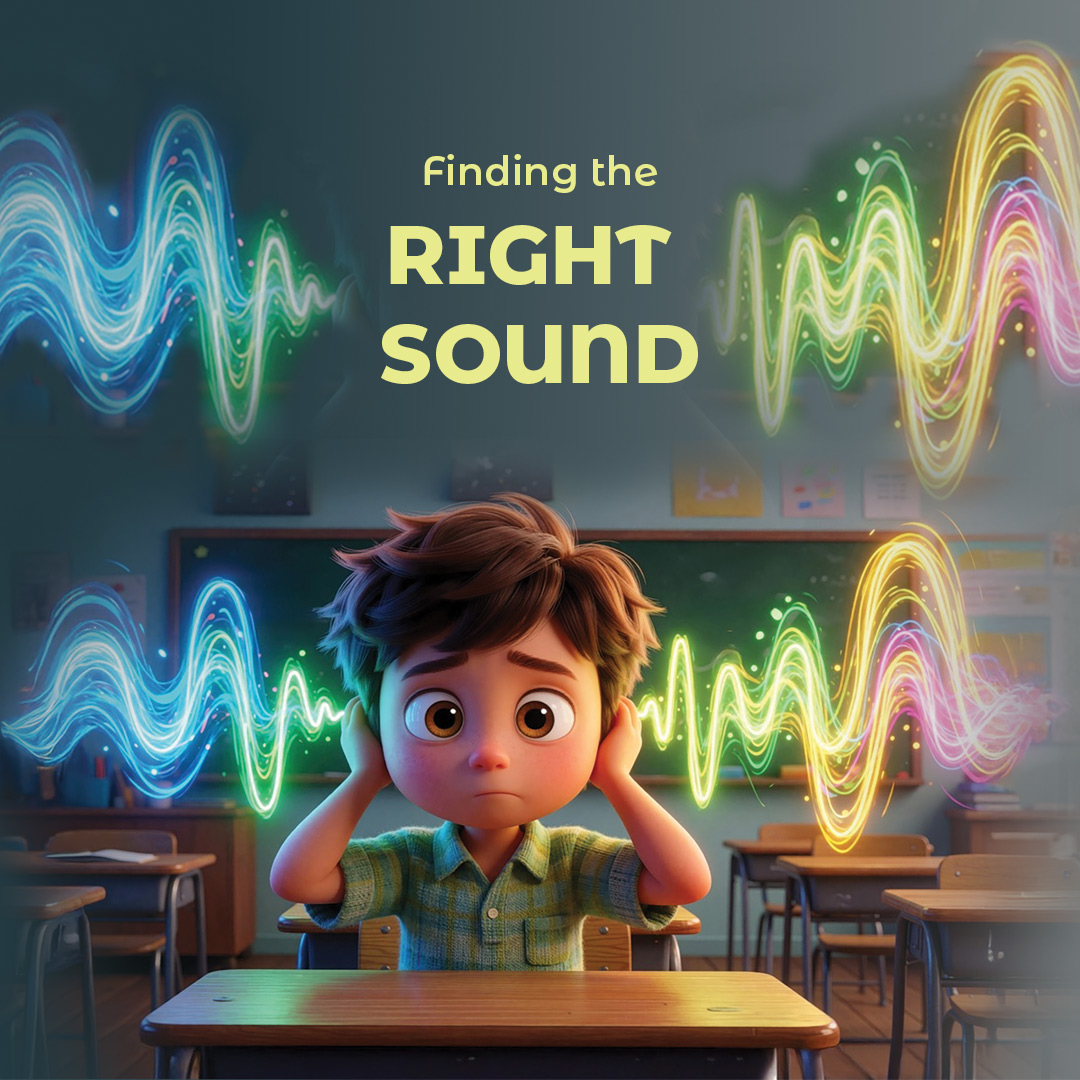
Music, focus, and auditory processing disorder
“How can you possibly concentrate with that music playing?” Parents and teachers have asked students this question forever. However, many students will tell you that music helps them concentrate. This is actually true for most people. The right sounds can train your brain to focus better and for longer periods of time.
Music or white noise can help students to block out distracting noises, to focus, and to complete tasks in longer sittings.
The important part is finding the right sound. One student might focus best with instrumental music, while another prefers nature sounds or silence. Music with lyrics may help during a repetitive assignment but become distracting during reading or writing. Instead of assuming that music always helps or always hurts, students should notice what actually improves their work.
But what happens when a student cannot decide which sounds receive attention?
Imagine sitting in a classroom and hearing the teacher, the air conditioner, a tapping pencil, a scraping chair, footsteps in the hallway, and another student whispering. Now imagine that your brain treats every sound as equally important.
It is almost as if every sound has been assigned the same volume button. For a student with auditory processing disorder, or APD, this can be an everyday experience. A student may have normal hearing but still struggle with how the brain interprets and organizes sound.
The student might ask people to repeat themselves, forget verbal directions, mishear similar-sounding words, or struggle to understand a lesson when there is background noise. The truth is, that student may be listening to far too much.
I once worked with a middle school student who could explain complicated ideas beautifully when she had time to process them. In class, however, she struggled to take notes and often missed important information. Her teachers thought she was daydreaming.
When I asked what she heard during class, she said it was so noisy. She kept describing how people are always coughing, tapping pens, or chattering. As someone who has personal experience with APD, I knew the sounds would always feel loud to her.
Instead, I taught her strategies. She learned to take short notes whenever the teacher spoke to help her focus. She also used a recorder, with permission. At home, she could replay the lesson, pause often, and give herself time to process the information without distractions.
During independent assignments and certain tests, noise-canceling headphones helped quiet the chatter and movement around her. Some teachers allowed it, some did not. However, the goal was not to avoid sound. It was to find the sound environment in which her brain could learn best, because students with APD often excel at listening when they can focus on one sound or voice at a time.
An evaluation by an audiologist is important because APD can resemble attention, language, or learning difficulties. Support may include auditory training, speech and language intervention, visual directions, repetition, extra processing time, improved classroom acoustics, or assistive technology. Music and rhythm may also be used in activities that strengthen timing, sequencing, sound discrimination, and careful listening.
So, should students listen to music while they study? They should listen to anything that helps them focus.
For most students, finding the right sound can make learning more comfortable. For a student with auditory processing disorder, it can make learning possible.