
Subliminal Doubt: A Tribute to No Doubt 

            No Doubt About It:   Monica Leamy Channels Gwen Stefani with Talent & Charm

A double-shot of punk-pop nostalgia takes center stage as Subliminal Doubt channels the spirits of Blondie and No Doubt with gleeful exuberance.

On a recent Friday night, the central Florida-based tribute band headed to Lakeland, Fla. for a repeat performance at Union Hall.

With a setlist spanning two decades of pop rebellion, the group aims to capture the raw energy of Blondie’s disco-punk anthems and the ska-infused spirit of No Doubt’s ’90s hits.

At the center of it all is lead singer Monica Leamy, 48, – a doppelganger for Stefani – known to fans as “Fake Gwen,” channels the charisma of both Debbie Harry and Gwen Stefani as the eyeliner-clad crowd dances and sings along to “Just a Girl,” “Don’t Speak,” and “One Way or Another.”   

In the 1990s, No Doubt had hit songs with “Hollaback Girl,” “Spiderwebs,” “Underneath It All,” “Sweet Escape,” “Don’t Speak,” “Hella Good,” and “Hey Baby.”

Leamy and the Subliminal Doubt band, Danny Siper (drums), 29, Jonathan Leamy, 40, (bass) and Steve Osborne, 42, (lead guitar) took to the stage with an enthusiasm and mission to resurrect two decades of pop rebellion, the swagger of Blondie’s disco-punk sounds and the spirit of No Doubt.

The group travels the state and the northeast, recently playing in New York City at Sony Hall and has played at Revolution Live in Fort Lauderdale, Crazy Uncle Mike’s in Boca Raton and Sharkey’s Bar and Grill in Coral Springs.

“I’m a huge fan of both Debbie Harry and Gwen Stefani,” says Leamy, a formally trained dancer and singer who grew up in Florida and has performer at Disney, Universal Studios and Sea World.  “When I heard Gwen Stefani’s “Just a Girl,” I was spellbound; I didn’t leave my tape player for weeks.”

Leamy, who, when dressed in character, has a strong resemblance to both Harry and Stefani, says she loves Stefani’s whole vibe, her retro look, her fashion sense, her vocal style and “everything about her.”

She was dubbed “Fake Gwen,” by the real Gwen, at a No Doubt concert in Las Vegas, when she and her bandmate, Jonathan Leamy, married and went to Las Vegas for their honeymoon in 2019.

She was dressed in her best “Fake Gwen” hair and makeup, in jeans and a T-shirt reading, “Blonde Rebel,” from Stefani’s “This is What the Truth Feels Like Tour,” in 2016.  Stefani asked her, “Have I met you before?” before bringing her up on stage and bestowed the nickname of “Fake Gwen.”

With the recent announcement in October that No Doubt will reunite for a residency at the Sphere in Las Vegas in 2026, both Leamys plan to be there, coincidentally, coinciding with their wedding anniversary.

Born in Guam, where her father was a musician in the U.S. Navy, Leamy knew from an early age she wanted to be a performer. 

She took gymnastics from the age of three, started dance class at the age of six, took singing lessons in high school and majored in flute at Edison College (now called Florida SouthWestern State College) in Ft. Myers, earning her associate’s degree from Valencia College in Orlando in 2004.

‘I never saw another option,” she says.  “I wanted to be Madonna.”

Not only Madonna, but Paula Abdul, Katy Perry, Audrey Hepburn, Marilyn Monroe and Taylor Swift (her impersonation is called “Taylor Thrift”). She has been listening non-stop to Swift’s latest album, “The Life of a Show Girl,” and, despite mixed revieiws, loves it

In later years, Leamy developed personas for these performers and uses them as inspiration for her shows.

“I’m not sure, exactly,” she says when asked how she channels each singer, “but something just happens.”

Once she warms up her voice, puts on her costume, listens to their music or watches a music video, she gets in the mood and is able to express herself organically as Debbie Harry or Gwen Stefani.

Jonathan Leamy, who was born in France and grew up in Hawaii, says he loves working together as a team with his wife, Monica Leamy.

He showed an early aptitude for music and began playing guitar as a child.  Later, he played the trombone in his high school marching band.

He joined 69 Fingers, a punk-ska band, where he met Osborne and performed at Disney Springs for ten years.  He taught music theory and music production at the private, for-profit Full Sail University in Winter Park, Fla.

Among his musical influences are jazz, funk, classic rock, the Beatles and he got into ska reggae and punk music in his late teens.

“It’s still a big part of what I do,” he says, admitting that he sometimes slips an Allman Brothers riff into one of their Blondie or No Doubt performances.

With career highlights, including the recent performance in Times Square at Sony Hall, New Haven’s iconic Toad’s Place and an appearance on “Live from Daryl’s House,” an award-winning on-line music series created by Daryl Hall (of Hall & Oates renown), Jonathan Leamy says the band is happy with their success.

“We’ve met and exceeded our goals,” he says.

They hope to keep on making music and to grow the Blondie shows.  Jonathan Leamy has a new appreciation for No Doubt’s bass player, Tony Kanal, and hopes to meet him one day.

“I’m surprised by how much his music has affected my life,” says Jonathan Leamy.  “I thought I’d make it as a ska or punk rocker.  I never thought my success would come as part of a No Doubt tribute band.”

The group has recently released their first original song and video, “Cutdown Culture,” (“You don’t know me; but you say you hate me”), a commentary on social media, available on streaming sites, and hope to create an original body of work.

“I feel fortunate to work every day with Monica, and Steve and Danny are like brothers to me.  We’re all very close,” he says. “Who else can say they get to work and travel with their wife and best friends?”

“It’s a rare thing and I’m grateful for it,” says Jonathan Leamy.

For Monica Leamy, stepping into the spotlight each night as “Fake Gwen” or “Fake Debbie” is more than a tribute — it’s a rallying cry for women’s empowerment.

And while Gwen Stefani once belted “I’m Just a Girl” sardonically and with irony, Leamy has claimed the refrain as her own — proving that being “just a girl” means you can be anything you want to be.

Visit them on Facebook or at https://subdoubt.com.
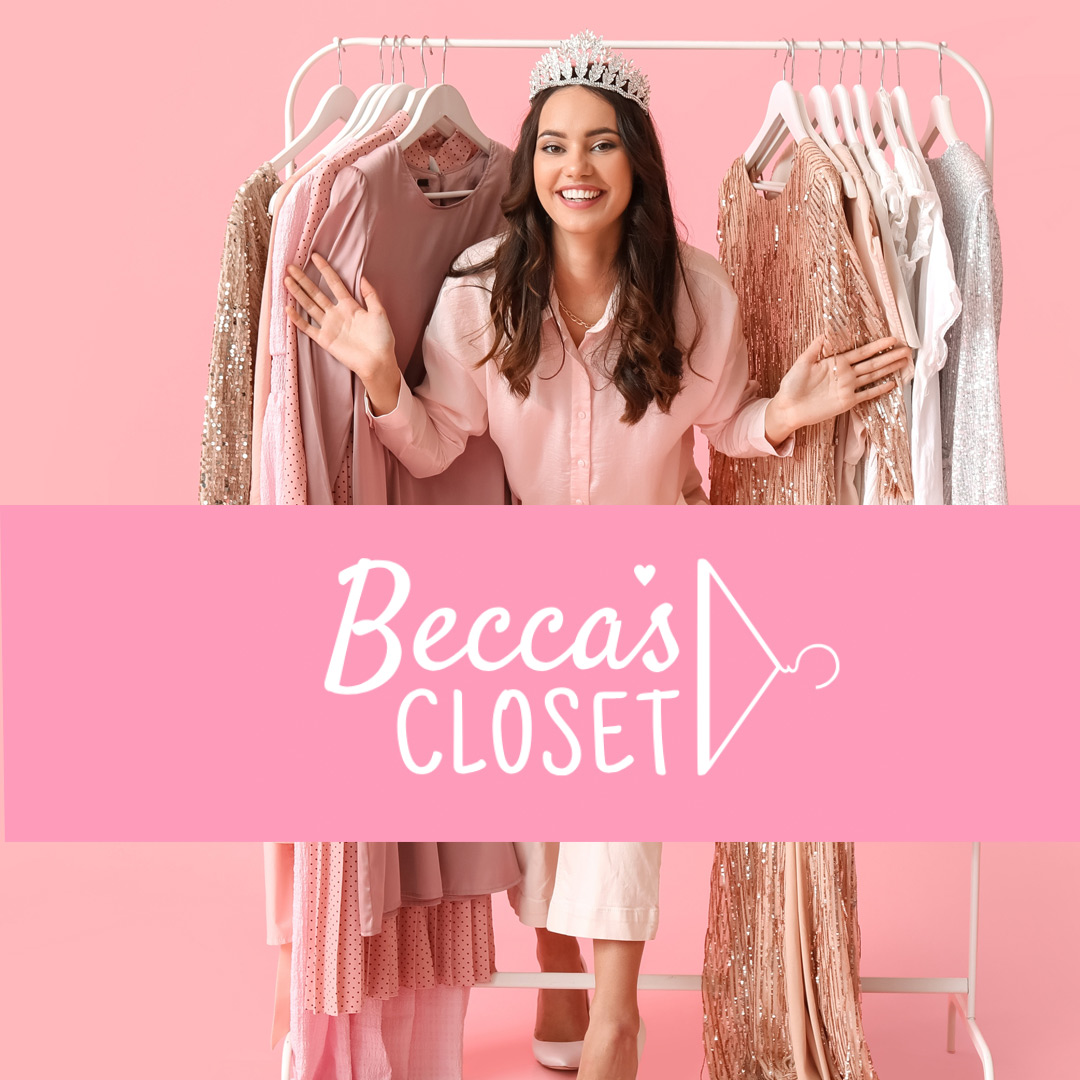
Becca’s Closet Providing Homecoming and Prom dresses for girls in need

School is back in session, and that means, for most high school students, Homecoming is fast approaching, and with it, the opportunity to dress up and celebrate with peers at a formal dance. For many girls, this is an exciting time and a chance to go shopping for the perfect dress. But for others, the expenses involved create unnecessary financial stress that, in some cases, may force them to miss out on a major high school milestone.

Rebecca (“Becca”) Kirtman wanted to change that. While a freshman at Nova High School in Davie, she realized that purchasing dresses and accessories for Homecoming and Prom presented a significant financial hardship for some students, and she made it her mission to ensure that all girls, no matter their financial situation, had access to formal dresses.

The idea came to Becca after reading an article in a teen magazine about female students at a private school in California who decided to donate their dresses to a less affluent school in their community. Inspired by the article and determined to create this kind of opportunity for less affluent students in her own community, Becca began writing letters to different manufacturers requesting dress donations.

Through her project, known as the Nova High School Dress Bank, Becca singlehandedly collected and donated more than 250 brand-new formal dresses, helping girls across Broward, Miami-Dade, and Palm Beach counties attend their high school Proms and Homecoming dances.

When a tragic automobile accident took Becca’s life in 2003, her parents immediately decided to continue their daughter’s work, turning her project into a registered nonprofit organization named Becca’s Closet.

“It was a very easy decision,” recalls Jay Kirtman, Becca’s father and president of the organization’s Board of Directors. “She started this and we needed to continue it, so we formed the organization within 10 days of her passing.”

The Kirtmans changed the name to Becca’s Closet both to honor Becca and because her friends were always raiding her closet and borrowing her clothes.

From the beginning, Becca’s Closet garnered a lot of support from the community, with several members of the Florida Panthers organization jumping on board. “It took on a life of its own,” says Kirtman. “We were almost immediately on CNN, the ‘Today Show,’ ‘Inside Edition,’ and many other TV shows.”

The national media coverage spurred inquiries from people across the country wanting to do the same thing in their communities. Becca’s Closet now has a national presence, with more than 50 chapters across the United States all run by volunteers.

South Florida remains the organization’s operational center. “We currently have over 7,000 dresses locally in South Florida,” says Kirtman. Becca’s Closet recently received a donation of 1,000 dresses from fashion retail chain Windsor. “When the organization receives a large donation like this, we reach out to chapters around the country to see who needs dresses and then distribute them accordingly,” explains Kirtman.

Every year, Becca’s Closet dresses thousands of girls in South Florida, and tens of thousands across the country. “The most rewarding thing for me is the appreciation people have when they get a dress,” says Kirtman. “Hopefully they know what Rebecca did and what she stood for. And we only hope they continue doing something in their own communities.”

To qualify for a dress, you must be a high school student with financial need who cannot afford to purchase a dress for a school-sponsored event/dance.

“We’re on the honor system,” explains Kirtman. “If they tell us they can’t afford a dress, we give them a dress.” The honor system is in place to protect the girls. “It’s hard enough for kids who can’t afford things to jump through hoops and prove everything. We want this to be a positive experience.”

Girls seeking a dress need to provide a current high school ID and answer the question of how they would get a dress if they didn’t get it from Becca’s Closet. They do not have to provide tax returns or other financial documentation. “We’ve had a couple of kids in our 20-plus years who have gone home without a dress,” recalls Kirtman. “You can count that on one hand, and those are the kids who are trying to beat the system.” Becca’s Closet also serves a lot of girls in the foster care system, girls who are homeless, and those in the court system.

For the past 23 years, Becca’s Closet has had a donated central distribution center located inside Festival Marketplace in Coconut Creek, where girls could make an appointment, go see the dresses, and try them on. “They worked one on one with an adult volunteer and two student volunteers and had their own private dressing room,” says Kirtman.

In lower-income areas, the organization will sometimes get more than 30 students from the same school and takes thoughtful steps to ensure that each girl still feels special.

“We keep logs on which high school the girls go to and what dress they got, because we don’t want to give the kids who go to the same high school the same dress,” explains Kirtman. If a girl does choose the same dress that someone in her school already chose, the volunteers inform her and give her the option of selecting another dress.

With the closure of Festival Marketplace in May, Becca’s Closet is now looking for a new home. “We have not been able to find a home to distribute dresses for girls who need them,” says Kirtman. “If we don’t procure something, we’re going to be doing pop-ups at a major hotel and will be doing a big giveaway at the end of September.” Ideally, Becca’s Closet would prefer to remain in central Broward near major highways to be easily accessible for kids across Palm Beach, Miami-Dade, and Broward counties.

On Nov. 11, the organization is hosting its annual fundraising luncheon at Anthony’s Runway 84 in Fort Lauderdale.

To donate dresses, to get involved, or for more information, visit www.beccascloset.org.

Pelican Harbor Seabird Station Nonprofit celebrates 45 years and 45,000 animal rescues

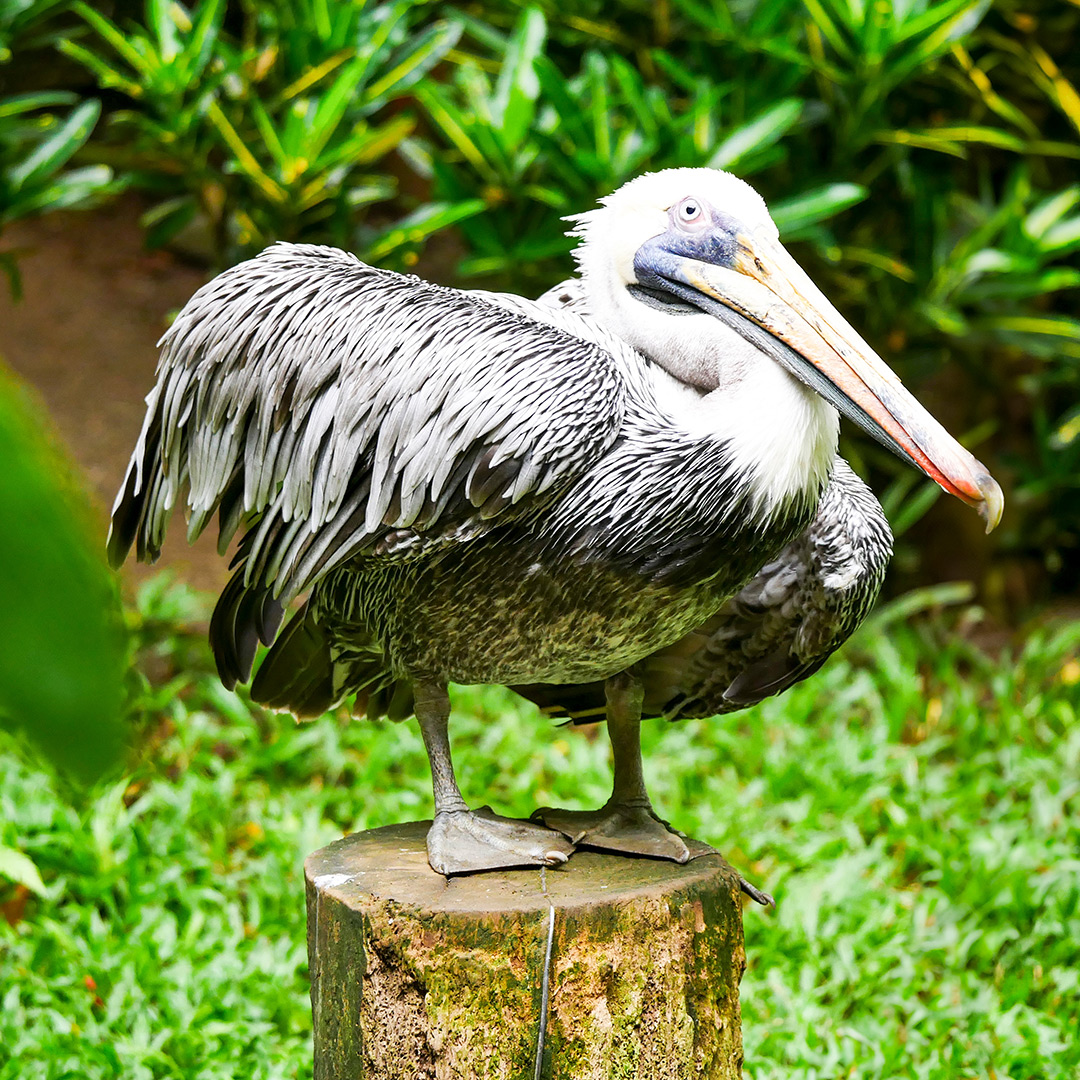
Pelican Harbor Seabird Station (PHSS) is Miami’s premier native wildlife hospital, which over time has evolved into a world-class wildlife rescue, rehabilitation, release, and education center. This nonprofit organization, now in its 45th year, is an internationally recognized seabird rehabilitation center that has rehabilitated and released more than 45,000 native animals.

Like most nonprofits, PHSS started with humble beginnings. In 1980, PHSS founders Harry and Darlene Kelton lived on a houseboat and had no experience in animal care. After moving their houseboat to the Pelican Harbor Marina, they found an injured brown pelican, removed a fishhook from its mouth, and decided to nurse it back to health.

When people learned of what the Keltons had done, they started bringing injured pelicans to their houseboat. What began as a love of pelicans quickly grew into a larger calling.

As more and more people began bringing injured pelicans and other animals to them, the Keltons knew it was time to expand, to create a real rescue and rehabilitation center. Others got involved, with the Miami-Dade Parks Department providing land, and in 1992, Miami-Dade County built the organization’s current facility, which is part of the Pelican Harbor Marina.

In 1996, former Executive Director Christopher Boykin led the effort to expand PHSS’s patient intake beyond seabirds to include all Florida native species, with the exception of rabies-vector animals such as racoons and foxes, as the facility did not have space to safely quarantine them. In 2023, PHSS treated more than 2,000 animals spanning 131 native species.

The Keltons remained involved with PHSS their entire lives and were known for helping revolutionize the rehabilitation and care of brown pelicans. Harry and Darlene developed a special medical procedure called “the cotton fish,” where they would stuff fish with cotton balls and feed them to a sick pelican with a hook in its stomach. Once the fish was digested, the cotton would cover the fishhook, and in many cases, the pelican would regurgitate it.

“We still use the cotton fish technique,” says Renata Schneider, DVM, a staff veterinarian at PHSS. “I would guess that it works 50% of the time. It’s noninvasive, so we always try that first. Then if we have to do a manual or surgical removal of the hooks, at least the metal is wrapped up in cotton.”

In October, PHSS will move to a new location along the Little River (about five minutes away from its current location). The new Wildlife Hospital and Education Center is 14 times larger than the current facility and will feature more ambassador and rehabilitation pens, a center for hosting school groups, natural history exhibits, and a manatee viewing location.

“At the new building, we plan to dramatically expand our educational programming as we will finally have space on-site to welcome larger groups of children and adults,” says Marianna Niero, PHSS’s communications manager. “We are planning enhanced tours, hands-on experiences, lectures, day camps, and other programming. The additional space will also allow us to offer more volunteer opportunities of various kinds, all with the aim of creating opportunities for people to connect with our native wildlife and to the ecosystems of South Florida.”

As PHSS has grown, it’s remained committed to its mission of improving the lives of sick, injured, and orphaned native wildlife with the goal of releasing healthy animals back into the ecosystem, enabling future generations.

One of PHSS’s recent rescues was a great blue heron white morph, a rare, federally protected bird that was a victim of animal cruelty. A fisherman threw a rock at it and broke its wing. The bird required multiple surgeries, but they were able to rehabilitate and release it. “The bird’s wing looks droopy, so we still get calls from people thinking it’s injured,” says Niero. “It’s nice because usually when we release a bird we don’t know how it’s doing. But because of these calls, I know it’s still there and doing well.”

According to Niero, more than 90% of the animal injuries PHSS sees are because of humans, and 70% of seabird injuries are from improper disposal of fishing equipment. “It might be cruelty, a car accident, pollution, or loss of habitat because of overdevelopment,” explains Niero. “That’s why it’s important to support organizations like ours. We owe it to wildlife because we are taking so much from them. They have no space and their environment is so polluted because of us. We should give back as much as we can.”

Some of the animals that cannot be released back into the wild become ambassadors for PHSS and help with education and outreach programs. One such ambassador is Mowgli, a female screech owl that fell from the nest as a baby and was attacked by a cat. The attack left her with a permanent injury to her left wing that makes her unable to fly properly and therefore unreleasable.

In addition to being an ambassador, Mowgli is also a teacher, training young screech owls how to hunt. “When we raise orphaned baby screech owls, before we release them, we have to make sure they know how to hunt and survive in the wild,” explains Niero. “We put Mowgli in an enclosure with the young owls, and we release mice. Thanks to game cameras, remains, and by weighing the owls, we can tell if they are learning. We call this ‘mouse school,’ and once they pass mouse school, they are cleared for release if everything else is fine with them.”

PHSS also has a library program called “Books with Mowgli,” where children can meet Mowgli and learn more about owls.

In addition to its educational programs, PHSS is open to the public as well. Free tours are available Saturdays at 11 a.m., and self-guided audio tours are available Monday through Friday from 9 a.m. to 5 p.m. For a more in-depth experience, guided “Behind the Scenes” tours are available and must be booked in advance.

For more information or to get involved, visit PelicanHarbor.org.

“Walk the Runway”: ArtServe

Turn left onto East Sunrise Boulevard. Then turn right onto Northeast 14th Street. It will be on the right. That’s right, ArtServe is where we are going this month. This nonprofit organization is for everyone, which is why admission is always free to view its exhibitions and attend its receptions. The gallery’s capacity, however, holds up to around 200 people, so be sure to come on in. Its new showcase will be held from July 18 through Sept. 19.

ArtServe. This arts venue first opened to the Fort Lauderdale community in 1989. Since then, it has grown into a vibrant arts incubator and cultural hub, supporting thousands of local artists and nonprofit organizations across Broward County. It’s not just a gallery—it’s a creative laboratory where exhibitions, performances, and workshops come together to spark connection and innovation.

ArtServe focuses its efforts on lower-income communities, typically west of I-95, offering not only opportunities for local artists, but also free workshops for small art businesses, teaching grant writing, marketing, and even how to start a small business. ArtServe serves to inspire artistic development, supporting the advancement of its diverse members, including artists and the community, through education and creative exploration and presentation opportunities in both the visual arts and performing arts.

“Walk the Runway.” Highlighting South Florida’s local fashion scene, ArtServe is currently showcasing local fashion designers, bringing individuality, liveliness, and, even more fascinating, its call for oceanic awareness to center stage.

Recently broadcast on Local 10, Young At Art presented “Reef Restyled,” a fashion phenomenon set to raise awareness out to the public about the coral reefs and the need to save them. These vibrant ecosystems support about 25% of all marine life, despite covering less than 1% of the ocean floor.

Currently, 84% of the Earth’s coral reefs are in danger. Runoff from agriculture, sewage, and plastic waste smothers reefs, blocks sunlight, and introduces toxins. Even sunscreen chemicals like oxybenzone can damage coral DNA.

Young At Art brings this pollution problem to the forefront, using fashion to come to the ocean’s defense. Seventeen participating local high school–age artists in the program used 75% upcycled and/or recycled materials to showcase their reef collection. Coral reefs aren’t just beautiful—they’re vital for human life. In the Walk the Runway showcase, the Young At Art collection will be exhibited in one of ArtServe’s solo galleries.

Chelsea Rousso. Another exhibitor is the esteemed glass artist and fashion designer Chelsea Rousso, who bridges the boundaries between the two media and is an innovator in her use of fused glass in fashion. While her work has been exhibited in numerous museums, galleries, and art shows across the nation and in Canada, Rousso, aside from her glass sculptures, is best known for her exquisitely wearable glass swimwear, corsets, bow ties, and masks.

Rousso’s book, “Fashion Forward: A Guide to Fashion Forecasting,” is being used in several colleges and universities around the world. Her installation for this showcase heavily features her Alice and Wonderland Collection.

Rousso holds a bachelor of fine arts from Pratt Institute and a master of fine arts from Goddard College. For more information, visit https://chelsearousso.com.

More about ArtServe. For most exhibitions, ArtServe does a call to artists (CTA), typically advertised through its social media or e-blasts. There are both long-term and short-term artists who keep up involvement with the organization.

ArtServe is self-affiliated, and its funding goes to operational costs of the building, its employees’ salaries, artist fees, and exhibitions. ArtServe’s artists always get paid for their work, and they are promoted via ArtServe’s social media and e-blasts.

Aside from CTAs, artists may also come from the Broward County Cultural Division for exhibition space to carry out its grants, or through collaborations that ArtServe does with other nonprofit organizations. Some of these past initiatives were set to amplify the healing and transformative power of the arts, reflecting ArtServe’s mission to be not just a gallery, but a community catalyst for good.

In 2020 and again in 2025, ArtServe has been the recipient of the Community Care Plan Non-Profit Awards hosted by 211 Broward, as the Non-Profit Organization of the Year. In 2024, ArtServe received Yelp’s “People Love Us” award.

ArtServe has been said to be a cultural trendsetter, due to its leadership role in the local arts community. It supports more than 350 nonprofit cultural organizations and around 10,000 artists across Broward County.

Some of ArtServe’s sponsors include FPL, Seacoast Bank, the Hudson Family Foundation, Topo Chico, and OutClique Magazine, all of which are local supporters invested in the creative economy.

For more information about ArtServe or how to respond to its calls for artists, visit https://artserve.org.

Picture:

https://www.dropbox.com/scl/fo/azd8co0umod56h72i96nd/APz6YnD6HfAKla6kpVvhbk4?rlkey=edahezpfo6c8xru8hl9t8wc1u&st=gfb2sga4&dl=0

Some other exhibitions

https://www.dropbox.com/scl/fo/7u44upp28b1atn6wogt9j/ADogl1jXVlRmwykhpLf_UkA?rlkey=wsd3zxn8eb9nx97qcot2hpeyt&st=cujn6o54&dl=0


Roots and realism: Sophia Lacroix

Haiti’s deep history is one of resilience, revolution, and cultural richness. It endured the 15th-century Spanish colonialization, the 17th-century French takeover of the western part of the island that led to its revolution in 1804, isolation from global powers, economic struggles, and internal conflicts. It has faced political turmoil and natural disasters. Despite the challenges, Haitian culture has flourished, influencing the world by its artistic magnetism in music, literature, and the visual arts.

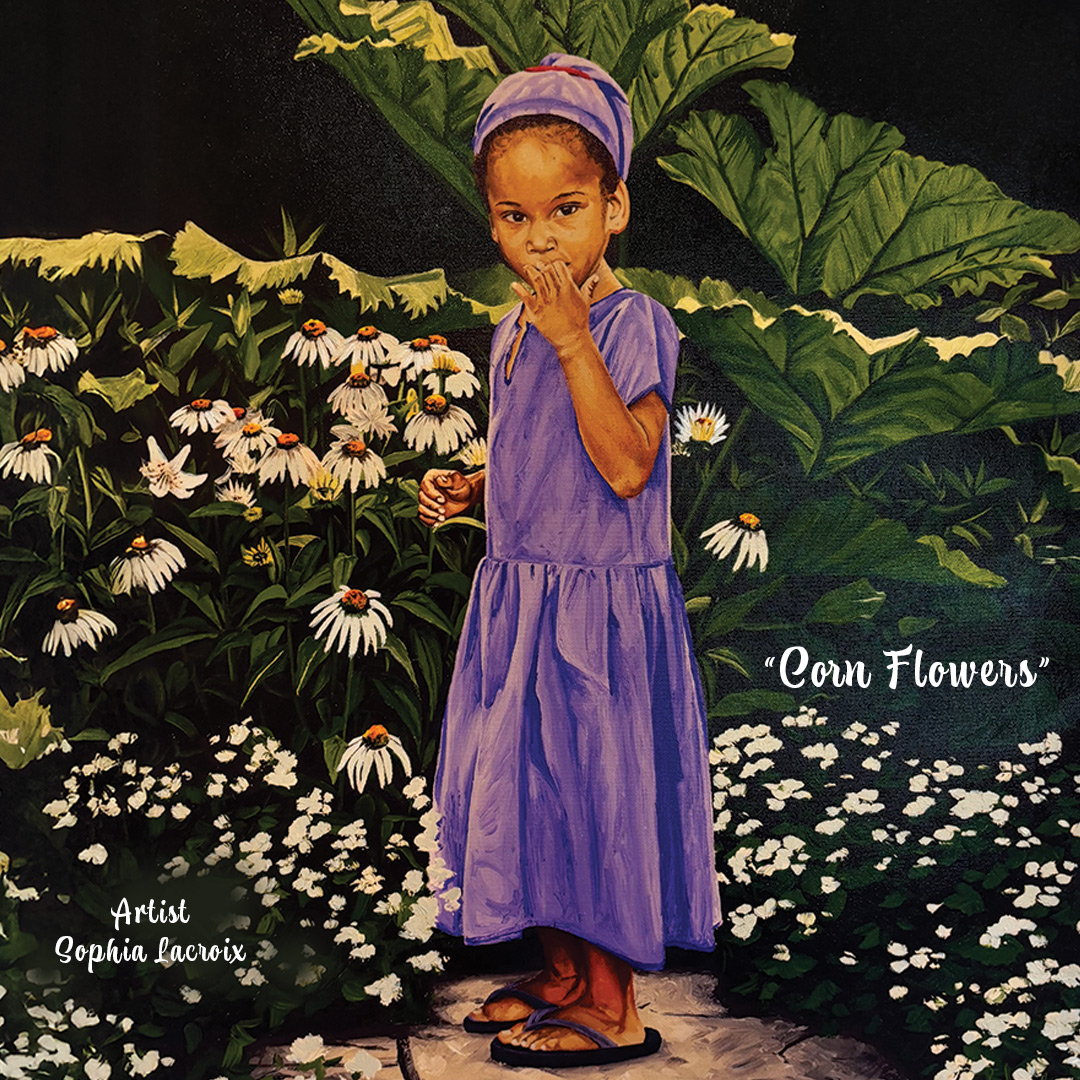
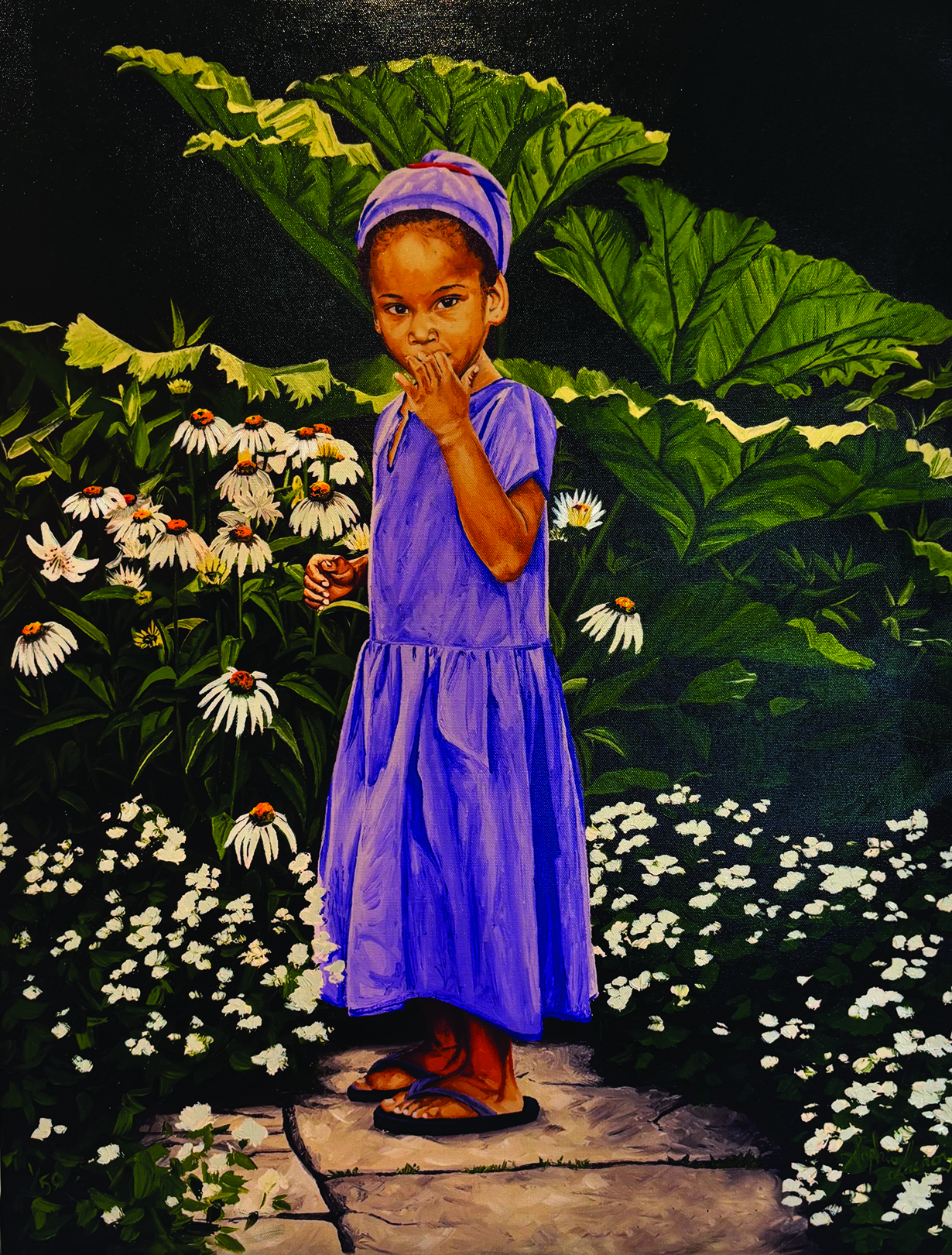
Sophia Lacroix brings focus to Haiti in her true-to-life paintings by her cultural reminiscence. Lacroix, who was born in Haiti, migrated to South Florida at the age of 15. Since then, she has used her talent in oil paints and charcoal drawings to keep the scenes alive from her memories of everyday life, Haiti’s people, and her culture.

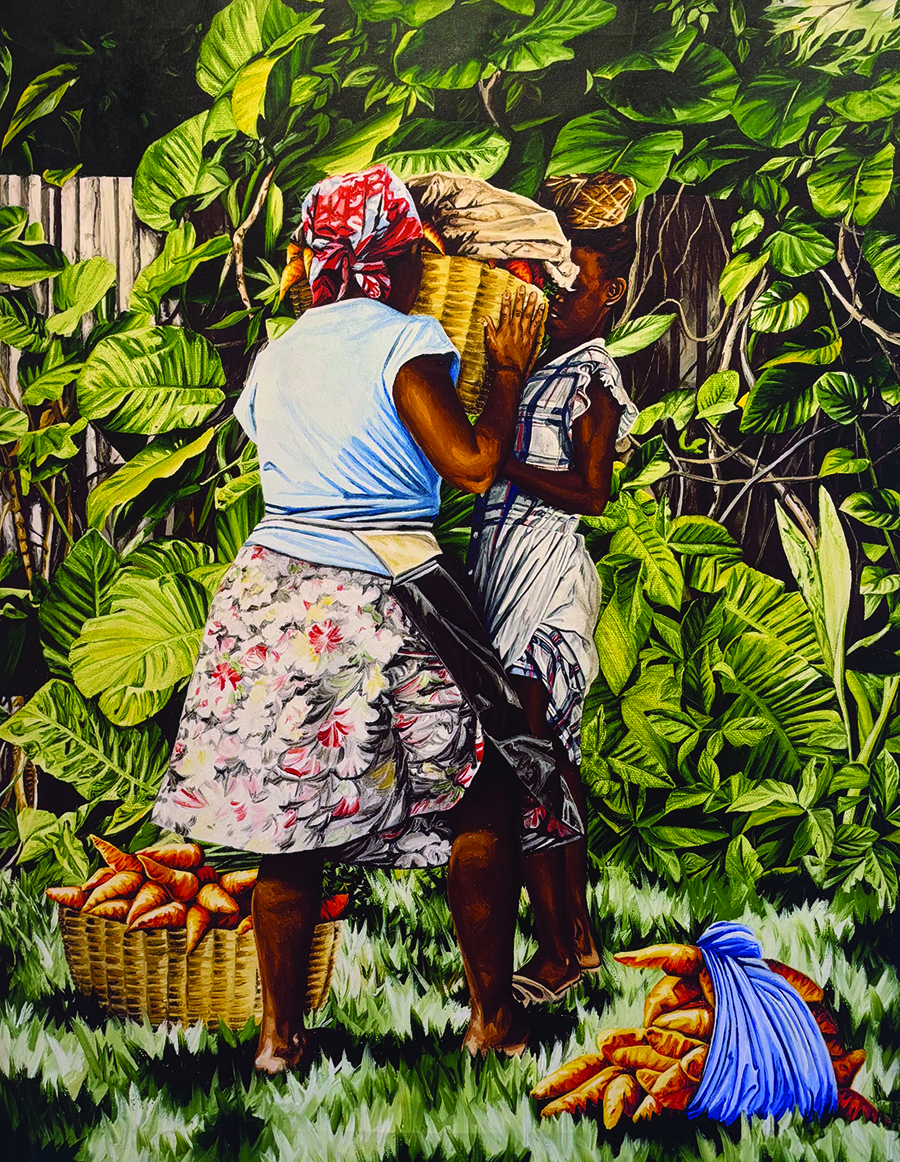
Currently on display at the Pompano Beach Cultural Affairs Department is “Ede’m Poté Li,” or “Help Me Carry It” (2024), a 31.5-inch by 40-inch, limited-edition, hand-embellishment Giclée print. It is among the many paintings garnished with sapphire-symbolic detailed blends of norms that encompasses Haitians’ daily lifestyle. In Pompano Beach’s exhibition,Roots and Realism: A Haitian Artist’s Reminiscence,” traditional methods of daily customs are alive and vibrant in a variety of ways, echoing Haitian ethos through compositional transcendency of principle. The exhibit runs through June 21 at the Ali Cultural Arts Center.

Realism. In this style, the principles of art play a crucial role in capturing life as authentically as possible. The threads that twine Lacroix’s experiences to voice these echoes are emphasized in sharp details and light techniques. Light censors are by sources that are clearly complimented by their opposing shadows. Lacroix applies cohesion to colors and proportions to grow rhythmic palettes of her subjects in each of their organic landscapes.  it’s like being a tourist as a viewer because she draws you into the culture.


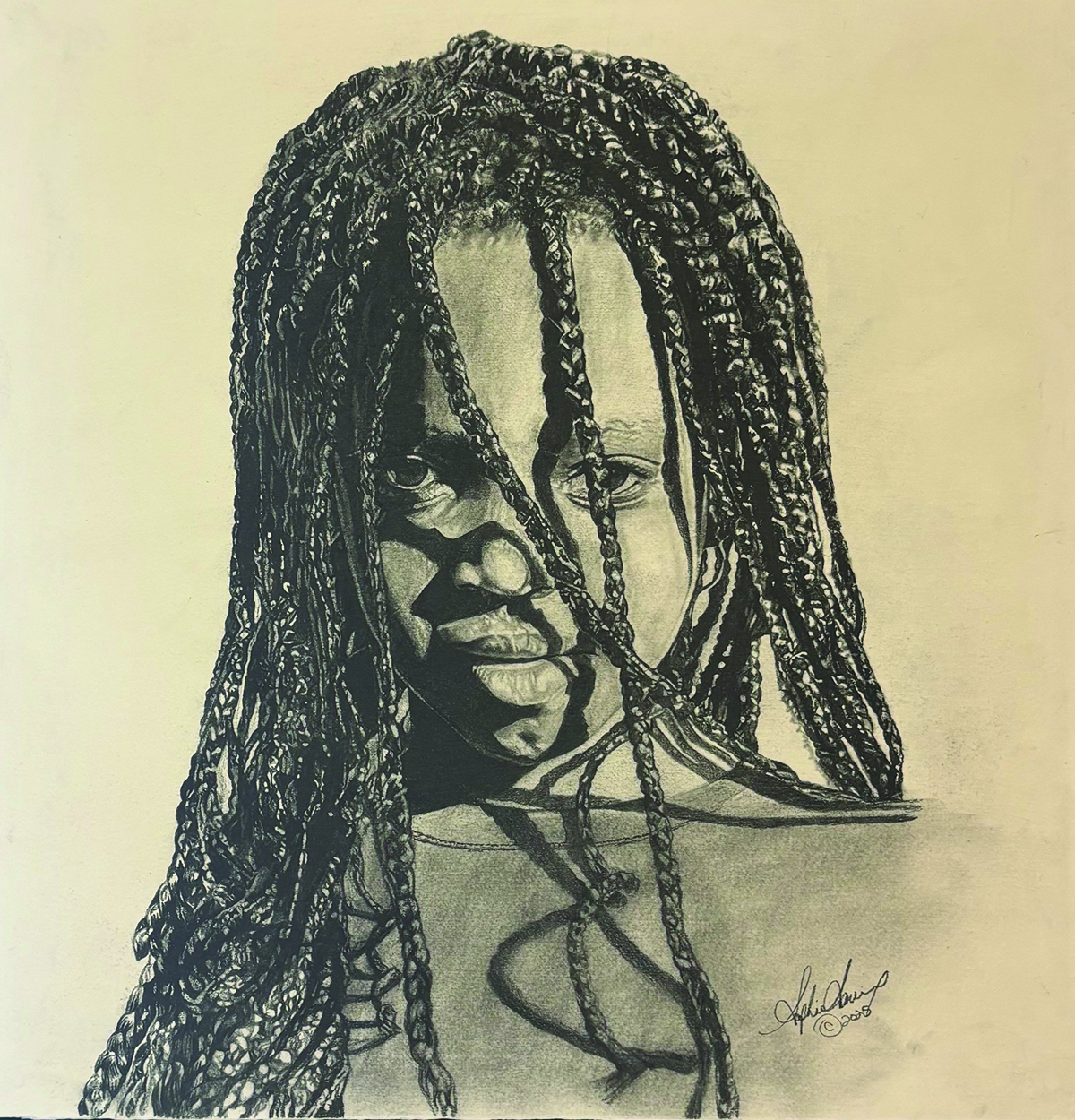
In twine. Lacroix’s portraits sustain a sapphire-symbolic durability that apprehends the same critical elements in authenticity as the platform of its landscapes. The cultural significance of “Bel Ti Fi” (2025), a 23.5-inch by 24-inch graphite on paper—blended with texture and depth by its medium—is one representative of Haiti’s people. The child, an embodiment of their heritage and their future. Lacroix strings life intrinsically through art value.

Lacroix’s “Jocelyn,” a 30-inch by 24-inch oil on canvas, is similar in that it digests as a mineral’s complacency as she demonstrates her commitment to accuracy, mirroring how light interacts, producing variations in tone and highlights, and portraying her subjects with honesty and precision. This piece follows Realism’s tradition by transforming its simplistic human element into a work that is visually compelling and technically refined. Lacroix’s attention to detail is apparent throughout the entire composition, as she captures the subtle variations in light and shadow. Each strand of hair appears meticulously woven, and the shading of her subject’s face enhances depth and dimension, which reinforces the sense of realism.

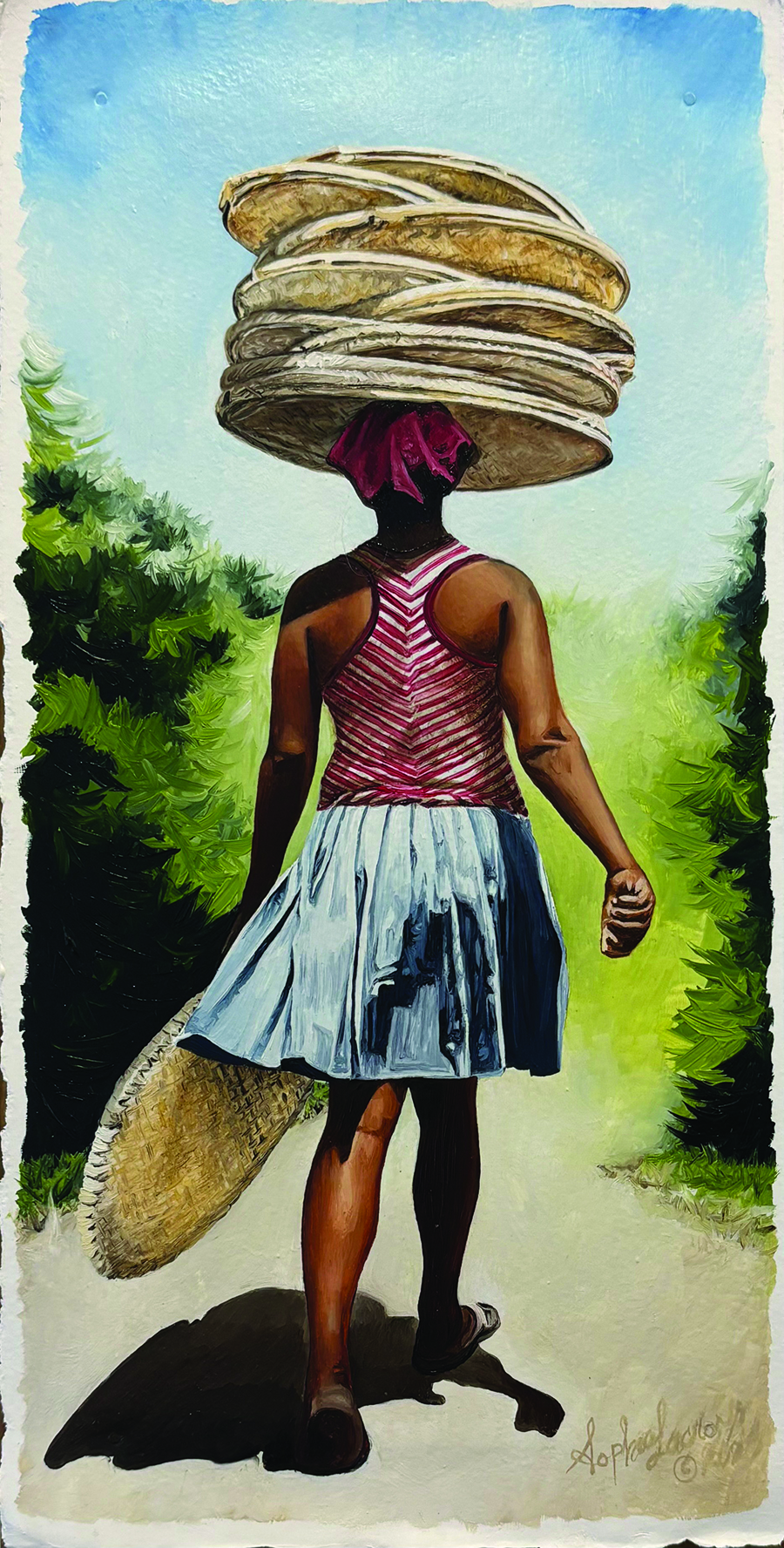
“Macchan Laye.” Lacroix’s 16-inch by 8-inch oil on paper (2025) refers to the merchants who play a critical role in local commerce, selling everything from local produce to handmade crafts. The painting puts the macchan at the center of the focal point, vacating details away from those surrounding her, and as she walks into the distance, so does the solidity of the imagination, and into her subject’s reality.

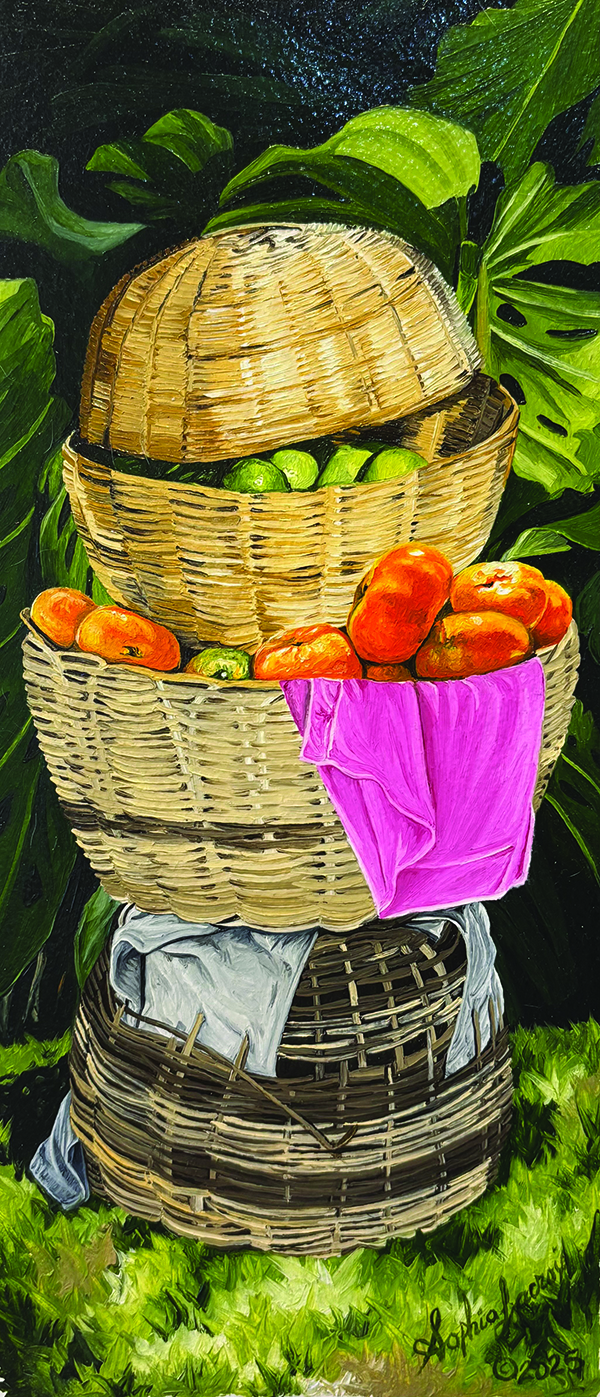
Paintings of macchans are accented around the room in the spirit of Pompano Beach’s Roots and Realism exhibition. That is, until one approaches still life, where it and Realism share a deep artistic connection, particularly through the art principles that govern composition and technique. In contrast to the paintings of different macchans in motion, movement is instead implied through curved shapes and leading lines, accurately scaled and reading to subject as the delicacy at hand.

In almost 30 years of professional painting, Sophia Lacroix has exhibited in both group and solo shows throughout the eastern and central parts of the nation. Her work has been recorded in several publications and has developed a loyal following of collectors around the world. Lacroix’s passion began at 4 years old, and she is a self-taught oil painter who began selling her work in 1995 while working in social services helping the underserved. It’s highly recommended that you pay a visit to the Ali Cultural Arts Center for a brief vacation into the painted depths of human observation. For more information, visit http://sophialacroix.com.

Trooper’s Law and the importance of animal hurricane preparations

As hurricane season approaches, a new law is going into effect to further protect dogs. Trooper’s Law, effective Oct. 1, will make it a third-degree felony to abandon a restrained dog during a natural disaster. The measure was inspired by Trooper, the bull terrier who made national headlines last year when state troopers found him tied to a fence and left in belly-high water on Interstate 75 during Hurricane Milton evacuations.

Trooper was adopted by Parkland residents Frank and Carla Spina and was honored at Parkland City Hall in January. “The state troopers appeared and presented him with a ‘Junior Trooper’ Florida Highway Patrol badge, which he wears around his collar,” says Frank Spina.

After being rescued and adopted, Trooper went through an even greater ordeal, requiring surgery to remove cancerous tumors from his body, and then undergoing a four-hour endoscopy to remove more than 100 pieces of garbage from his stomach. Thankfully, the procedures went well, and Trooper is now thriving.

Trooper and the Spinas have been invited to witness Governor Ron DeSantis officially sign Trooper’s legislation into law. “The governor and his wife are very big proponents of Trooper,” says Spina. “They think the world of him.”

Trooper’s situation was not the first to force lawmakers to expand protections for animals during natural disasters. The Pets Evacuation and Transportation Standards Act of 2006, known as the PETS Act, was passed and codified into federal law following the aftermath of Hurricane Katrina in 2005, when an estimated 200,000 pets were stranded and close to 150,000 perished during the storm. The act requires states to include the needs of households with pets and service animals in emergency preparedness operational plans in order to receive federal funding for those plans.

Florida was one of the first states to revise disaster relief plans to include household pets and service animals, creating pet-friendly shelters and aiding in pet evacuation and transport. But where the law still falls short is in protecting farm animals, including horses. Because they are not considered household pets, the PETS Act does not require states to incorporate hoofed animals into their emergency plans, and Florida does not have specific legal protections for these animals during hurricanes, despite the need for it. During Hurricane Ian, one dairy farmer in Myakka City lost 250 dairy cows.

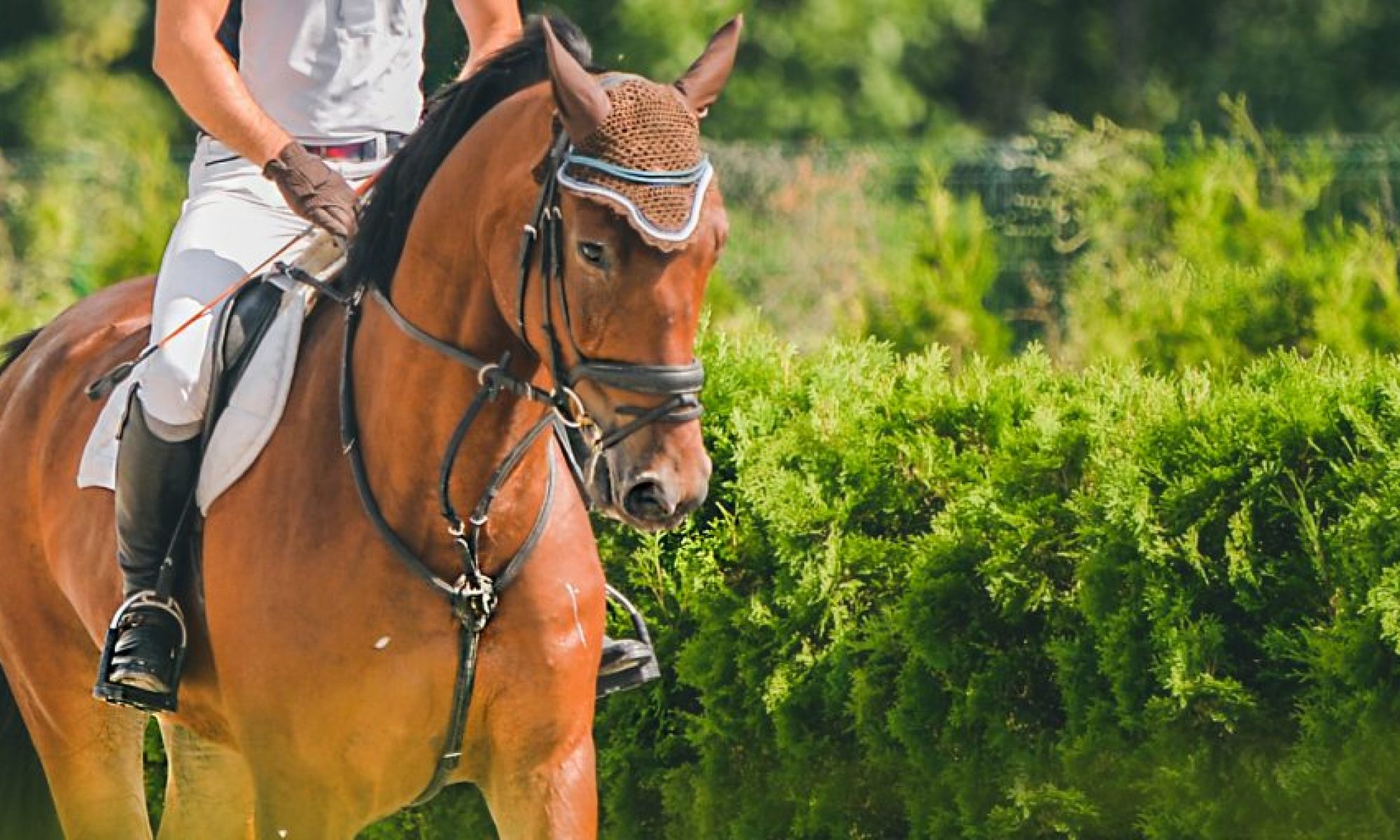
The Florida Department of Agriculture and Consumer Services offers guidelines on disaster preparedness for horses, livestock, and pets, which include what to consider when sheltering in place or evacuating. For horse and livestock owners, it’s important to maintain contact with private businesses and nonprofits as many of them often step up during a storm, offering aid and/or shelter. During Hurricane Ian, the World Equestrian Center in Ocala provided free shelter for 3,000 horses, and American Humane helped rescue farm animals stranded during the storm.

Many of these organizations also offer free online resources on making preparations for your animals in case of a hurricane. It’s never too soon to prepare.

Tomorrow’s Rainbow When tragedy creates new purpose

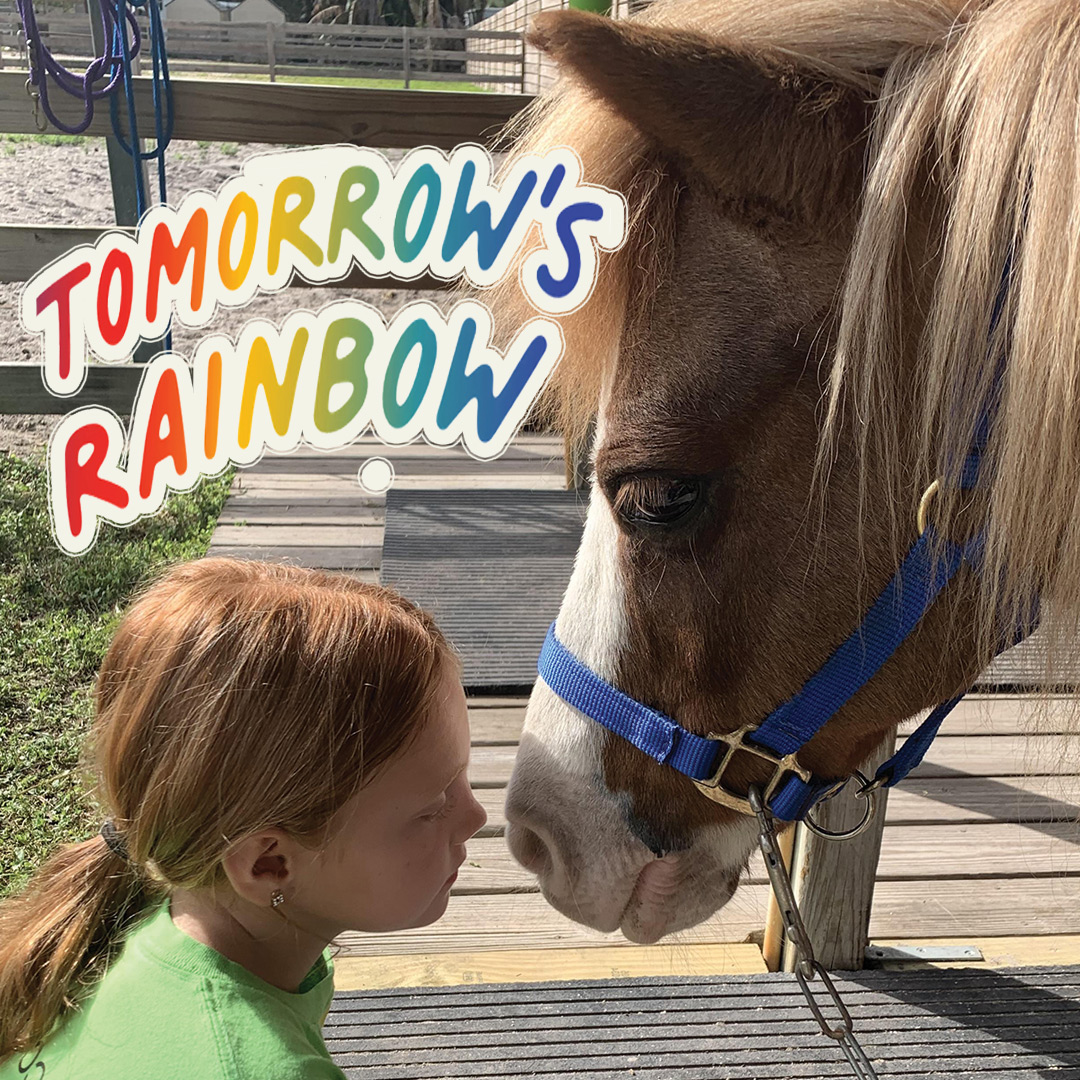
Abby Mosher turned a personal tragedy into purpose, creating one of the most magical places for children in Coconut Creek—Tomorrow’s Rainbow.

Tomorrow’s Rainbow is a 501(c)(3) nonprofit organization that provides free mental health support services for children ages 3 through 18, their caregivers, and adults healing from grief, loss, or trauma. What makes Tomorrow’s Rainbow special is that it incorporates animals—specifically, horses, goats, and mini donkeys—into its program, providing outdoor, experiential sessions where children explore their world through interactions with the animals.

This year, Tomorrow’s Rainbow will celebrate its 20th year of providing these life-saving services to children—services inspired by Mosher’s difficult loss. On a family vacation in Texas 25 years ago, a head-on collision took the life of Mosher’s husband, Paul. She and her 7-year-old son, Dustin, survived but were thrust into a world of grief and loss that didn’t have many resources available for children.

“When we came back to Florida, I thought, with Broward County being the sixth-largest school district in the nation, that there’d be tons of resources available,” says Mosher. “But I found that Broward County had no children’s grief center.”

Thankfully, Mosher had insurance, so her son was able to receive individual therapy. But that therapy had its limitations. “The social isolation for him was devastating,” explains Mosher. “He didn’t have a single friend he could relate to.”

That’s when Mosher decided she wanted to create a space where families could come together with other families who knew what it was like to have someone important in their life die. She also wanted to make it accessible for those who couldn’t afford individual therapy.

Mosher didn’t know at the time that her newfound dream would quickly align with her childhood dream of owning a horse. Through her work with the parent-teacher association, she knew Wally Hennessey, a Hall of Fame harness track racer. She and her son would go to the track to watch Hennessey race.

“After the race, Wally would take his goggles off, and he’d be covered in sand, and the horse’s nostrils would be flaring from winning the race, and Wally would be perfectly peaceful,” recalls Mosher, who wanted whatever that peacefulness was. When the Hennesseys introduced her to a woman with miniature horses, she knew the animals had to be part of her program.

Three years later, Mosher met her current husband, Shel, and shared with him her dream of supporting grieving children with horses, and he was on board. Together, they purchased a 2.5-acre mini-ranch adjacent to Tradewinds Park, and in 2005, Tomorrow’s Rainbow opened its doors.

It wasn’t until after opening and going through trainings with the Equine Assisted Growth and Learning Association that Mosher realized how powerful horses are in the healing process. “Horses are the only animal that can mirror our behavior,” explains Mosher. “The horse is the mirror for the child. So if the child doesn’t like what they see, if they adjust themselves, the horse will adjust as well.” Mosher likens it to a football player watching game tapes to get better. With horses, you watch their behavior to improve your own.

Tomorrow’s Rainbow offers bereavement group sessions and individual equine-assisted psychotherapy. When children first arrive, they undergo a screening process. Those who have suffered trauma in addition to grief are put into individual equine-assisted psychotherapy, where they work with a horse, an equine specialist, and a therapist. “We have to support the trauma before we can support the grief,” explains Mosher. “So we get them into our individual services and then when they’re ready, they can transfer to our bereavement group services.”

A bereavement session begins with introductions under a large tree, followed by an activity, horse grooming/interaction, and then play. “Kids can’t stay in their grief for a long time,” explains Mosher. “So we have to have opportunities for them to laugh and be kids.” During the bereavement session, adults are in a facilitated talk circle and given some psychoeducation on raising grieving children.

Children often tell their stories through the activities, acting out what happened at the puppet theater, or building something related to their loss at the LEGO table. Program facilitators are trained to honor the children’s stories and provide the space for them to express without judgment or shame. “We’re not teaching them how to grieve,” explains Mosher. “Children are experts in their own grief. We are supporting them. We’re not giving advice, we’re not problem-solving. It’s not a problem we can fix.”

At the end of a session, children are taken into a room filled with teddy bears where they can symbolically light a candle to remember their loved one. These charming, child-friendly touches run across the property, from the puppet theater to the teddy bear hospital to the wishing well. “We have dissolving paper so the children can write messages to their loved ones and put them in the wishing well, and the paper will dissolve, but the words will stay floating on top of the water until they’re ready to swirl it,” says Mosher.

To ensure that children of all economic backgrounds have access to these services, there is no cost for the bereavement groups. A combination of corporate and private donations, along with grants from organizations including Parkland Cares, Broward Behavioral Health Coalition, and the Jim Moran Foundation, helps offset the cost of individual psychotherapy sessions, which are normally $150 per hour. The organization runs on a tight budget, but for Mosher, the priority is the impact these services have on children.

“They come in with the weight of the world on their shoulders, and they leave joyful,” enthuses Mosher. “The energy completely changes when they realize they’re not alone and they don’t have all that stuff bottled up inside anymore, because they had a safe space for it to come out. And nobody made fun of them, nobody told them how to feel, and nobody tried to change them in any way, they just honored their journey.”

In addition to its on-site work, Tomorrow’s Rainbow has a “Grief on the Go” trailer to support underserved communities in Broward and Palm Beach counties through partnerships with nonprofits that work with at-risk children.

For Mosher, Tomorrow’s Rainbow has become her life’s mission. “I feel like I don’t work a day in my life,” she says. “To see the children and the impact this program has on their lives is a blessing. I knew we were going to help children heal. But what I didn’t know is that we would literally be saving lives, and that’s pretty powerful.”

For more information, visit TomorrowsRainbow.org.

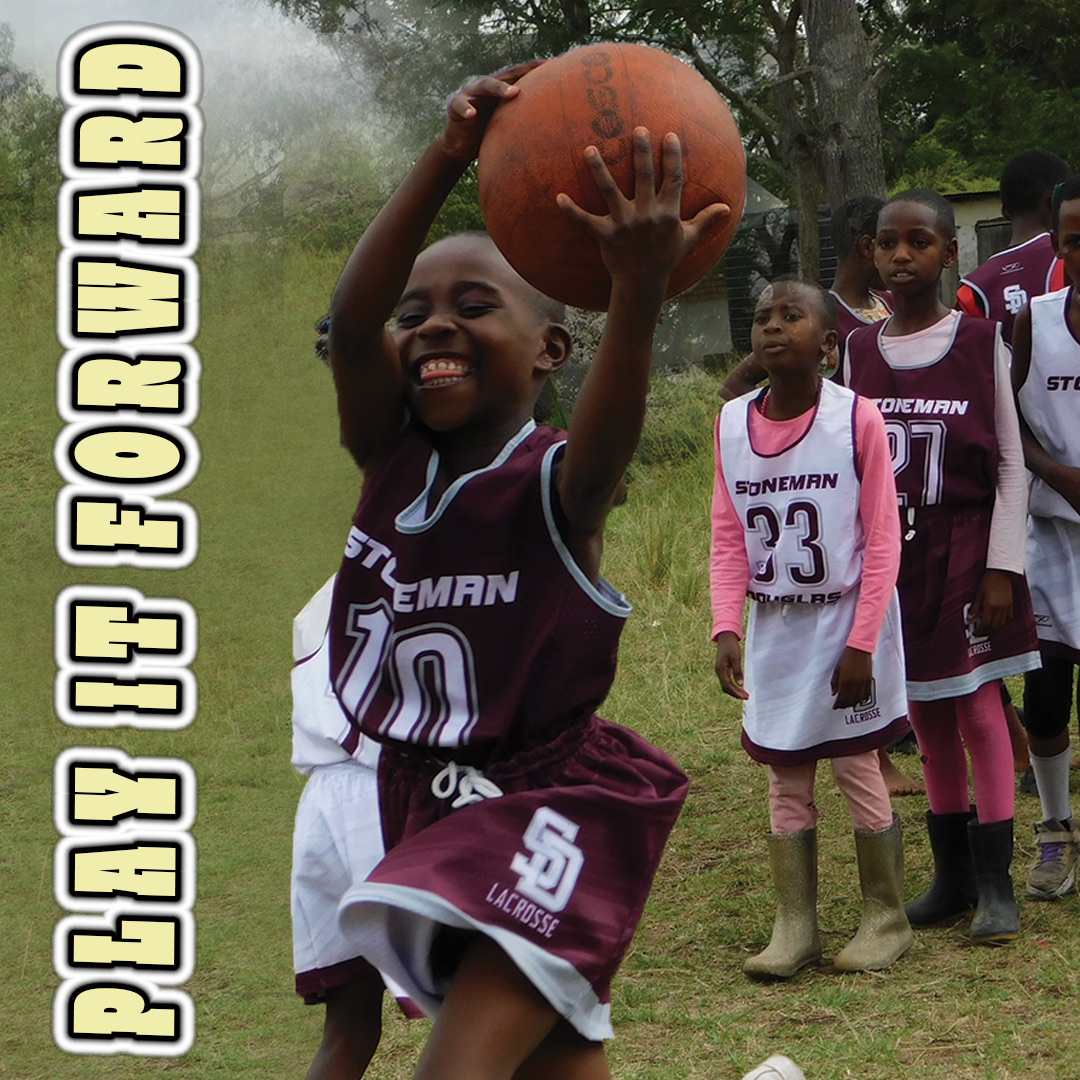
Playing it forward Teen organizes drive to support student athletes in Africa

For Jordin Bekker, a freshman at North Broward Preparatory School, a recent school service trip to Tanzania was the perfect opportunity to give back to her native continent.

“I felt really inspired, being from Africa and knowing I was going to go on this trip, to give back to my community,” says Bekker, who grew up in South Africa and has lived in Parkland for almost three years.

A lifelong athlete whose love of sports helped her develop confidence, engage with people, and release her anger in a healthy way, Bekker wanted to support student athletes.

“Since sport is my passion, and there are many kids in Tanzania who don’t have the opportunity to pursue a passion like sports because they lack equipment and facilities, I wanted to give back part of what I was able to experience growing up,” explains Bekker, who decided to do an athletic clothing drive.

Bekker and her mother created a Facebook post about the drive, asking for used athletic clothing donations, and the response from the Parkland community was overwhelming. “The people of Parkland are absolutely amazing,” enthuses Bekker, who received three seasons’ worth of brand-new lacrosse uniforms from Marjory Stoneman Douglas High School alone. “I didn’t expect this to blow up as much as it did. We received messages multiple times a day from people telling us they had bags and bags for us.”

Bekker spent weeks collecting and washing clothes and cleats and sorting them by size and age group. Due to the volume of donations, she had to put a shed in the backyard and is already planning on expanding her efforts next year. “It’s definitely something I want to keep doing,” she confirms. “I love kids.”

With the help of her fellow classmates and travelers, Bekker was able to transport 27 duffel bags, each filled with two T-shirts, two pairs of shorts, a pair of cleats, a soccer ball, and a ball pump.

The bags were distributed to students at Ngongongare Primary School, which has four sports teams and more than 700 students. “Giving them the sports equipment made me cry,” recalls Bekker. “Before we gave them the equipment, I watched them play during recess. They were playing barefoot on stones that would pierce your foot. Their field was slanted with long grass, and a goal made out of wooden planks. They were so happy when we gave them the equipment. They sang and danced to say thank you to us.”

Since returning from her trip, Bekker has already collected 50 more pairs of cleats and has begun registering her charity, aptly named Play It Forward, to continue and expand her mission of providing clothes and sports equipment to children in Tanzania.

For more information, visit platitforwardinc.com. {Is this URL link correct? It doesn’t work. And playitforwardinc.com doesn’t have anything on the site yet.}

https://playitforwardinc.com/ coming soon

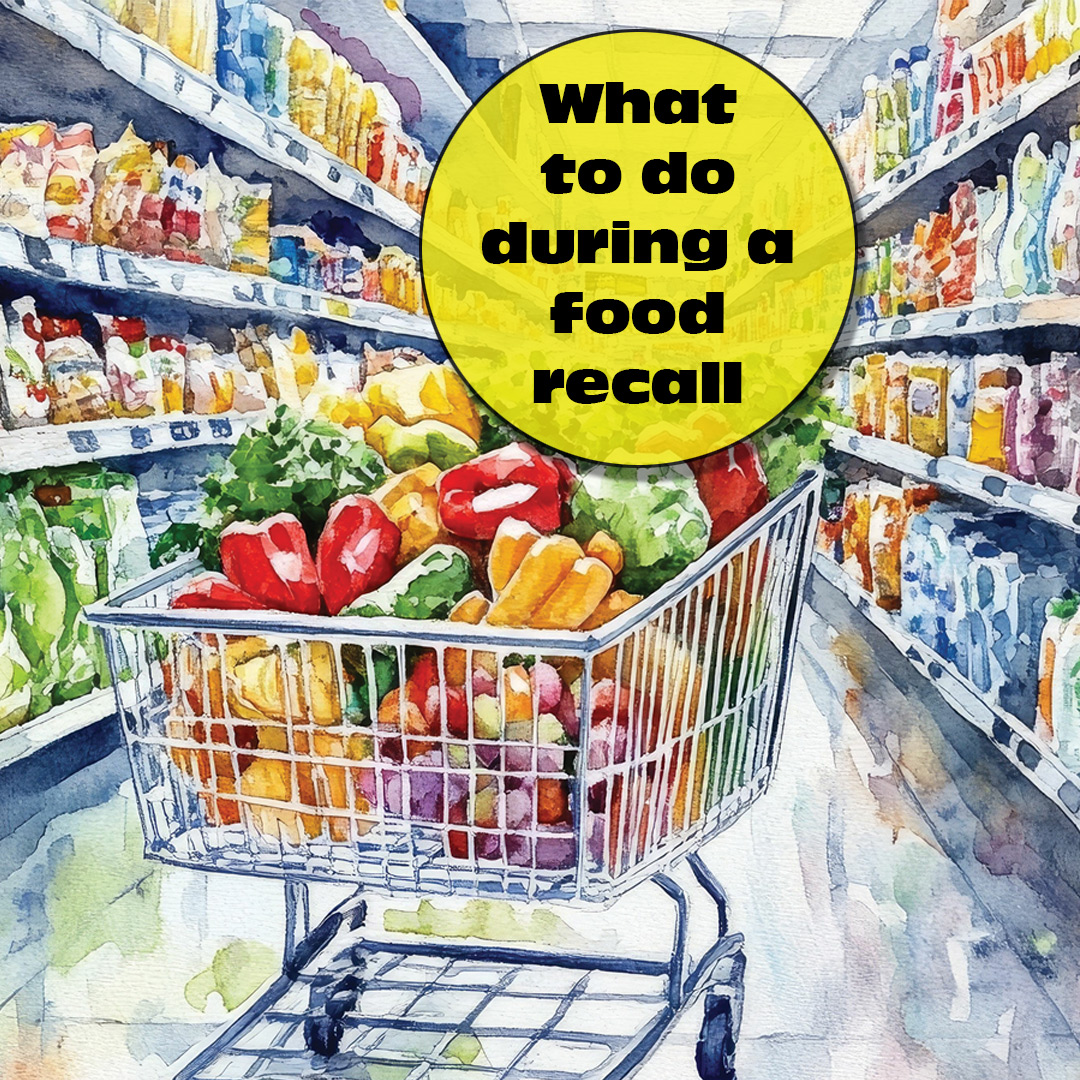
What to do during a food recall

If there are times when it seems that a food recall is constantly in the news, that’s partly thanks to the continuous monitoring that happens to ensure that food stays safe. The systems that are used to identify potential problems have gotten more efficient.

While there are a few reasons a food may be recalled, the good news is that there are ways to stay informed and reduce your risk of getting sick from certain foods.

Why Is Food Recalled?

Food recalls are typically issued by food producers. This may happen if a food is mislabeled, if they believe the food is contaminated, or when a food has been linked to a foodborne illness. Some examples might include undeclared tree nuts found in ice cream, elevated levels of lead in applesauce, or potential botulism in canned food.

A foodborne illness outbreak happens when at least two people get the same illness from the same type of food or drink. Some examples include listeria in a specific brand of cheese, salmonella in eggs, or E. coli in carrots. The Food and Drug Administration, the Centers for Disease Control and Prevention, and local health agencies monitor and investigate these situations to help prevent additional people from getting sick.

Public health advisories are issued for recalls and outbreaks when there are specific steps that consumers should take to protect themselves. These advisories include information on how to identify products affected and suggestions for handling these foods if you have them at home.

What Should You Do If You Have a Recalled Item?

For a food or beverage recall, specific information is given to help identify the food or beverage affected. This typically includes the type of food, which brands are included, and the product’s “use by” date. This information must match for a product to be considered part of the recall. If it doesn’t match the recall information, then it is generally considered safe to use.

If a food or beverage is part of a food recall, it should not be consumed. You may be able to return the item for a refund at the place it was purchased. Otherwise, it should be thrown out. This includes any leftovers you may have in the refrigerator or freezer that used the recalled products.

If you identify a food in your home that was part of a food recall, make sure to clean any of the surfaces it may have touched during storage. This includes food storage containers as well as refrigerator or freezer shelves.

Food Safety for High-Risk Groups

While anyone can become sick from a foodborne illness, some groups of people are at a higher risk of serious side effects if they consume food that has these harmful bacteria or viruses. Individuals who are pregnant, children, older adults, and people with cancer, diabetes, HIV/AIDS, organ transplants, or autoimmune disorders are all at increased risk.

Those individuals are often advised to avoid certain high-risk foods, such as the following:

  • Raw (unpasteurized) milk or cheese
  • Undercooked or raw eggs, meat, and fish
  • Hot dogs and lunch meats
  • Raw sprouts
  • Premade deli salads, such as ham, egg, or tuna salads

Safer alternatives to these foods include pasteurized dairy products, eggs and meat cooked to their appropriate internal temperature, deli meats heated to steaming, and deli salads made at home. It also is advisable to wash fruits and vegetables before cooking or eating.

Stay Informed

For live updates on food recalls and public health advisories, check the U.S. Department of Health and Human Services initiative at FoodSafety.gov.

Other ways to stay informed include brushing up on food safety. Remember to wash your hands when preparing, serving, or eating food, and always cook foods to their appropriate temperatures. These simple steps can help reduce the spread of foodborne illness.

The colors of life: Deborah LaFogg Docherty

A “colorist,” her professors in college had called Deborah LaFogg Docherty.  She is a colorist with talent for color, which is why she likes pastels.  LaFogg’s compositions are saturated in detail, and beneath the layering,  the surface of sanded pastel is full of pigments with little binder.  LaFogg brings the colors in life forward and into this month’s focus.

“It has to have motion, color, and contrast—oh man, there is always something to learn,” explained LaFogg. “The right textures and, most importantly, it is the composition that has to be right.”

Toy in the Attic (38″ x 28″). LaFogg’s first exhibition was at the Yale University Art Gallery in her senior year of college. “Toy in the Attic,” an oil painting on gessoed board, was exhibited there; it is of LaFogg’s Raggedy Ann doll that she found in the attic.

LaFogg, who grew up on a farm in Connecticut, was inspired by her mother at a young age to pursue art. One could say the “writings were on the wall”—when LaFogg was only 4 or 5 years old, she did a full mural of dogs, cats, trees, and birds on the wall of the hallway. Of course, her parents thought it better to give her coloring books, paints, and crayons instead, for her to continue on. And she did just that.

LaFogg, having graduated with honors in illustration and commercial art from Paire College, later relocated to South Florida, where she worked in illustration, cartooning, and as a designer for the Sun Sentinel for several years of her life. There, she did a plethora of work in the artistic field, including prepress, editorial, and advertising. She was a Special Sections designer in Deerfield Beach, and it helped her to further develop her skills in compositional strength throughout the experience.

Commissions. During and after her Sun Sentinel career, LaFogg has continued to do commissions for art lovers. Her commissions range from portraits to animals, in extensive use of detail, and even with an Impressionistic piece. She has illustrated a couple of books, including “Rosie’s Song” and “Woodrat Jill,” in themes about conservancy and nature. While LaFogg is naturally drawn to pastels due to her talent for color, her works are shaped from oils and even acrylics. Her tendency to equip detail is apparent, while maintaining balance between her softened backgrounds to pronounce the foregrounds of the composition’s focus. This cute little fur ball (pictured) is a recent commission, 11″ x 14″ oil on canvas.

Wildlife. LaFogg lives in Boynton Beach, where she works from her studio. Her property is in fact a wildlife habitat. Known well for her wildlife works, LaFogg’s achievements in wildlife conservation efforts cannot go unnoted. Winning first place in fine art in the Endangered Art4Apes International Exhibition, fourth place and honorable mention in the wildlife/animal category of the Pastel Journals International Pastel 100 Competition, and honorable mention in the International Artists Magazine Wildlife Challenge, these are just a few of many of her achievements. Her work is often featured in the NYC Salmagundi Club shows, and she’s been published in the International Artist Magazine, the Pastel Journal, and the WildScape literary journal.

LaFogg’s wildlife paintings cannot be missed. Since 2018, after she became a part of an artists group to visit Kenya for conservation efforts to bring the Northern White Rhino back from the brink of extinction, she continues creating paintings for the National Parks Trust and strives to raise awareness about the importance of wildlife conservation.

Among some of the animals painted are the wolf, the cougar, the black bear, and many more. However, her favorites are the birds, LaFogg’s main subject. She loves how they symbolize freedom and beauty, a topic very important to her.

“Frost,” an 11″ x 14″ pastel on archival sanded pastel paper, is a testament to that. The lone cardinal is the focal point of the painting, drawing the viewer in by his natural predominance—color, defining the composition by his inherited hierarchy upon the wires. As he looks on, it hints to the viewer a suggestion, perhaps, in hopes for the spring.

LaFogg’s works are spread nationally and internationally, including in China and Spain. In the U.S., a piece well worth mentioning is her real-life cowgirl, whose portrait is a 16″ x 20″ pastel on archival sanded pastel paper, titled “Ready to Ride Out.” The offsets of the composition come into focus by the pronouncing of life to her face, where her position is to skin tones, mellowed by the balance at which it borders by color. It all is complimentary—as the cowgirl looks to the light, the background remains mysterious, leaving the fluidity to the viewer in a pending sense before her journey into the great wide open.

Every little detail to experimental abstracts. After a great year in 2024, LaFogg is currently rebuilding her inventory. Subsequently, recent interests have delved into abstracts. Her “Koi Pond,” a 16″ x 20″ acrylic on canvas, explores her applied techniques into simpler strokes. Form, however, remains defined by color, as the core emphasis is toward the Koi fish. Koi, also known as Nishiikigoi, is a species that originated in China and later were extensively bred and popularized in Japan.

Inspiring others. LaFogg’s aim is to inspire others by doing demos and teaching. Currently, she teaches art at the Boyton Beach Arts & Cultural Center every Wednesday from 1 to 4 p.m. On April 4, 5, and 6, LaFogg will be at the Delray Art Fair. On April 12, she’ll be at the open house of Delray Beach’s Creative Arts School. And on May 3, LaFogg will be painting life at the Palm Beach Zoo.

For more information or to contact Deborah LaFogg Docherty, go to https://lafogg.com.


Hillsboro Inlet Lighthouse: A historic treasure

One of the brightest lights in the world shines from Hillsboro Inlet—the light beam emanating from the Hillsboro Inlet Lighthouse, which can be seen from 28 nautical miles (just over 32 miles) away. Built in 1907, the lighthouse has withstood major hurricanes and fires to guide ships through the shallow waters and coral reefs of Hillsboro Inlet for the past 118 years.

In 1855, the U.S. Army Corps of Engineers designated Hillsboro Inlet as hazardous to the safe navigation of ships and recommended that Congress authorize the funding of a lighthouse. However, due to a lack of funds, more than 50 years passed before the approval and construction of the Hillsboro Inlet Lighthouse began.

During that time, Hillsboro Inlet continued to challenge ships. In 1900, the SS Copenhagen, a British cargo steamer, sank after striking a reef in 25 feet of water off the coast of Pompano Beach. Finally, in 1901, the United States Lighthouse Board persuaded Congress to authorize the construction of a lighthouse at Hillsboro Inlet. “The sinking of the SS Copenhagen really jumpstarted getting this lighthouse,” says David Velez, a Hillsboro Lighthouse Preservation Society (HLPS) volunteer. The HLPS, a nonprofit organization, works with the U.S. Coast Guard to maintain the lighthouse.

At 147 feet tall at its highest point, the Hillsboro Inlet Lighthouse is one of the tallest lighthouses on the East Coast. One hundred and sixty-seven winding steps lead to the watch deck of the lighthouse, which offers sweeping views of the coast and overlooks part of the Florida Reef, where sharks and fish are commonly spotted.

One of the lighthouse’s most unique features is its second-order, bivalve Fresnel Lens, which dates back to 1907 and was the most technologically advanced at the time. “The lens is original from 1907,” says Amber Velez, membership chair of the HLPS, whose grandfather was one of Hillsboro Inlet’s original lighthouse keepers. “Only a few of these lenses are still active, one being ours. Others are on display in museums. Ours is rotating just as it was in 1907.”

The lens comprises 356 glass pieces that form a large diamond. “When it was first put into service, the lighthouse had a vaporized kerosene light visible up to 15 nautical miles out,” explains David Velez. “They created the lens in such a way that no matter where the light was coming from the kerosene flame, it would refract and create a horizontal beam shooting out into the ocean.”

In 1932, the lighthouse went from kerosene to electrical power, and in 2021 it switched to an LED light visible from 28 nautical miles out. “That’s only at 50% brightness,” says David Velez. “If we increased it to maximum brightness, we’d probably get complaints from residents.”

Originally the Hillsboro Inlet Lighthouse used a mercury bath to rotate its Fresnel lens, which weighs about 3,500 pounds. Floating the heavy lens on a pool of liquid mercury allowed it to rotate quickly with minimal effort, creating the bright flashing signal that lighthouses are known for. “This was done on mercury because mercury is frictionless,” explains Ralph Krugler, a historian with the HLPS and author of “The (Almost) Complete History of the Hillsboro Inlet Lighthouse.”

“Once the lens was floating, with one finger, you could push a giant lens around in circles,” says Krugler.

The lighthouse keepers were responsible for maintaining the mercury bath. When dust, sand, or other impurities built up in the mercury, they had to strain it. “They would drain the mercury and run it through a cheesecloth,” says Krugler. “These guys weren’t wearing gloves and were doing all this by hand.” Sadly, keepers were commonly referred to as “mad hatters,” as constant exposure to the bath often led to mercury poisoning and abnormal behavior.

Throughout the years, several major hurricanes caused some mercury to spill out of the basin. Thankfully in 1998, all mercury was removed from the lighthouse, and the mercury bath was replaced with a ball-bearing system that would rotate the lens. In 1974, the lighthouse became fully automated, meaning keepers were no longer needed.

On Friday, March 14, the HLPS is hosting its annual fundraising gala. Those who attend will be treated to a private tour of the lens room and an up-close look at the original 1907 Fresnel lens, an experience not available on public tours.

Proceeds from the gala—which takes place under the full moon on the lighthouse grounds—will go toward upkeep, repairs, and HLPS’s restoration project.

The million-dollar restoration project involves a complete overhaul of the struts, cables, and turnbuckles, along with the blasting and repainting of the lighthouse to restore it to its original color scheme composed of three black sections and two white.

“It’s a 10-year restoration plan with a 10-year guarantee,” explains Amber Velez. “We’ll have 10 years of guaranteed service, so if anything happens with the paint or rust starts coming back, the restoration company will come back and take care of it.”

Because the lighthouse is located on U.S. Coast Guard grounds and is bordered by the Hillsboro Club, it is only open to the public once a month for public tours. Upcoming tours are scheduled for March 8, April 12, May 10, and June 15. Visitors meet at the Sands Harbor Resort and Marina in Pompano Beach and are transported by boat to the lighthouse grounds.

For more information, visit www.hillsborolighthouse.org.

Death of chocolate?

Chocolates are a favorite romantic gift for Valentine’s Day—everything from a rich chocolate truffle to chocolate-covered strawberries. Beyond the happy smiles of chocolate enjoyers everywhere this Valentine’s Day, there are changes lurking in the industry. The future of chocolate is murkier than ever before.

If you have ever seen a chocolate plant, you will find the fruit quite different from the smooth, creamy chocolate in your favorite confectionary. The cocoa fruit pod is the size of a melon, and it’s grown in hot, rainy, tropical areas around the equator. Each melon-sized pod yields around 30 to 40 cocoa beans, which are dried and fermented before the next steps in the production process.

The dried beans are further roasted, and shelled into pieces before being ground into a paste, commonly referred to as chocolate liquor. The chocolate liquor is often processed to separate out the cocoa power from the cocoa butter (commonly referred to as grinding in the industry). Traditionally, chocolate is often made by adding more cocoa butter and sugar into the chocolate liquor.

It takes about 10 of the pods to yield enough dried beans to make one pound of chocolate. At a recent peak in 2022,  the world produced just under six million tons of these dried cocoa beans in 2022, mostly in Africa.

Recently, the supply of this delicious treat has been under threat. The cocoa commodity index has jumped 500% since 2022, after decades where the prices have been stable. The total cocoa supply in 2024 has fallen to around 4.4 billion tons (25% reduction since 2022), and the lowest in 45 years.

The increase in cocoa prices has impacted consumers with price increases, and it has reduced product sizes. Some manufacturers have resorted to substitutions, and some companies are offering non-chocolate products, or completely removing cocoa from their products. One potential alternative that some producers are working with is carob, from the tree of the same name grown in the Mediterranean region.

For craft chocolate makers targeting high-end chocolate enjoyers for key holidays like Valentine’s Day, they do not have that luxury. Some craft makers have increased their prices by 10% to 20% in the past few months—all due to the shortage in cocoa production.

How did the grinch steal our beloved chocolate? There are several long-term factors impacting the shortage.

Cocoa trees become increasingly prone to disease as they age. So old farms are abandoned, with new ones established in fresh forest. But this is becoming increasingly difficult due to a lack of new land to farm, and competition with mining interests in the growing area. Farmland is often sold to miners, exacerbating the production challenges.

Recent weather patterns in western Africa, often associated with the recent El Nino cycle, have been reducing production from the cocoa tree farms. The same weather phenomenon that has suppressed hurricanes in the past couple years has caused drier weather in West Africa, contributing to increased plant disease that devastated the trees in that region. The weather impacts not just total production, but also the quality of the beans produced, further stressing the craft makers who rely on top-grade beans.

Meanwhile, chocolate demand is continuing to grow at around 4% annually. So the mismatch between supply and demand is likely to be further strained. Because most manufacturers tend to hedge their long-term supply agreement pricing, according to a senior analyst at RaboResearch, the recent steepest price increases are likely to trickle to consumers in 2025.

Long term, farms worldwide may grow more cocoa trees as a result of this steep increase in price, but it will take three to four years to begin producing beans. And across many of the traditional growing regions, new farms in West Africa and South America will still face the same challenge of disease and weather patterns that has weakened production.

Carob, the alternative you can already buy, has been thriving since the 1970s as a natural sweetener and thickening agent. It is low in fat, and rich in fiber, calcium, and antioxidants, a potentially healthier alternative. But it has a distinct flavor and texture, and a more nutty and sweeter taste profile for consumers to adapt to.

Other startups have been looking at newer alternatives in trying to create a more perfect substitute for the diminishing chocolate supply aimed at a taste-conscious chocolate lover. One promising process uses fava beans. Most of the plants being looked at as alternatives have less demanding agriculture needs than the cocoa tree, mitigating the ecology impact to the chocolate supply chain.

Even further out, some other companies are looking at options of growing cocoa plant cells in a bioreactor, to produce chocolate without relying on the trees. The development is in early stages, but it uses the same technology advancements in the pharmaceutical industry for cancer drugs and nutrient supplements.

As the price of chocolate stays at all-time highs, these alternatives will likely gain more traction in the industry, especially for the price-sensitive segment of the chocolate industry. Short term as the supply drops, and the price increases, the industry is already seeing consumers pulling back on satisfying their sweet tooth. Data from a Jan. 16, 2025, report show North American chocolate grinding falling 1.2% in 2024 year-over-year, following similar trends in Europe, where its grindings dropped 5.3% in quarter 4, and fallen for two years in a row.

So expect 2025 to be a year in which you’ll likely see both a shortage of high-quality chocolate as well as increased prices. And on the horizon, if the chocolate alternative startups gain traction, we may see more and more chocolate using less and less cocoa, and the use of more alternatives to cocoa. It will be hard to conceive a world without chocolate, but we may be entering a period where consumers will be seeing hybrid offerings of both original and newer alternative chocolate.