Holiday tips to manage diabetes

November is National Diabetes Month, and the Center for Disease Control reports that 29.1 million people, diagnosed and undiagnosed, are challenged with this disease in the United States. As a Certified Diabetes Educator (CDE) I focus on wise food choices throughout the year. As the holiday season unfolds, I want to give people the tools to eat well and wisely.

In planning menus and choosing items from those often served at holiday meals, diabetes can afflict the meal planner as well as those dining at the table.As the host or hostess, it is important to include options for those who may have challenges with what some folks dismiss as “just a little sugar.” In putting together a menu of traditional dishes, which tend to be carbohydrate heavy, remember that to control diabetes it is essential to manage carbohydrate intake. Carbohydrates are necessary nutrients that are the fuel for energy— however if diabetes is a factor, carbs must be monitored. Carbohydrates are starches, sugars, and fiber. Now let’s look at some of the dishes typically found on the Thanksgiving menu.

Michelle Stewart

Snacks and Appetizers:
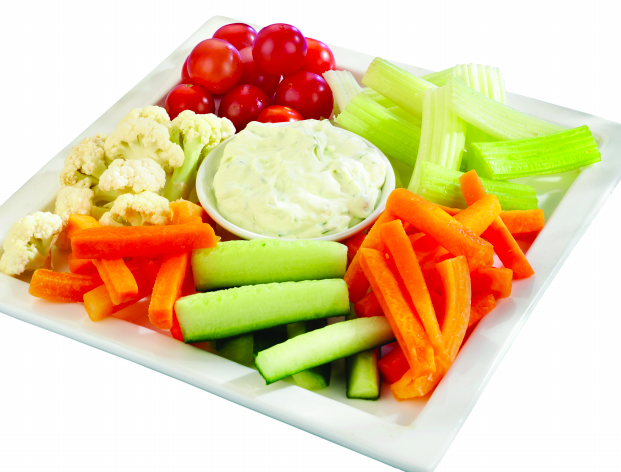
These often include cheese and crackers, dips, or cocktail-size frankfurters. Good- for-you options to substitute are fresh vegetables in place of salty snacks such as chips or pretzels. Limit the cheese, which can be high in fat and calories, and ditch the baby frankfurters for lean lunchmeat rolled in lettuce leaves.

Side Dishes:
Folks do love potatoes — mashed, scalloped, or sweet. It is not the potato itself that gets the bad rap; it’s the additions of butter, cheese, milk, sour cream, and other goodies. If making potatoes, opt for low-fat milk or plain Greek-style yogurt in place of cream and sour cream. If sweet potatoes are on the list, cut back on the amount of butter, sugar, and marshmallows. Sweepotatoes are a real power food, but if pairing the sweets with the previous list, the power punch is knocked out! Include roast or steamed green vegetables, baked squash, and a tossed green salad.

Now turkey stuffing is in the side-dishcategory — this too can be more wholesome if you use a little less butter or margarine, use sodium-reduced broth, and whole grain bread or brown rice, depending on the type of stuffi ng you are making.


Main Dishes:

Turkey is the star attraction on most tables, however, it can also be joined by ham or roast beef. These are protein foods without any carbohydrates. Limit servings to 3 to 4-ounce portions. If turkey is your main-dish choice, go for roasted turkey and not deep- fried. Choose turkey breast and remove the skin. If gravy is on the must-have list, limit to a couple of tablespoons or half a ladle of gravy.

Dessert:
I know this is where so many slip up. Don’t deny yourself dessert, choose half-size portions, forgo caramel, chocolate, and whipped toppings. If eggnog is in the picture, pour a juice-size glass or make the beverage your dessert in place of cake or pie.

These are some of the tools and guidelines for good and healthy eating during the holidays. Diabetes is serious but by making wise choices as the host or guest, folks can eat well, enjoy the season, and keep well-being goals in sight.

Take Away: You can enjoy seasonal holidays by making good choices to eat well and manage the Diabetes challenge.

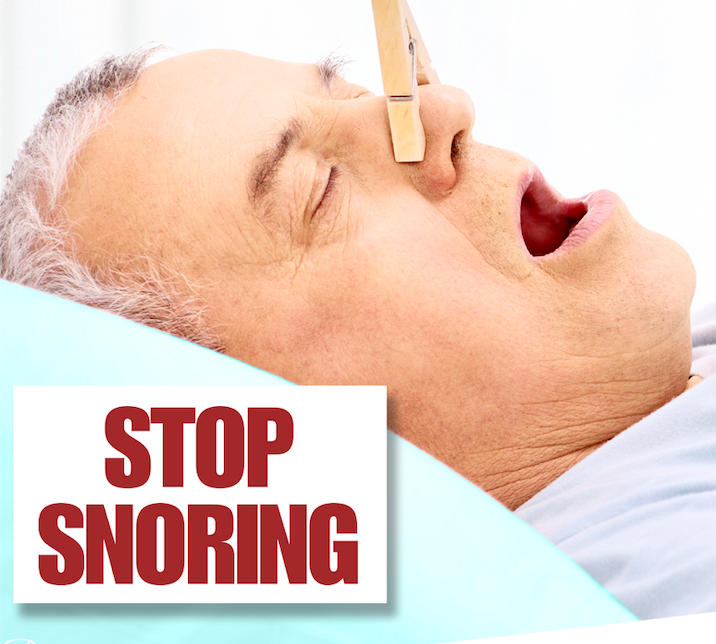
DO YOU OR DOES SOMEONE YOU KNOW SNORE?

Do you or does someone you know snore? Are you tired during the
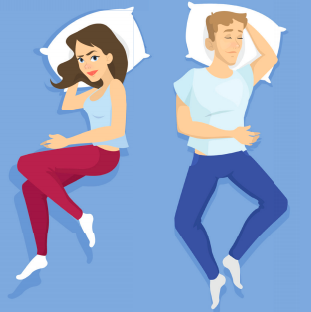
day? Maybe you fall asleep during the day and rest? Snoring causes a disruption in sleep patterns for both the patient and their partner. Sleep plays a vital role in good health and well-being throughout your life. Ongoing sleep deficiency can raise the risk factors for chronic health issues such as high blood pressure, heart attack, stroke, asthma, COPD, cancer, arthritis, kidney disease, diabetes, and depression. It can also affect how well we react at work, absorb new information, and get along with others.

There are different types of snoring:

(1) Palatal snoring is the most common. This occurs when the air flows past the relaxed tissues in the soft palate and causes the tissue to vibrate. Loose palate tissue obstructs the airway causing loud snoring.

(2) Obstructive Sleep Apnea is caused by the throat muscle relaxing too much during sleep which will cause pauses in breathing, thus reducing blood oxygen levels.

Other factors related to snoring are alcohol consumption, body weight, sleep position, or nasal obstruction.

Patients who snore should have an evaluation by a medical professional to
determine if a sleep study is necessary. If the patient has sleep apnea, it will require the use of a C-pap machine to assist in keeping the airway open during sleep.

Many dentists now aid in the evaluation of snoring and sleep apnea and are able to treat your palatal snoring, or refer you to a sleep specialist.

If a patient has palatal snoring, it an be treated with a new innovative treatment using a SOLEA Laser. It isa short, non-invasive treatment with no downtime, no cutting, and no discomfort. The laser treats the collagen in the soft palate with a 15-minute procedure that will tighten the palate. The patient will notice a difference in the first night regarding their snoring and the palate will continue to tighten and improve over the next two weeks. This procedure can’t cure sleep apnea but can aid in the treatment of shrinking the soft palate tissue.

Compared to other lasers for this treatment, SOLEA treats the soft palate in one 15-minute session. Other lasers need three 20-minute sessions to correct.

So, if you or someone you know suffers from snoring or any of the above symptoms, call your usual medical professional for a consultation today. It can save your life.

By Candace R. Colella D.M.D., P.A.

To sleep, perchance to scheme – ay there’s the rub

Sleepopolis.com is a website that bills itself as “Your Ultimate Sleep Destination.”

That must be true, because I’ve been trying to reach them for months and they never, ever answer their phone or respond to emails.

I figure they all must be catching like 40 million winks. If I apply the highly respected “Rip Van Winkle snooze postulate,” first developed by Washington Irving in 1819, I’m not going to hear from them until 2040.

That’s a hell of a power nap.

OK, so here’s what happened. Last April I read a story in the Miami Herald about a survey Sleepopolis.com had done about the best cities for sleeping. The story said Miami was rated 246 out of 300 Florida towns.

So, I looked up the whole study and discovered that Parkland, our Parkland, was among the top ten best Florida cities for sleeping, snoring in at number six, right between Miami Shores and Fruit Cove. Wow, what a story.

The only other area city to make the top ten was Palm Beach, which nodded off at number nine.

As for the rest of Broward County? How do you spell that noise you make when you put the “P” sound with the “F” sound and end with a bunch of “T” sounds?

Pfttt?

And this was not a casual study. Sleepopolis included factors like drinking, smoking, obesity, physical and mental health, exercise, and unemployment. Surprisingly, the only critical factor overlooked was whether sleepers had a My Pillow under their noggins.

But still, how can Parkland rank sixth and Coral Springs103rd or Coconut Creek way down at 193? Is that much more drinking and smoking and not exercising going on in cities literally right next door to us? I don’t think so.

The worst Broward County city was North Lauderdale, ranking 298 out of 300. I don’t even want to know what goes on there.

The study “measured,” and I use the word with total sarcasm, 20 of Broward County’s two dozen cities. But as I looked at all the numbers, I noticed scores for things like obesity, drinking, and sleepless nights were almost identical for most towns. There was only one measurement that differed significantly.

And that measurement is why Sleepopolis won’t return my calls.

I put the 20 Broward County cities in a spreadsheet. The cities fell in line perfectly according to one factor: Median income.

Parkland, in first place among Broward towns, had a median income of $131,525. The median income of the last place, North Lauderdale was more than three times less at $41,841. There were no exceptions. Rankings dropped as median incomes fell; one by one, in perfect order; from Parkland, Cooper City, and Weston at the top; to Margate, Dania Beach, and North Lauderdale at the bottom.

The Miami Herald should have taken a harder look before condemning its town’s ability to get a good night’s sleep. Maybe it’s just a case of projection. Given the paper’s pending bankruptcy and hedge fund guys rubbing their hands together gleefully, I’m sure folks at the Herald aren’t sleeping that well. Maybe they should commute fromParkland.

By Richard Battin
editor@theparklander.com

Guidelines for Breast Health

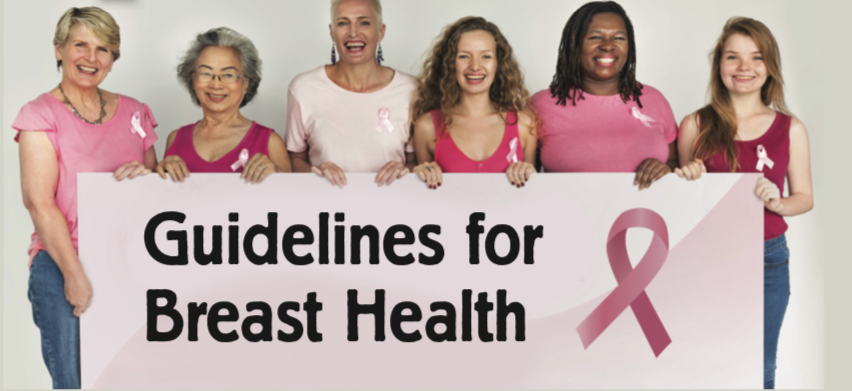
“In the pink” is pervasive this month. According to Dictionary.com, the idiom is actually “in the pink of health.” One would think that this is the connection between breast cancer awareness and the pink images that are highly visible. In reality, the symbol is derived from a ribbon’s symbolism as a sign of courage and support, and a promotion by Self magazine and Estee Lauder cosmetics in 1992. The pink ribbon promotion has evolved significantly over the years — from lapel pins to illuminated skylines in cities nationwide, to the addition of the color and symbol in uniforms for professional sports.

Though we need to be aware of breast health every month, with pink splashed spectacularly on just about everything in October, it brings the topic to the forefront. You know I am all about having a healthy lifestyle and making sure you’re in the know on keeping “your girls” aka breasts, healthy. Here are a few guidelines to help you out.

  1. Lifestyle
    Adjust your lifestyle to limit alcohol, increase fruit and vegetables, and exercise regularly; these are all factors that can help reduce the risk of breast cancer. It is also important to avoid smoking, control weight, and avoid exposure to radiation and environmental pollution. Breastfeeding can be beneficial, and the length and duration of hormone therapy should be limited.

2. Mammograms
Mammograms are considered the gold standard in breast cancer screening. The
American Cancer Society recommends that all women
get a mammogram every year beginning at age 40. For women with an above-average risk
of getting breast cancer, it is suggested that they discuss with their doctors if they should begin screenings at an earlier age.

3. Know Your Breasts.
Talk to your doctor about the pros and cons of breast self-exams. If you choose to do breast self-exams, your doctor can review how to do them with you. If you know how your breasts “should” feel then you can easily recognize when something is atypical and you should reach out to your health care provider.

4. Be Persistent.
If you think you feel “something,” and your healthcare professional dismisses your concerns, be persistent. You are your best advocate. If necessary, seek another opinion.

5. Network
Talk to your network of friends and ask them to share the names of their doctors or clinics. Personal recommendations from people you trust can go a long way when choosing healthcare professionals.

6. Symptoms
A lump is a symptom we hear about most often and 80 percent of lumps turn out to be benign. A lump can feel like a frozen pea, marble, or another hard item. This does not mean it is cancer, but if it is still noticeable after a few weeks or changes size or shape, have your doctor take a look.

Some of the other signs that something is amiss include persistent itching, a bug bite–like bump on the skin, and nipple discharge. If you notice something out of the ordinary that continues a few weeks, again, you will want to check with your doctor.

I’m not trying to alarm or create anxiety; you know my goal is to help guide you along the path of living a healthy lifestyle. Keep these guidelines in mind year ‘round for good health.

Take Away: You are your best advocate for “being in the pink of good health.” Follow these guidelines and make wise choices about your lifestyle.

By Michelle Stewart

Fight anxiety with goop, gadgets, and gravity

It seems as if the Age of Anxiety has eclipsed the Age of Aquarius. In this time of COVID-19, quarantine, and social distancing, many people are feeling stressed, isolated, and anxious. Depression is on the rise. Uncertainty wreaks havoc on our mental well-being.

According to the CDC,

“Fear and anxiety about a new disease and what could happen can be overwhelming and cause strong emotions in adults and children.”

To stay busy and decompress, Coral Springs resident Lanie Hyman Shapiro, a market research consultant, takes an on-line exercise class twice a week.

“I look forward to it,” she says. “Even if I’m napping, I make sure to get up for the class.”

She finds cooking and meal planning help her to focus on something besides reality. She takes her dog for a walk and has completed five puzzles back-to-back.

“I find it very satisfying and relaxing,” she says.

Additionally, she binged Schitt’s Creek on Netflix and the Hulu Shows “Better Things” and “Little Fires Everywhere.”

To stay connected, she chats with friends regularly and keeps in touch on social media.

Here are some other possible methods for reducing stress and anxiety.


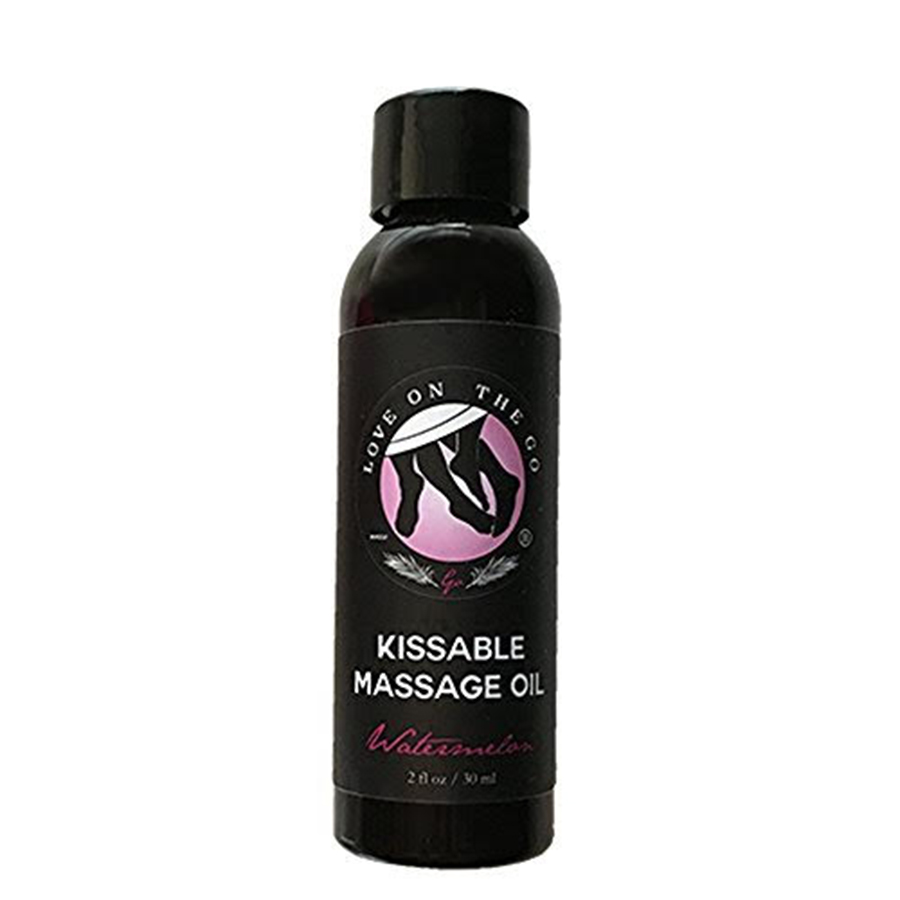
Scented massage oils

Try some aromatherapy skin products or scented massage oils in lemon, rosemary, or lavender.

Science has shown a pain-relieving mechanism from the nose to the brain. Exposing your senses to strong scents and smells helps alleviate stress and anxiety, and creates a sense of well-being in the body.

Olfactory receptors in the nose trigger a strong sense of smell, which then sends signals to the brain, reducing swelling to the nerves. Studies show that aromatherapy can improve brain chemistry, boost the production of dopamine, and fight stress.

Sharon Fried Buchalter, a Boca Raton psychologist and CEO of Products on the Go, which makes the lifestyle brands, Little Toes and Sunshine On The Go, recommends destressing with mindfulness meditation, a breathing technique that keeps your mind focused on the present.

Products On The Go’s natural massage oil is great to use individually, or as an aromatherapy relaxation massage oil for couples, says Dr. Buchalter. Made with natural oils that hydrate and moisturize your skin, they stimulate your senses with their nature-inspired scents, which can lower stress levels.

Visit products-onthego.com or sunshineonthego.com

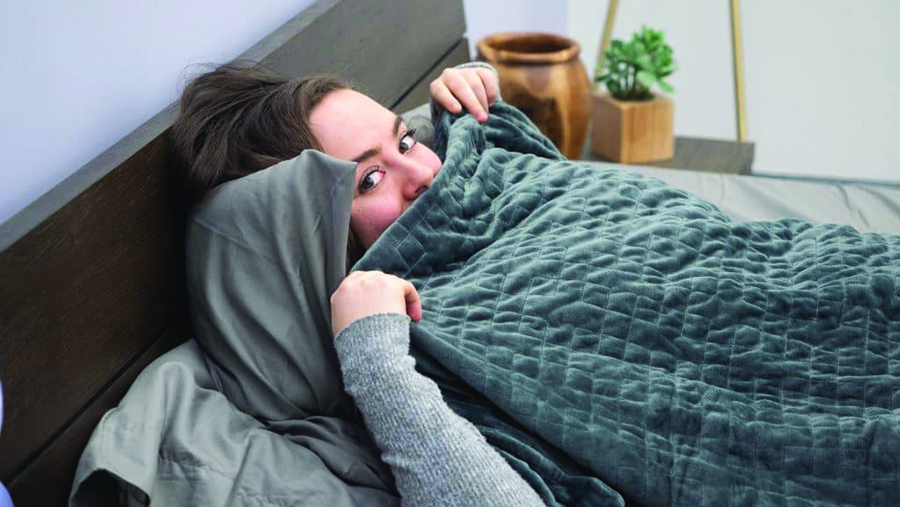
Weighted blankets – (Gravity blankets)

Snuggling up with a weighted blanket can not only help you feel calmer and less anxious but can help you sleep better – no sleeping pills necessary.

Typically weighing between 5-30 lbs., experts say to choose one around 10 percent of your body weight (or 5 percent for children).

How does it work? Experts say the weight of the blanket mimics a therapeutic technique known as deep pressure stimulation which calms the nervous system.

It is believed that grounding your body while sleeping can lower cortisol levels, which helps improve blood pressure, heart rate, glucose levels, and even boosts the serotonin in your brain.

And all this while you’re sleeping – what more could you ask of your blanket?

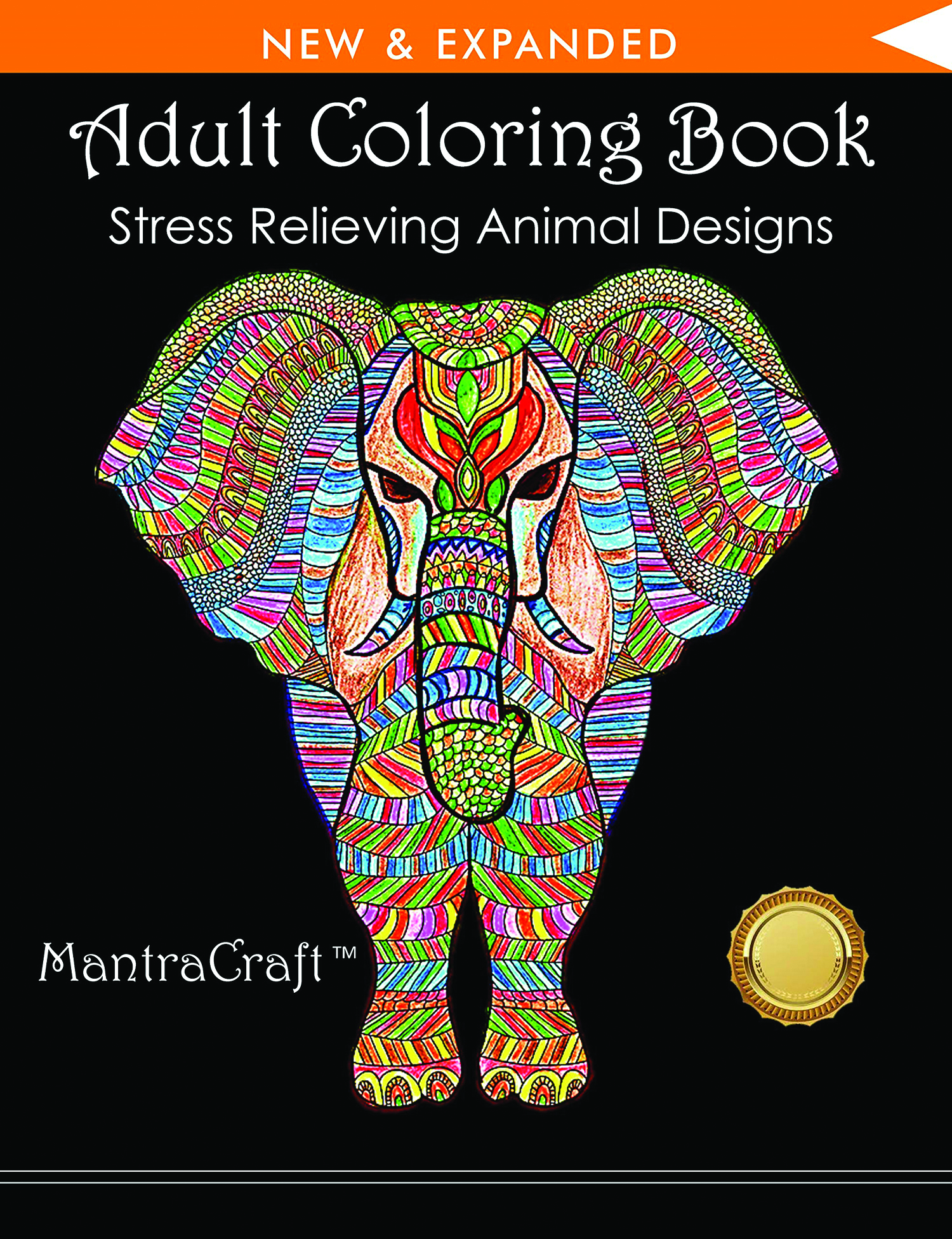
Adult coloring books

One of the latest trends to emerge from our time at home is the popularity of adult coloring books as a way to relieve anxiety and boredom.

They help you relax by utilizing different areas of the brain to improve motor skills, senses, and creativity. Think of it as coloring meditation. Your focus is on the task at hand and not on your troubles.

For an extra bonus, try your coloring skills on geometric mandalas. A 2005 study by the American Art Therapy Association Inc. concluded that coloring complex geometric patterns induces a meditative state beneficial for reducing anxiety. Even psychologist Carl Jung had his patients color mandalas 100 years ago as a way to relax and learn more about themselves.

Magnetic Zen garden

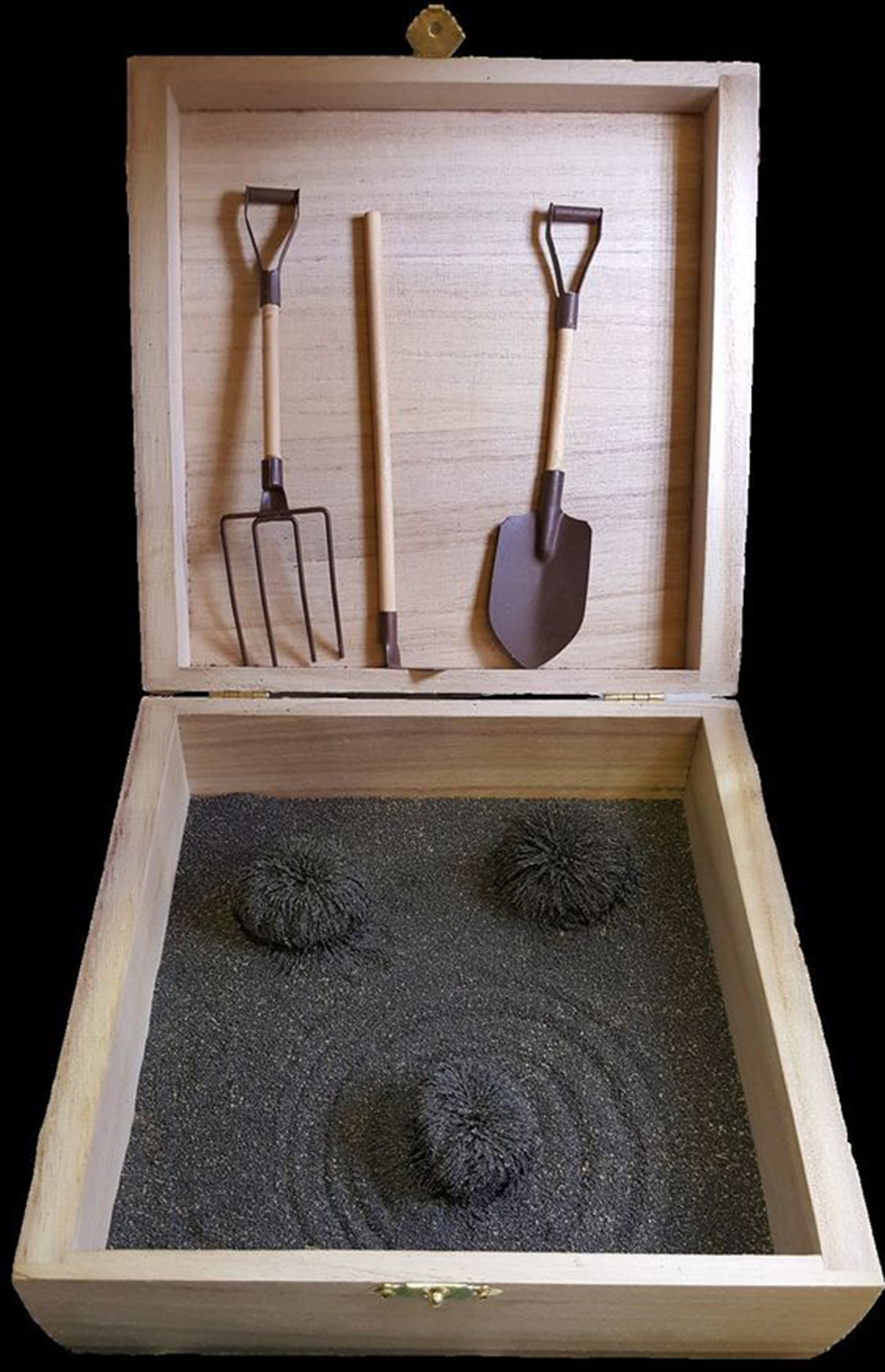
If you can’t join a monastery in Bhutan, at least you can bring a Zen garden to your home. Ancient Buddhists used Zen gardens for meditation and you can, too.

These desk-top sized gardens come with magnetic sand, smooth stones, gravel, greenery, and figurines replicating the serene nature of a Japanese garden and promote a meditative state of mind.

The Japanese concepts of Kanso (simplicity) and Fukinsei (asymmetrical balance) contribute to the garden’s grace and appeal.

They can remind you to breathe and that perfection is unattainable, simplicity is beautiful and that attachment to materialism and desires are ephemeral.

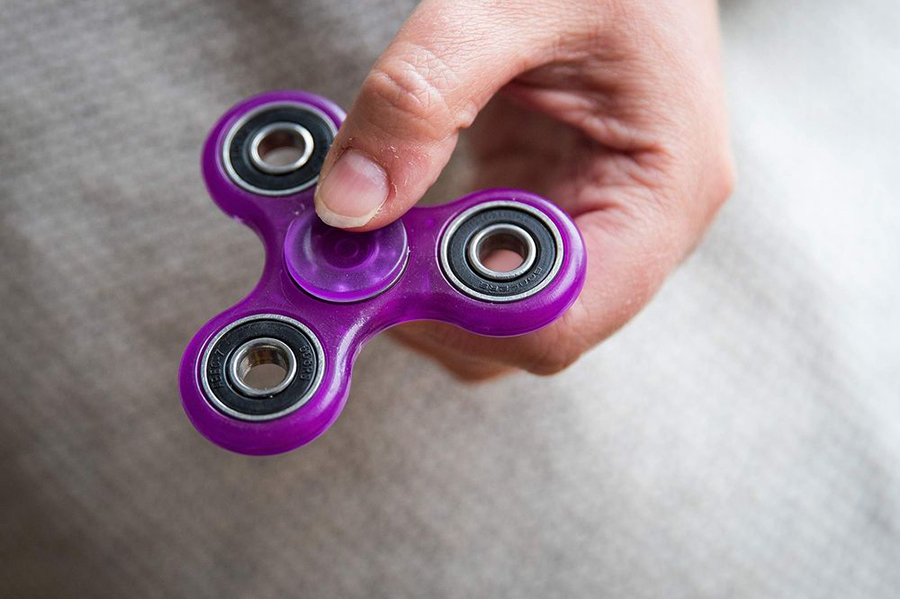
Fidget spinner – Not just for kids anymore

Invented by chemical engineer Catherine Hettinger in the early ‘90s, these triangle-shaped gadgets have been all the rage with middle- schoolers.

But, for adults, fidget spinners, considered a rapid stress management technique (RSMT), can relieve stress and distract us from ruminating about our problems.

Proponents believe they can help with anxiety, ADHD, and even autism, although there is only anecdotal evidence to support this.

One of Amazon’s best selling toys, fidget spinners can put us in a state of mindfulness meditation, and through their nature to soothe, empty our minds and channel our nervous energy.

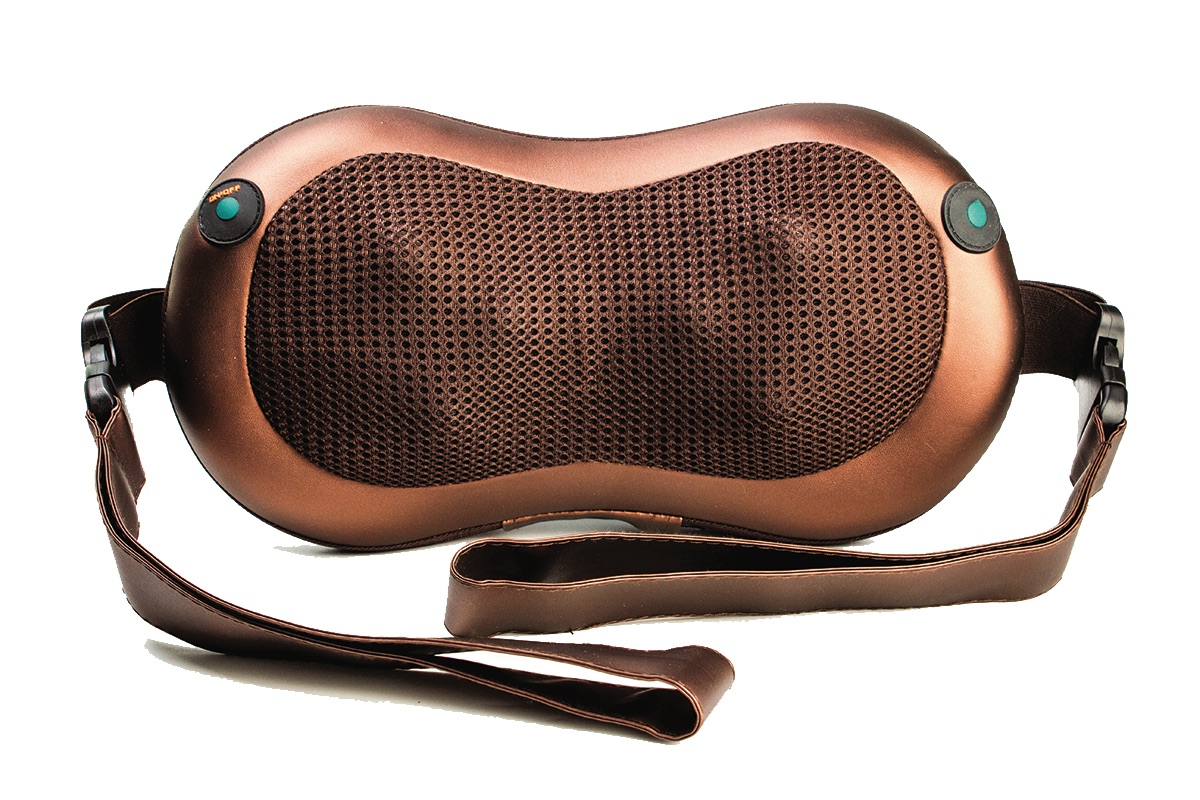
Portable Shiatsu massager

Japanese Shiatsu (finger pressure) massage can enrich your physical, emotional, and cognitive health and promote overall well-being, similar to acupuncture, but without the needles.

It allows the qi (pronounced chi) to flow freely, which contributes to keeping the body in balance.

In addition to relieving stress, Shiatsu helps relieve anxiety and depression, and can even boost your mood.

Practitioners believe the treatment calms the sympathetic nervous system and — in turn — stimulates circulation, reduces stress, and mitigates pain.

A portable massager lets you relax at a moment’s notice. Some units come with heat, vibration, different intensities, etc. Look for one that delivers a deep tissue massage and leaves you in a relaxed state of bliss.


By Jan Engoren

Medicare plan change window opens October 15

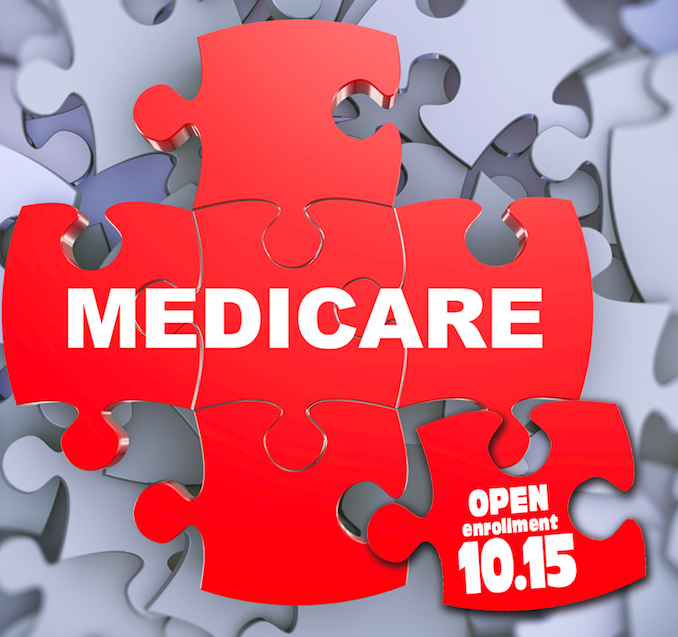
Each year in late September, every Medicare recipient should receive an Annual Notice of Change (ANOC) in the mail, which summarizes their current Medicare Advantage or Part D drug plan changes that will go into effect on Jan. 1st of the following year. Medicare Open Enrollment (Oct. 15th through Dec. 7th) is the period in which you may make changes to your current Medicare plan or your Medicare Drug plan.

Recipients should take the following steps to see if their current plan is still appropriate:

  • Check your prescription drugs to make sure they are still covered. If not, you may need to change to a plan that will reduce the cost of your drugs.
  • Since contracts can change during the year, you will need to ensure your doctors and hospitals are still in the plan; if they are no longer in the plan, you will need to go out of your network to see your usual doctor and this will probably cost more money than you want to spend. If you are currently on an HMO Advantage plan, you might need to change plans so your primary care doctor remains covered.
  •  Medicare Open Enrollment is the time to join a Medicare drug plan because if you select a plan outside of this period, you may encounter a late enrollment penalty; if you wait for future years, coverage will probably be more expensive.

Have you checked the following plan changes to see if they benefit you?

  • Plans sometimes add value items, such as gym memberships, over the counter allowances, meal delivery, and acupuncture.
  • Drug plans also make changes to which pharmacies are included as well as changes to tier coverage, deductibles, co-pays, and sometimes they will no longer cover the cost of a specific drug. Not knowing this information can save or cost you a lot of money. Also, if you went into the coverage gap last year, you need to see if changing plans can help you save money.
  • Some plans are more useful for issues that might be important to you. Aetna, for example, has a generous hearing aid allowance compared to other plans, but co-pays may be higher. And if you have money coming out of your Social Security for Medicare payments, those could be waived depending on the amount you receive from Social Security.

The best way to make sure you’re getting the most out of Medicare is to visit a broker who is familiar with all the plans. There is no charge.

Reneé Gorden is an insurance broker and the founder of Health Choice America in Boca Raton.

By Reneé Gordon

Shed those COVID-19 pounds

Food is our comfort in these trying times. It helps relieve the anxiety we feel due to the uncertainties swirling around us. What’s going to happen to school? Should I visit my favorite restaurant? Given the amount of TV / streaming content we have also consumed, couch potatoing is an activity that is gaining
momentum as we settle into new routines.

There are many activities residents have been doing to burn off those newly acquired COVID-19 pounds. Some, like me, have a bike and have gotten more familiar with their neighborhoods. Others have been running and playing tennis, as those activities allow us to keep our social distance and get our heart rate up.

However, a lot of us need some help to get a good program going. There are a lot of local pros that can help; you may have seen the Trainstation mobile gym trailer driving around in your neighborhood. Rick delivers all the gym equipment you need to your house. Harry, a kickboxing trainer from HB Kickboxing, can help you get a workout and improve your martial arts skills.

Whatever your choice is, COVID-19 pounds are another way this pandemic could impact your health long term, but there are many options to shed them. So, you can keep active, or if you need help, many professionals are ready to keep you healthy.


By Curiously Hungry

With COVID-19 there are no ‘immaculate’ assumptions

If you feel confused by the ever-changing data and recommendations surrounding COVID-19, you are not alone. As a new virus emerges, doctors and scientists are learning new information almost daily. Hence, the need to modify recommendations as this information arises.

If I say one thing to help guide you through this process, it is that as long as the virus is around, you must take measures to mitigate the risk of getting and spreading it. Over the last few months, many of us have witnessed two extremes: Those who drive alone in their car while wearing gloves, a mask, and a face shield, and those who partake in large group gatherings with no social distancing nor PPE of any kind.

Regardless of whether you fall into one of these categories or somewhere in the middle, I think we can agree that we all want to do whatever we can to keep our loved ones out of harm’s way.

The question I get asked the most from family and friends is regarding what measures to take when visiting with others. Whether it is a party for Grandma’s 90th birthday or a relatively small family gathering at a lake house, everyone wants to know a definitive answer on doing the right thing in the age of COVID-19.

Although there are evidence-based answers, anyone watching one of the numerous news networks or various social media feeds knows the research is ever-changing. Even those of us who have been critically reviewing journal articles as part of our career are relatively confused as to what the perfect answer is. As I said, you are not alone!

All of that being said, I would like to offer what I think is a risk-mitigating, comfort level approach to keeping you and your loved ones as safe as possible during group gatherings and family visits. For this, we need to make a few assumptions:

Assumption 1: When someone says they tested negative, assume this means they still could be infected with the virus.

Yes, I know this one is confusing, but it is very important. PCR and Rapid tests of all kinds (including flu) have always been known to be unreliable – this is not unique to COVID-19. This means that you should always inquire about symptoms, such as fever, cough, loss of smell/taste, etc. (refer to the CDC website for a current symptom list; cdc.gov/ coronavirus/2019-ncov/ symptoms-testing/ symptoms.html). If a person tests negative and has any of the listed COVID-19 symptoms, you must assume they are infected, and the test didn’t pick it up.

Assumption 2: Asymptomatic patients can still transmit the virus.

If someone says, “I tested positive but didn’t have any symptoms, therefore, I am fine,” be cautious. Although it seems that asymptomatic patients have a lower likelihood
of transmitting the virus, the evidence is debatable and from a personal standpoint, I wouldn’t bank on a lower potential transmission rate equating near zero chance, especially when dealing with any of the vulnerable populations. Play it safe!

Assumption 3: Assume that anyone with a fever of 100.4°F or greater has COVID-19.

For those who are taking temperatures at their door, more power to you. Although it is surely an uncomfortable welcome at the front door, it is one of the few truly objective measures we can take, even if it won’t screen in every infected person. Understand though, a temperature of 99° Fahrenheit is not a true fever. I grew up thinking anything above a 98.6° meant you were hospital-bound. We all have very normal fluctuations in our core temperatures throughout the day, but a fever doesn’t truly start until 100.4° Fahrenheit.

Assumption 4: Assume everyone has COVID-19.

Clearly, this will be the most controversial assumption, but I believe a smart approach, especially when dealing with the elderly population and those with chronic illnesses, such as diabetes or lung disease. Assume everyone has COVID and take precautions based on that. Everyone may seem okay or say they are fine, but don’t stop practicing strict hand hygiene or whatever form of social distancing you usually partake in.

If you don’t personally believe this is as bad as the news is portraying, the simple effort of regular hand sanitizing/washing and wearing a face mask during group gatherings could have maximum outcomes if it means you could prevent the spread to a vulnerable person.

Should you worry so much about your healthy 3-year-old or 16-year-old getting very ill? Not nearly as much as the vulnerable populations, but you should worry about who they will potentially pass it on to. Thankfully, although children can indeed get ill, they seem to be the safest population when it comes to COVID-19 with mortality and morbidity rates seemingly lower than influenza, but this doesn’t mean that they are not vectors.

At the end of the day, we all want to keep our loved ones as safe as possible, but unless you live in a HEPA filter bubble, I don’t think there is a 100% perfect approach in this COVID world we live in; however, you can mitigate risk. Personal interactions are core to our sanity and mental health. If you understand the risks and take precautions to mitigate them when you can, you can certainly achieve these interactions while maintaining relative safety.

By Dr. Jahn Avarello

Dr. Avarello was the Division Chief of Pediatric Emergency Medicine for the Cohen Children’s Medical Center of NY for the past 9 years and is now the Florida Regional Medical Director for PM Pediatrics Urgent Care (1st site due to open in the Sawgrass Center this fall). He is currently seeing patients for acute care needs virtually at PMPanywhere.com.


Dietitians View: What About Breakfast?

What’s for breakfast? It is National Breakfast Month and the question is, “What are we eating?” I share with my clients that it is not necessarily when you eat, but what you eat. It is important to eat something to fuel your body as your day starts. Research shows that eating breakfast can aid in improved performance and concentration in both the conference room and the classroom. Additionally, breakfast helps you eat adequate amounts of the vitamins and minerals recommended for a healthy lifestyle, you also are more likely to control your weight and eat less fat and cholesterol.

Key ingredients for a healthy breakfast include:
Whole grain rolls, bagels, cereals, low-fat bran muffins, English muffins, Melba toast, and crackers.
Low-fat protein, such as peanut butter, almond butter, Nutella® spread, Canadian bacon, low-fat mozzarella cheese sticks, turkey bacon and sausage, scrambled egg whites or an egg-white omelet, hard-cooked eggs, or vegetarian protein items.
Low-fat or fat-free dairy foods, i.e., fat-free milk, Greek-style low-fat yogurt, cottage, and natural cheeses.
Fruits and vegetables, including fresh or frozen items, 100 percent juice beverages without added sugar, fruit, or vegetable smoothies.

Breakfast-on–the-go has grown in popularity. Research from The NPD Group on American eating habits noted an increase in breakfast and morning snack consumption. However, 70% of breakfast meals are consumed in the home. If you’ve been a ‘breakfast skipper,” try these tips for making this meal a little easier to get on the table (or in your hand and out the door).

1. Pre-pack to-go bags the day before a busy morning. Include a zip-top plastic bag of granola; add a hard-cooked egg, low-fat yogurt, and fruit just before you leave.

2. Have a smoothie. Just make sure to add some protein, like yogurt, whey protein powder, or tofu, to keep you satisfied longer.

3. Make quick and healthy breakfast sandwiches with toasted frozen waffles, peanut or almond butter, and sliced banana.

4. Set foods aside the night before; cut up fruits, pour cereal, or prepare mixtures for baked or scrambled eggs.

5. Consider steel-cut oats for a super-healthy and convenient meal. Combine the oats and water, bring to a boil, remove from heat, cover, and let set overnight. The next morning, you can reheat them in the microwave oven.

6. Keep your freezer stocked with frozen waffles. They are available in whole grain and gluten-free varieties. Keep fresh strawberries or blueberries on-hand; they’re a good source of antioxidants and they dress up waffl es or a bowl of cereal.

7. Prepare hard-cooked eggs in advance. Hard-cooked eggs in the shell can be stored in the refrigerator for 2 to 3 days.

8. Always keep a bowl of fresh seasonal fruits available for the easiest grab-and-go breakfast or snack.

Adding breakfast to the day is easy; just make a few adjustments to your schedule, plan ahead, and grab-and-go, choosing some of the above breakfast choices.

If you begin with breakfast, you are well on the way to jumpstarting the day with optimum energy.


By Michelle Stewart

Rampant Allergies? The eyes have it

This summer, your immune system certainly isn’t the only part of your body you should be looking after.

As residents of South Florida, taking care of our eyes should certainly remain a top priority as people begin to flock to the beaches and their backyards. Summer weather and activities, in particular, can cause excessive strain, irritation, or permanent damage.

Luckily, there are a plethora of practices we can follow to combat these effects, while still participating in a summer of fun. Dr. Adrienne Florczyk, an optometrist in Coral Springs, offers a few tips that families everywhere can follow.

A mask shouldn’t be the only protective accessory you’re investing in.

Wearing sunglasses that are 100% UV protection polarized are the most efficient in blocking out harmful rays to make sure you don’t get a sunburn of the eye. A broad-brimmed hat can also be helpful for shading your eyes from direct sunlight. Additionally, shoppers can order UV protection contact lenses if they are contact users.

Watch out for water parks

Waterparks, pools, and beaches can all contain bacteria or chemicals that irritate the eyes. Wearing waterproof goggles is one way to protect your eyes, but if you have children who aren’t so fond of them, Dr. Florczyk recommends buying preservative free artificial tears that flush out the eyes after spending some time in the water.

Yard work can put your eyes at risk

While any outside activity can dry out or trap bacteria in your eyes, yard work, especially, requires some attention. If you are spraying sunscreen, bug spray, or other chemicals that may get in your eyes, you should wear safety goggles or polycarbonate sunglasses that won’t break during landscaping. They also act as a shield from any falling brush or debris.

Spending your relaxation time inside? Your eyes still need protection!

A lot of our down time is spent staring at a television, computer, or phone screen. Unfortunately, it can cause excessive eye strain, especially from the blue wavelengths emitted by these devices.
If you’re staring at a screen, follow the 20-20-20 rule—every 20 minutes, take a 20 second break, and look 20 feet away. This gives your eyes a needed break to keep them healthy. Blue
light glasses, a newer product, also filter out the blue light from screens by using anti-glare coating. Because blue light has been proven to disrupt your natural sleep cycle, this type of eyewear is growing increasingly popular.

By Madison Smith

Spas and more offer COVID-safe pampering

During stressful times, we are always told to make time for ourselves, to give ourselves a break, to get some “me” time, so we don’t burn out. During COVID-19, if you’re homebound but live alone, that’s one thing, but if you live with your family? Alone time is a tall order.

Luckily there are many options for those who are looking for some pampering in a safe environment within Parkland, Coral Springs, and the surrounding cities. Salons, spas and medical spas have reopened in Broward and Palm Beach counties, and following Florida State Executive Order 20-120 “must manage the capacity of the premises based on an appointment-only schedule” up to 50 percent capacity.

Places “must allow at least 15 minutes between the conclusion of an appointment and the beginning of the next appointment for proper disinfecting practices,” the order mandates.

“Barbershops and salons should take necessary action to limit gatherings in waiting areas prior to and following appointments to the extent necessary to promote appropriate social distancing,” the order continues.

Establishments “are encouraged to adopt means of limiting patrons waiting for appointments, such as calling patrons from a waiting vehicle or outdoor waiting area once an available service station is cleaned, prepared, and ready for service of the next patron.”

Nina Presman is the owner and founder of Anti-Aging Center of Boca, which specializes in non-surgical body sculpting and anti- aging services. She only schedules one appointment between her two treatment rooms to meet the capacity guidelines.

“We want people to feel safe, that’s the most important thing.” Plus, she mentions, clients will receive more individualized attention this way.

Lisa Morrison and her sister, Susan Levine, are the owners of Salon Mia Bella, a full-service beauty salon and blow-dry bar in Coral Springs. The salon opened March 4 and closed March 20 because of COVID-19. They reopened May 18.

Lisa’s main focus has been on keeping customers and her staff safe and healthy. Your temperature is taken upon your arrival, and everyone is expected to wear a mask. They’ve removed their refreshments from the waiting area, as waiting areas aren’t recommended, and they aren’t allowing visitors in, only the client for their scheduled appointment.

They have an esthetician on call, but she has her own separate room for waxing and facials, which is also thoroughly cleaned and disinfected after every appointment. For manicures and pedicures, the nail technician is behind a plexiglass shield and the service is performed separately from the hair stations.

Whatever needs fixing after months of isolation, or do-it-yourself attempts (Cutting your own bangs?), don’t be afraid to make an appointment. You’ll be well taken care of.

Valentina Shtefan, owner of Hello Gorgeous Medical Spa in Coconut Creek has also taken additional steps on top of the guidelines. The furniture is covered with plastic, which can be easily sanitized after every appointment.

As the medspa offers wrinkle relaxers, facial fillers, and micro needling, along with regular skincare treatments, they have added precautions surrounding their injectors. Before the appointment, patients are asked if they are experiencing any symptoms or if they’ve been in contact with anyone who has been sick.

Shtefan recommends patients come in early to fill out the COVID- 19 questionnaire. They even supply a disposable pen, so no two patients use the same one, and sanitize the clipboards. They have a plastic shield protecting the front desk, and the gowns they wear can be disinfected. Everyone, of course, wears masks. Shtefan has even added COVID-19 antibody testing to their offerings. The quick finger prick test is 95% accurate and takes approximately 10 minutes.

It seems like a contradiction that we need to force ourselves to relax and take time to look after ourselves, but this is what is recommended for our short and long term mental and physical health, especially now. Be good to yourselves and stay safe while doing it.

By Sheryl Dunn