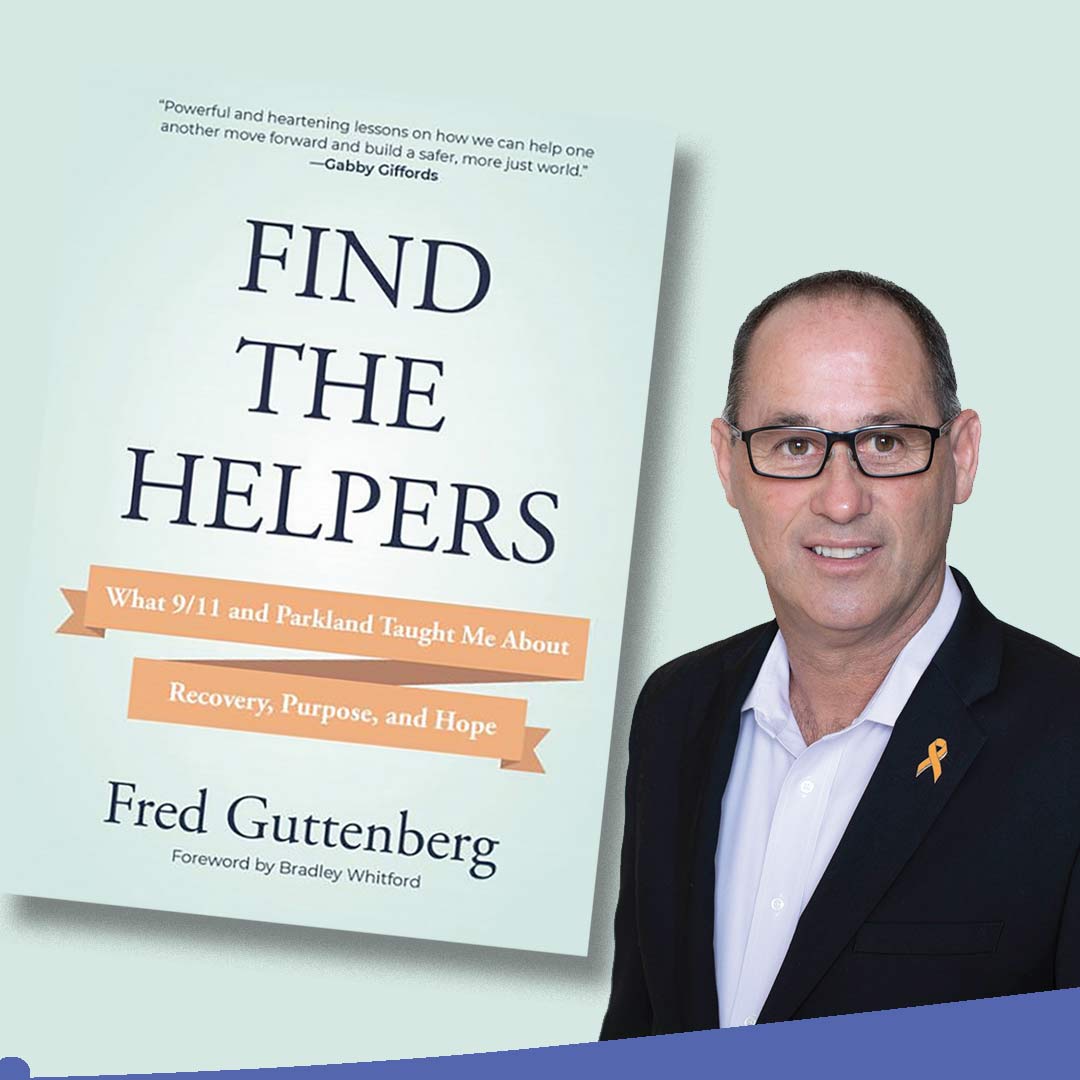
Two dates are at the center of Fred Guttenberg’s recently released Find the Helpers — Sept. 11, 2001 and Feb. 14, 2018.
The small but affecting book recounts the lives and heart-rending deaths of Guttenberg’s brother, Michael, a first-responder at Ground Zero who as a result later died of pancreatic cancer, and his daughter, Jaime, a 14-year-old student at Marjory Stoneman Douglas High School who was among the 17 slain in the mass shooting in Parkland, Fla.
But for Guttenberg, another date promises hope: Jan. 20, 2021 — Inauguration Day, when Joe Biden will be sworn in as the 46th President of the United States.
Biden’s election and the transition away from four years of the presidency of Donald Trump promise more than wishful thinking for Guttenberg. The 54 year-old Broward man has spoken often with Biden, who is notable among the “helpers” at the heart of Guttenberg’s book.
“For me, the Vice President has been a helper,” Guttenberg writes in the book, released in September by Mango Publishing. “He has given me the advice that I needed to go forward from the worst moment in my life, often speaking to me about mission and purpose. That advice has formed my life and my advocacy since.”
In the aftermath of the MSD shooting, Guttenberg and his wife, Jennifer, started the nonprofit Orange Ribbons for Jaime to advocate for gun safety. Guttenberg has been ubiquitous and vocal in his activism.
He has testified in U.S. Senate hearings and been invited to speak at the Democratic National Convention this past summer as well as speaking his piece at nationally televised town halls, marches and vigils, occasionally clashing publicly with Washington political figures, like Florida’s Republican senator Marco Rubio, who back de- regulating gun ownership.
Invited to attend Trump’s last State of the Union address this past February, Guttenberg was escorted out of the House chamber after standing shouting at the president, who had taken time to express his support for continued liberalized Second Amendment rights.
Biden “has an understanding of what Americans go through,” Guttenberg said in a recent interview.
Biden’s plan to address gun violence is detailed and, as Guttenberg notes, backed by a majority of Americans. Among the proposals are repealing a law that protects gun manufacturers from legal liability, banning the sale of assault rifles and high-capacity magazines paired with nationwide buy-backs, closing loopholes in background checks before gun purchases, and allowing states to implement “red flag” laws.
Biden also wants to enact legislation to support survivors of gun violence and their communities.
“He plans to treat gun violence like the public health emergency it is,” Guttenberg said. “His commitment is real.”
Guttenberg says in Find the Helpers that his life’s goal is “to break the gun lobby,” and to help elect lawmakers who support gun safety and defeat those who don’t. How his aims will dovetail with Biden’s plans, Guttenberg doesn’t yet know, but his voice is hopeful and resounding with the inspiration that suffuses his book.
“I can’t say what my role will be, but I intend to have a role,” he said.
Find the Helpers: What 9/11 and Parkland Taught Me About Recovery, Purpose, and Hope
by Fred Guttenberg
Forward by Bradley Whitford
Mango Publishing, Sept. 22, 2020
Hardcover, 198 pages (18,000 copies currently in print)
Available at Amazon (hardcover and Kindle), Target.com, Barnes & Noble
and Indiebound.org.
List price: $19.95
Notable reviews by U.S. Rep. Eric Swalwell, former Congresswoman Gabby Giffords, Alyssa Milano, Debra Messing, former Congressman David Jolly, and Glenn Kirschner, legal analyst and former U.S. Army prosecutor.
Find the Helpers was named among the Best Political Books of 2020 by MarieClaire.com and has been noted in newspapers across the country, including the Virginian-Pilot, Twin Cities Pioneer-Press and Columbus Dispatch, in addition to the South Florida Sun Sentinel and Miami Herald.
‘Jaime’s Law’ to be re-introduced to Florida legislature
Florida Phoenix
Legislation has been filed for next year’s session of the Florida Legislature that would close a loophole that can allow people barred from owning firearms because of criminal histories to nevertheless purchase ammunition without a background check.
The proposal (HB 25) is similar to a bill that failed during last year’s session. It’s called “Jaime’s Law,” after Jaime Guttenberg, aged 14, one of the 17 people killed in the 2018 mass shooting at Marjory Stoneman Douglas High School in Parkland.
“As a graduate of Marjory Stoneman Douglas High, nothing is more important to me than preventing another tragedy like what our community experienced from ever happening again,” bill sponsor Dan Daley, a Democrat from Coral Springs, said in written statement.
“Jaime’s Law is a huge step in the right direction towards ensuring that weapons and ammunition stay out of dangerous hands. It’s also common sense and does not restrict the rights of legal gun owners,” he said.
Bartenders are required to card people who order beers, he noted. “Why isn’t a vendor required by law to ensure that someone seeking to purchase ammunition is legally allowed to do so?”
Daley filed similar legislation last year, as did Sen. Lauren Book, also a Broward Democrat, but it failed.
Existing law requires licensed gun dealers to run background checks on buyers and to refuse purchasers who have felony convictions, histories of domestic violence, or mental illness. But the law doesn’t apply to ammo sales.
Daley’s bill would require that purchase records for law-abiding people remain confidential. It cites an existing ban on any gun registration lists. The Legislature when passing that ban declared such a list “an instrument that can be used as a means to profile innocent citizens and to harass and abuse American citizens based solely on their choice to own firearms and exercise their Second Amendment right to keep and bear arms as guaranteed under the United States Constitution.”
Following the Parkland shootings, the 2018 Legislature voted to let
some school personnel carry guns on campus and the next year to allow teachers to carry under some circumstances.
Gun reform advocate Fred Guttenberg, Jaime’s father, has endorsed the proposal.
“With approximately 400 million weapons already on the streets, we must make it harder for those who intend to kill to do so,” he said.
“Prohibited purchasers of weapons are also prohibited from buying ammunition, but there is no mechanism in place to keep that ammunition out of their hands. We must close this ammunition loophole and this bill is a step in the right direction to do it. Jaime’s Law will help save lives immediately.”
Visit www.floridaphoenix.com for more news on state politics.