
Spring often brings a feeling of renewal, and across South Florida that sense of refreshment is showing up in the growing popularity of wellness and recovery therapies. From Coral Springs to Boca Raton and Fort Lauderdale, studios and wellness centers are introducing new treatments designed to help people relax, recover, and recharge, whether from demanding schedules, workouts, or everyday stress.
One treatment gaining attention locally is intravenous (IV) drip therapy, now offered at several wellness clinics around town. The therapy delivers vitamins and hydration directly through an IV line, and many people turn to it when they feel run down, dehydrated, or simply in need of an energy boost.
Several other therapies focus on deep relaxation and sensory experiences. Float therapy, available at centers in nearby Fort Lauderdale and Delray Beach, allows you to float effortlessly in warm saltwater inside a quiet, low-stimulus environment. Many people describe the experience as calming and restorative.
Salt rooms offer a similar sense of relaxation. Found in wellness studios across Broward and Palm Beach counties, these rooms circulate microscopic salt particles through the air while visitors sit quietly in a peaceful setting designed to promote relaxation.
Technology is also playing a growing role in the wellness space. LED light therapy has become common at local spas and wellness studios, where it’s often used for skin care and recovery. Another option, pulsed electromagnetic field therapy, uses gentle electromagnetic pulses that are believed to support circulation and the body’s natural healing processes.
Many recovery studios are also offering contrast therapy, a treatment that alternates between heat (often in a sauna) and cold plunges. The hot-and-cold cycle has become popular among athletes and fitness enthusiasts, who say it helps with muscle recovery and leaves them feeling refreshed.
Closer to home, Hopson Health Wellness Center in Coral Springs offers a wide range of these therapies in one place, including red light therapy, hyperbaric oxygen chambers, infrared saunas, cryotherapy, salt therapy, and compression therapy—all designed to support recovery and overall well-being.
Even gyms are joining the trend. At Planet Fitness in Coral Springs, the Relax Space Wellness Pod gives members a place to unwind after a workout with guided relaxation, gentle massage, and immersive audio designed to reduce stress.
While some of these treatments may sound high-tech, their appeal is simple. More people are looking for ways to slow down, recover, and feel better. Whether it’s floating in a sensory tank, trying a robotic massage, or sitting quietly in a salt room, South Florida residents are embracing new ways to recharge as part of their wellness routines.
Our local guide to some of the best specialty foods in our area
Brunch spots to brighten up your weekend
When the weekend rolls around and the Florida sun shines, there’s no better excuse to gather your family and friends for brunch. From fluffy pancakes and perfectly poached eggs to bottomless mimosas or a waterfront bite, we have no shortage of standout spots all around town. If you’re looking for ocean views, bold flavors, or a cozy café vibe, there is something close by for every brunch lover. So grab your people, make a reservation, and turn your weekend into a delicious tradition.
Cooper’s Hawk Winery & Restaurant
At Cooper’s Hawk in Coconut Creek, brunch meets sophistication. Known for its award-winning wines, this spot pairs classic brunch favorites with signature wine selections and handcrafted cocktails. Think indulgent entrées, shareable starters, and elegant desserts—all in a polished yet welcoming setting. Whether you’re celebrating something big or just treating yourself to a leisurely Sunday meal, Cooper’s Hawk makes brunch feel like an occasion.
Revelry – Burlesque Brunch
If you’re looking to turn brunch into an experience, Revelry in Pompano Beach delivers something completely unforgettable. Its Burlesque Brunch blends high-energy performances, bold cocktails, and a lively atmosphere that feels more like a show than a simple meal. Expect creative brunch plates, craft drinks, and entertainment that keeps the energy up from the first mimosa to the final curtain call. It’s the perfect spot for birthdays, girls’ brunches, or anyone who believes brunch should come with a little drama and sparkle.
Dear Olivia
If you want to stay close to home, Dear Olivia in Parkland offers a cozy yet elevated brunch experience. With its bright, welcoming interior and beautifully plated dishes, it’s ideal for a relaxed catch-up with friends or a family weekend outing. From fresh pastries and specialty coffees to thoughtfully crafted brunch classics, every dish feels both comforting and refined. It’s proof that you don’t have to leave Parkland to enjoy a brunch that feels special.
Sixty Vines
For a bright and airy brunch vibe, Sixty Vines in Boca Raton offers a fresh take on weekend dining. With a menu focused on seasonal ingredients and shareable plates, it’s ideal for groups who love sampling a little bit of everything. Its wine-on-tap concept adds a fun and modern twist, while dishes balance indulgence and freshness beautifully. It’s the kind of place where you can linger a little longer, sip slowly, and soak up the weekend atmosphere.
Sea Watch on the Ocean
Perched directly on the sand in Fort Lauderdale, Sea Watch on the Ocean offers one of the most scenic brunch settings in South Florida. Known for its panoramic ocean views and relaxed coastal atmosphere, it’s the perfect place to enjoy brunch with the sound of waves in the background. The menu highlights fresh seafood alongside brunch favorites, from lobster benedict and fresh-caught fish to classic eggs and mimosas. Whether you’re celebrating a special occasion or simply enjoying a sunny weekend morning, Sea Watch delivers a brunch experience that feels both elegant and effortlessly coastal.
It was pouring rain upon arriving at History Fort Lauderdale that Sunday. Luckily, each artist had their workspace covered under their tarped tent. “I’m used to working with the elements,” said Sergio “Surge” Quiñonez, a South Florida artist, who pointed out the “teal wash”among his media.
Surge is just one of 12 local artists matched with 12 nonprofits for this year’s Mural Fest. In his recent collaboration with the Hollywood Art & Culture Center, the wash gave an extra layer of authenticity apart from the exterior and spray paints commonly used for creating mural works. While Dali had not yet been given his mustache, Surge’s illustrative hand shows a level of talent that blends symbolic portraiture and surrealist exaggeration. Upon completion, the work will be found at the Center.
Stephanie “Steph” McMillan is another artist painting permanence at the Mural Fest. Her work is for Fort Lauderdale’s Museum of Discovery and Science. The mural will be found in the permanent collection of the new nature exhibition, “Nature Explore,” which showcases Broward County’s wildlife and ecosystems while promoting conservation and biodiversity.
PriVer & Murals is a collaborative duo, painting an artwork for the nonprofit New City Players. The theater is dedicated to fostering human connection through productions that bring people together in a shared space. The mural reflects this mission through a visual language of psychological duality and emotional simultaneity, while capturing the infinite spectrum of energies that coexist within one shared world.
Nate Dee, a Miami artist, is painting for the Stonewall National Museum and Archives. His work delivers cultural “awesomeness” as he blends portraiture, social narrative, and street‑art chromatics into a single, declarative visual language. Dee bridges contemporary muralism and the museum’s mission: “art as testimony, art as presence, art as a public record of lived experience.”
Ivan Roque paints the pompano fish in smooth, densified color for the Pompano Beach Arts Foundation. The mural reads as a vibrant, site‑specific celebration of Pompano Beach’s coastal identity, sharing the energy of the city’s waters and the creativity of its arts community.
Luis Valle, also known as El Chan Guri, paints for the Inside Out Theater Company. He takes almost an Aborigine approach, surrounding the focal point in infrared-choice combinations. His composition radiates outward in concentric pulses of color, as though the figure is generating her own field of emotional frequency. The mask is like an ornate interface between inner life and public performance, while the dotted halos echo communal ritual, ceremony, and the shared rhythms of spectatorship.
Gabby Shepherd, painting for the Old Davie School Museum, shifts the focus beyond the Everglades to the wider story of Davie’s heritage. The warm side of the panel highlights native plants and citrus while the cool, watery side nods to the surrounding wetlands. By letting the local heron transform between these environments, Shepherd shows how the museum preserves a fuller history.
BK Foxx’s work is grounded in portrait realism, but it’s pushed into a cinematic register specific to the Florida Children’s Theater. The mural’s monochromatic purple palette mirrors the theater’s role as a space where imagination is distilled. Foxx echoes how theater uses lighting and mood to guide an audience’s attention toward the inner transformation of a character rather than the literal world around them.
Michael Andress, aka Mongo, also uses monochromatic themes to deliver his message. Painting for the South Florida Pride Band, Andress takes his “psychedelic-abstract” style to bring fun to the surface. By limiting the palette, he amplifies rhythm and movement, allowing the character’s energy and musicality to take focus.
Samara, creating for the South Florida Chamber Ensemble, folds its mission directly into her portrait, turning listening itself into an act of natural transformation. A blue jay anchors the piece as a symbol of generational growth, while the subtle textures of layered trash bags add a quiet reminder of resilience, voice, and the courage to evolve.
Stefan Smith, a South Florida muralist whose work channels vibrant, uplifting energy into an exploration of nature and culture, shares his vision for the Developing Dreams Foundation. The mural binds crisp energetic detail that reflects Smith’s direct, high‑impact approach. It is a sharp, stylized portrait built from bold complementary colors that captures the figure in motion.
Ashlee Sanford paints a symbolic timeline of movement for the Art Prevails Project, syncing colors with the flow of creative growth. Her palette of purples, golds, and deep blacks becomes a current that carries the viewer from academic achievement to dance, theater, music, and community arts.
“Mural” of the story, it turned out to be a bright and sunny day at the fest. Finally, artist Orla Ananda, of Miami, painted a permanent mural behind Howl at the Moon, Fort Lauderdale, specifically for the Business of the Arts of Broward at History Fort Lauderdale.
Artificial intelligence (AI) is the hot phrase this year. Everything AI is being discussed, from saving humanity to being demonized as taking all the jobs. There is one job that AI may be taking over sooner rather than later—that of the family pet.
It is not the first time a robot has been introduced as a replacement for Fido, but the economics of a robot pet are more compelling than ever. The modern AI is a lot more sophisticated than the ones powering Teddy Ruxpin of the 1980s, or the virtual pet phase that was kicked off with Neopets in 1999. Let’s call our new super-electronic pet “Gadget,” and see what he can do.
Potentially powered by an advanced Nvidia with its Blackwell architecture, your new Gadgetwill come pretrained to be your loyal companion. It will be powered by a rechargeable lithium battery pack, and it will have its own kennel that will charge it when entering.
Forget about vet bills—your new Gadget would come with a warranty, hermetically sealed and waterproof. So no more need to pick up your pet’s poop when you take it on a walk. Of course, Gadget can walk, run, and sit, just like a puppy. All this is completely flexible—Gadget will adjust its speed to match yours and will be as active, or a couch potato, as you wish.
The built-in AI processor will learn from your engagement with Gadget, so it will continue to learn and customize its programming to match your needs. “Fetch your drink” mode comes standard.
All this technology is contained in a soft, nonallergenic faux fur, custom designed to your specifications. It is machine washable for easy cleaning, and stain resistant, so it can go anywhere you want. It also has an electric heater, so on those cooler nights, it can keep you warm.
Just imagine, when the weather is great, your Gadget will come to remind you to go on a walk. When the weather is poor, it will snuggle with you and provide you with a warm companion. All this, and with the ability to adjust its personality as you desire! No more feeling guilty that you didn’t walk your dog enough, or that you left your pet for the day when you were busy.
The future is ready to come to you. With Gadget,you will get calibrated and consistent affection, with low maintenance needs—no special dietary requirements, no escalating vet bills. With proper care, your Gadget will have a longer lifespan than you, so you don’t have to worry about saying goodbye to your beloved pet.
So if your family is not yet ready for the full responsibility of a biological pet, or you don’t trust your kids to be able to take care of a dog that they’re demanding, consider Gadget. Coming soon, the “AttackMode” software upgrade, where it will become an automated guard dog on demand. Available with a subscription pack, your friendly Gadget can be trained to become a security asset for your home.
If this vision of the future sounds great, or dystopian, feel free to send us a message at editor@theparklander.com. We would love to hear from you, and to publish your responses.
Intellectual and developmental disabilities, or IDDs, are lifelong disabilities that begin during childhood. These conditions include mental and/or physical impairments that may impact a person’s mobility and the ability to perform certain basic activities of daily living without assistance. IDDs may affect learning, comprehension, and language skills.
Maintaining good nutritional health can be challenging for individuals with IDDs. For instance, genetic disorders, such as Prader-Willi Syndrome, may lead to weight gain and obesity. In contrast, individuals with cystic fibrosis may struggle to maintain a normal body weight.
There also may be limitations during mealtime for both children and adults. Vision problems and difficulty holding utensils can affect the ability of individuals with IDDs to feed themselves. Swallowing problems, digestion problems, food allergies, and medications also can impair nutritional status. Oral health problems—such as dry mouth, cavities, gum infections, and oral hygiene—can contribute to feeding difficulties.
Some people with IDDs may have a partial or total need for nutrition support. These individuals may receive nutrition through a tube inserted into their stomach or abdomen, or a vein in an arm.
How a Registered Dietitian Nutritionist Can Help
As part of the health-care team, registered dietitian nutritionists (RDNs) with special training provide patient-centered, culturally competent nutrition counseling in a range of settings. RDNs identify strategies for mealtime support and create menus of acceptable food options to meet special nutritional needs.
Individuals with IDDs may struggle with other health conditions such as diabetes and obesity. RDNs are skilled in educating patients, family members, and caregivers on nutrition needs for these conditions too.
As RDNs work closely with other members of the medical team, they can be tremendous patient advocates. RDNs can connect patients or their family members and caregivers with community resources to help meet food and nutrition needs.
What to Expect When You Meet with an RDN
The RDN may start by assessing the individual’s overall health status. During this appointment, the RDN reviews the patient’s medical history, including the following:
Diagnoses
Lab test results
Medicines and supplements
Height and weight
The RDN may ask about other things:
Eating patterns
Food preferences
Feeding skills
Functional abilities
Social factors
Cultural and religious customs
Barriers to buying food
Activity level
Many RDNs perform a nutrition-focused physical exam, which helps them assess the person’s nutritional status and risk for malnutrition. During this exam, the RDN looks for physical signs of nutrient deficiencies.
RDNs may consult other members of the health-care team too. For example, speech-language pathologists and occupational therapists can help determine the need for modifying the texture of foods, special feeding positions, and the pace of feeding and will discuss ways a caregiver can provide encouragement.
Based on the findings of the assessment, the RDN will work closely with patients and their caregivers to create a nutrition care plan. The plan may provide recommendations on what, when, and how to eat to meet individual nutrition needs. Vitamin and mineral supplements may be recommended to help correct nutrient deficiencies, and tips for meeting weekly activity goals may be discussed.
RDNs also can provide training on food selection and meal prep for people with IDDs and their caregivers.
Find an RDN
The Academy of Nutrition and Dietetics’ Find a Nutrition Expert online directory lets you search for a registered dietitian nutritionist in your community or one who offers services via telehealth.
It all started with a family in Boynton Beach rescuing a horse who had been abused and neglected and needed a home. That horse, Kona, came to live with the family on their large, rural property off US-441, and she changed their lives. A few months later, they rescued four more horses, a donkey, some sheep, and a cow. They started a business called Pet-N-Parties. Then they decided to open a petting zoo where people could come see the animals. And Animal EDventure Park & Safari was born.
They now have two locations in western Boynton Beach, both open to the public, but each one different. The Walkthrough Safari is located at their private property on 441. It is reservation only (you can’t just show up), costing $25 for a guided safari tour of their 8.5-acre property. This 1.5-hour tour includes kangaroo encounters, sloth encounters, and all feed for the farm animals, camels, and more. All encounters include animal petting, pictures, and learning about the animals. Visitors can also get up close with zebras, porcupines, lemurs, otters, horses, deer, and more. If you want to play with otters, hold sloths, interact with monkeys, meet Kona the horse, and see where the animals live, this is the place.
Their second location is the Animal Park at Bedner’s Farm, at 10066 Lee Road. It is open to the public every Saturday and Sunday from 10 a.m. to 4 p.m., with no reservations needed. Visitors can enjoy all-day access to the park, with its petting area, animal feeding area, and exotic animal encounters. Admission is $15 per person, which includes one exotic animal encounter (or sign up for more for an extra fee). This animal park is not structured or guided like the safari location—roam around as you see fit. There is the opportunity to meet kangaroos, sheep, goats, camels, donkeys, cows, lemurs, porcupines, llamas, macaws, parakeets, and spider monkeys. These animals don’t live at the park, they get brought over to Bedner’s on the weekends from the property just up the road. Bedner’s Farm also offers food trucks, “U-Pick” opportunities, tractor rides, and more.
My son Jacob and I opted to do the walkthrough safari recently, and we’re so glad we did. The tour guides (we had JJ and Rick) and staff were wonderful—very informative and entertaining, giving background and interesting details on each type of animal as we walked through the property and took in all they have there. We could tell the guides really care about their animal residents, as they told us their rescue stories.
Some people in our tour group had signed up in advance for extra add-ons as part of the safari—Otter Encounter, Sloth Holding, Monkey EDventure, and Otter Swim—all of which are popular activities at this venue. We hadn’t bought tickets for those, but we still enjoyed and got a lot out of our tour.
The first stop we were taken to that morning was their large kangaroo yard, where we got to meet, pet, and photograph all the mama kangaroos with their babies in their pouches. The male kangaroos were kept in a separate enclosure on the other side of a fence. On our side, I’d never seen so many kangaroos in one place, and we learned that a group of kangaroos is called a “mob.” We were quite amazed both by the kangaroos’ method of running/hopping around their habitat as well as by the cute youngsters peering out of the pouches, some dangling their long legs out on a different side from their head. We learned from the guide that they stay in their mothers’ pouches for 6 to 8 months—so these were not newborns!
After the kangaroos, we continued our tour of the property, meeting Franklin, an adorable 3½-year-old spider monkey; donkeys and zebras and a rare hybrid offspring called a “zonkey”; and a collection of camels, lemurs, and caracals. We learned from our guide that four caraculs and four other cats came from a Florida man who had ordered them online and kept them as pets until he had to surrender them to the farm.
And finally, we met “Slow Mo,” an adorable two-toed sloth who was brought around on a special pillow to meet everybody in our group as we stood in a large circle with him and his handler in the center. Slow Mo, along with all the animals we met at Animal EDventure, seemed happy and well cared for.
Most of the wildlife you’ll see at either location have been rescued, adopted, or surrendered there. It’s great to see the animals have a nice place to call home.
When spring break rolls around, it’s easy to assume that you need a plane ticket, a packed suitcase, and a full itinerary to feel like you’ve “went away.” But for locals, adventure is closer than you think. Some of South Florida’s best hidden gems, beach towns, and nature escapes are just a short drive away—perfect for a spontaneous day trip that feels more like a vacation without the stress of travel.
Whether you’re looking for beaches, boutiques, wildlife, or simply a change of scenery, here are a few easy spring break escapes within two hours.
Port St. Lucie: Laid-Back Beaches and Nature
Just over an hour north, Port St. Lucie offers a slower, quieter vibe than Broward’s busy shoreline. Locals love Walton Rocks Beach, where wide stretches of sand make it easy to spread out, walk along the water, or collect shells.
For something more adventurous, head to Savannas Preserve State Park, where winding boardwalks take you through wetlands flanked with birds, turtles, and occasionally alligators. It’s a great option for families, nature lovers, or anyone who wants a peaceful reset from daily life.
Finish the day with a waterfront dinner along the St. Lucie River, a simple, scenic, and perfectly relaxed way to complete the getaway.
Stuart: A Charming Small-Town Escape
If you’re craving a coastal town with personality, Stuart is hard to beat. Known as the “Sailfish Capital of the World,” this historic downtown is filled with colorful murals, boutique shops, and local cafés.
Spend your morning strolling along the riverwalk, browsing vintage stores, or grabbing a coffee at a local bakery. Then drive over to Stuart Beach for soft sand, calm water, and beautiful views of the Atlantic.
For a unique experience, hop on a sunset boat tour or kayak through nearby mangroves … an unforgettable way to see Florida from a different perspective.
Naples: Upscale, But Still Relaxed
A bit farther west and just under two hours, Naples feels like a mini luxury getaway without leaving Florida. The downtown area is polished and picturesque, with palm-lined streets, art galleries, and high-end dining.
Naples Pier is a must-see, especially at sunset, when the sky turns shades of pink and orange over the Gulf. If you prefer nature, Delnor-Wiggins Pass State Park offers pristine beaches and clear water perfect for swimming, snorkeling, or simply lounging.
While Naples has a more sophisticated feel, it’s still welcoming and easy to explore in just one day.
So grab your essentials, hit the road, and see what’s just beyond our city. You may find that adventure is closer than you think!
Élisabeth Louise Vigée Le Brun, “Self-Portrait with Her Daughter, Julie,” 1787, oil on wood (105 × 84 cm), Musée du Louvre, Paris.
I remember studying Élisabeth Louise Vigée Le Brun’s “Self-Portrait with Her Daughter, Julie” back in my university days. She was a single mother like myself at the time, and an influential figure to my career.
During my first visit to Austria, I had a long layover in Vienna, so I hopped on the train and took it over to the Kunsthistorisches Museum. Not knowing which works, specifically, to expect to see, I eventually found myself standing directly in front of a Vigée Le Brun (room VII).
The good news is that there is no need to go all the way to Austria to see Vigée Le Brun’s work. Her portrait “Julie Le Brun as Flora”(1799) can be viewed at the Museum of Fine Arts in St. Petersburg right here in Florida. It is a beautiful portrait that muses her daughter as the Roman goddess of flowers during Vigée Le Brun’s period of exile from France. It was painted in St. Petersburg, Russia, enveloping the Neoclassical exquisition mirrored in many of her works done for her elite clientele. For South Floridians, St. Pete’s may be a bit of a drive, but for art lovers, Vigée Le Brun’s masterpieces are definitely worth checking out.
Élisabeth Louise Vigée Le Brun. Vigée Le Brun emerged in late‑18th‑century France as one of the most gifted portraitists of her generation. She rose to prominence at a time when women artists faced steep institutional barriers. Born in Paris in 1755 to a modest, artistic family, she absorbed the fundamentals of painting early. She quickly surpassed the expectations set for her.
By her early 20s, Vigée Le Brun had become a sought‑after portrait painter among the aristocracy. She was admired for her ability to capture warmth, elegance, and psychological presence. Her refined style was identified in luminous skin tones, expressive eyes, and a gentle naturalism that distinguished her forms separately from the more rigid academic conventions of the era. Vigée Le Brun’s talent and reputation eventually brought her into the inner circle of Queen Marie Antoinette, and she ended up painting for the queen more than two dozen portraits. This ultimately solidified her status as one of the most influential artists at court.
Élisabeth Louise Vigée Le Brun, “MarieAntoinette, Archduchess of Austria, Queen of France,” ca. 1792–1795, oil on canvas, Kunsthistorisches Museum, Vienna.
However, the French Revolution dramatically altered the course of Vigée Le Brun’s life. Branded as too closely tied to the monarchy, she fled France in 1789 with her young daughter and spent more than a decade in exile. Still, she continued working across Italy, Austria, Russia, and Germany. This was far from a diminishing career, because this period expanded her international acclaim. Vigée Le Brun became a celebrated portraitist in nearly every European capital she visited.
When she finally returned to France in 1801, she resumed painting and later published her memoirs, which offered vivid insight into the cultural and political upheavals that she had witnessed. Vigée Le Brun’s long, prolific life ended in 1842, leaving behind an extraordinary body of work that continues to shape our understanding of portraiture, femininity, and artistic agency in the tumultuous age that bridged the Enlightenment and the modern world.
Julie Le Brun as Flora, Roman goddess of flowers. Vigée Le Brun’s “Julie Le Brun as Flora” carries within it the quiet architecture of its “living geometry” that creates a portrait. In this painting, her daughter Julie becomes a sort of moving axis. The soft oval of her face acts as the focal chamber, while the drapery and floral garland spiral outward like a gentle vortex. Vigée Le Brun always painted emotion as if it were a natural law. For example, the use of light behaves like breath, her color use behaves like memory, and the rosy warmth across Julie’s cheeks in this painting shares with the viewer that it is not merely pigment used, but the maternal gaze translated by form. The work reflects a kind of visual heartbeat.
Élisabeth Louise Vigée Le Brun, “Julie Le Brun as Flora” (1799), painting, oil on canvas (129.5 x 97.8 cm), Museum of Fine Arts, St. Petersburg, Florida.
The composition adheres to Vigée Le Brun’s signature principle—to which the subject is not placed in the world but emerges from it, as if the figure is the vanishing point of the portraitist’s own atmosphere.
The significance that this portrait was painted in St. Petersburg, Russia, adds a historical resonance. While Vigée Le Brun created it during her exile, it was subsequently when she was embraced by the Russian imperial court. Here, she found a second artistic home far from the turbulence of revolutionary France. It was in St. Petersburg, which for her became the stage where she rebuilt her identity. Also, painting Julie there meant capturing her daughter not only as Flora, the goddess of spring, but as a fragile anchor in a life uprooted. Clearly, the Russian light, colder and more crystalline than Vigée Le Brun’s Parisian glow of origin, subtly influenced the integrity on the palette. The whites are indeed sharper, the shadows are more silvery, and the flowers are almost trembling with northern clarity (e.g., a Dutch vanitas or early German/Flemish naturalism).
The fact that this Russian-born painting, “Julie Le Brun as Flora,” now resides in St. Petersburg, Florida, inflects a kind of accidental transcontinental echo within the chambers of its subject matter. The artwork’s journey mirrors Vigée Le Brun’s own across borders, climates, and political eras. Its presence in St. Petersburg, FL, is as if that duality itself, of exile and arrival, old world and new, deepens the portrait’s aura, making its current location feel almost fated. Coincidence?
Our local guide to some of the best specialty foods in our area
Dining al fresco in the spring
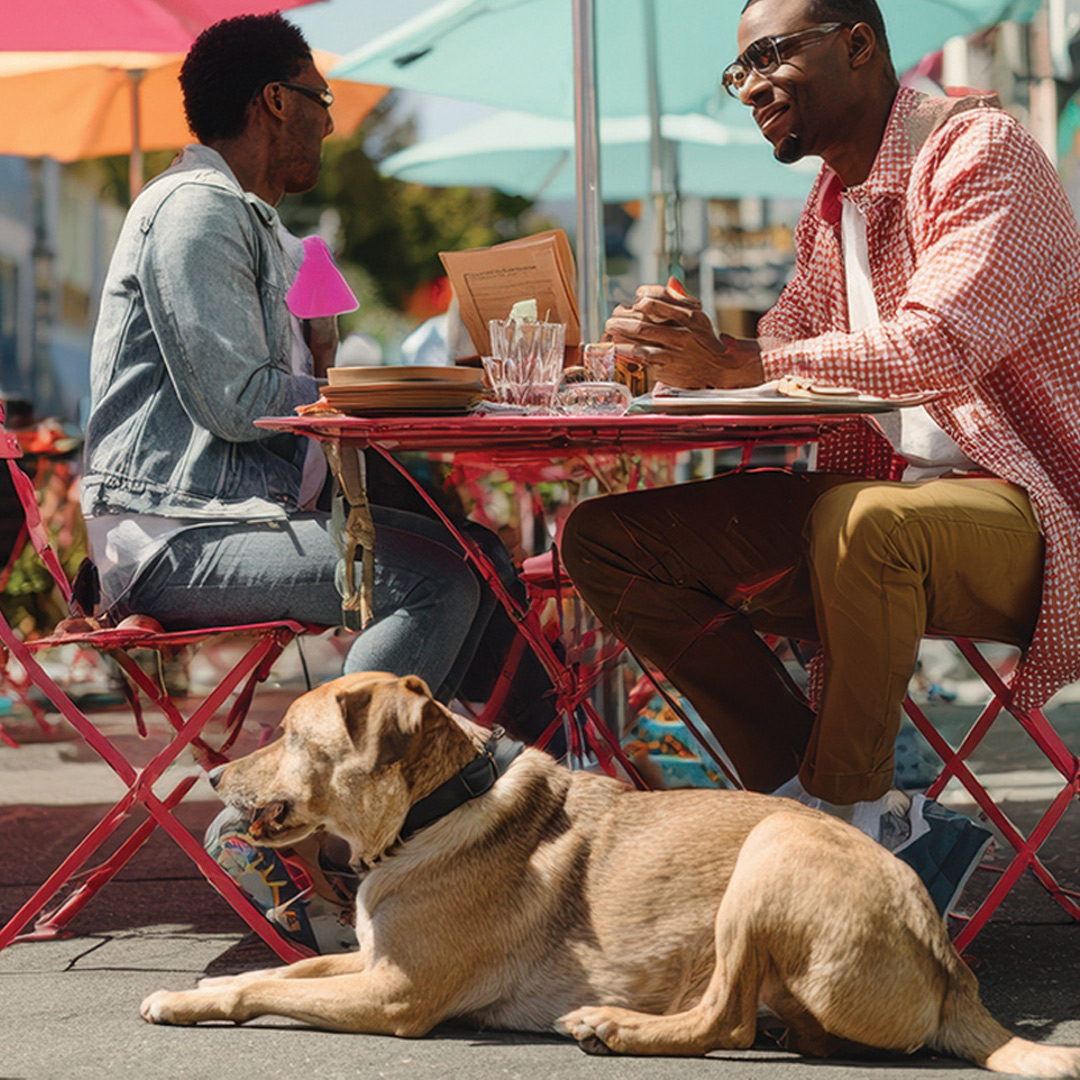
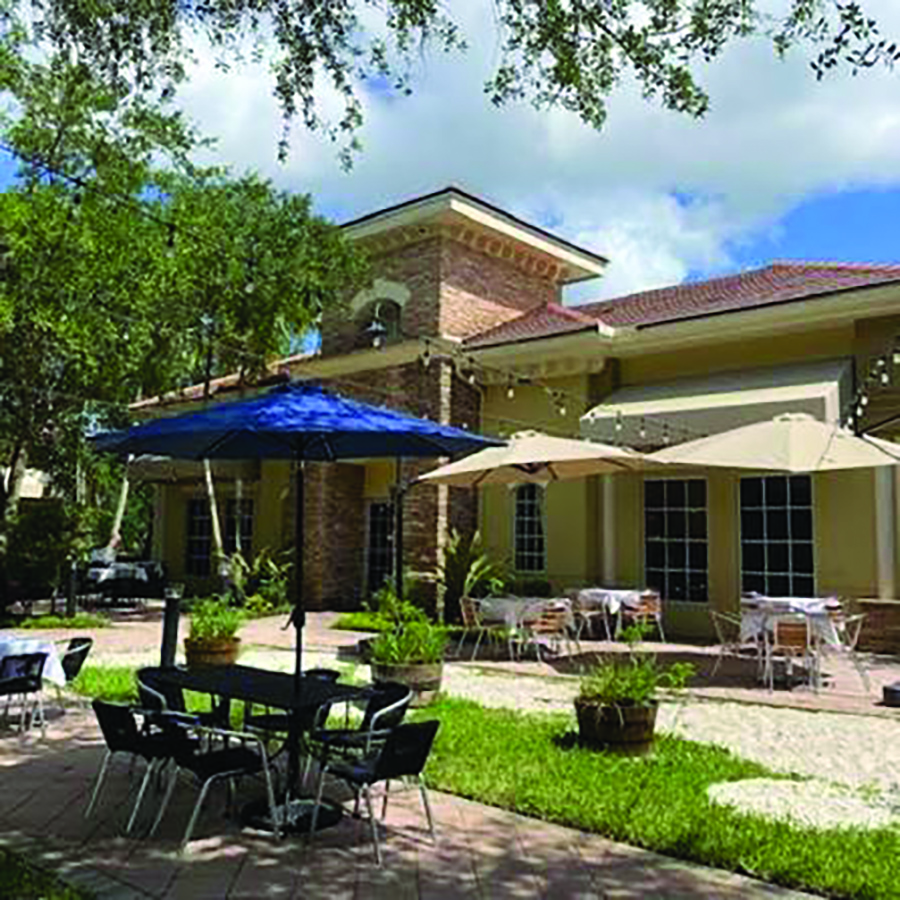
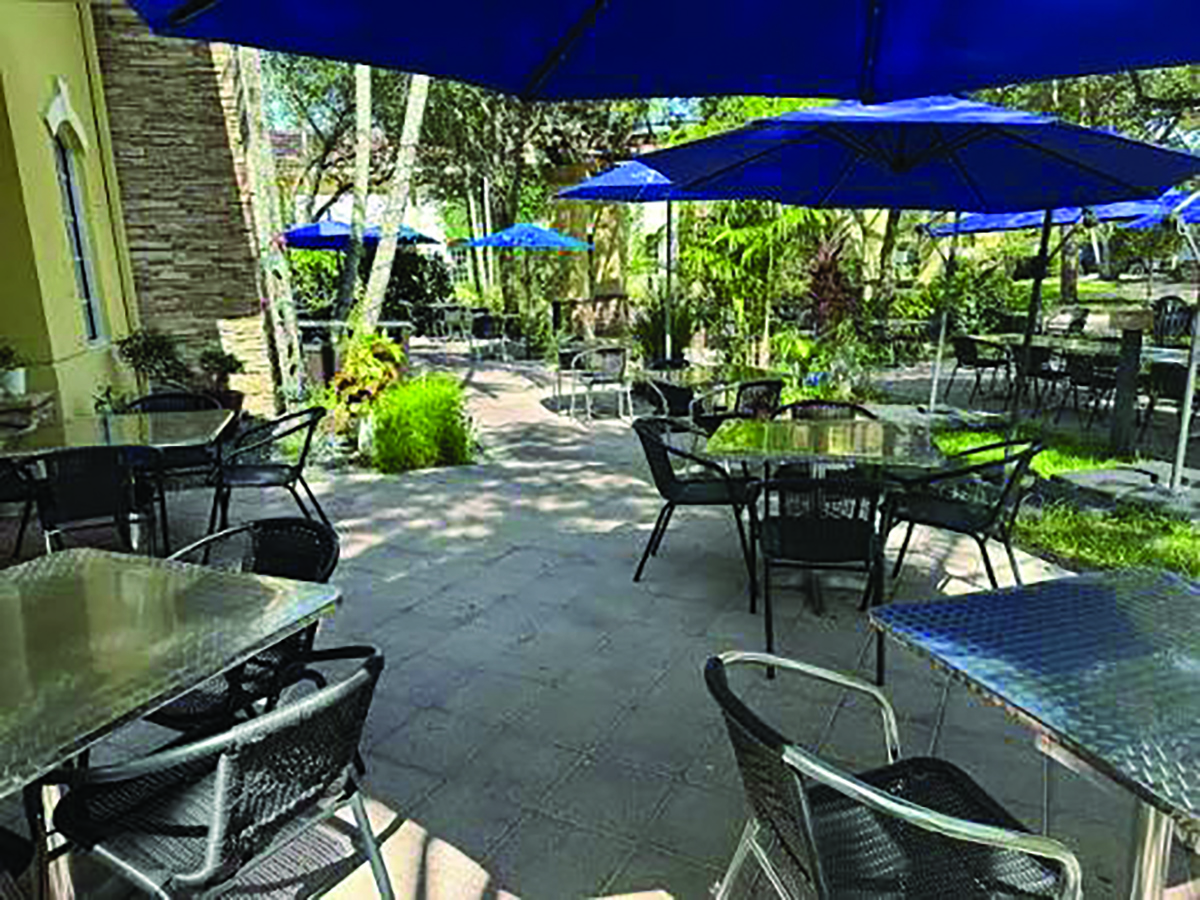
This season naturally invites a slower rhythm. Longer dinners, quieter conversations, and evenings that linger under the open sky. With cooler spring breezes in the air, many locals are choosing outdoor dining, seeking settings that feel relaxed and connected to their surroundings. From cozy patios to lively outdoor spaces, these local restaurants offer the perfect backdrop for a memorable night out (and outside).
Tap 42 – Coral Springs A favorite for its energetic yet comfortable atmosphere, Tap 42 offers one of the best outdoor setups in Coral Springs. The spacious patio, string lights, and open-air feel make it ideal for everything from casual date nights to celebratory dinners. With craft cocktails, elevated comfort food, and a lively crowd, it’s a great place to linger and enjoy the evening.
Sicilian Oven – Coral Springs Sicilian Oven’s outdoor seating brings a warm, neighborhood feel to its classic Italian menu. With wood-fired pizzas, homemade pastas, and fresh salads, it’s a comfortable spot for those who want great food in a relaxed patio setting. The open-air tables make it easy to enjoy a slow meal while soaking in the evening.
The Cheesecake Factory – Coconut Creek The Cheesecake Factory’s outdoor seating provides scenic views of the Promenade and a pleasant atmosphere. Whether you’re enjoying a full dinner or sharing one of their famous cheesecakes, the patio setting adds a special touch to any evening out.
Ethos Greek Bistro – Coconut Creek Ethos brings Mediterranean charm to outdoor dining with its inviting patio and vibrant energy. The fresh Greek dishes, lively ambiance, and warm lighting make it a great pick for those who want something flavorful and slightly different while still feeling romantic and relaxed.
Big Bear Brewing Co. – Coral Springs For a more casual but still scenic outdoor experience, Big Bear’s patio is a go-to. With craft beers and a laid-back atmosphere, it’s perfect for couples who want to enjoy good food and drinks in a fun, social environment.
No matter the occasion, these outdoor dining spots remind us that some of the best meals are better under the sky, with good company, and great food. Whether you’re celebrating love, enjoying quality family time, or simply savoring the moment, these patios offer a beautiful place to dine beneath the open sky.
Ice speed: fueling strategies for high school hockey
March is National Nutrition Month, which is a nutrition education and information campaign sponsored annually by the Academy of Nutrition and Dietetics. National Nutrition Month focuses attention on the importance of making informed food choices and developing sound eating and physical activity habits. The academy’s National Nutrition Month press releases feature information for the media on activities and messages that the academy highlights every March.
National Nutrition Month started in 1973 as National Nutrition Week, and it became a monthlong observance in 1980 in response to growing interest in nutrition.
When it comes to fueling the body, the demands of high school ice hockey players are high. Speeding explosively across the ice requires muscle strength, endurance, and superior skating skills. Consuming optimal foods and fluids, both on and off the ice, is essential to sustain energy levels throughout the school day, during practice, and in preparation for competition.
Hockey training, muscle building, and growth require plenty of calories—most of which come from carbohydrates. That’s because both on-ice and weight-room workouts are predominantly fueled by muscle carbohydrate, or glycogen, which needs to be replenished between daily training sessions. For optimal recovery, include healthful sources of carbohydrates such as whole grains, low-fat or fat-free milk and yogurt, fruits, and vegetables. Try adding whole-grain cereals, breads and pasta, potatoes, and winter squash to meals. Low-fat yogurt cups and fruit are quick and easy snack choices.
Daily protein requirements can easily be met from a well-balanced eating plan that includes adequate amounts of poultry, fish, lean red meat, low-fat cheese, milk and yogurt, and plant-based protein such as beans. But to maximize muscle building and recovery, consider the specific nutrient-timed choices outlined below:
Aim for a snack that provides 15 to 20 grams of high-quality protein plus 25 grams of carbohydrate one hour before resistance training. For example, this could come from 2 cups of low-fat milk. Add another 25 grams of carbohydrate, such as a large banana, if the weight training session is followed by ice-time practice. Prehydrate with 16 to 24 ounces of fluid, which may include the milk.
After weight training, rehydrate with 20 ounces of fluid for every pound of weight lost during practice. Replenish after your workout with a snack that provides 20 grams of high-quality protein and at least 50 grams of carbohydrate, such as a high-protein smoothie or a sports bar.
Follow practice or a game with a meal about two hours later. Aim for a meal with about a quarter of your plate coming from protein foods and half your plate made up of whole-grain carbohydrates such as whole-grain pasta or brown rice. The remaining quarter of your plate should be filled with vegetables or fruit.
Protein foods to choose before and after weight training may include low-fat or fat-free yogurt, cottage cheese, plain milk or fortified soy milk, cooked chicken, eggs, lean red meat, peanut butter, tuna, tofu, and tempeh. High-protein energy bars are easy to pack and convenient when other foods aren’t available. Read labels—look for products that provide 10 grams of protein, and avoid those containing high amounts of saturated fat or added sugars.
Hydration on the ice also is essential to minimize the performance-draining effects of dehydration. For workouts lasting more than 75 minutes, consume a sports drink at the rate of 5 to 10 fluid ounces every 15 to 20 minutes.
For individualized nutrition guidance, consult a registered dietitian nutritionist who specializes in sports nutrition.
If you would like to experience a beautifully shaded property that looks like a botanic garden with waterfalls but also is a zoo and a conservation center, then the Palm Beach Zoo & Conservation Society is for you. This is a place where they rescue, rehabilitate, and care for injured and endangered animals, and visitors have a chance to interact with some of the zoo’s residents.
Among the many animals at this zoo are bears, tigers, cougars, alligators (including a rare white one), otters, flamingos, a pair of capybaras, a bald eagle, a barred owl, lorikeets, scarlet macas, a Southern ground hornbill, a Baird’s tapir, koalas, sloths, lemurs, tortoises, servals, and a variety of monkeys. I went to visit with my friend Susan recently, and we saw lots of these animals.
We had heard that the Palm Beach Zoo & Conservation Society does a lot of good in helping endangered wildlife. The organization sponsors conservation projects in many parts of the world; much of it deals with species that are represented in the zoo’s collection. Admission to the park is relatively expensive, but we understood that it is to help the conservation society do all its great work for the animals.
Two zoo residents here are a little famous! A female (Iyari) and a male (Zeus) Capybara in the Tropics of the Americas section have been featured on episodes of the TV show “Finding Florida” because zookeepers have been closely observing them as they realized the two had formed a bond. The Capybaras spend a lot of time together and share their food. Zoo workers are hoping that this new couple will breed. Susan and I got to see them from a distance while we were there. Another highlight for us at this venue were the many colorful flamingos in a gorgeous water setting, with some of them “mirroring” each other, a fascinating process we learned they do.
Some nice features at the zoo are its “Animal Experiences,” which cost extra, and its zookeeper chats, which are free. There is a daily schedule board near the entrance that indicates the sessions that visitors can attend for that day. Registration in advance is required for the animal experiences. The animals that participants can sign up to enjoy close encounters with include otters, giant aldabra tortoises, sloths, koalas, panthers, and bears.
Susan and I opted to attend two of the zookeeper chats—the howler monkeys and the Malayan tigers. What we came away with was how dedicated and passionate these staff members are about the animals in their care. The zookeeper for the monkeys stood in front of their outdoor habitats and told us all about these energetic animals, pointed out many of their habits and activities as the monkeys moved around, and answered any questions we had. He had a large group of people gathered around and kept us all entertained and informed.
Afterward, we walked over to the tiger section and listened in as we heard about Kadar, an older tiger who needs regular cold laser therapy to manage age-related stiffness, reduce inflammation, and increase his mobility. The zookeeper there told us we’d get to watch Kadar have this non-invasive treatment during his feeding time. It helps to treat chronic pain and arthritis while allowing the veterinarians to reduce reliance on medications. Observers got a unique experience as another zoo staffer proceeded to feed and apply the laser device to Kadar, who we were told would feel no discomfort from the treatment. We all were thrilled to watch this process so close up. And Kadar is a beautiful animal.
I learned that the Malayan tigers who live at the zoo play a crucial role in maintaining the balance of their native habitats. And by visiting these tigers, you are saving tigers in the wild, according to conservationists. Once widespread, Malayan tigers are now only in isolated pockets, and zoo visitors are supporting initiatives to protect their dwindling homes.
In addition to helping with animal conservation, the Palm Beach Zoo is assisting with conserving tropical forests, which it says provide homes to over 63% of all land mammals, including tamarins and sloths, and is essential for human survival. The zoo is restoring its own forest by planting native trees, shrubs, and grasses that support native species.
While there, Susan and I encountered a very striking-looking tree that resembled peacock feathers flaring out. It is called a traveler’s palm, a member of the “bird of paradise” family. Known for its massive, fan-shaped leaves structured in a single plane, its thick trunk can reach up to 30–50 feet in height and the dramatic tree provides great impact in its environment. We had never seen anything like it before. The lushly landscaped Palm Beach Zoo is definitely a recommended outing.
As Valentine’s Day approaches, chocolates are always a go-to treat or gift. For those who want to try something different from the classic chocolates, Dubai chocolate is a a newcomer to the scene.
Dubai chocolate is a chocolate bar filled with filo pastry and a pistachio-tahini cream. For those not familiar, tahini is a ground sesame seed cream popular in the Middle Eastern region. The cream provides Dubai chocolate filling with yellow and green coloring.
This creation was a recent invention, credited to Sara Hamouda, who was a British-Egyptian engineer living in Dubai in 2021. While pregnant, she had cravings for chocolate, pistachio, tahini, and knafeh (a Middle Eastern pastry dessert). Thus, the idea of Dubai chocolate was created.
Dubai, a trade-hub, was already a hub for gourmet chocolate, as part of its luxury branding efforts. Hamouda was able to find and collaborate with a Filipino pastry chef, Nouel Catis Omamalin, who helped to perfect the new style of chocolate bar. Omamalin felt that knafeh would provide the chocolate bar with a satisfying crunch, like many successful chocolate bars that came before it, and he was right.
Initially made by hand, producing 25 bars a day, Dubai chocolate sold for $19.72 in 2023. With viral marketing online, it quickly gained popularity by 2024. In 2025, a U.K. supermarket chain had to impose a limit of two per customer for its Dubai chocolate bar. Recently, a Dubai chocolate cookie has gained popularity in South Korea. Made viral by a K-pop band, the new cookie started to take off last fall, and it saw supply falling short to demand.
The popularity of this new style of chocolate bar quickly drew the attention of major manufacturers. Lindt, the Swiss chocolate maker, created its own version. This caused legal controversy, as it was not produced in Dubai. Since then, Dubai-style chocolate creations have become more common than the original ones made by Hamouda and Omamalin’s Fix Dessert Chocolatier.
Traditionally made with dark chocolate, you can now find them in other styles, like milk chocolate. Given the popularity, many chocolatiers created new Dubai-style variants. New chocolates were mixed with other sweets, like dates, cotton candy, or dusted with gold. Pairings that go well with Dubai chocolate, like high-quality coffee or tea, have been introduced as gift packs.
All this demand for Dubai-style chocolate is putting strains on one of the key ingredients—pistachios. Already an addictive snack across the world, the extra demand is causing a shortage of pistachios worldwide.
This year, it shouldn’t be difficult to find Dubai-style chocolate. The local Costco carries a variant that is made by Bouchard in Belgium (not Dubai). You will also find many online purveyors selling Dubai chocolate, calling to its marketing roots with online influencers. Prices will vary, depending on the quality of the ingredients, or if it’s handmade. The typical handmade bar by a chocolatier will cost around $25 a bar.
So this Valentine’s Day, if you have one of these chocolate bars from your favorite chocolatier, give thanks to Hamouda and her pregnancy cravings, for creating a new addition to the chocolate confection family.