
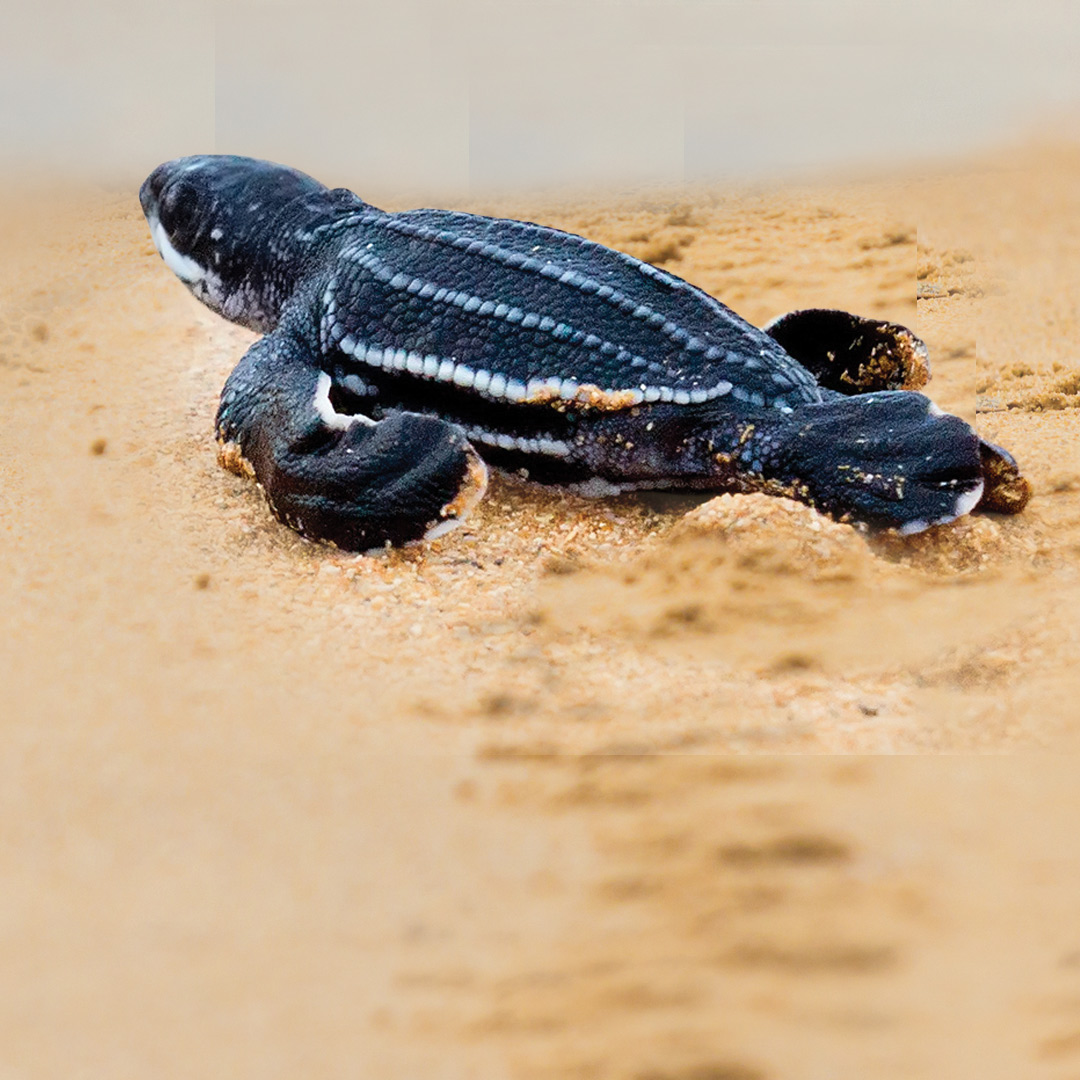
Boca Raton is experiencing a record-breaking sea turtle season, with leatherback sea turtle nests already surpassing previous highs along the city’s 5-mile stretch of beaches. According to Gumbo Limbo Nature Center, the milestone is a promising sign for one of Florida’s rarest and most-fragile nesting sea turtle species.
“As of May 6, we already have 40 leatherback nests,” Gumbo Limbo Nature Center said in an interview about this year’s nesting season. The previous Boca Raton record stood at 33 nests, making this season a significant leap forward.
The increase mirrors a larger statewide trend. Florida recorded 2,022 sea turtle nests in 2025, another all-time high. Scientists believe the growing numbers likely point to a gradual increase in the endangered species’ population after decades of conservation work.
Leatherback nesting season typically peaks in April and May, though nests can continue appearing into June. The latest leatherback nest documented in Boca Raton was recorded on July 7, 2012, meaning that this year’s record is likely to continue climbing in the coming weeks.
The achievement carries added importance because leatherbacks remain far less common than loggerhead and green sea turtles. “Record-breaking nest numbers is an indicator that conservation efforts across South Florida may be helping leatherback populations grow,” Gumbo Limbo explained.
Researchers say that several factors likely are contributing to the encouraging trend, including stronger protections for nesting beaches, reduced poaching and harvesting, safer fishing practices, and growing public awareness about sea turtle conservation.
One of the most encouraging developments, according to Gumbo Limbo staff, has been increased community involvement. “The people we encounter on the beach and at the nature center are genuinely interested in what we do and ask how they can help,” the organization said. “The children who grow up learning about sea turtles today are becoming the future scientists, advocates, and environmentally conscious community members who will help protect these populations for years to come.”
Protecting nests on Boca Raton’s busy beaches requires daily attention. Every nest is marked with orange stakes, tape, and signage to prevent accidental damage from beachgoers, umbrellas, or authorized beach vehicles. Staff members monitor each nest throughout incubation and take additional measures when necessary, including predator deterrents and protective mesh screens.
“We monitor each nest during the entire incubation period and protect them from predators or other disturbances,” Gumbo Limbo said. “Each and every nest is given so much attention to ensure success.”
Technology has also improved conservation efforts in recent years. Satellite tracking, GPS mapping, flipper tags, and advances in rehabilitation medicine now allow scientists to better understand migration routes, identify danger zones, and improve survival rates for injured turtles.
Despite the progress, challenges remain. Coastal development, boat strikes, plastic pollution, and climate change continue to threaten sea turtle populations. Still, conservationists say the growing level of public support gives them hope.
“Every action, no matter how small, can make a meaningful impact when it comes to sea turtle conservation,” Gumbo Limbo said. “Something as simple as turning off beachfront lights, picking up trash, filling in holes on the beach, or reducing single-use plastics can directly help protect sea turtles and their habitat. Conservation is most successful when communities come together, and every person can play a role in helping ensure sea turtles continue to thrive for future generations.”