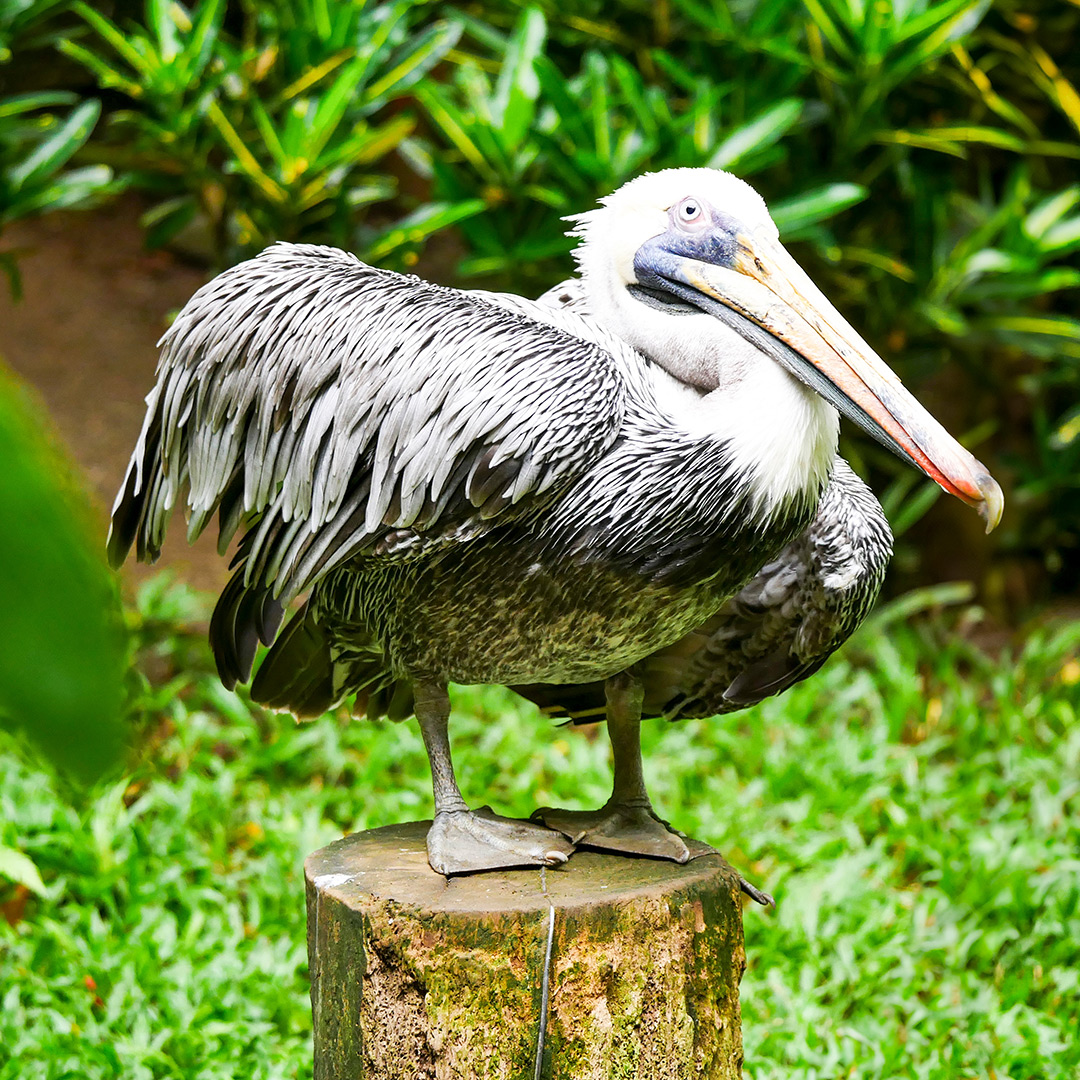
Pelican Harbor Seabird Station (PHSS) is Miami’s premier native wildlife hospital, which over time has evolved into a world-class wildlife rescue, rehabilitation, release, and education center. This nonprofit organization, now in its 45th year, is an internationally recognized seabird rehabilitation center that has rehabilitated and released more than 45,000 native animals.
Like most nonprofits, PHSS started with humble beginnings. In 1980, PHSS founders Harry and Darlene Kelton lived on a houseboat and had no experience in animal care. After moving their houseboat to the Pelican Harbor Marina, they found an injured brown pelican, removed a fishhook from its mouth, and decided to nurse it back to health.
When people learned of what the Keltons had done, they started bringing injured pelicans to their houseboat. What began as a love of pelicans quickly grew into a larger calling.
As more and more people began bringing injured pelicans and other animals to them, the Keltons knew it was time to expand, to create a real rescue and rehabilitation center. Others got involved, with the Miami-Dade Parks Department providing land, and in 1992, Miami-Dade County built the organization’s current facility, which is part of the Pelican Harbor Marina.
In 1996, former Executive Director Christopher Boykin led the effort to expand PHSS’s patient intake beyond seabirds to include all Florida native species, with the exception of rabies-vector animals such as racoons and foxes, as the facility did not have space to safely quarantine them. In 2023, PHSS treated more than 2,000 animals spanning 131 native species.
The Keltons remained involved with PHSS their entire lives and were known for helping revolutionize the rehabilitation and care of brown pelicans. Harry and Darlene developed a special medical procedure called “the cotton fish,” where they would stuff fish with cotton balls and feed them to a sick pelican with a hook in its stomach. Once the fish was digested, the cotton would cover the fishhook, and in many cases, the pelican would regurgitate it.
“We still use the cotton fish technique,” says Renata Schneider, DVM, a staff veterinarian at PHSS. “I would guess that it works 50% of the time. It’s noninvasive, so we always try that first. Then if we have to do a manual or surgical removal of the hooks, at least the metal is wrapped up in cotton.”
In October, PHSS will move to a new location along the Little River (about five minutes away from its current location). The new Wildlife Hospital and Education Center is 14 times larger than the current facility and will feature more ambassador and rehabilitation pens, a center for hosting school groups, natural history exhibits, and a manatee viewing location.
“At the new building, we plan to dramatically expand our educational programming as we will finally have space on-site to welcome larger groups of children and adults,” says Marianna Niero, PHSS’s communications manager. “We are planning enhanced tours, hands-on experiences, lectures, day camps, and other programming. The additional space will also allow us to offer more volunteer opportunities of various kinds, all with the aim of creating opportunities for people to connect with our native wildlife and to the ecosystems of South Florida.”
As PHSS has grown, it’s remained committed to its mission of improving the lives of sick, injured, and orphaned native wildlife with the goal of releasing healthy animals back into the ecosystem, enabling future generations.
One of PHSS’s recent rescues was a great blue heron white morph, a rare, federally protected bird that was a victim of animal cruelty. A fisherman threw a rock at it and broke its wing. The bird required multiple surgeries, but they were able to rehabilitate and release it. “The bird’s wing looks droopy, so we still get calls from people thinking it’s injured,” says Niero. “It’s nice because usually when we release a bird we don’t know how it’s doing. But because of these calls, I know it’s still there and doing well.”
According to Niero, more than 90% of the animal injuries PHSS sees are because of humans, and 70% of seabird injuries are from improper disposal of fishing equipment. “It might be cruelty, a car accident, pollution, or loss of habitat because of overdevelopment,” explains Niero. “That’s why it’s important to support organizations like ours. We owe it to wildlife because we are taking so much from them. They have no space and their environment is so polluted because of us. We should give back as much as we can.”
Some of the animals that cannot be released back into the wild become ambassadors for PHSS and help with education and outreach programs. One such ambassador is Mowgli, a female screech owl that fell from the nest as a baby and was attacked by a cat. The attack left her with a permanent injury to her left wing that makes her unable to fly properly and therefore unreleasable.
In addition to being an ambassador, Mowgli is also a teacher, training young screech owls how to hunt. “When we raise orphaned baby screech owls, before we release them, we have to make sure they know how to hunt and survive in the wild,” explains Niero. “We put Mowgli in an enclosure with the young owls, and we release mice. Thanks to game cameras, remains, and by weighing the owls, we can tell if they are learning. We call this ‘mouse school,’ and once they pass mouse school, they are cleared for release if everything else is fine with them.”
PHSS also has a library program called “Books with Mowgli,” where children can meet Mowgli and learn more about owls.
In addition to its educational programs, PHSS is open to the public as well. Free tours are available Saturdays at 11 a.m., and self-guided audio tours are available Monday through Friday from 9 a.m. to 5 p.m. For a more in-depth experience, guided “Behind the Scenes” tours are available and must be booked in advance.
For more information or to get involved, visit PelicanHarbor.org.