For those familiar with the Looney Tunes cartoons, the term “Super Genius” conjures up images of a Wile E. Coyote, and his ingenious but often ill-fated attempts to capture his nemesis, the Road Runner. The coyote was an icon of the American West, with its wide-open, dusty landscape. But unlike Wile E., real-time coyotes have been employing their adaptivity and smarts to spread eastward, and they’ve steadily expanded their natural ranges into southern Florida.
According to the Florida Fish and Wildlife Conservation Commission (FWC), coyotes are found throughout Florida’s 67 counties. Coyotes were living in Florida until around 12,000 years ago, when they disappeared from the fossil records. In modern times, coyotes became confined to the plains and deserts of the western U.S.
So it came as a surprise to many South Florida neighborhoods that coyotes started to show up in their local neighborhoods. They arrived first in the Florida Panhandle area in the 1970s and naturally expanded their territory until today they’re throughout all of Florida. Unlike many new animal arrivals to Florida, like the pythons and lionfish, coyotes arrived naturally on their four legs, and they’re considered “naturalized” residents of Florida per the FWC.
Coyotes’ success is often attributed to their adaptability. Coyotes are a close relative to gray wolves and domestic dogs, and they’ve taken advantage of the disappearing wolf population to expand their territory. DNA testing has shown that Florida coyote populations contain significant genetic contributions from wolves and dogs, which has made them sturdier and less afraid of humans.
Unlike Wile E., real-life coyotes are pragmatists. With no Acme product on their body, real coyotes typically weigh 20–40 pounds, and they resemble a medium-size dog with pointed ears and a bushy tail. They are generalist predators; they prey on small to medium-size animals and will consume fruits and humans’ leftovers.
This pragmatic nature allowed the coyotes to take over the ecological vacuum that was created when the larger predators like the red wolf and Florida panther populations were reduced. Like the Hollywood reboot, the coyotes came back to dominate their new domain in Florida.
With no roadrunners to chase, the Florida coyotes found new targets. A recent study shows local coyotes have been preying on many South Florida icons. Iguanas, especially in the winter season when they are slower and often enter a torpor state due to the cold, are being regularly hunted by the coyote, along with Indian peafowls. Coyotes are also found to be dining on local crabs when they are in season, and local fruits, like palm seeds and mangos. Juvenile pythons are also on a coyote’s menu, which in turn has helped to control the invasive python population.
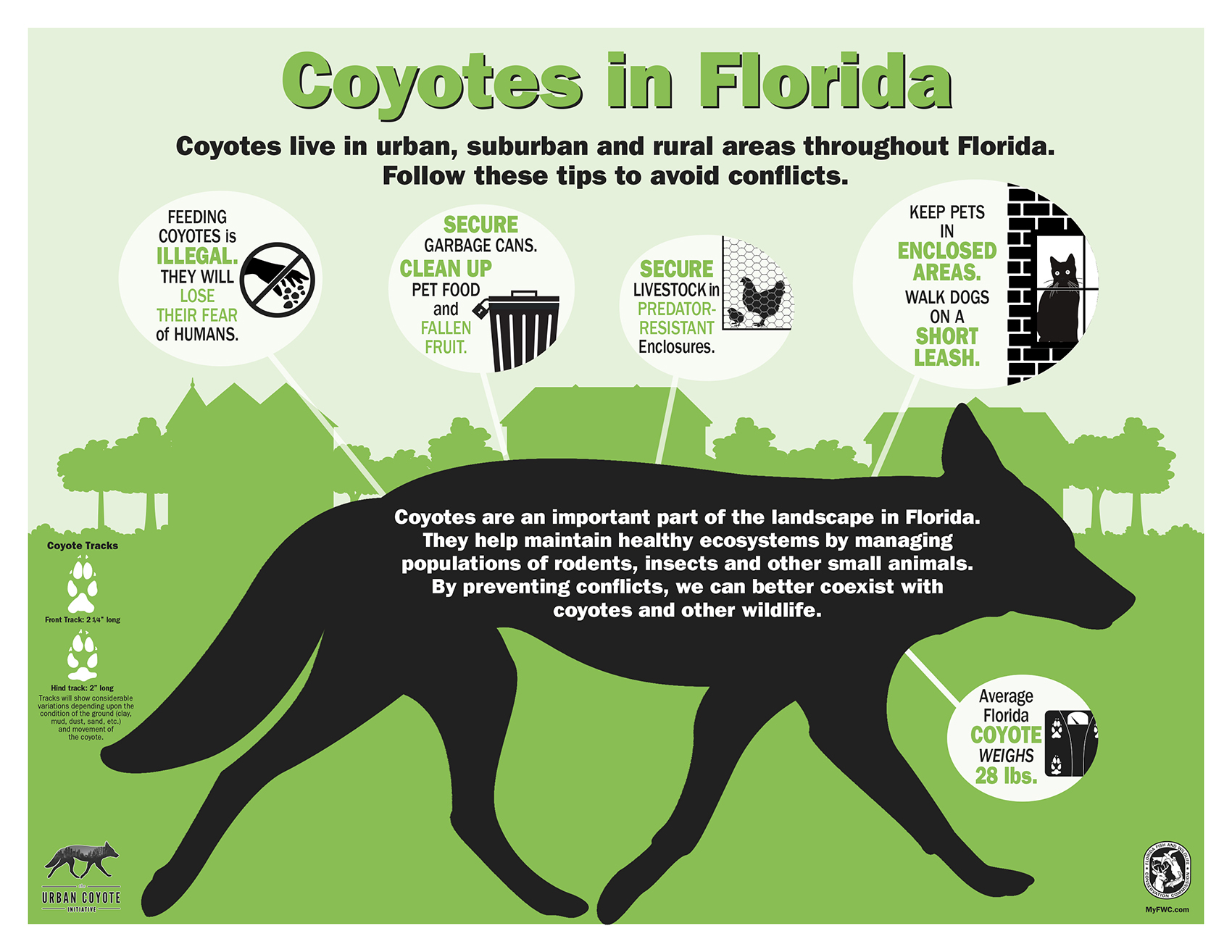
The returning coyotes act as a top-tier predator, which keeps the smaller wild animal population in check, and it helps reduce predatory stress on local bird and turtle populations. According to Florida FWC, coyotes “help maintain healthy ecosystems by managing populations of rodents, insects, and other small animals. By preventing conflicts, we can better exist with coyotes and other wildlife.”
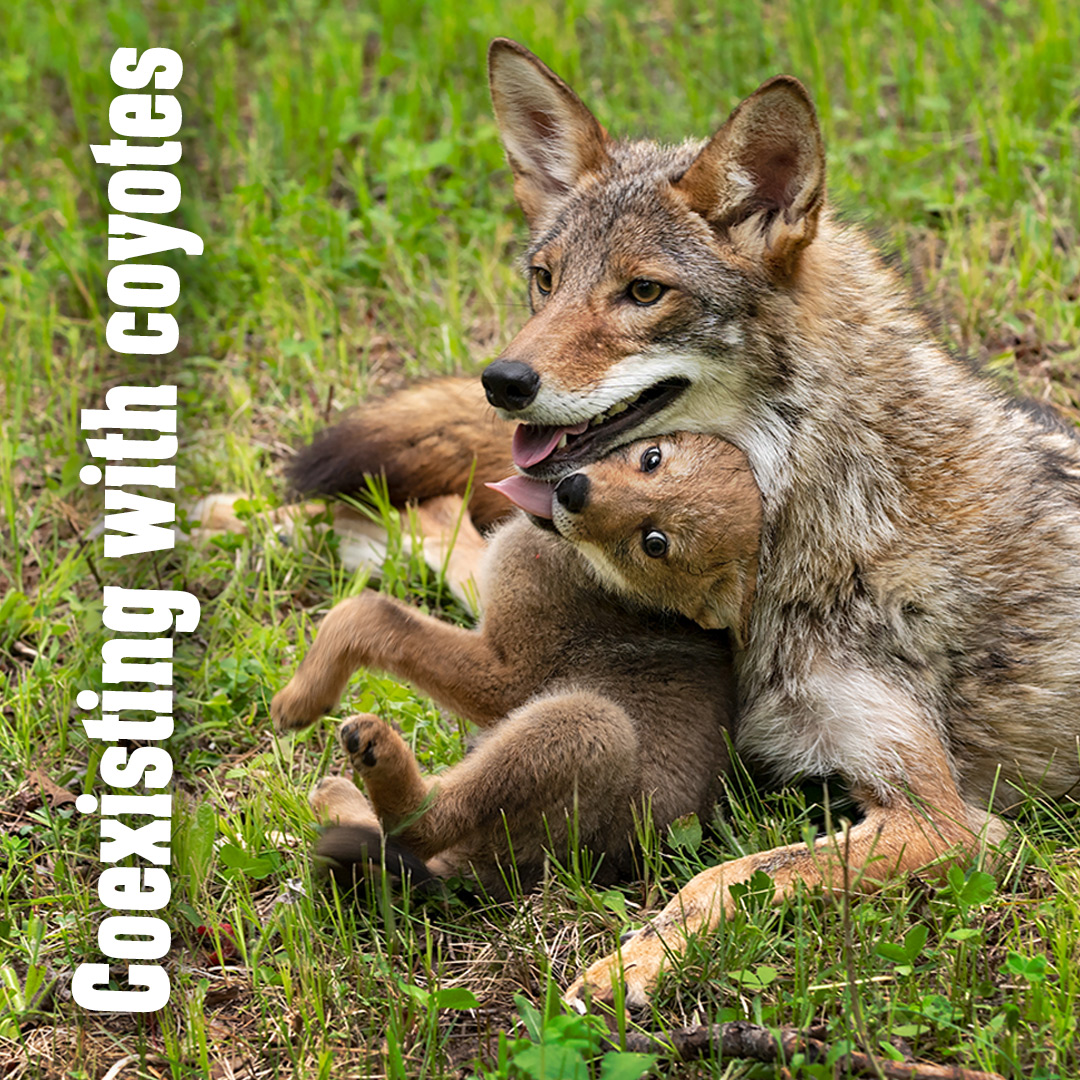
Another reason for their success is because coyotes are great parents, which helps to increase the survival chances for their pups. Coyote families are small and tight-knit, as parents form pair bonds that stay together for many seasons. This helps the parents learn and adapt to their surroundings together, and the pups have more success surviving the vulnerable early months of their lives. Older siblings and related coyotes often stay with the parents to form a small clan, which helps with pup-raising and, in return, allows youngsters to learn from the experiences of the older bonded parents.
Unlike their Hollywood caricature, Wile E., who is a loner and doesn’t talk, the real coyotes are very vocal. Their Latin name, Canis latrans, means “barking dog.” Their yips, howls, and woofs are key to their socialization, and it’s often heard at night when they are in the area.
Florida’s suburbs are also particularly attractive to coyotes. It provides many of the food sources that coyotes prefer, and they are quick to adapt to our suburban schedule. They will learn the daily routines of the human residents of the neighborhoods, and to move without human detection. They are often only detected by motion-activated cameras, or by their yip-howls at night.
Coyotes don’t fit well into a typical Floridian’s vision of curated gardens and golf courses. The coyote is a natural predator that will happily snack on a pet animal when opportunities arise. Trapping and relocation is often considered, but it’s a temporary solution, and as effective as an Acme product. When a coyote is removed, the remaining coyotes often respond with a larger litter of pups, which fills the void left by the removed animal.
Once we accept that coyotes are here to stay, our mindset changes to how best to live with them. Their arrival in our neighborhoods is a reminder that we live amidst nature in South Florida. Knowing their habits allows us to coexist with them. Coyotes still retain a fear of humans, which helps minimize their human contact. Experts recommend a strategy of “hazing,” where coyotes are made to feel unwelcome in populated areas through making noise, waving arms, or spraying them with water. This reinforces the natural boundary of fear that coyotes have for humans.
To prevent coyotes from losing their fear of humans, Florida FWC recommends securing garbage cans, pet foods, and fall fruits around your house. Keeping your pets in enclosed areas and walking dogs with a short leash will help keep them safe from coyotes looking for a quick snack.
So next time you see your local coyote, remember, they are resilient canines that have found their way home to Florida and help us to keep our natural surroundings in balance. Though it resembles a domestic dog, it is a wild animal that has earned its place in Florida and should be kept wild, for its own success.
Meanwhile, the Looney Tunes super genius Wile E. Coyote is seeking justice for all those faulty Acme products he has used over the years in the new movie “Coyote vs Acme,” in theaters now.
Image here: https://myfwc.com/media/15892/coyotes-in-florida-infographic.jpg