
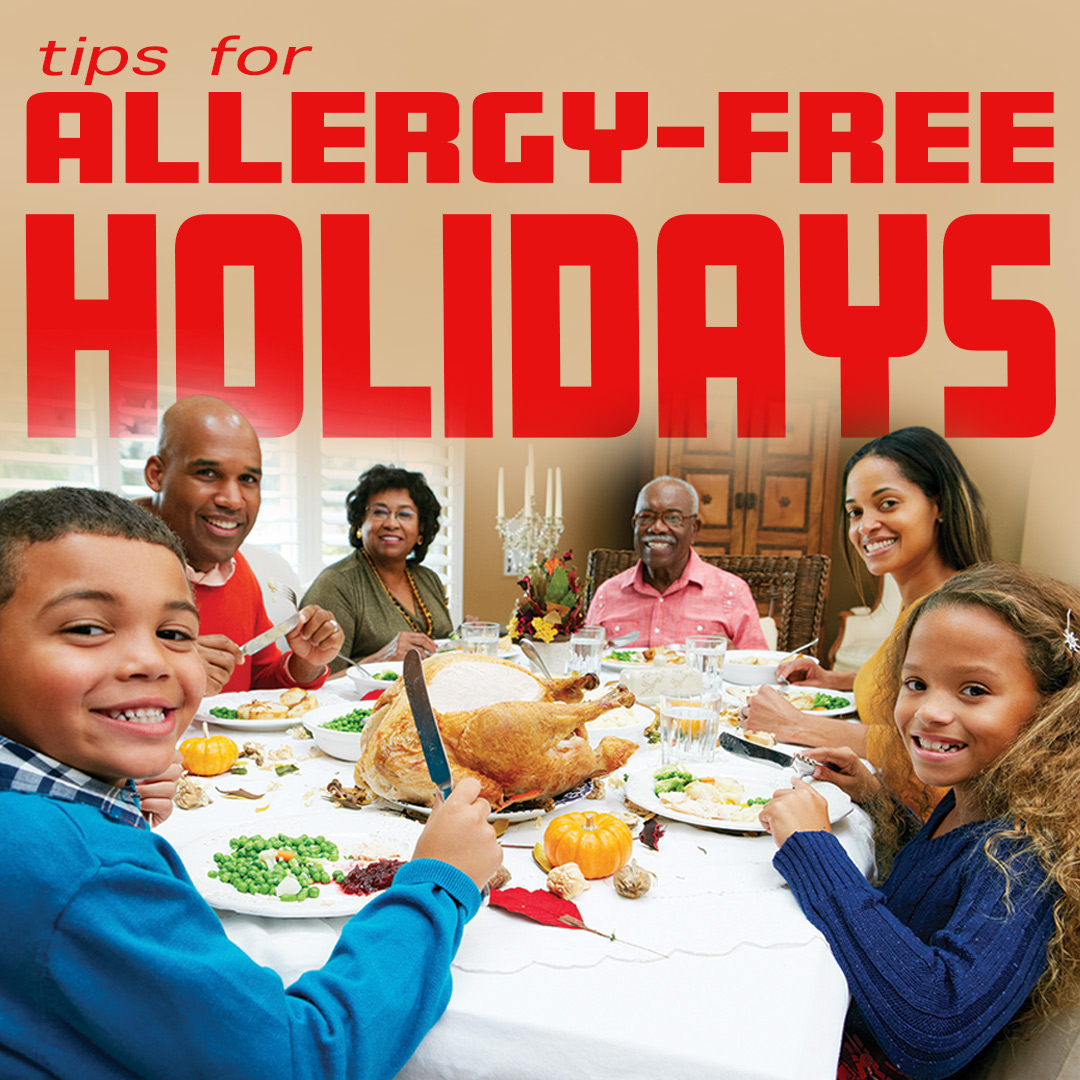
Winter holidays bring cheer and plenty of opportunities for festive eating. While common food allergens lurk in many traditional dishes served at Thanksgiving, Hanukkah, Christmas, and Kwanzaa celebrations, a little preparation and planning can help you glide through the holidays safely, whether you are a parent of a child with food allergies or hosting guests who have them.
These tips can help you navigate food allergies safely and healthfully this holiday season.
5 Tips for Avoiding Food Allergens at Home
- Host at your home. Because you are in control of what is served, this can be the safest option when managing food allergies. You may choose to prepare only “safe” foods and let guests know what they can and cannot bring into the house. If you do have foods containing allergens, designate separate areas for these foods to be served to help prevent cross-contact.
- Focus on whole, unprocessed foods. While cooking from scratch may seem like more work, it helps ensure that food and prep areas are free from food allergens. You might even find that you save time overall because you do not have to scour every ingredient list.
- Modify traditional recipes using allergen-free ingredients. Once you know a few simple swaps, you may realize just how easy it is to modify your recipes. Focus on similar items when considering swaps, like nondairy milk for cow’s milk (or vice versa), or naturally gluten-free grains for wheat. Eggs in recipes often can be substituted with ground, rehydrated flax or with chia seeds.
- Always read all ingredient labels. Even if you think a product is allergen-free, read the label. Food manufacturers change formulas, which may introduce allergens into previously “safe” foods and beverages.
- Keep it clean. Prevent cross-contact and cross-contamination by encouraging frequent handwashing.
3 Tips for Avoiding Food Allergens Away from Home
- Offer to help the host. If you help plan the menu or shop for ingredients, you can choose items that you know are safe. If you cook, you can help ensure that dishes are prepared without allergens. And do not hesitate to ask your host to save labels from products to reference and provide you peace of mind.
- Bring snacks and desserts. If helping ahead of time is out of the question, bring a few allergen-free options. Bring your own allergen-free snacks and desserts, as baked goods feature common allergens such as wheat, dairy, eggs, nuts, and soy. Pack snacks such as fresh fruit with sunflower butter packets, carrots with hummus, popcorn, or homemade trail mix made with rice cereal, seeds, and chocolate chips. For easy, festive desserts, melt chocolate chips as a dip for dried apricots or allergen-free cookies, or bake apples sprinkled with cinnamon and brown sugar and top with an allergen-free whipped topping.
- Communication is key. If a host is unfamiliar with how to manage food allergies, they might fall victim to the “a little bit won’t hurt” mindset. Communicate at the start that a little bit can hurt, and that you would be more than happy to help with shopping or prep, so the host can feel comfortable and you can feel confident in the foods served.