
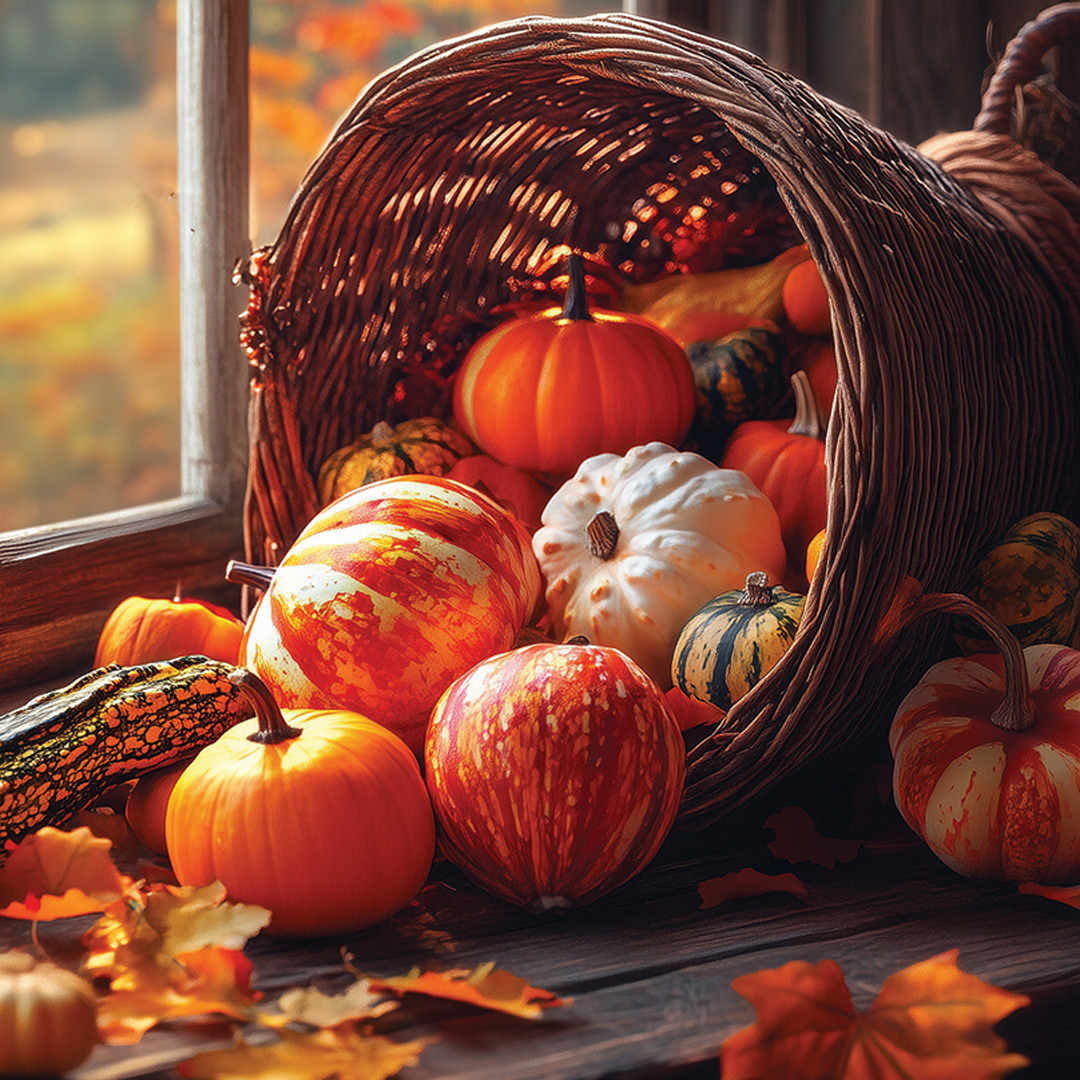
As the daylight shortens, and Thanksgiving comes into focus, we find a range of hard-shelled squashes on the grocery shelves. Unlike their summer cousins, like zucchini, winter squashes have hard shells and come in a vibrant range of colors and a variety of shapes. They were an American native vegetable when the pilgrims first arrived at Plymouth Rock, and were served in the early Thanksgiving dinners across the states.
The squash is part of the traditional Native American “Three Sisters” agriculture methodology, where corn, beans, and squashes were planted together to mutually benefit each other. Squashes with their prickly stems acted as a protector against pest animals for the bean and corn crops. They also provided shade and ground cover to retain moisture and suppress weeds. Corn provided a natural trellis for the beans to climb, and beans improved soil by fixing nitrogen from air, feeding the nutrient-demanding corn. Along with wild fowls, these three crops were featured in the first Thanksgiving dinner in 1621.
Archaeological evidence suggests that the squash was domesticated in the Americas approximately 10,000 years ago. The main food species, Cucurbita pepo, was first domesticated in Mexico, and its descendants are the pumpkins. A second domestication of Cucurbita pepo happened in the American Northeast, which yields the summer squashes—yellow- and-green skinned squashes, such as zucchini and acorn squash. You can still find wild populations of Cucurbita pepo in Texas and Mexico.
When the settlers first arrived in the Americas, the Native Americans shared their knowledge of agriculture with the new arrivals. Squash soon became an indispensable staple of the American diet. Stored in cool cellars, these hard squashes could last through late spring, and they were a key cornerstone to survive the winter. Settlers took the native word for them, askutasquash, and abbreviated it to “squash.”
In the fall, a wide variety of squashes are harvested, and you can typically find them in your grocery store:
- Butternut squash—sweet and nutty, with a creamy, smooth texture
- Acorn squash—earthy, with a dense, fibrous texture
- Spaghetti squash—slightly sweet, with a stringy, noodle-like texture
- Pumpkin—sweet and slightly spicy, with a dense, moist texture
If you are a fan of squashes, and want to highlight them for your Thanksgiving dinner, here are some ideas:
- Squash soup—roasted squash, onions, and garlic, served as a first course
- Mashed squash—cooked squash, butter, and milk, as a side dish
- Squash casserole—cooked squash, breadcrumbs, and cheese, as a side dish
- Pumpkin pie—made with cooked pumpkin, sweetened condensed milk, and spices, as a dessert
Considered by Native American cultures as a sacred food, the squash symbolizes abundance and resilience. It is that abundance from the land that we still celebrate and give thanks today at every Thanksgiving.
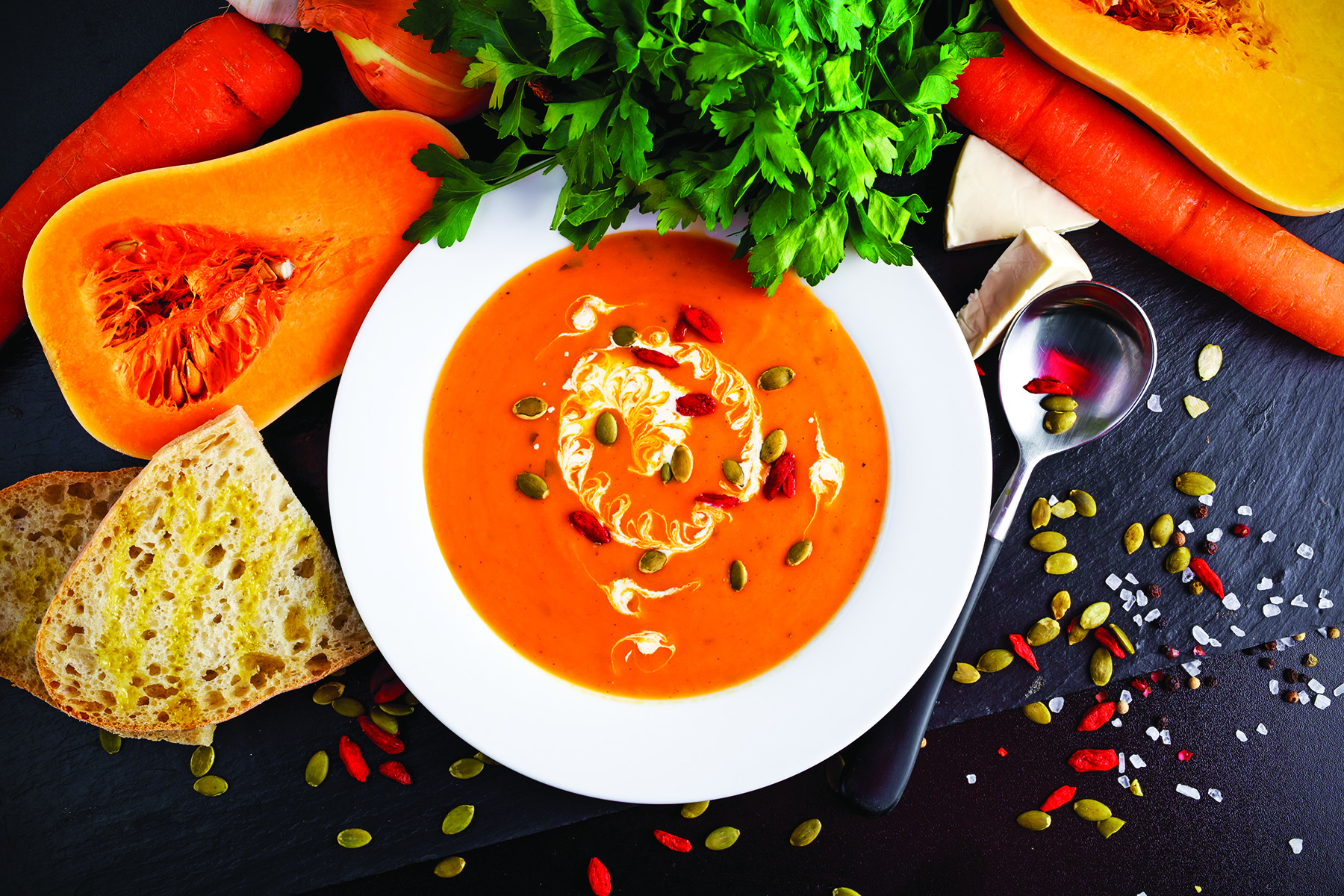
Here is a popular butternut squash soup recipe:
1½ tablespoons butter
½ onion, sliced
2 cloves garlic
2 sprigs fresh thyme
½ butternut squash—peeled, seeded, and cut into 1-inch cubes
4 cups chicken broth
½ cube chicken bouillon
1 pinch ground cumin
1 pinch ground allspice
Salt and ground black pepper, to taste
Directions: Melt butter in a large pot over medium heat. Add onion, garlic, and thyme, and sauté until onion has softened, about 5 minutes. Add squash and chicken broth; bring to a simmer, then cook until squash is tender, 10 to 15 minutes. Crumble bouillon into the soup. Season with cumin, allspice, salt, and pepper, then remove from heat.
Working in batches, pour soup into a blender, filling no more than halfway. Hold the lid in place with a kitchen towel, then carefully start the blender, using a few quick pulses to get the soup moving before leaving it on to purée. Pour soup into a serving bowl.
Source: Allrecipes