
April 2020 Magazine
May 2020 Magazine
Travel Back in Time to Yesteryear Village
An obviously happy youngster, who couldn’t be more than 5 or 6 years old, beckoned her equally enthused friends into a building that you might not expect to pique the interest of small girls – a jail house. Nevertheless, the girl’s friends followed her to the old structure.
Inside, they found a statue of a prisoner in a striped uniform. Perhaps the girls’ experience unleashed their curiosity just a bit about their state’s past. The jail building stands amid other attractions at Palm Beach County’s Yesteryear Village. It is a living history park where the volunteers and staff’s aim is “opening people’s eyes to Florida’s history,” said Steve Barnard, a volunteer since 1998.
He is one of many volunteers who donate their time, among other things, portraying people from the state’s past. In Barnard’s case, he plays a fictional character, Lt. Ambrose Hall, a man inspired by Barnard’s family history. Ambrose was an “old family name,” he added. Barnard can speak with authority about one attraction in particular, a village fire department housing old-fashioned fire trucks. Barnard, a West Palm Beach resident, is a retired fireman who joined the city’s department when he was 40. He recalled that when he joined the department, it was a time of horses and buggies.
Recently, he showed a visitor several fire trucks at Yesteryear dating back to the 1920s. Up until then, the trucks were horse-drawn, he said. Barnard, a man with grey hair and mustache, sporting work overalls on a recent day, speaks with a scratchy voice and states, “I love South Florida, it has some real cool history that most people don’t know about.”
The village comprises 9 acres on the South Florida Fairgrounds. ”If it wasn’t for the fairgrounds, the village wouldn’t be here,” said Paige Poole, Yesteryear’s Education and Community Relations Manager. The village displays buildings and artifacts from 1895 to 1945. Through audio on telephones, visitors can browse and learn about the original and replicated buildings including an old school, a farm, a blacksmith shop, a general store, a jailhouse and other places. In addition, Yesteryear features “the only big band museum in the United States, the Sally Bennett Big Band Hall of Fame Museum.”
Poole recommends that visitors allot at least two hours to tour the entire village. She says, “Past visitors love it, they absolutely love it, adding they’ve come from afar as Germany, Italy, Spain and Russia. There are a lot of unique exhibits here that people really enjoy.” For instance, if you wish to learn about a major crop in Palm Beach County, you can visit the sugar-processing exhibit.
Yesteryear Village also showcases a Southern Bell Telephone Exhibit dedicated to the history of the telephone. That term might sound like one from the past – especially in this day of cell phones and other technological advances.
“Speaking of technology, the village affords visitors and others a chance to unplug and go back in time,” said volunteer Marie St. John. On a recent day, St. John, in character, was showing youngsters how pioneers churned milk to make butter and make the liquid safe to drink. Back in her character’s day, everyone helped prepare a meal. “Everyone’s prepared some food for a feast,” she said.
Visitors can learn about history at Yesteryear Village, one of Palm Beach County’s most unique cultural attractions. Yesteryear Village, located at 9067 Southern Blvd. in West Palm Beach. Hours of operation are 10 a.m. to 4 p.m. Thursday, Friday and Saturday. https://www.southfloridafair.com/p/yesteryearvillage
What The Police Want You to Know
The Parklander spoke with Captain Chris Mulligan of the Broward Sheriff’s Office, Parkland District, to learn what’s going on with our police department that our local residents should be aware of. Captain Mulligan led off the conversation with good news. He said that Parkland citizens are living in a safe community and the first six months of this year, crime is down 30 percent compared with the same period last year. He also spoke about the Center for Public Safety Management’s study of the BSO’s Parkland area in the wake of the Stoneman Douglas incident. One decision that came out of that study was a call for increased staffing. The BSO responded by enhancing traffic safety enforcement and adding a motorcycle deputy. (There previously was not one in the area.) Citations are up as a result, and statistics show that the number of accidents has remained even compared with the same period last year.
In more good news, the increase in staffing also resulted in an increase in the Crime Suppression Team, whose role it is to target specific problems that have been identified as well as the locations and times where and when they most often occur. The Crime Suppression Team moves from location to location in order to combat crime and keep it from occurring. The BSO also has revived their bike patrol unit and now has deputies on bikes in the area, particularly in areas of heavy traffic, in parks, in business areas, and in residential areas. Their mission is the same as that of officers in patrol cars, but being out in the open they can see and hear more of what’s going on in their surroundings. Therefore, they’re also able to interact with residents, businesspeople, and patrons of businesses. The area is also seeing, among the new hires, more deputies who are new to police work. Although not as seasoned as those who have worked in other agencies, but they are fresh and eager to get into stopping crimes before they occur and solving them when they do occur.
Captain Mulligan also said that the Parkland area detective unit has a clearance rate (rate of number of crimes solved) of 32%, making it one of the best in the agency.
In response to comments from residents, the Parkland area unit is also making a greater effort to engage with the community’s residents. They are contacting homeowner associations and attending their meetings on an average of three a month. In addition, some HOAs hold events (e.g. carnivals, Easter egg hunts), and the BSO tries to be a presence there as well. The unit also does its own events, including Coffee with a Cop, where residents can sit down with officers at a restaurant or coffee shop and, over a cup of coffee, discuss their concerns, pose questions to the officers, and get to know better what the BSO is doing in their area. It’s a great opportunity for an exchange of information and ideas. Then there is National Night Out, another anti-crime initiative, and an opportunity for parents of school-age kids to meet their school’s Resource Officer. Last year, at the beginning of the school year over 2000 residents turned out for this. Another event involving kids is Trunk or Treat, a goodie-filled event, co-sponsored by the city of Parkland, that’s an alternative to trick-or-treating and is safer than walking the streets and ringing doorbells. Parkland Unit BSO officers also attend PTA meetings. Additionally, there are programs in which officers read books to kids, which fosters a greater harmony between kids and police. The BSO participates in area farmers’ markets in the fall and spring, also co-sponsored by the city of Parkland. They bring out their specialty vehicles, including a striped police car, for the kids to swarm all over. The SWAT trucks are a special favorite.
Last year the BSO had a Rape Aggression Defense program in Parkland, teaching situational awareness, how to know you’re in danger, and some self-defense techniques. They will repeat this program this year. The Parkland Area unit is getting ready to start a Police Youth Explorer program for middle school and high school students who have an interest in law enforcement and might consider it as a future career. There is training, and the kids get community service hours while developing leadership skills. October will see the first Citizens Police Academy in the district. As the start of the school year is upon us, the Parkland Area unit of the BSO has its safety plan and traffic plan in place so they can be sure they’ll be watching out for our kids.
Kol Tikvah The Synagogue Where Everyone Knows Your Name
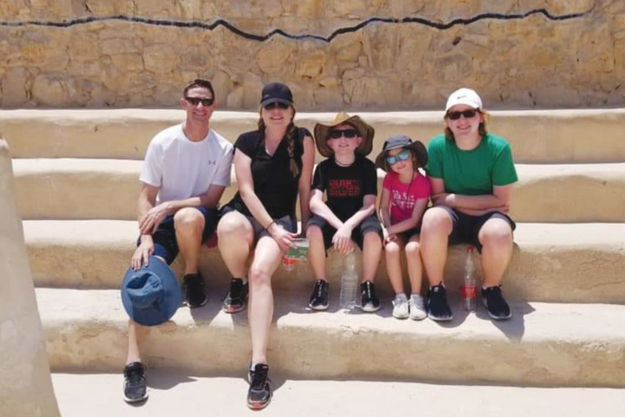
“Shabbat Shalom! Good Shabbos!” These are the greetings you hear echoing on any given Friday night, in the sanctuary and corridors of Kol Tikvah, a reform synagogue serving Parkland and the surrounding communities. From Rock Shabbats under the stars, to Paint & Sip Happy Hours, to Mimouna celebrations and social events, Congregation Kol Tikvah is the “synagogue that never sleeps.”
Boasting an early childhood center, teen nights, a caring committee, business networking events and social action (Tikkun Olam) opportunities with monthly PB&J sandwich collections for the homeless, the synagogue, sandwiched between City Hall and the Coastal Community Church on N. University Dr., is a hub of activity.
“As a reform congregation we can take more liberty in choosing what to participate in,” says Rabbi Melissa Stollman, Director of Lifelong Learning. “We don’t have the same sense of responsibility toward Jewish law, but focus on our responsibility toward one another. The heart of our community is the relationships people have with one another that take place in a Jewish setting,” she explains.
“We hear from many of our congregants that this is their home, this is where their “family” is – friends who’ve become family,” Stollman says. “This is where they feel comfortable bringing their kids, praying, with activities grounded in Jewish values. Everyone is seen and known and important.” The synagogue was birthed in 1991 when six Parkland families, including a Jew by choice, an interfaith couple and several adopted children met for Shabbat dinner and decided to establish a synagogue in the Reform tradition. In fact, president Jennifer Levin-Tavares likens it to the popular TV show, Cheers, comparing Kol Tikvah (which means Voice of Hope) to a synagogue where “everyone knows your name.”
With more than 350 families, this is not an easy task. One of those families is the Levine family Craig, a realtor, Jennifer, a physician and their three children, Benjamin, 12, Max, 11, and Rebecca, 5, who spent three years in Kol Tikvah’s Phyllis J. Green Early Childhood Center (ECC). The whole family is active and involved with Kol Tikvah. Craig is a board member of Kol Tikvah’s Brotherhood while Jennifer is involved with the synagogue Chavarim, which works to create and deepen relationships between members. Their oldest son, Benjamin will be a Bar Mitzvah this September and is working hard with Rabbi Bradd Boxman, Cantor, Malcolm Arnold and Mr. “B,” Fred Berkowitz, the Hebrew teacher. “In our ten years as members of Kol Tikva, we have felt warmly welcomed by the staff and members. We are impressed with the sense of community and our children have made lifelong friends,” says Craig Levine. “We are so happy to have found Kol Tikvah.”
President Levin-Tavares says what distinguishes Kol Tikvah from other Jewish institutions in the area is that Kol Tikvah functions as a community center, offering more than just religious school, Shabbat and holiday services. “We have an amazingly energetic, demographically diverse synagogue with a wide range of activities and programming for every age group,” Levin-Tavares says. Because the congregation is still young, “Our youthfulness allows us to change and evolve much more nimbly than more established institutions,” she says.
For Rabbi Stollman, who lived in 10 cities growing up, she says belonging to a reform synagogue was an oasis in the midst of her chaotic life and kept her connected to her Judaism and Jewish values. She says the same is true for Parkland’s Kol Tikvah.
“If you identify as Jewish or are curious about being Jewish and seeking a faith-based tradition, being connected on a deeper level, Kol Tikvah will welcome you,” says Rabbi Stollman. “You don’t have to look too hard to feel connected and feel a part of something.”
For more information visit: koltikvah.net or call: (954) 346-7878The next Rock Shabbat is scheduled for Nov. 1.
A Special Case of Bravery
At first glance, the word “brave” may spark several images in our subconscious, the iconic superman “S,” or a prince in shining armor. For less mystical minds, first responders may be synonymous with bravery. However, bravery also lies in more common, quotidian acts of everyday life. Coconut Creek novelist Melody Maysonet perfectly displays a case of this “common bravery,” a special possession of valor required to produce something truly raw, honest and authentic. Maysonet has been writing ever since she can remember. As a young girl, her dreams were to become a writer and a teacher. She has already accomplished both. Maysonet’s previous work experience includes her positions as an English teacher, editor, columnist, and ghostwriter. It was not until her son, now 14 years old, started school that Maysonet decided to tackle her dream of becoming a published novelist. She began attending workshops and conferences to hone her writing skills, inching closer to her goal.
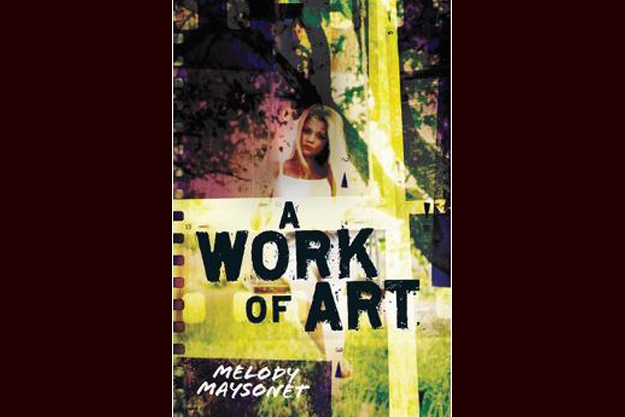
In 2015, Maysonet published her first novel, A Work of Art, and has since then achieved several accolades including Best Book of 2015 by YA Books Central. A Work of Art is a captivating story about a 17-year-old girl, Tera, who struggles to determine if her father is guilty of a crime he is accused of. Recently, Maysonet opened up about the inspiration for A Work of Art sparking from her own personal experience with sexual assault. “It just kind of came out on its own because the book… was a completely different story… I realized it wasn’t what I wanted to write about and so I scrapped it and started over,” Maysonet said. “I think I just needed to do it, and to start healing.”
In addition to the countless hours practicing her craft, Maysonet also attributes part of her success to the honest critique from her writers’ group, Tuesday Writers. Tuesday Writers consists of six different writers and was founded by mentor and YA author, Joyce Sweeney. Sweeney started the group as an invitation-only writers’ group, requiring the writers to have a certain level of expertise. “We were all beginners at one time,” Maysonet said, “and over the years, we’ve watched each other grow.”
Maysonet takes her writing
very seriously; she has a very disciplined work ethic and always tries to
improve. Most recently, she took on the insurmountably difficult task of
reading deprivation, as recommended by her workbook titled, The Artist’s Way.
“It really was helpful and I’m not sure exactly why but I’ve been thinking about
doing it again,” Maysonet said. Currently, Maysonet is
revising her second YA novel, tentatively titled, What We Wish For,
about a 15-year-old girl living with her alcoholic mother who wishes for a
different lifestyle. It is as Maysonet describes, “a genie-in-the-bottle
story,” when “things are never what they seem.”
Maysonet is also starting the
first draft of her third novel. It
is too early for Maysonet to confirm the synopsis but it’s intended for an
adult audience.
With A Work of Art, Maysonet fearlessly ignited a much-needed
conversation about the highly stigmatized topic of sexual assault. In addition
to her groundbreaking novel, Maysonet continues to tackle more ordinary
struggles whether it is becoming a better creator through The Artist’s Way workbook
or fighting her introversion by attending conferences. Maysonet truly encapsulates
what it means to be brave. In her Tuesday Writers blog, Maysonet writes, “I’m
going to play the “What if” game. And I’m going to search the hidden cavities
of my soul to find what it is I’m afraid to write about, because someone once
told me that those types of stories—the ones we don’t want to touch—are the
ones that push us to the next level.”
Anguish in the Aftermath
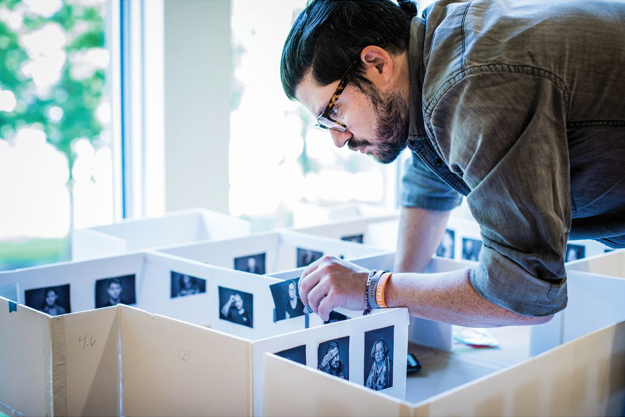
“Tragedy should be utilized as a source of strength,” the current Dalai Lama has said. “ By examining tragedy, as painful as it is, we hope to make sense of it. A new exhibit by Coral Springs photojournalist Ian Witlen opening at the Coral Springs Museum of Art on Sept. 14 and running through Nov. 9, titled, “Anguish in the Aftermath: Examining a Mass Shooting,” proposes to do just that.
On Feb. 14, 2018, Witlen, received the assignment from the Miami New Times to cover the shootings and its aftermath at Marjory Stoneman Douglas High School, where 17 students and teachers were shot and killed. Witlen rushed to the scene and was on-site snapping photos and documenting the tragedy as it unfolded of this now scarred-in-our-memory event. As it happens, Witlen, now 36, graduated from MSD, so the events had a special resonance for him. “After the shooting I was at the school every day.” says Witlen. “I had many students and teachers coming asking me how can we get our stories told?”
A world traveler and internationally published photojournalist, Witlen’s work has appeared in Time, der Spiegel, CNN and Vanity Fair, among others. A self-described apolitical person, Witlen was in shock and unnerved by what he saw and driven to express all the emotions and tumult he was witnessing the best way he knew how – through photography.
Over the past 12 months, in his spare time and during nights and weekends, Witlen interviewed more than 75 students and teachers who were in the freshman building at MSD on that fateful day. To remain neutral in his role as a photojournalist, Witlen asked the participants only two questions: What was your experience that day? And what would you like to see come of it? Out of that project emerged the exhibit, a collection of black-and-white portraits and audio recordings from each of the participants.
Museum-goers can listen to the audio of the responses and hear what the students are saying at that exact moment Witlen captured them on film. Julie Andrews, executive director of the Coral Springs Museum of Art was introduced to Witlen through former Coral Springs City Commissioner Lou Cimaglia. “When I saw Ian’s masterful photography and heartfelt stories I knew I had to find resources to help him continue his work,” says Andrews. “His photographs are the perfect intersection between art and the humanities,” she says.
Artist Nicoelle Danielle Cohen, 41, understood Witlen’s motivation. She created the Healing Hearts Project, and works with Parkland survivors to heal and honor the victims. “I think what Ian is doing is incredible,” says Cohen, who spent part of her summer working with the Shine MSD Camp to provide healing through the arts. While Witlen says his message is a humanitarian one, not a political one, Cohen is open about expressing her views.
“As an MSD alum and mother of a 7-yr. old, I want to use my art to raise awareness, create healing and to continue the conversation about common sense gun laws,” she says. “I look forward to seeing Ian’s show,” says Cohen. “He’s working hard and I know the emotional toll it takes.” “My dream is that we are all inspired to use whatever talents we have to help make changes in the laws,” Cohen says. “We owe it to our children.”
The Coral Springs Museum of Art offered Witlen an artist-in-residence opportunity and hope to have the exhibit to travel to other museums and educational institutions across the country. For Witlen, too, his life was changed forever on that fateful February day. Witnessing all the horror and speaking to so many people directly affected by the tragedy, Witlen says he experienced vicarious trauma along with much heartbreak.
The project helped him get through those dark days. “This was a cathartic and therapeutic experience for myself and many of the students,” says Witlen. He was surprised that many of the students and teachers voiced a sense of relief. “They expressed a desire to help others, and I was moved to tears knowing I had a positive effect and helped someone in their time of need,” he said.
Witlen hopes the community will feel the same way. “It’s an opportunity for these students, teachers and families to unburden themselves, give them a voice and help them heal in some small way,” he says. “These kids want to make a better world where others are treated with kindness. Despite the hardship, these students and families have kept on. They are an inspiration to me,” he says. “The least I can do is to do my part.”
For more information about this exhibit, contact the Coral Springs Museum of Art at (954) 340-5000 or museuminfo@coralsprings.com and online at coralspringsmuseum.org. Meet the artist at a complimentary meet and greet reception on Thursday, September 26, 2019 at 6 pm.
Wahoo at August moon
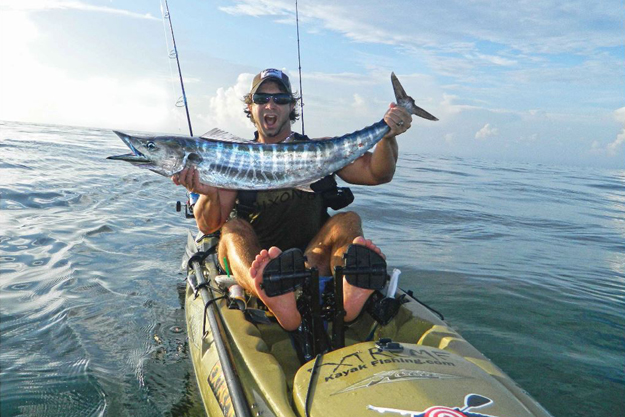
Wahoo can be caught year-round off South Florida, but the full moon in August is the absolute best time to catch one of the big, speedy, tasty gamefish.
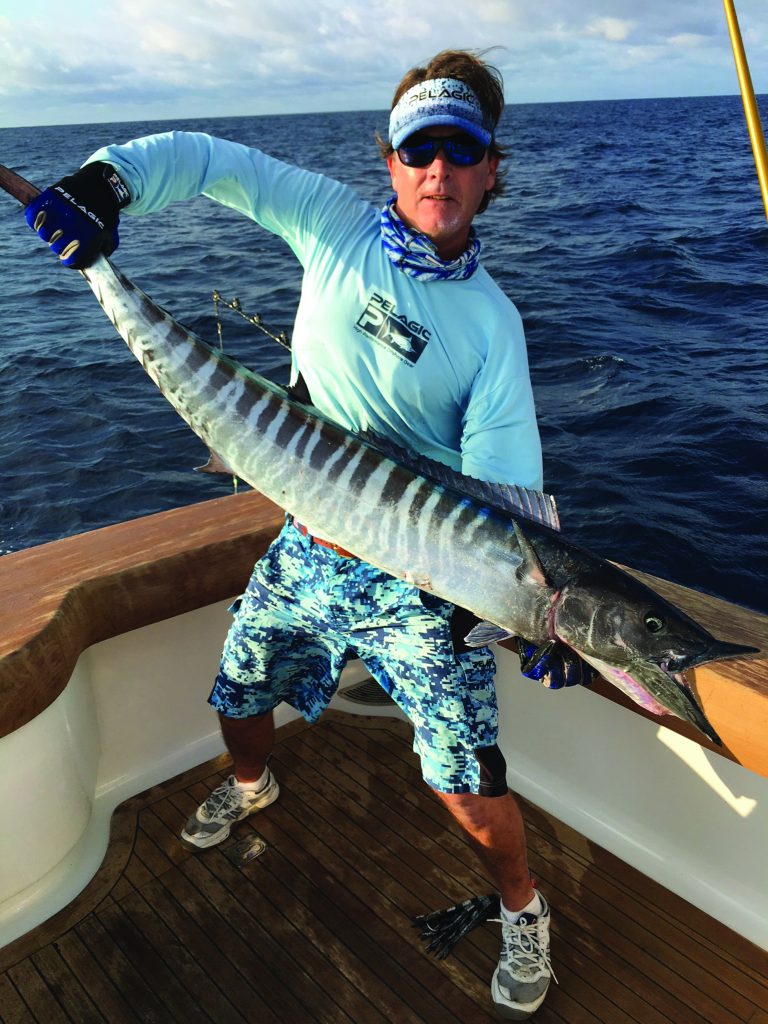
The wahoo fishing is so good around the full moon, which is Aug. 15, that you don’t even need a powerboat to catch one.
“To me, August is the prime time to get those monster wahoo,” said Joe Hector, who fishes out of a kayak and also runs kayak fishing tournaments out of Pompano Beach. His ExtremeKayakFishing.com tournament two years ago in August produced eight wahoo, including a 71.9-pounder and two others over 50 pounds.
No one knows why wahoo are so abundant in South Florida around August’s full moon, and those who catch them don’t really care. The hard-fighting fish take off when they’re hooked, typically running out several hundred yards of line. Once an angler gets a wahoo close to the boat or kayak, the fish often take off again.
Anglers also love wahoo because they are delicious. Their firm, white flesh is great grilled or seared. The daily bag limit is two wahoo per angler.
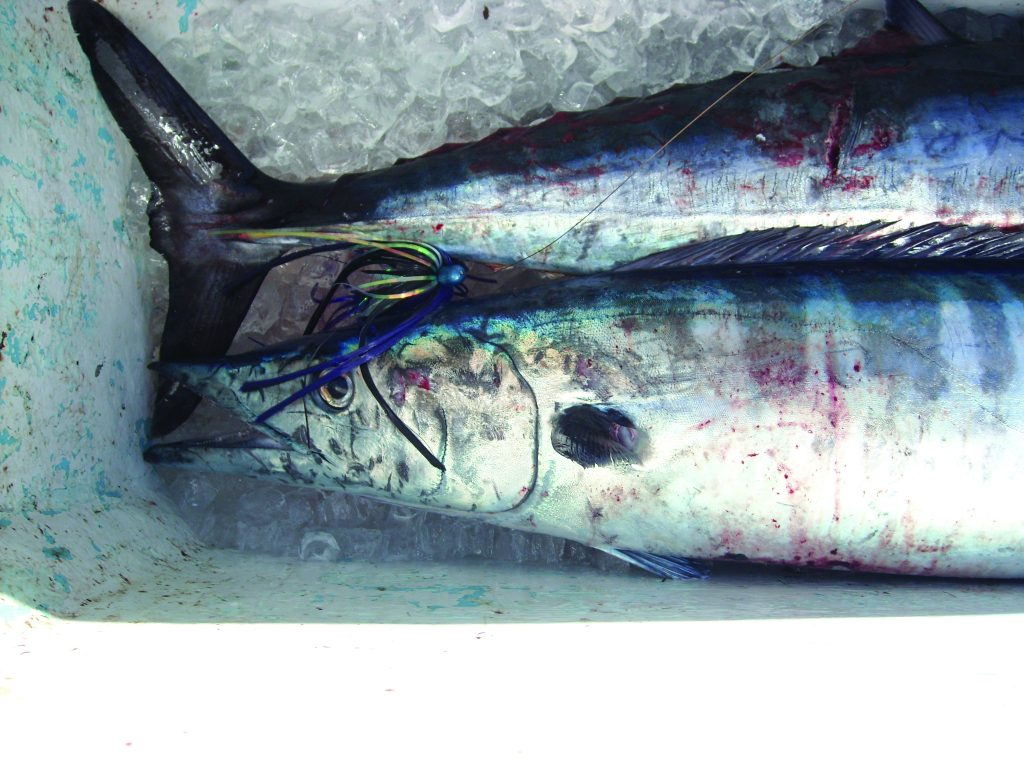
Given their choice, most captains and anglers would fish for wahoo before and after the August full moon.
“I’ve caught them all the way out from a week before the full moon to a week, a week and a half after the full moon,” said Hector, whose personal-best wahoo was a 65-pounder.
Capt. Skip Dana, of Deerfield Beach, who runs charters on his center console Pop-A-Top out of Pompano Beach, prefers to fish “three to four days before a full moon and then a few days after. The day of the full moon is usually slower, with the best bite at mid-day.”
Many wahoo anglers troll lures or dead baits or a combination of both using planers, which are metal plates that help get the lures and baits 30 to 40 feet below the surface. But Dana said live baits are especially effective around the full moon in August as well as in September.
“You get more bites live-bait fishing than any time of year. I’d rather catch one on live bait than 10 trolling a lure on a planer,” said Dana, who starts fishing in the morning by putting up two fishing kites, each with three lines. The kites get the baits away from the boat and suspend them at or just below the surface. He also puts out two flat lines with live baits that can swim wherever they want, along with two lines with sinkers to get those baits down deeper.
“Once the sun is up, I’ll start slow-trolling for them. I’ll go out to 200, 300, 400 feet and put out goggle-eyes, blue runners, speedos, little bullet bonitos. All you’re doing is bumping the motors in and out of gear to keep the lines tight as you move.
“I’ll put a flat line 200 yards back, and one 50 or 60 yards back. I’ll put a downrigger bait on each side of the boat and stagger them. I’ll start at 75 and 125 feet down, and if I get a bite on the deeper one, I’ll go to 125 and 200 feet.”
Dana fishes Penn Fathom high-speed reels spooled with 20-pound Momoi Orange Crush monofilament line on 7-foot medium-action 20-pound rods. He uses a 15-foot 30-pound Momoi fluorocarbon leader. To prevent cut-offs from sharp-toothed wahoo, he adds a three-foot piece of 30-pound Knot 2 Kinky nickel-titanium leader wire attached to the fluorocarbon with an 80-pound Spro swivel. The other end of the leader is tied to a 6/0 VMC hook attached by a short piece of No. 6 wire to a 4/0 VMC stinger hook.
Hector, who uses spinning outfits with 30-pound monofilament, a 50-pound leader and a 6- or 7-inch piece of 30- or 40-pound wire, also prefers live bait for wahoo. Before heading to the beach to launch his kayak, he buys five goggle-eyes and three pilchards from a bait shop. He keeps them in a 5-gallon bucket with a battery-powered aerator. Once he catches a wahoo, he heads back to shore, which is why he doesn’t need a lot of bait.
“When I’m targeting wahoo, my trips are short and sweet,” he said. “I’ll put out my first gog on the way out in 80 feet, then set up a drift. I fish a pilchard on top with a gog below. If you put out two gogs together, you’re going to end up with a tangled mess.
“Believe it or not, I’ve caught more wahoo on a big pilchard than on gogs. Some of my best catches have been on a 6-inch pilchard.”
That ties in with something Capt. Cory Burlew said about why he trolls smaller lures than most captains.
Burlew, whose GoddessCharters.com fishes out of Deerfield Beach, likes to troll dark-colored lures for big wahoo, such as black-and-red, blue-and-black and black-and-purple. Instead of fishing 12-inch lures, his lures are 8 to 10 inches long to better match what wahoo eat. “Sometimes the smaller ones seem to catch more fish and bigger fish because wahoo feed on flying fish and small tuna,” Burlew said. “I feel like the big ones are lazy. They’d rather eat a small bait. It’s like walking by a buffet, are you going to pick up a French fry or a baked potato?”
All Doll’d up
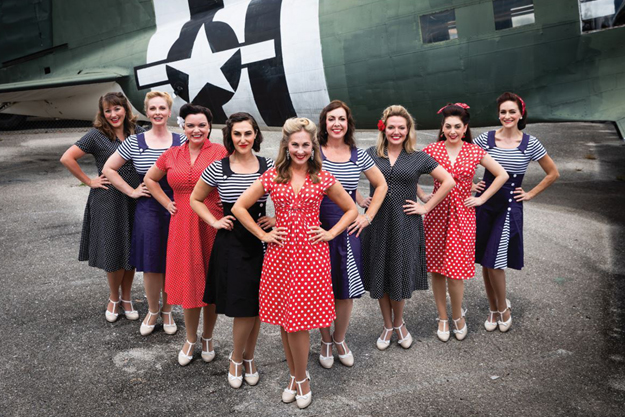
New group set for WWII boogie-woogie
The Victory Dolls are just about ready to march.
The nine women who make up the newly formed patriotic vocal ensemble — all familiar performers on the South Florida theater circuit — have spent nearly a year perfecting their vintage, Andrews Sisters-inspired harmonies with a modern twist. They are already booked for two performances in September and hope to schedule more as their melodies, talents, and stories about the 1940s era and the Greatest Generation gain popularity.
The group — the first of its kind in South Florida — is planning annual tours of the Sunshine State and beyond, and will call several regional theaters home each season, including the Delray Beach Playhouse, Mizner Park Cultural Arts Center in Boca Raton, and the Lauderhill Performing Arts Center.
A meeting between a longtime theater manager and an award-winning singer who had created a World War II-style production led to the creation of a troupe that will sing tunes from the decade of war bonds, FDR’s “fireside chats,” ration stamps, victory gardens and a radio in every home.
Kevin Barrett, manager of the Delray Beach Playhouse and former director of the Coral Springs Performing Arts Center earlier this year traveled to New Orleans for the opening of the National World War II Museum.
Formerly the National D-Day Museum, the New Orleans venue recreated the legendary Stage Door Canteen, which features a production of World War II-era songs by the resident musical group, the Victory Belles.
“I thought, this would kill in Florida,” Barrett said.
“I remembered that Shelley Keelor did a World War II show here [at the Delray Playhouse] two years ago, so I pitched her the idea of creating one similar to the museum production. She loved it.”
Keelor, a stage and musical theater veteran who created the popular one-woman show Sentimental Journey: Songs of WWII, gathered a group of talented singer/actresses together and dubbed them the Victory Dolls. They’ve been rehearsing a program of 1940’s-era tunes since then.
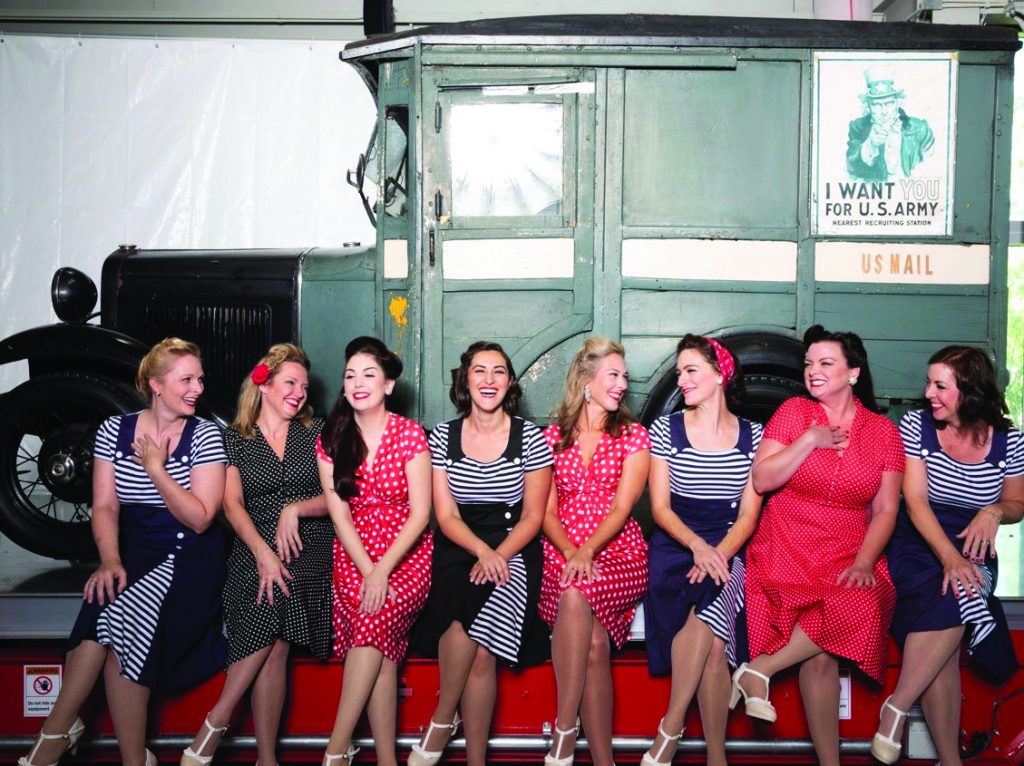
The Victory Dolls roster of performers includes Keelor, of Jupiter, as leader of the pack, along with Sabrina Lynn Gore, Amy Miller Brennan, Leah Marie Sessa, Julie Kleiner, Jeanine Levy, Aaron Bower, Katie Angell Thomas, Jinon Deeb, and Ann Marie Olsen.
Phil Hinton creates original arrangements for the troop-praising troupe, and Carbonell Award-winning keyboardist Caryl Fantel is musical director.
Shows will feature classic hits from the war years: “When the Lights Go on Again,” “We’ll Meet Again,” “Hot time in the Town of Berlin,” “White Plains of Dover” and many of the Andrews Sisters’ hits such as “Rum and Coca Cola,” “Shoo Shoo Baby,” “Bei Mir Bist Du Schoen” and “Boogie Woogie Bugle Boy.”
Performances will benefit organizations including Honor Flight of South Florida, Gary Sinise Foundation, and Wounded Warriors Families Support.
The Victory Dolls’ signature show, I Left My Heart at the Stage Door Canteen, will debut Fri., Sept. 20 in Delray Beach (DelrayBeachPlayhouse.com). The group will perform in Boca Raton (MiznerParkCulturalCenter.com) on Sat., Sept. 21. Tickets are $35 and $45. Future shows will have different themes, such as Rockin’ with the Dolls (1950s/’60s top hits), Home for the Holidays and All Dolled Up (Great American Songbook selections).
True grunge
Exhibition reveals pre-stardom Cobain, Nirvana
Most people know two, maybe three things about Kurt Cobain. He founded the band Nirvana in Seattle, ground zero for grunge music. He was married to former stripper and punk-grunge bad girl Courtney Love. And he died at age 27 of a suicide said to be fueled by drug use and depression, just as the band reached its pinnacle.
Cobain was the straw-haired Nirvana front man who made his mark with crazed on-stage antics and blazing guitar riffs punctuating the band’s performances throughout the U.S. and Europe. Despite his and the band’s meteoric rise to super stardom, Cobain had a somber, lonely side —one not shown on stage or to the public until now.
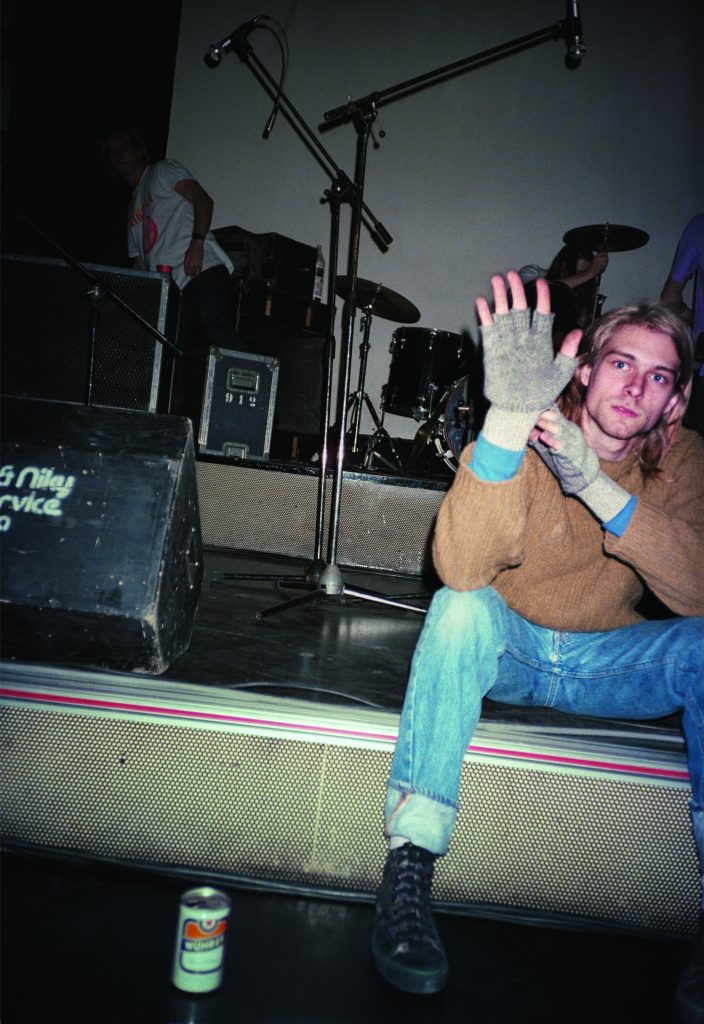
“I was a friend of Kurt. He was a very sensitive, quiet, gentle person,” said Bruce Pavitt, co-founder of Sub Pop Records which put Nirvana’s early tunes on disc. The record man and former DJ spent eight days touring with the band in 1989, taking candid photos throughout, including some that capture Cobain in private, unguarded moments.
Pavitt’s photos have been published in Experiencing Nirvana, a book of 350 images. Selections from the book are on display at Pompano Beach Cultural Center, which on July 12 premiered the exhibition of 13 large-format frames from Pavitt’s collection.
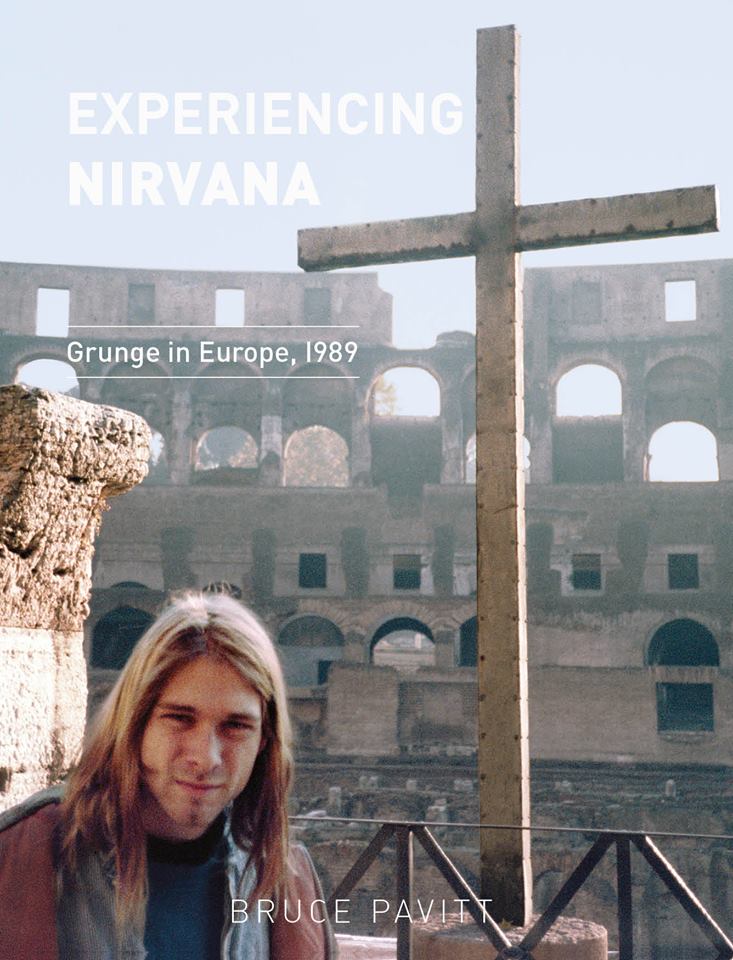
“We were touring in Europe with two other grunge bands, Tad and Mudhoney,” Pavitt said. “The tour took a toll on Kurt. He was somewhat depressed in Rome and he had a breakdown. He smashed a guitar and climbed a 14-foot speaker tower, threatening to jump off.”
Cobain, exhausted from a dizzying zig-zag of European tour dates, worried the band might not perform up to par at an important concert in London.
“Spending six months on the road was pretty tough on Kurt. He was exhausted and downcast. But the tour brought the band together in a super tight way. When they played England, it was great.”
Not just great. The usually jaded British press proclaimed Nirvana was “Sub Pop’s answer to the Beatles.” The performance rocketed Nirvana and grunge to fame and is a seminal moment in rock ‘n’ roll history.
Pavitt’s exhibit is a photographic story of an iconic music breakthrough amid the early stages of what would become an equally iconic mental breakdown.
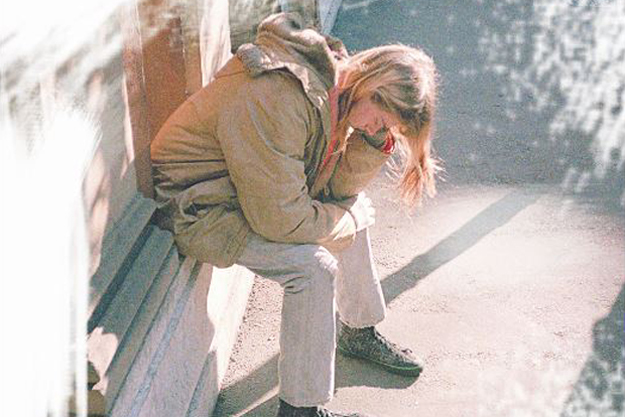
One particularly expressive photo in the display of 16-by-20-inch prints on aluminum shows Cobain outside a hotel in Rome, sitting with his head in his hands. Pavitt said it was taken the morning after Cobain’s meltdown.
In early 1994, Cobain went missing for six days after returning home from touring. On April 5, an electrician found his body. Dead of a head wound, Cobain had a shotgun lying across his chest and, nearby, a scrawled suicide note. An autopsy showed Valium in his bloodstream along with a high concentration of heroin.
Pavitt said Cobain’s passing was a death knell for grunge music, though other groups in the genre, Soundgarden in particular, continued to succeed. “Kurt was a recluse,” he said, “he was not seen much socially. The more famous he got, the more reclusive he became.”
CROW’s nest
Helping wildlife … and veterans
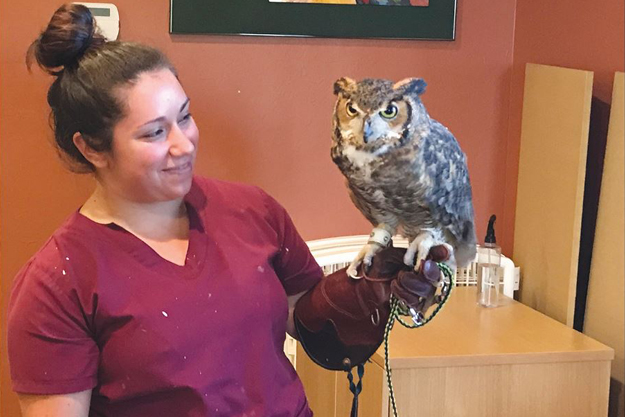
Breanna Frankel knows it takes patience to make friends with a Great Horned Owl. And over time, she developed a rapport with one named Mini — “a good relationship,” Frankel said, “built on food.”
Mini arrived at the Clinic for the Rehabilitation of Wildlife (CROW) on Sanibel Island, off the coast of Fort Myers, with a chunk of a wing missing. The injury upset the bird’s natural balance, according to Frankel, CROW’s rehabilitation manager. Now, Mini sometimes leans against Frankel’s neck or chest, seeming to cuddle.
“That’s not love,” Frankel said. “it’s Mini leaning on Breanna to keep her balance.” Frankel is the only one at CROW who can interact with Mini this way, but it took months for Mini to trust her. A hair dryer has now strengthened their relationship. Mini likes to be blown dry after getting wet and learned how to make it happen. Great Horned Owls secrete an oily substance from a gland that waterproofs their feathers. If their feathers were soaked, the owl would be unable to fly. But that doesn’t work on Mini’s amputated wing. It doesn’t get waterproofed. One time when it got wet, Frankel decided to blow-dry it. Mini’s enclosure is partly covered and partly open to the sky. When it rains, Mini may run out in the rain and then come back looking for Frankel to blow-dry her feathers. (Maybe she’s a wise old owl indeed.)
Besides being displayed to educate us, Mini is a valuable resident of CROW because she is an effective “foster mother” to orphaned baby owls. When caring for young ones, she’s so protective that no one can enter her enclosure, not even Frankel.
I learned this and more during Frankel’s 35-minute presentation about owls – the kind of presentation about various animals made most mornings at 11:00 o’clock at CROW.
One of the “take home facts” I’ll remember is about an owl’s ears. Perhaps you think those two things sticking up atop the owl’s head are ears. They are not. They are just tufts of feathers revealing an owl’s emotions. The owl’s ears are actually holes in each side of its head. Unlike ours, they are not symmetrically placed directly across from each other. One is higher than the other. The higher one hears things above the horizon and the lower ear hears sounds closer to the ground.
CROW is a very busy place. Mini was one of 4,760 animals among 160 species treated at CROW last year. Most of them are injured for an unknown reason. Some are hit by cars. Some are birds that fell from a nest. Some are attacked by another animal. At the time of my visit this spring, CROW was treating 215 animals and had treated more than 1900 since the start of the year. At that pace they’ll exceed last year’s numbers.
As a teaching hospital with an on-site dormitory for veterinarians in training, CROW is “dedicated to saving wildlife through state-of-the-art veterinarian care, research, education, and conservation.”
The visitor center gives viewers a peek of that medicine in practice on large screens. The screens show what’s happening live in six areas of the center, including the “in-take” room where injured animals arrive and are examined.
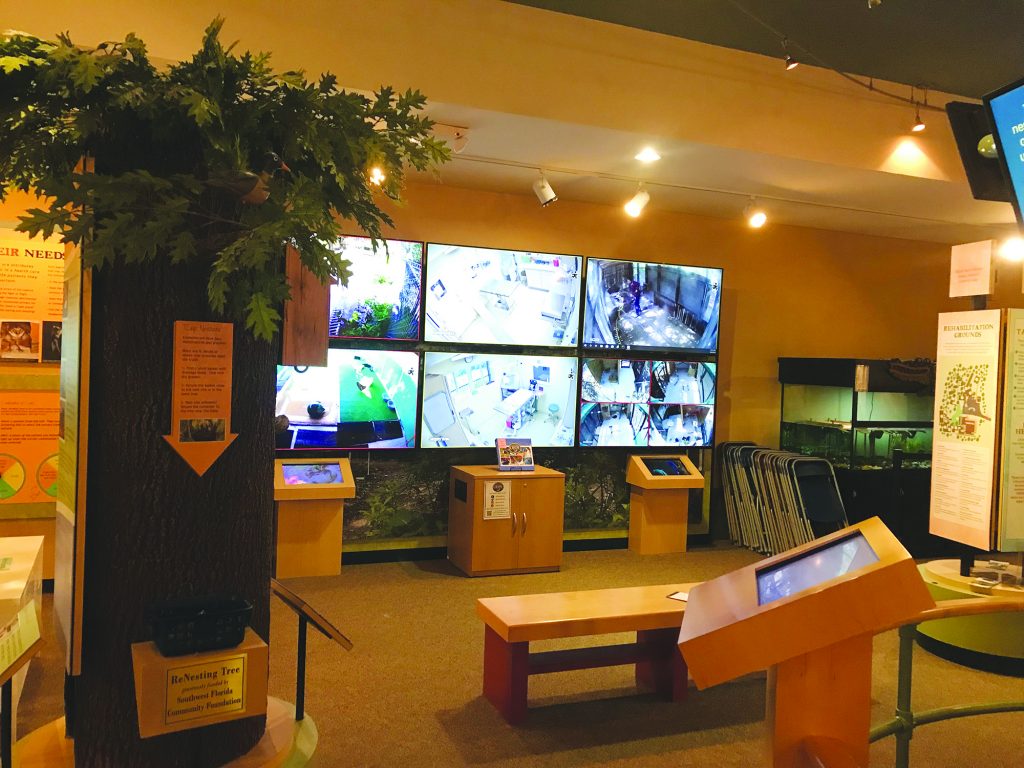
To visit the CROW visitor center on Sanibel, the fee is $12 for adults, less for children. For an additional $13, you can be guided through the grounds to an aviary, a large cage where birds are practicing to fly again, large water tanks with sea turtles, a pelican compound, an area of shallow pools with ladders to encourage mammals to climb, and other animal habitats. You can visit the animal hospital as well.
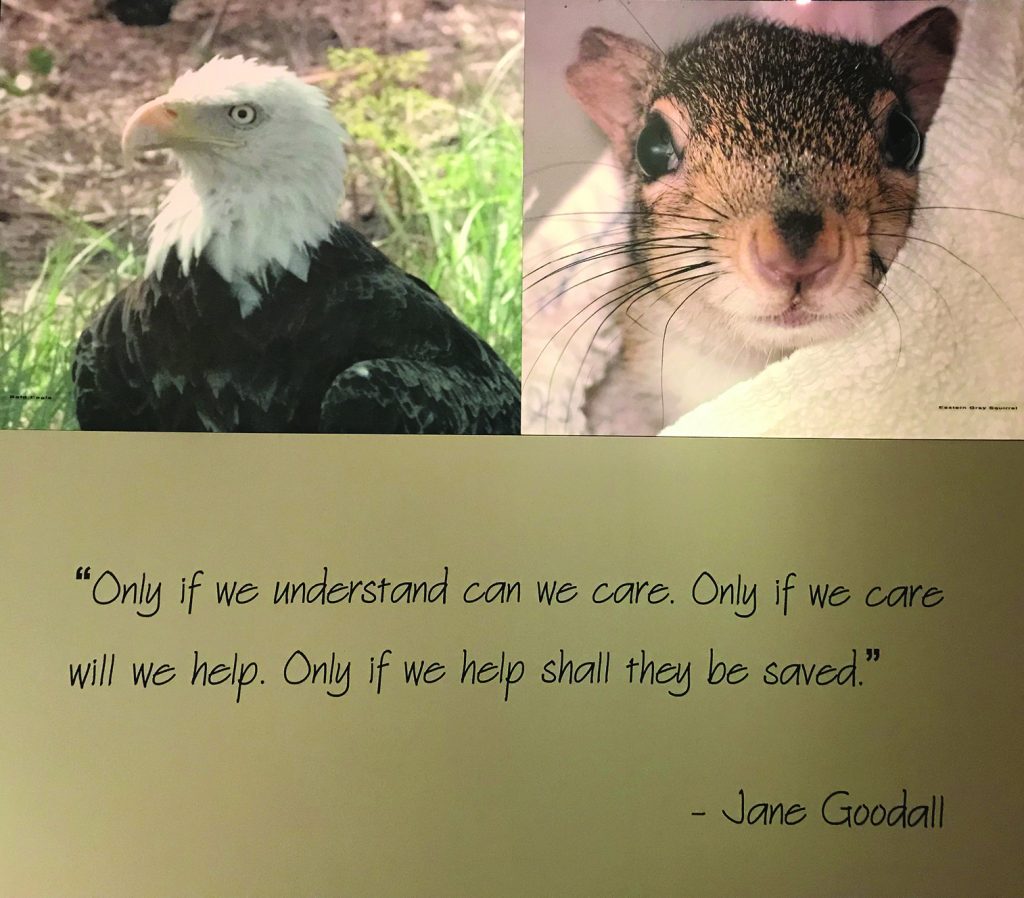
Among the informative exhibits in the visitor center is a poster with a quote from the well-known anthropologist Dr. Jane Goodall that reflects the purpose of the CROW organization. It reads: “Only if we understand, can we care. Only if we care, will we help. Only if we help, will they be saved.”