Alice’s Teapot Cafe

A feast for the eyes as well as the stomach

My friend Susan and I recently stepped into a rabbit hole. I mean, an “Alice in Wonderland”–inspired café of whimsy and enchantment!

Part “Alice” fairy tale, part “Enchanted Forest,” and part High Tea destination, Alice’s Teapot Cafe in Delray Beach is a delight. “Welcome to the immersive world of Alice’s Teapot Cafe, where reality disappears and every tea tells a story.” Their quote is a good introduction to this cute café/bakery/tea-and-coffee shop, located in a large shopping center near the bustling, noisy intersection of Atlantic Avenue and Military Trail. But once you get inside this cozy venue, it’s an entirely different environment. Beautifully decorated from floor to ceiling—and be sure to look up at the gorgeous ceiling art!—it’s a sight for sore eyes.

The whimsically themed backdrops at Alice’s Teapot Cafe make you feel as if you’ve stepped into a lushly illustrated storybook. And it is more than just a charming restaurant—it’s billed as an immersive dining and entertainment experience. Alongside its signature high tea and brunch that’s served all day, this unusual eatery offers visitors a magical ambiance filled with madcap décor, regal seating, interactive moments, and musical waitstaff.

“Our restaurant is meant to be a respite from the outside world. To take the bricks off your shoulders and help you escape from reality,” says Christine Prestininzi, founder of Alice’s Teapot Cafe, a family-run business. “If I can help one person, I’m happy to do it.”

“The heart behind Alice’s Teapot Cafe has always been simple—to offer a gentle escape from a world that can often feel harsh, judgmental, and unkind,” according to Prestininzi’s daughter, Alice (and, yes, that’s her name). “We set out to create a retreat from reality.”

Soothing “Bridgerton”-style music played in the background at lunchtime while Susan and I sipped on our chai tea and nibbled on finger sandwiches, melt-in-your mouth scones with berry preserves, and a delicious assortment of desserts. The hot tea was served in individual colorful teapots, and the savories and sweets were artfully arranged on an elegant, three-tiered service tray. Our servers were warm and accommodating.

After we’d been there a little while, the live entertainment began. The hostess came out and spoke to us all about Alice’s Teapot, then broke into song—“Heaven, I’m in heaven, and my heart beats so that I can hardly speak…”—sounding very good.

On a table near the front was a lovely display of handmade frosted cookies for sale, created in a tea-party theme by an art teacher at Riverglades Elementary School in Parkland. Her business is called Icing Meets Cookie. Also, along a wall by the entrance was a colorful assortment of fancy lady’s hats and fascinators. If you’d like to dress up but didn’t bring anything, you are welcome to borrow a hat or other prop for your special time there. It also makes for some fantastic photos.

In the evening, you can expect Broadway-style serenades, themed dinners, sing-alongs, and guests joining in the fun—“because here, dinner is part theater, part tea party, and completely unforgettable,” as they advertise. This venue is available for event space rentals, making it a great spot for special gatherings. While we were there, two separate parties of women were celebrating someone’s birthday, and in quite a festive mood.

Other activities at Alice’s Teapot Cafe include creative events and workshops such as art classes, “Alice in Wonderland” glow-in-the-dark painting, watercolor classes, “Dinner and Decoupage,” parents’ night out, sip and paint, adult crafts, and a flower social club.

Whether you’re planning a fun ladies’ night out, looking to dress in your finest for high tea, wanting to partake in the arts, putting together a little girl’s birthday bash, or just looking for something different and adorable for your Instagram, this is the place to be. Maybe you’ll meet the Mad Hatter!

For more information, go to www.aliceteapot.com. Photography by Susan Tutwiler.

Feeding your body, feeding your brain

Being healthy means taking care of your brain as well as your body. This is especially important as we age because the risk of dementia increases over time. While Alzheimer’s disease is the most common cause of dementia for adults, affecting more than 6 million Americans ages 65 and older, it isn’t the only type.

Other illnesses and conditions, such as Parkinson’s disease, alcoholism, stroke, multiple sclerosis, amyotrophic lateral sclerosis, and traumatic head injury, also can cause dementia. Additionally, diabetes, high blood pressure, and heart disease can increase the risk of dementia, so managing these conditions is important.

Making healthful lifestyle choices—including getting regular physical activity, socializing, limiting alcohol intake, and not smoking—can help to reduce your risk for dementia. Scientific evidence has shown that eating patterns such as the Mediterranean diet and the MIND diet may be beneficial to your body as well as your brain, helping to protect against cognitive decline. Certain nutrients are especially important for brain health and may help maintain and improve cognitive function. These include the following:

Omega-3 Fatty Acids. About 60% of the brain is composed of polyunsaturated fatty acids. The most abundant type is docosahexaenoic acid, an omega-3 fatty acid. Some research suggests that diets rich in omega-3s, combined with a low saturated-fat intake, may lower the risk of cognitive decline.

B Vitamins. B vitamins, including B6, B12, and folate, are known for their role in metabolizing homocysteine, one of the amino acids in protein. High levels of this amino acid are considered a risk factor for cognitive impairment, such as dementia and Alzheimer’s disease. B vitamins are involved in many other aspects of brain function, and deficiencies may affect mental health and lead to cognitive decline. However, research on B vitamin supplementation and cognitive function remains unclear.

Antioxidants and Phytonutrients. The brain is particularly susceptible to damage caused by free radicals, which are substances that attack healthy cells. Vitamins C and E, as well as the mineral selenium and phytonutrients such as lycopene, are antioxidants and are known to help minimize the damage caused by chronic stress and free radicals. Other well-known phytonutrients—such as anthocyanins, which give certain fruits and vegetables their color—are thought to have a positive effect on brain function.

Vitamin D. Vitamin D is found in nearly every cell in the body, so it’s no surprise that this vitamin is present in brain cells. Vitamin D is believed to have protective effects against cognitive decline, and research has suggested that low blood levels of vitamin D may affect brain health.

Choline. Choline is an essential nutrient required for fat transport and metabolism. It is necessary for normal brain and nervous system function, muscle control, and other functions.

Focusing on an overall healthy eating pattern that includes these nutrients from foods is important for good health. You can get these nutrients from a variety of fruits, vegetables, whole grains, protein foods, and healthy fats:

  • Berries, including strawberries and blueberries, citrus fruits, grapes, and watermelon
  • Dark, leafy greens such as spinach, kale, collard greens, and broccoli
  • Whole-wheat bread, oats, quinoa, and other whole grains
  • Seafood, including shellfish and fish such as salmon, mackerel, tuna, sardines, and herring
  • Nuts and seeds such as chia, flaxseeds, walnuts, and almonds
  • Beans and lentils, including chickpeas, black beans, and lima beans
  • Whole eggs, skinless chicken, and turkey
  • Sources of unsaturated fat such as avocados and olive oil

Remember: While making healthful food choices is a vital part of a healthy lifestyle, other important factors that contribute to overall health include getting enough sleep, managing stress, staying hydrated, and adding regular physical activity to your daily routine.

From rescue to release: The work of Busch Wildlife Sanctuary

For more than 40 years, Busch Wildlife Sanctuary has been a leading voice in wildlife rehabilitation, conservation, and education. Set on 20 acres in Jupiter, the sanctuary features a state-of-the-art animal hospital and rehabilitation center and is home to approximately 150 native wildlife species, including otters, black bears, bobcats, foxes, cougars, and pelicans.

Each year, the hospital treats around 5,000 patients, and it’s equipped to handle complex cases with a computed tomography machine, blood diagnostic equipment, a laboratory, and a surgical suite. Busch Wildlife has a full-time veterinarian on staff, along with two rotating veterinary interns and a network of experienced veterinarians who generously donate their time.

That network can make all the difference. When Grayson, one of the sanctuary’s resident foxes, was diagnosed with a thyroid tumor and needed surgery, the staff veterinarian estimated the complicated procedure would take two hours. “We have a veterinarian in the area who is a retired orthopedic veterinary surgeon, so we reached out to him. He came over and had it done in 15 minutes,” recalls Amy Kight, CEO of Busch Wildlife Sanctuary, who is celebrating 22 years with the organization.

Busch Wildlife can only accept and treat native wildlife species, which presents a unique challenge in Florida, where invasive species such as iguanas, pythons, and Muscovy ducks are widespread. Kight estimates that 10% to 15% of the cases brought in are invasive species that the sanctuary cannot treat, though staff always provide referrals rather than turning people away.

Of the native species admitted, about 30% can be successfully rehabilitated and released back into the wild. For animals that recover but cannot be released and are deemed suitable for captivity, the sanctuary follows a thoughtful and collaborative placement process.

“We have a joint committee of animal welfare and animal placement where, each month, our veterinarian, our head of animal care, our education director, and other key staff sit down and go through the list to figure out a placement.” In some cases, animals are placed with other organizations. Disney’s Animal Kingdom, for example, has taken in raptors, opossums, and snakes for its education program.

This time of year—baby season—brings a surge in activity. The sanctuary often takes in about 50 new patients per day and fields calls from concerned residents who encounter baby birds, squirrels, opossums, and other wildlife in their neighborhoods.

“It’s a lot of chaos and education,” says Kight. “People tend to see a baby animal and think they have to go rescue it, which gives us the opportunity to say, ‘Please don’t do that.’ We have to first determine whether this animal really needs us, or whether it’s just a youngster trying to make its way in the world and we’re interrupting that life cycle.”

Some of these situations are preventable. During hurricane preparation, for example, tree trimming can inadvertently disturb nests where young animals live. The sanctuary emphasizes education around proper tree-trimming practices and encourages residents to consider whether displaced animals can be safely renested nearby.

Other cases are unavoidable, such as when a mother squirrel is killed by a car, leaving orphaned babies behind. “To get a squirrel from eyes still closed back to the wild takes 4 months,” explains Kight.

When orphaned animals—whether squirrels, owls, opossums, or others—require long-term care, staff take careful steps to ensure they are raised as naturally as possible. This helps prevent them from becoming habituated to humans, which is critical for successful release.

Precautions include wearing ghillie suits—specialized camouflage designed to resemble foliage—using puppets for feeding, and placing animals with foster mothers when possible, a method that has proven especially successful with owls and opossums. “Opossum moms are great,” says Kight. “As long as she’s producing milk, she’ll raise other babies.”

While the rehabilitation center itself is not open to the public, the sanctuary welcomes visitors seven days a week from 10 a.m. to 4:30 p.m. Admission is by donation, with no set fee.

Each year, Busch Wildlife Sanctuary draws tens of thousands of visitors through its gates. Its education programs include daily offerings such as Conservation Conversations in the amphitheater, as well as school field trips, guided tours, summer camps, Junior Naturalist programs, outreach presentations, and interactive exhibits designed to inspire curiosity and conservation action.

“We want people to really know what lives in their environment and how they can coexist with it,” says Kight of the educational programming. Rather than overwhelming visitors with large-scale environmental issues like global warming and microplastics, the sanctuary focuses on simple, actionable steps—such as planting native species instead of exotics that can harm local ecosystems. “You gotta start small,” says Kight. “Otherwise, when you start thinking about all the things encroaching on our environment, it starts to feel impossible.”

A walk through the sanctuary offers visitors the chance to meet its permanent animal residents. Among them is Freddie, a 40-year-old alligator who has lived at the sanctuary her entire life.

When Freddie was still developing, a child cracked her egg open prematurely. The child’s parents brought the egg to Busch Wildlife, but because of the early opening, Freddie never fully developed and cannot open her mouth all the way. Unable to survive in the wild, she has since become an ambassador for her species, giving visitors an up-close look at a Florida alligator.

Another resident, Charlie the California cougar, has a cross-country story of his own. Declawed on all four paws and sold as an illegal pet, Charlie was first taken in by Conservation Ambassadors, a California-based sanctuary. From there, Kight and COO Christen Mason personally transported him to Florida. “We just got up one Saturday morning, grabbed Starbucks and a van, and got to California Monday afternoon,” recalls Kight. “Tuesday, we loaded Charlie in a kennel on our van, and it was 44 hours straight back to Florida. We timed it so we got back right when the staff was getting in on Thursday morning, so they could help us get him set up.”

At the time, Charlie was overweight and would have had to be transported as cargo if by airplane—an option the team wasn’t willing to consider. “It would have been too stressful,” explains Kight. “Also, you’re talking about an apex predator, so there were too many things that could go wrong. It was safer to have him in our hands.”

California cougars and Florida panthers are the same species, considered geographically separated. Charlie—despite being about 30 pounds heavier than a Florida panther—serves as a representative who helps teach visitors about conserving the Florida panther.

While long known as a family-friendly destination, the sanctuary has recently expanded its offerings to appeal to adults as well. New events include Wine Down with Wildlife, Yoga in the Wild, and music concerts. The next Yoga in the Wild session is scheduled for Saturday, May 16, at 9 a.m.

For more information, visit www.buschwildlife.org.

The quiet evolution of Mother’s Day

Mother’s Day doesn’t look the same for everyone. For some moms, the day starts early with little feet running into the room, handmade cards in hand, and the kind of excitement that can’t be planned. There might be breakfast in bed, even if it is slightly messy, and a full day built around celebrating Mom.

For others, the day is quieter. It might be a phone call in between classes, a text sent during a work break, or plans that have to fit into already busy schedules. And sometimes it is not a full day at all, but a few moments carved out of a busy schedule. Neither version is better than the other. They simply reflect different stages of the same role.

When kids are little, motherhood fills up everything. It’s the school drop-offs, the packed lunches, the practices and games, the constant reminders, the routines you repeat every day without thinking about it. It’s hard to miss, and Mother’s Day in those years usually carries that same kind of energy.

As children grow, life naturally shifts. They begin to build their own schedules, their own responsibilities, and their own lives outside the home. Time together is no longer automatic. It becomes something that has to be planned, or at least intentionally chosen. Because of that, Mother’s Day begins to change too.

For many moms, it becomes less about big gestures and more about effort. It’s rarely about gifts or anything elaborate. Instead, it is about whether someone took the time to think ahead. Whether the call feels rushed or if it lasts a little longer than usual. Whether there is a moment where everyone is fully present.

A short message that feels thoughtful can mean more than something expensive. A visit, even if brief, can matter more than a perfectly planned day that feels forced. It’s not about how much is done, but how intentional it feels. Across all stages of motherhood, that need to feel seen and appreciated does not go away—only the way that it shows up changes.

For some, that might bring a sense of pride. Watching children grow into independent people is the goal, after all. At the same time, it can also come with a quiet awareness that the closeness of earlier years does not exist in quite the same way anymore.

Not worse. Just different.

And that’s really what Mother’s Day reflects. It isn’t about perfection or scale. It’s not about creating a picture-perfect moment that looks a certain way. It’s about acknowledgment. About taking a pause, no matter how brief, to recognize everything that this role has required over the years.

Whether that comes in the form of a crayon card, a last-minute phone call, or a simple “Thinking of you,” the meaning behind it stays the same. It doesn’t have to be big. It just has to be thoughtful. Because in every stage of motherhood, being remembered is what matters most.

12 local artists + 12 local nonprofits = BFA Artwalls Mural Fest at History Fort Lauderdale

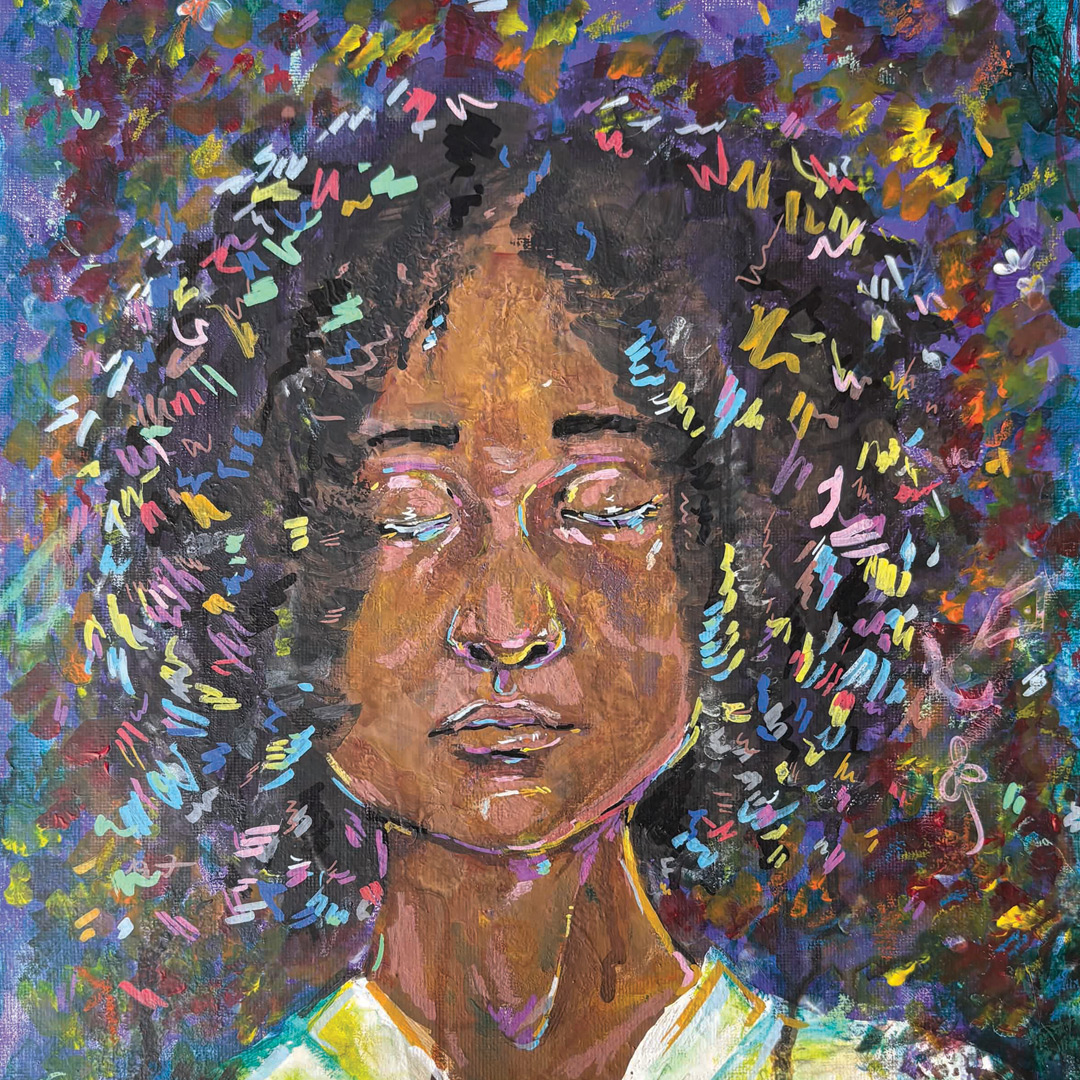
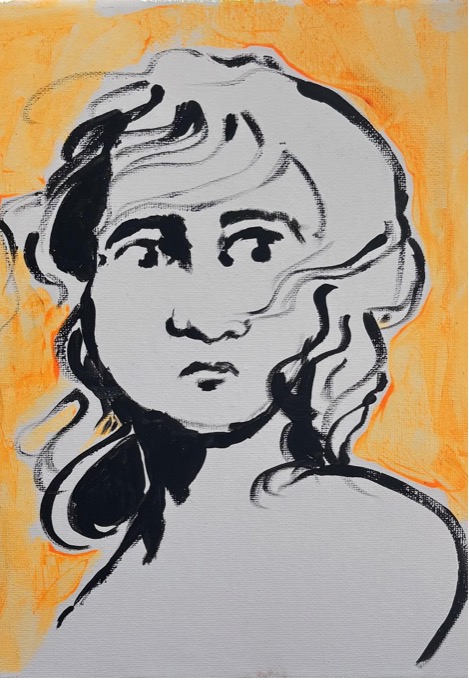
It was pouring rain upon arriving at History Fort Lauderdale that Sunday. Luckily, each artist had their workspace covered under their tarped tent. “I’m used to working with the elements,” said Sergio “Surge” Quiñonez, a South Florida artist, who pointed out the “teal wash”among his media.

Surge is just one of 12 local artists matched with 12 nonprofits for this year’s Mural Fest. In his recent collaboration with the Hollywood Art & Culture Center, the wash gave an extra layer of authenticity apart from the exterior and spray paints commonly used for creating mural works. While Dali had not yet been given his mustache, Surge’s illustrative hand shows a level of talent that blends symbolic portraiture and surrealist exaggeration. Upon completion, the work will be found at the Center.

Stephanie “Steph” McMillan is another artist painting permanence at the Mural Fest. Her work is for Fort Lauderdale’s Museum of Discovery and Science. The mural will be found in the permanent collection of the new nature exhibition, “Nature Explore,” which showcases Broward County’s wildlife and ecosystems while promoting conservation and biodiversity.

PriVer & Murals is a collaborative duo, painting an artwork for the nonprofit New City Players. The theater is dedicated to fostering human connection through productions that bring people together in a shared space. The mural reflects this mission through a visual language of psychological duality and emotional simultaneity, while capturing the infinite spectrum of energies that coexist within one shared world.

Nate Dee, a Miami artist, is painting for the Stonewall National Museum and Archives. His work delivers cultural “awesomeness” as he blends portraiture, social narrative, and street‑art chromatics into a single, declarative visual language. Dee bridges contemporary muralism and the museum’s mission: “art as testimony, art as presence, art as a public record of lived experience.”

Ivan Roque paints the pompano fish in smooth, densified color for the Pompano Beach Arts Foundation. The mural reads as a vibrant, site‑specific celebration of Pompano Beach’s coastal identity, sharing the energy of the city’s waters and the creativity of its arts community.

Luis Valle, also known as El Chan Guri, paints for the Inside Out Theater Company. He takes almost an Aborigine approach, surrounding the focal point in infrared-choice combinations. His composition radiates outward in concentric pulses of color, as though the figure is generating her own field of emotional frequency. The mask is like an ornate interface between inner life and public performance, while the dotted halos echo communal ritual, ceremony, and the shared rhythms of spectatorship.

Gabby Shepherd, painting for the Old Davie School Museum, shifts the focus beyond the Everglades to the wider story of Davie’s heritage. The warm side of the panel highlights native plants and citrus while the cool, watery side nods to the surrounding wetlands. By letting the local heron transform between these environments, Shepherd shows how the museum preserves a fuller history.

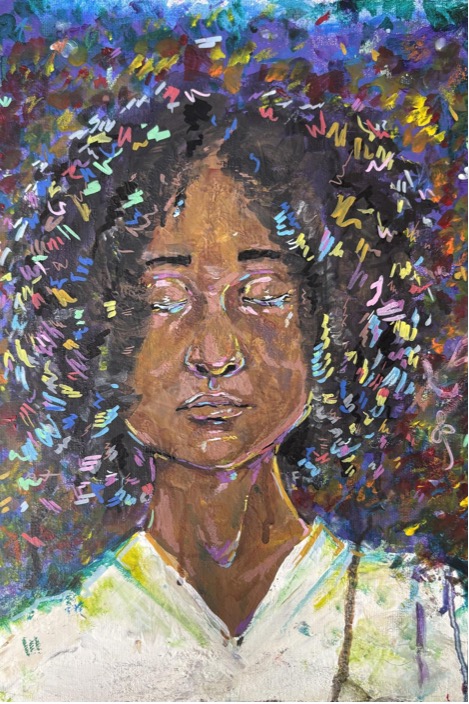
BK Foxx’s work is grounded in portrait realism, but it’s pushed into a cinematic register specific to the Florida Children’s Theater. The mural’s monochromatic purple palette mirrors the theater’s role as a space where imagination is distilled. Foxx echoes how theater uses lighting and mood to guide an audience’s attention toward the inner transformation of a character rather than the literal world around them.

Michael Andress, aka Mongo, also uses monochromatic themes to deliver his message. Painting for the South Florida Pride Band, Andress takes his “psychedelic-abstract” style to bring fun to the surface. By limiting the palette, he amplifies rhythm and movement, allowing the character’s energy and musicality to take focus.

Samara, creating for the South Florida Chamber Ensemble, folds its mission directly into her portrait, turning listening itself into an act of natural transformation. A blue jay anchors the piece as a symbol of generational growth, while the subtle textures of layered trash bags add a quiet reminder of resilience, voice, and the courage to evolve.

Stefan Smith, a South Florida muralist whose work channels vibrant, uplifting energy into an exploration of nature and culture, shares his vision for the Developing Dreams Foundation. The mural binds crisp energetic detail that reflects Smith’s direct, high‑impact approach. It is a sharp, stylized portrait built from bold complementary colors that captures the figure in motion.

Ashlee Sanford paints a symbolic timeline of movement for the Art Prevails Project, syncing colors with the flow of creative growth. Her palette of purples, golds, and deep blacks becomes a current that carries the viewer from academic achievement to dance, theater, music, and community arts.

“Mural” of the story, it turned out to be a bright and sunny day at the fest. Finally, artist Orla Ananda, of Miami, painted a permanent mural behind Howl at the Moon, Fort Lauderdale, specifically for the Business of the Arts of Broward at History Fort Lauderdale.

Light and beauty

Mariko Kusumoto, Take Akari sculptures grace the Morikami

Mariko Kusumoto, “Light as Air,” fiber-based, translucent, and crafted through tsumami‑zaiku techniques.

The buoyant sculptures of Mariko Kusumoto. Occupying the Morikami Museum and Japanese Gardens’ main gallery through April 5, expect an immersive, contemplative experience where light and proximity matter integrate. Fine detail is prevalent and parallels the authentic, methodical organization characteristic of a kimono. When viewed closely, the work is consuming.

Mariko Kusumoto. This Japanese-born artist is known for her delicate, floating fabric sculptures that blend traditional Japanese craft with contemporary installation. She creates whisper‑light fabric sculptures that seem to hover between craft and contemporary artistry. Raised in a 400‑year‑old temple as the daughter of a Buddhist priest, Kusumoto developed a keen attunement to subtle light, tactile surfaces, and the hush of carefully ordered space.

Mariko Kusumoto, “Ethereal Garden,” mixed-media sculpture (polyester and wire), 2024.

Kusumoto’s “Ethereal Garden” is an intricate, modular installation evoking underwater ecosystems through fabricated coral, sea anemones, and marine flora. The work explores themes of biodiversity, emotional fragility, and poetic buoyancy through textile manipulation and sculptural choreography.

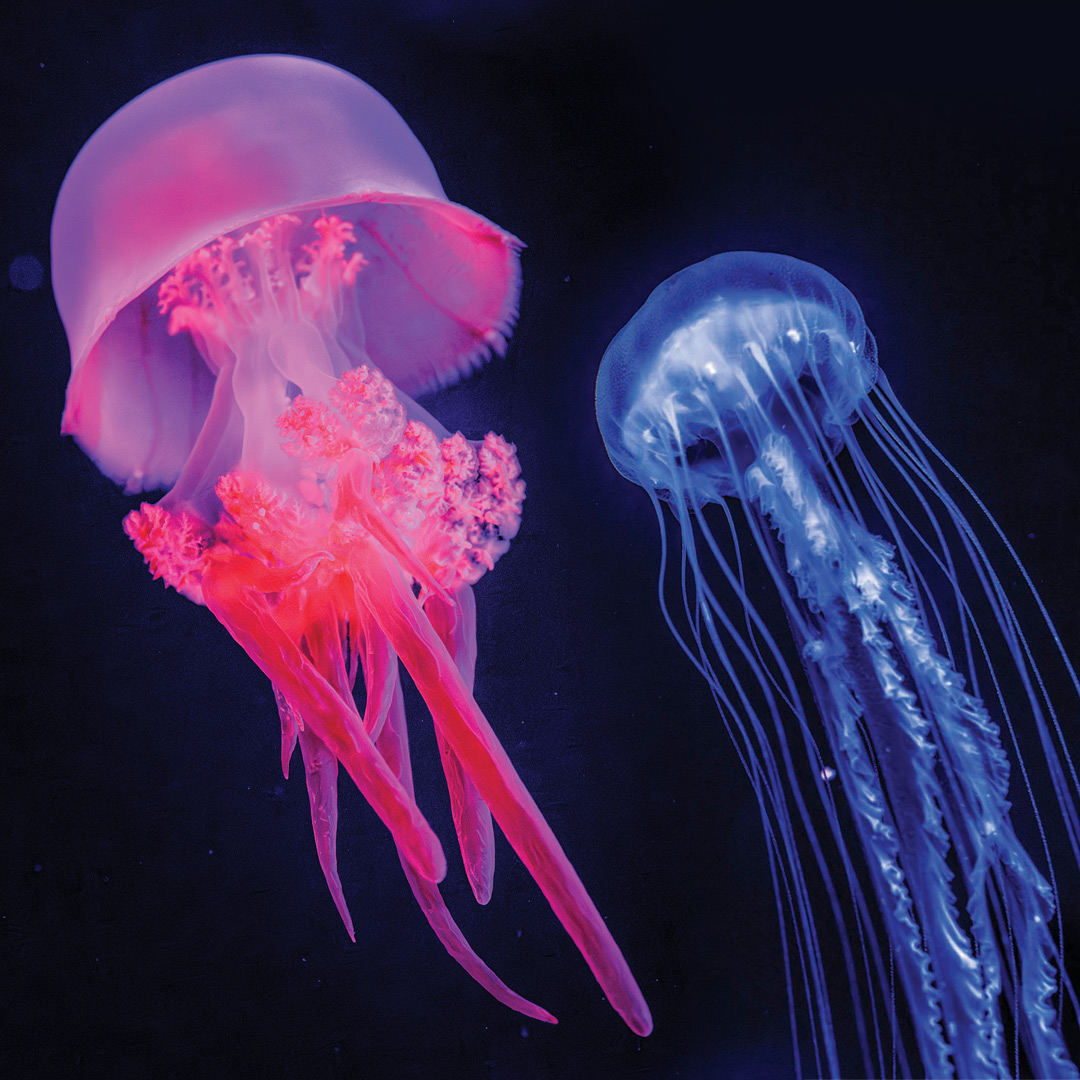
Kusumoto’s practice is intensified by time‑honored Japanese handicrafts, especially the delicate folding and pinching of tsumami zaiku, with modern sculptural thinking. From tiny, exacting manipulations, she builds larger, translucent forms that evoke drifting blossoms, jellyfish, or underwater plants, inviting viewers to watch how shifting light and gentle motion reshape surface, depth, and perception.

Marine biodiversity as emotional landscape. While inspired by real marine life, Kusumoto’s forms are not literal replicas. Instead, they’re imaginative hybrids, blending both botanical and anatomical references, color radiation and molecular symmetry, as well as subatomic weight and poetic buoyancy where fantasy meets biology.

Mariko Kusumoto, pencil cases, 2011, mixed-media sculpture (hinged human‑form containers with embedded objects).

Mixed-media sculpture. Kusumoto, who is also a metalsmith and former printmaker, celebrates her earlier works with this sculpture, which features two hinged, human-shaped forms filled with miniature objects, including a clock, a ruler, a vanity, a flower, and cut‑out figures. They are arranged as internal “compartments” that explore themes of identity, memory, time, and personal ritual. It is a striking example of her narrative container series, where the body becomes a vessel for memory, identity, and symbolic layering.

Psychologically, the body represents a container for time, memory, and ritual. It is sociocultural, objectively gendered as a commentary on formation and subjective narrative—each of which, an artwork demonstrates a chapter in a personal or objective story.

Mariko Kusumoto, “Bamboo Garden,” mixed-media installation (polyester and wire), 2025.

A bamboo-inspired aesthetic. In “Bamboo Garden,” a vertical arrangement of vibrantly colored bamboo stalks of green, yellow, blue, and orange is presented as an immersive sculptural display. The work explores repetition, texture, and chromatic variation, transforming natural forms into stylized patterns that evoke both serenity and visual rhythm. Handcrafted by Kusumoto, whose signature practice involves delicate textile manipulation and organic sculptural forms, it’s an originally crafted, site‑specific installation for Tiffany’s. Kusumoto was inspired by Kabuki theater for Tiffany’s six‑story flagship in Ginza, Tokyo. It is an elegiac homage to Kabuki, one of Japan’s most stylized and dramatic performance traditions. Kusumoto has also collaborated with other notable names, such as Elizabeth Arden, Jean Paul Gaultier, and La Mer, and is represented in several museums around the world, including the Victoria & Albert Museum in London and the Smithsonian American Art Museum.

Take Akari: Bamboo Lights. The Morikami’s “Take Akari: Bamboo Lights” exhibit features expansive, glowing bamboo sculptures curated by Akihiro Mashimo, celebrating tradition, craft, collaboration, and sustainable management. Mashimo, a master bamboo artisan known for revitalizing community‑based illumination festivals in Japan, brings a contemporary sensibility to this centuries-old material practice. He is a leading figure in contemporary bamboo craft and is recognized for his large‑scale light installations that merge artisanal technique with ecological awareness and community engagement. Mashimo’s practice centers on hand‑carved bamboo illumination and collaborative making, which has helped shape the modern Take Akari movement through his commitment to sustainable harvesting and local participation.

The Morikami Museum first debuted “Bamboo Lights” on July 7, 2024. Following the exhibition, the museum commissioned the illuminated bamboo installations crafted by Akihiro Mashimo for long‑term stewardship and preservation within its collection.

Tanabata is Japan’s Star Festival, celebrating the once‑a‑year meeting of the lovers Orihime, the weaver princess (Vega), and Hikoboshi, the cowherd (Altair). Vega and Altair are the two stars at the heart of the Tanabata legend. Legend has it that they fall deeply in love, neglect their duties, and then are separated by the sky deity (the Milky Way) as punishment. Moved by Orihime’s sorrow, the deity allows them to reunite once a year, on the seventh day of the seventh lunar month. This reunion is the heart of the Tanabata festival mythology. It is marked by hanging colorful wish‑strips on bamboo and local festivals held between July and August.

“Take Akari” literally means bamboo light. It uses cut and drilled bamboo tubes fitted with candles or LEDs to create patterns of light and shadow across gardens and public spaces. Take Akari began as a grassroots response to abandoned bamboo groves and the social need to bring communities together. Makers harvest overgrown bamboo, carve decorative perforations, and light the pieces to form “lightscapes” that are both aesthetic and civic.

This practice has grown into community festivals and site-specific installations that celebrate local craft, reconnect people with nature, and draw attention to bamboo forest management issues.

Visitors can experience the world of illuminated bamboo at the Morikami Museum.

Akihiro Mashimo. Born in 1977 in Yokohama, Mashimo is a Japanese bamboo craftsman and artisan recognized for his mastery of takezaiku, traditional bamboo craft. He grew up in Nagaoka, Kyoto Prefecture, where bamboo was a constant presence. He was formally trained at the Traditional Arts School of Kyoto, graduating in 1998. Mashimo is known internationally for demonstrations, workshops, and collaborations in the U.S., Italy, and the U.K., where he promotes sustainable bamboo practices and contemporary applications of traditional techniques.

A beach day in the shadow of the pier

The longest pier in Broward County, at 976 feet, is the Deerfield Beach International Fishing Pier, considered the crowning jewel of the beach, a landmark that attracts thousands of sightseers and anglers annually. I went there recently with my son Jacob—not to fish, but to walk the pier and take photos, to view wildlife, and to stroll along the beach.

We started with lunch at JB’s on the Beach, a nice seafood-focused restaurant overlooking the ocean. They have valet parking there, but we were planning to spend several hours at the beach that day, so we ended up parking in a parking garage just off A1A, not far away, and leaving the car there all day. Street and lot parking is at a premium in this area.

After lunch, Jacob and I walked the short distance over to the fishing pier, stopping to look at the screen for Spinner the Sea Cam, the city’s live underwater camera, at the entrance to the long pier. The sign next to the sea-cam screen says that Spinner is located at the end of the pier, 30 feet below the surface of the water. You can watch fish swim right up to it. It’s known as a fun, quirky local highlight showcasing the personalities and activities of the pier’s fish residents.

“Welcome to the amazing views of Deerfield Beach,” according to the city website. “Whether you are watching the early morning sunrise, a fisher on the pier fighting a feisty barracuda, or King Benny the Blenny yeeting sharks—we hope these awesome wonders will help serve as a reminder that we all have a responsibility to take care of the ocean and everything in it and around it.” (For more information and to watch a live feed of the sea-cam, visit DFB.city/beachcams.)

The iconic Deerfield Beach International Fishing Pier has been loved for generations. It stretches well into the ocean with great views, has a well-stocked concession stand for fishing amenities (fresh and frozen bait, rod and tackle rentals), and carries a storied history, including a dedication by President Gerald Ford in 1976. The pier serves as a symbol of the town, and the area around it provides a community gathering hub and entertainment spot, including hosting special events like “Pier Under the Stars.” Visitors can take scenic walks along the Atlantic in the clean sand, walk on the (not-so-sandy) green turf that runs just behind it, or go up on the “boardwalk” that runs along the back of the restaurants. For some, it’s the quintessential Florida beach experience. 

The first wooden Deerfield fishing pier was reportedly built in 1951–52. Because it was low and close to the water, it was a place for community members to gather and fish. In 1956 it changed hands, and new management built a restaurant, tackle shop, and chum machine. This all  brought fishermen flocking to the pier. Then in September 1960, Hurricane Donna wiped out the pier, destroying the wooden structure and sending planks floating away; the pier was rebuilt by 1963 through a city bond issue. Through the years different people leased the pier, though it was hard to turn a profit. The last lessee turned the pier back over to the city and became the pier manager, organizing events like fishing contests.

Today, it is a bustling pier, filled with several people fishing and cutting up their catch on tables while we were there, and others just watching the pelicans and other wildlife and taking in the ocean breezes. Jacob and I walked to the end of the pier and enjoyed the scenery. The cost to enter the pier is typically $2 for sightseers and $4 for those there to fish.

After we left the pier, we strolled along the boardwalk and listened to a pair of musicians playing at one of the restaurant patios; took a walk on the turf on the other side of the pier, taking in the sights there; and finally walked barefoot along the surf until we found a good place to set up our towels and enjoy the beach. From there, we could see the pier jutting out in the distance—it was a lovely day at the Atlantic.

For more information, go to www.deerfield-beach.com/1420/International-Fishing-Pier.

Bustling farmers market on the waterfront

Did you know that one of the best farmers markets in the country can be found in South Florida? Yes, if you head up to downtown West Palm Beach on a Saturday, you’ll discover a cacophony of sights, smells, and sounds near the Intercoastal Waterway, in Centennial Square, and down Clematis Street. This is the West Palm Beach GreenMarket, where large crowds show up every weekend for this highly rated market.

With more than 130 vendors, the GreenMarket is in its 31st season, which opened in October; this year, it’s extended through the end of May. This season’s theme is “From the Ground Up.” In 2025, the West Palm Beach GreenMarket once again excelled in USA Today’s 10 Best contest for “Best Farmers Market.” This Readers’ Choice poll highlights the top 10 farmers markets nationwide. The GreenMarket maintains its status as a leading market, securing the No. 1 position in 2021, 2022, and 2023, and achieving No. 2 in 2024 and 2025.

After hearing a lot about this well-regarded farmers market, I went to check it out recently with my husband and another couple. Of course, with the popularity of this event, the free parking garages had already filled up by the time we got there, so we ended up paying $15 for a spot in a nearby garage. Early birds will have better luck, though. We had packed the car with soft coolers to store our purchases, as well as reusable tote bags to carry everything through the maze of vendors. We grabbed our bags and headed to the market.

There, we found the usual fresh vegetables and fruits (some very exotic), along with breads and baked goods, apple cider donuts and other sweets, Cuban coffee, teas, smoothies, spices, herbs, flowers, plants, dog products, and local wares. And that’s just a sampling of what there is. We experienced the fragrant smells of several kinds of delectable foods. Many of them, such as empanadas, crab cakes, and lobster rolls, you can get to eat right there, or bring them home to heat up later. And merchants sell a lot of local goods that you may not find anywhere else.

While strolling past the packed vendor stalls and plethora of savory and sweet offerings, you can also enjoy live music, some interesting workshops, lovely flower trellises, and the waterfront with its seagulls and assortment of sand sculptures. Deeper into the thick of it, the market gets very crowded, with some long lines, and even though there are picnic tables to sit at to enjoy your purchases, the tables all seemed full. (We ended up eating at a nearby restaurant but still got to sit out in the fresh air.) Also making their way through the crowds are lots of leashed dogs, adding to the hectic but fun and colorful scene.

This all started back in 1995, when former West Palm Beach Mayor Nancy Graham, inspired by the public markets of Europe, sought to establish the first weekly public farmers market in Palm Beach County. She envisioned a weekly green-market where people could buy fresh produce from local farmers as well as interact with friends and neighbors. She recalled that in the European markets, the people selling products knew their shoppers’ names, and the shoppers could ask questions about their wares. So she wanted to make that happen here.

In November 1995, when the West Palm Beach GreenMarket first opened, it took place in the parking lot of the old city hall and featured just 13 vendors. Despite its humble beginnings, the market became a hit, and local residents started to make it part of their routine to come to the GreenMarket on Saturday mornings. After moving to another location in West Palm Beach, the market eventually expanded to its current waterside locale in October 2010, in a place as well known for its beautiful scenery, Intracoastal breezes, and communal plazas as it is for its wide selection of fresh and delicious things to buy.

The GreenMarket is now an integral part of the bustling Saturday experience in downtown West Palm Beach. We’re glad we got to enjoy it—and take some of it home with us.

The West Palm Beach GreenMarket is open Saturdays from 8:30 a.m. to 1:30 p.m. at the Waterfront Commons. For more information, go to www.wpb.org/Residents/Community-Events/Events/WPB-GreenMarket.

A Taste of Italy, Built on Family: Flora’s Italian Eatery and Angela’s Bar & Kitchen Set to Open in Coral Springs

When the doors open this January at Flora’s Italian Eatery and Angela’s Bar & Kitchen, at 12335 West Sample Rd., Coral Springs will gain more than a new dining destination — it will gain a full-fledged Italian experience, crafted by a family that has spent 50 years bringing the flavors of Italy to South Florida.

The two-story, 15,000-square-foot space in an office park with plenty of parking, just across from the Panthers IceDen, is the newest venture from Flora Fine Foods, the nationally recognized importer known for supplying everything from Italian wines to cruise line gelato.

For founder and owner John (Giovanni) Flora, 73, the vision is simple: create a market and restaurant that feels like Italy, tastes like Italy, and operates with the heart of a true Italian family.

A Parkland resident for the past 28 years, Flora was born in Bari, in Italy’s Puglia region, and immigrated to New York with his family in 1962 at the age of ten.

“We’re excited to open our doors and welcome the community into an extension of our home,” says Flora. “This is a true family business, and everything we do — at the eatery, the restaurant, and beyond — is inspired by the values we grew up with around the table.”

He raised his family in Parkland, and his daughter Angela Flora, 42, now a new mom, is a graduate of Coral Springs Middle School and Marjory Stoneman Douglas High School. It was her vision to expand the business into a market and restaurant.

“It’s an ambitious undertaking, but a labor of love,” says Angela, who is juggling her roles with the business and as a mother to a nine‑month‑old son. “We cannot wait to meet you all and welcome you into our family.”

A Market That Starts at Breakfast and Ends at Dessert

Kenny Rodriguez, vice president of operations, sums it up simply: “Think Joseph’s — on steroids.”

On the ground floor, Flora’s Italian Eatery will function as an all-day market and café, offering breakfast, lunch, and dinner. Café tables invite guests to sit and relax, or they can order items to go.

The space will feature a wine room, a full deli, and shelves lined with specialty items imported directly from Italy. Fresh turkey and roast beef will be prepared in-house, sliced on top-of-the-line imported Berkel machines designed specifically for prosciutto and mortadella.

Guests can expect fresh breads, paninis, focaccia, bagels, and Roman-style pizza — both regular and gluten free — along with house-made sauces, soups, pastries, and gelato flown in from Italy. Brand-new Lavazza cappuccino machines will anchor the coffee program, ensuring every espresso tastes like it came from a café on Via del Corso.

“It’s about giving people the same culinary experience they’d have in Italy,” says Flora. “I want them to go, ‘Wow.’

Upstairs: A Bar, a Kitchen, and a Family Legacy

One flight up, Angela’s Bar & Kitchen will offer a more intimate, full-service dining experience. Named for Flora’s daughter, Angela, the restaurant will serve Italian-inspired small plates (piatti piccoli), craft cocktails, and a curated wine list in a warm, comfortable setting.

The kitchen will be led by executive chef Francesco Cavarretta, whose global culinary background brings a worldly touch to the family’s traditional recipes.

But the real secret ingredient is the family itself.

Flora Fine Foods is a true Italian-style family business, with multiple generations working side by side. Angela and her two brothers are involved in daily operations. Flora’s sister, Rose Farruggia, serves as human resources director. His wife, Irene, is a vice president of the company. His sons, John and Christopher, oversee food distribution and sales. Angela Flora’s uncles, Gregg and Mark Alpern, are directors of food service and export and complete the feeling of famiglia.

“Culture comes from passion and love in preparing your product,” Flora says. His passion is evident as he speaks about this labor of love. “I get my passion from my mother.”

A Half Century of Italian Flavor

Long before Flora Fine Foods became a national importer, Flora imagined a different future. He planned to become an electrical engineer, but a part-time job at a local Italian bakery changed everything, sparking a fascination with food that would shape the rest of his life.

While vacationing in Miami Beach in the early 1970s, Flora realized there was no good Italian pizza. If he wanted the real thing, he’d have to make it himself. In 1972, he bought a small property on the 79th Street Causeway and opened Flora’s Drive-Thru Pizza Parlor — his first entrée into the food business.

He later opened Flora’s Italian Restaurant in Hollywood, Fla. When other restaurateurs began asking about the products he used, Flora started importing tomatoes — then other goods — directly from Italy.

As demand grew, he ran out of storage space, eventually draining his backyard pool and filling it with cases of tomatoes. That makeshift warehouse marked the unofficial birth of Flora Fine Foods.

The opening of the eatery and restaurant is the natural evolution for a company that has spent five decades shaping the Italian food landscape in America.

Flora Fine Foods is now the largest distributor of Italian wine in the country and supplies cruise lines with ice cream and cookies. Their products appear on the shelves of Costco, Total Wine, and Publix — but the Coral Springs location will be the first time the public can experience the brand in a full culinary setting.

In addition to retail and dining, the new space includes a private function room and a large catering kitchen, allowing Flora’s to serve corporate events, private gatherings and celebrations throughout the region.

Bringing Italy Home

For Flora, this project is more than a business expansion — it’s the fulfillment of a lifetime of memories and a devotion to food and family that began with a boy from Bari, a drive‑thru pizza place and a dream that wouldn’t die.

“I’m not just bringing the food,” he says. “I’m bringing the culture of Italy. I want to bring that passion, that love, that experience here to South Florida.”

So, soon, when the first cappuccino is poured and the first slice of Roman pizza comes out of the oven, Parkland and Coral Springs residents will taste the culmination of one man’s journey — a vision and a love affair with a place where food, family and tradition come together under one roof.

Buon appetito!

For more information, visit florafoods.com or follow @FloraFineFoods on social media.

The Golden Rule(s): Steven Kummer

I had to stop for a lemonade while my husband and I strolled along Delray Beach’s art festival on Atlantic Avenue, passing by each of the booths until we finally stopped to view Steven Kummer’s work down the way. At first glance, I saw marble, but as I looked closer, it was the actual canvas I was staring at. Kummer’s process is deeply tactile, building layer upon layer, with resin binding it all. Ninety percent of his work involves painting with his fingers, guiding the movement of color to create compositions from predetermined themes or spontaneous inspiration. He describes his art as stress-free, evolving organically into form and meaning.

After a distinguished 40‑year career in information systems design and development, Kummer turned to painting, discovering a new medium for his lifelong creativity. Though new to the art world, his technical background informs his approach. He studies the chemistry of paints and media to understand their interactions, insisting on the highest-quality materials and craftsmanship.

Kummer’s work is driven by a desire to evoke strong visual responses. Shock, movement, balance, and depth are just some of the feelings often expressed through his bold color compositions and metallic accents. Influences from his wife’s Chinese heritage appear in the form of embedded characters, each carrying profound meaning that connects directly to the themes of each piece. Kummer’s attention to detail can be both powerful and even overwhelming, perhaps, as he recalls one viewer moved to tears by the symbolism in his work, an experience that reshaped how he channels energy into his art.

Beyond painting, Kummer is a martial artist with 15 years of training, having retired while preparing for his fourth‑degree black belt. Teaching, competing, and judging honed his discipline, yet he remains humble, likening himself to a gardener, rather. Where his professional life demanded aggression, art provides him balance—a practice he considers essential to his well‑being.

“Achievements,” 30″ x 30″ heavyweight canvas with a 2.5″ profile; acrylics, metallics, and epoxy resin. First in a series of three. 

“Achievements.” This work  was created using vibrant acrylics and metallic paints to embody the “gold stage of life.” The work is painted largely by Kummer’s fingers, building upon it layer after layer, until it is formed to represent the building blocks of success bonded by the richness of achievement. Gold metallic acrylic symbolizes the knowledge gained along the way, while iridescent colors reflect the fruitfulness of an achiever’s journey. Within the composition are two Chinese characters, handwritten by the artist’s wife, that translate to “work hard” and “prosper,” reinforcing the theme of accomplishment.

The painting’s texture was achieved through a process of layering and metallic spray, as Kummer describes, pulling the lower layers forward while the paint is still wet. It is a technique that he experimented with for the first time. The piece itself conveys strength, stability, and pride in one’s accomplishments. It is the first in a series of three works—“Achievements,” “Beautiful Life,” and “Strength”(not pictured)—each defined by a metallic theme, with gold emphasizing richness (“Strength” is in silver for clarity).


“Beautiful Life,” 30″ x 30″ heavyweight canvas with a 2.5″ profile; acrylics and metallic copper tones, epoxy resin. Second in a series of three.

“Beautiful Life.” This work is saturated with vibrant acrylics and metallic copper tones. The painting celebrates vitality and joy, inspired by the artist’s relationship with his wife. The embedded Chinese characters, written in her hand, translate to “beautiful life,” embodying their shared journey. Layers of imagery include trees with green leaves in the background, setting the symbolic foundation of a meaningful life, while a waterfall of vivid colors represents the energy, happiness, and support found in companionship. Copper serves as the metallic theme for this work, and it represents vitality. As the second in the series, “Beautiful Life” builds upon the richness of “Achievements” and precedes “Strength,” which features silver to symbolize clarity.

“A Walk in the Park. This work, capturing the quiet beauty of seasonal change, is a must-see. The uniqueness of this piece is that the “park” can be easily overlooked if not aware of it (the photo doesn’t do it justice). Soft sky blues form the background, while layers of rich, shifting colors mirror the transformation of leaves in autumn. The painting evokes the serenity of a peaceful stroll, encouraging viewers to look upward and embrace the natural palette of life.


“A Walk in the Park,” 30″ x 40″ heavyweight canvas with a 2.5″ profile; acrylics, metallic tones, and epoxy resin.

“Nature’s Yin Yang.” This work explores the balance between ambition and peace. Golds and reds symbolize drive and aggression, while blues, grays, and whites counterbalance with stability and calm. Kummer started the piece on opposite edges, articulately bringing it to form. The composition reflects the constant clash and reconciliation of these forces, a theme rooted in Kummer’s 15 years of Tang Soo Do martial arts training. The work embodies the discipline’s philosophy of balance, translating martial practice into visual form.


“Nature’s Yin Yang,” 24″ x 48″ heavyweight canvas with a 2.5″ profile; acrylics, metallics, and epoxy resin.

Steven Kummer is a local of South Florida; his origins root from New York. For more information about him and his artwork, go to www.artfullydonellc.com.

From the Miami beat to the music beat—meet the MTVJ’s

When former Miami police officer Tom Braga, 63, traded his badge for a microphone, he didn’t just start a band—he created a tribute group inspired by memories of his youth. His newest project, the MTVJ’s, brings the biggest hits of the 1980s and ’90s back to life with a nostalgic nod to the era that shaped a generation.

A labor-of-love tribute band, the MTVJ’s play venues across South Florida, including Crazy Uncle Mike’s in Boca Raton, Galuppi’s in Pompano Beach, and Sharkey’s Bar & Grill in Coral Springs.

In addition to Braga, the core lineup includes guitarist Pete Lauria, bassist Lou Carollo, drummer Tom Gress, and keyboardist Lesley Gent. Many of the musicians also perform in Braga’s two other tribute bands: Jaded, an Aerosmith tribute founded in 2015, and Shake It Up, a Cars tribute launched in 2022.

Braga’s path to music was anything but traditional. A longtime hockey player, he was hanging out at a rink in North Miami wearing black-and-gold Boston Bruins gear when another Bostonian struck up a conversation. That fellow fan turned out to be Robbie Merrill, former bassist and founding member of Godsmack. The two hit it off, and Merrill soon began teaching Braga to play bass guitar.

“Before I knew it, I was playing at open mics and then in various bands,” Braga says. “I guess you could say I was gobsmacked.”

After five years on bass, Braga realized he had an unexpected gift: He was a stronger singer than player. He began learning how to command a stage, work a crowd, and replicate the tone and timbre of singers like Alice Cooper, Steven Tyler, and Ric Ocasek of the Cars.

Braga is still amazed by the discovery. “Who the hell knew I could sing?” he says. He performed his first show at age 44.

“It’s a lot of fun,” he adds. “People bring me hats and album covers to sign, and I get to dress up. I’m just a frustrated actor who happens to be able to sing.”

His musical influences include Led Zeppelin, the Beatles, and the Rolling Stones, and he admires Steven Tyler for his showmanship. Although he came to music later in life, Braga approaches it with the same drive that defined his law enforcement career.

“I was loved by the Grove,” he says, referring to his years as a community police officer in Coconut Grove. “Now we want to be loved by our audiences.”

Braga isn’t the only band member with a long musical journey. Guitarist Pete Lauria, 59, has been with the MTVJ’s for three years, though he has played with Braga and several of the other musicians for a decade through their Aerosmith and Cars tribute bands. Now living in Port St. Lucie, the Boston native works by day as an outside sales rep for Plusco Supply, a plumbing supply company in Boca Raton.

Lauria received his first guitar at age 8 from his grandfather, though he didn’t get serious about playing until high school. He began writing songs, and by 2001 he was part of Superbone—a band performing original music (the name references oversized trombones). The group even released a record.

“I enjoy writing music and spending time in the studio,” Lauria says. He loves playing songs by Tears for Fears, U2, and Bruce Springsteen, and while the band sticks to the hits, they also dig deeper to revive tunes that audiences haven’t heard in a while. His guitar heroes include Ace Frehley of Kiss, Randy Rhoads of Ozzy Osbourne’s band, and Joe Bonamassa. On his own time, he gravitates toward hair metal and hard rock bands like Mötley Crüe.

Inspiration, he says, “just happens.” It often finds him while he’s out on his boat.

Coming from a nonmusical family, Lauria didn’t have early influences at home, but his relatives quickly embraced his passion and still come out to see him play. He’s a divorced father of five grown sons—one who’s a guitarist, another a drummer.

For Lauria, the best part of performing is simple—“jamming with my friends, smiling, playing music, having a great time and a night out. I enjoy the camaraderie.”

Rounding out the rhythm section is drummer Tom Gress, 70, who brings a lifetime of musical experience to the band. He spent 44 years as a high school choral and band teacher, including serving on the original staff at Marjory Stoneman Douglas High School, where he was choral director from 1991 to 1997. He also taught at Stranahan High School, NSU University School, and St. Thomas Aquinas in Fort Lauderdale, where he directed the marching band.

A voice major in college, Gress loves singing backup harmonies and jokingly calls himself “the singing drummer.” He admires drummers Danny Seraphine of Chicago and John Bonham of Led Zeppelin.

Outside of music, Gress loves golf and believes that both music and golf are vocations one can enjoy for life. Recently, he began playing acoustic guitar with singer-guitarist Ninowtzka (Nosh) Mier-Soika, forming a duo called Nosh and Gress. He also enjoys Americana artists such as Amos Lee, Jason Isbell, and Ray LaMontagne.

Listening to other genres, he says, “cleans my ears out.”

About his time drumming with the MTVJ’s, Gress says, “We have a passion and commitment to each other,” a spirit that shows every time they take the stage.

The MTVJ’s will perform on Thursday, Feb. 19, at Sharkey’s Bar & Grill, 10365 Royal Palm Blvd., Coral Springs; call (954) 341-9990. To learn more about the MTVJ’s, visit them on Facebook and Nosh and Gress at NoshandGressMusic.com.

Aetherography

New art form captures the magnificence of birds

Coral Springs resident Meir Martin is the creator of “aetherography”—an art form that transcends photography to capture time, motion, and the rhythm of nature through birds. By fusing together hundreds of photos of individual birds into one large-scale image, Martin reimagines nature not as a frozen moment, but as an unfolding experience.

“It is the art of layering time,” explains Martin. “Where photography isolates, aetherography gathers. Where photography freezes, aetherography flows. And what it reveals is the truth of life as it actually happened: chaotic, abundant, overwhelming, and magnificent.”

Martin—who admittedly spends at least 340 days per year taking photos of birds in the Everglades each morning—has amassed a collection of about 1.5 million photos. “Everything in my life is birds, birds, birds. I’m addicted to it, and there’s no cure,” he jokes. With such an extensive library to sort through, it sometimes takes him years to complete certain pieces, which contain hundreds of bird photos. “I keep looking until I find the image that will fit.”

Walking into Martin’s home, which he converted into his gallery after his wife’s passing, is a surreal experience that pulls you deep into the vision of an impassioned creator. Every surface—from the ceilings to the windows and soon the floors—is covered with artwork, each piece set in a custom wood frame that Martin makes himself.

Before birds became his calling, Martin, born in Israel, began his career primarily as a wedding photographer. But one day, when a man walked into his store asking for a camera with a 400-millimeter lens, Martin’s trajectory changed. Sick of the photography he was doing, he joined the man on a field trip and fell in love with photographing birds.

Martin spent the early 1980s photographing desert birds in Israel. In 1983, while on a trip to the Dead Sea, he became the first person to take a color photograph of a pair of desert tawny owls, and in 1986, he published a book, “Desert Birds of Israel.”

“Israel is one of the most amazing places in the world for birding,” says Martin. “Nobody knew that until I published a book in 1986. In America, you have only three species of eagles. In Israel, which is the size of New Jersey, we have about 12.”

After moving to Florida with his wife, Martin took a break from photography and—an innate creator—invented a new system to clean pet urine from oriental rugs. In 2008, after a chance encounter with a man at a dog park while walking his 172-pound Neopolitan Mastiff, he was drawn back into photography, joining a camera club.

“I went to the club, and everyone was taking regular pictures,” recalls Martin. “The digital camera came to the world, and everyone is taking pictures. My pictures would just be one of them. This is not what I want. This is not my style. I have to find something else.”

There was a competition in the club every Thursday to see who had taken the best photo that week. The first time Martin entered, his photo didn’t garner much attention. But the second time he did, the members took notice. Using Photoshop, he had combined images from multiple photographs he had taken, to create something different.

While Martin’s work received attention, acceptance was a different story. “The guy from the photography club said we are photographers and this is not photography. They didn’t accept it, so I left the club,” he says.

After leaving, Martin devoted himself fully to this emerging art form, and aetherography was born. “I’m the first one in the world making this new artwork,” he says—an assertion he supports through extensive research, including the use of ChatGPT, in search of anything resembling aetherography across the globe.

That sense of originality extends beyond technique into meaning. Each piece carries its own narrative, one Martin eagerly brings to life when he speaks about his work. “Everything that you do, you have to have a story,” he says. “What is the image for? What is the artwork for?”

Recently, he began the months-long application process to turn his home from a gallery into a museum. “This house will now become the Aetherography Museum,” enthuses Martin, who wants people to be able to experience this new art form in person.

While he wants to share his work and his stories with the public, he is still unsure about selling his pieces. “Right now I don’t sell any artwork. It’s mine, I love it,” explains Martin. “When I open the museum, it’s probably going to be different.”

Martin is currently working on a piece to honor the anniversary of the Marjory Stoneman Douglas High School shooting. He was across the street from the school that day and heard the gunfire. The artwork, which will be featured in the February issue of the Parklander, includes a golden eagle from a photograph he took in Israel in the 1980s. Above the eagle are 17 birds, each representing the 17 victims of the shooting. “This is a very powerful image with a lot of history in it,” says Martin, who is willing to donate the piece to the high school.

For more information, visit www.meirmartin.com.