
A haunting we will go
by David Volz
Halloween is a popular fall holiday, one that many people look forward to. Children often dress up as ghosts, and go trick or treating. The City of Coral Springs will host a Halloween Party at the Coral Springs Gymnasium on Friday, October 28 from 5 to 7:30pm, and Saturday, October 29 from 2 to 7pm. The cost is $5 per child, and $2 per adult. There will be some activities for children including a haunted house, bounce houses, and inflatable slides. Children are encouraged to dress in Halloween costumes, and they will receive candy. It is a safe and fun environment to enjoy Halloween.
If you want to see a real haunted house there are opportunities to do so in Broward County. There are a number of houses and buildings in the area that are said to be inhabited by spirit beings.
At Broward Health Coral Springs, there is a deceased nurse who haunts the area just outside the main elevators. Visitors often find that the elevator doors open for them just before they are about to hit the request button, and no one is inside.
At the Coral Square Mall, there have been sightings of the  ghost of a small boy roaming the premises. There have been strange sounds, and things moved in the mall.
At the Sunset Point Park in Tamarac, there have been sightings of dark figures with red eyes. Orbs have been seen. Some people have said a dark figure with white glowing eyes appears in front of them and vanishes.
Many spirits are said to reside in the Boca Raton Cemetery. Some of the most well-known are the screaming man, and Mary. The screaming man begins by crying, and then builds to screaming, shouting and cursing. People have seen the shadowy figure of a man running, and flailing his arms. The spirit of a teenage girl named Mary who offers condolences to grieving families has also been seen at the cemetery.
The Boca Raton Historical Society and Museum is also haunted. The 1926 museum was once Boca Raton Town Hall. Staff and visitors have said there are strange noises, vanishing objects, and the sound of a telephone ringing when there is no one around.
At Florida Atlantic University in Boca Raton, a ghostly spirit haunts the Arts and Humanities Building. She has been seen in the amphitheater, and at other times noises were heard in the hallways of someone running and slamming doors.
In Fort Lauderdale, there are two ghosts that have been seen at the Henry E. Kinney underwater tunnel. There is the ghost of a man wearing a brown suit and derby hat, and the ghost of a Native American man running through the tunnel.
The Stranahan House is probably the most famous haunted structure in South Florida. The house is one of the oldest buildings in the area, and served as a trading post on the New River. Staff and visitors to house say they have seen the ghost of Frank Stranahan, the home’s original owner jumping to his death in the New River. He committed suicide after a number of setbacks, including being diagnosed with terminal cancer. His wife Ivy has also been sensed at the House. People have reported other apparitions there as well. Some are friendly, others obnoxious.
The New River Inn, which now houses the Old Fort Lauderdale History Museum, is believed to be haunted. There is the ghost of a man who pace the first floor and front porch, and wears ranching attire. The ghost of the former owner is seen looking down at people from the second floor. There is also the ghost of a young girl who talks to people, and can be seen playing.
 , questioning people who hadn’t received the mailings and don’t read HARO resulted in two positive responses—from Amazing Grace and from Grant Houser of Palm Springs.

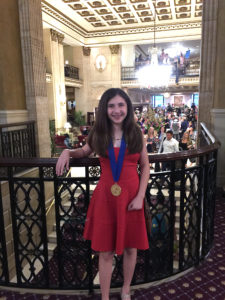 Karina Benitez, 13, of Coral Springs, is a gold medal winner of a National Scholastic Art and Writing Award. Competing with others in the 7th to 12th grade category, she didn’t feel she was experienced enough as a poet to even enter the contest. But her teacher at Mary Help of Christians Catholic School and her mother, Yvette Benitez, strongly encouraged her to enter the contest.
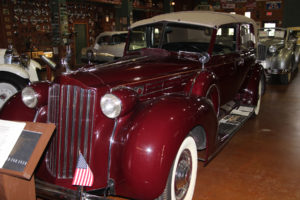
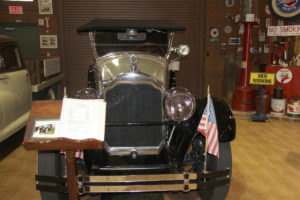 The museum is dedicated to the preservation of the history of the Packard Motor Car Company. There are 39 Packard cars on display, the oldest a 1909 model and the latest, a 1958 model. Most of the cars can still be driven. One can learn about each car on display and its unique features. You can see advertisements for the cars, and gain a sense of how the automobile industry developed.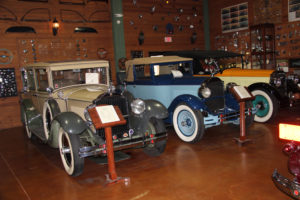







 Like other 17-year-olds, Liddy Clark enjoys going to the movies or hanging out with friends at the beach. Unlike other teens, though, Liddy goes to a recording studio after school for two or three hours a day and takes frequent trips to Nashville, where she collaborates with other songwriters.