LOOK WHAT’S AT THE LIBRARY!
by Cynthia MacGregor
Once upon a time—and not that long ago—the library was where you went if you wanted to borrow books or consult reference books. Period. End of statement. But, as the saying goes, that was then and this is now. The library systems in the Tri-country area is a trove of information, materials, educational, and cultural opportunities, and more…and, oh yes, you can still borrow books.
Broward County
The main phone number is 954-357-7444, and the website is broward.org/library. There are 37 library locations throughout the county and a wealth of information, activities, and materials. They offer free special events at the various branches. To find out what’s coming up that might interest you, go to the website and, under “News,” look for the newsletter link. There is also a paper copy of the newsletter available at each of the branches.
If the reason you prefer a paper copy is that you are not too familiar with the computer, you may want to know that their computer classes are popular and they are free. Besides borrowing books, you can borrow CDs and DVDs, and e-books for all popular platforms including Kindle, Nook, and electronic devices—computer, tablet, or smartphone. You can stream movies to your home electronic device, or download music to keep—all for free.
The Creation Station at the main library, 100 South Andrews Avenue, Fort Lauderdale, offers state-of-the-art technology including 3D printers and robotics.
Rosetta Stone is a program through which you can learn a Tower of Babel’s worth of languages including Spanish (Latin American or Castillian), English (American or British), French, German, Italian, Arabic, Mandarin Chinese, Dari (Persian as spoken in Afghanistan), Dutch, Filipino Tagalog, Greek, Hebrew, Hindi, Indonesian, Irish, Japanese, Korean, Latin, Pashto, Persian Farsi, Polish, Brazilian Portuguese, Russian, Swahili, Swedish, Turkish, Urdu, and Vietnamese.
If it’s learning you’re after but not languages, the Universal Class offers more than 500 areas of study in six-month online courses in such subjects as diverse as accounting, parenting, math, web development, or psychology. You’ll interact one-on-one online with a real teacher.
Also in the area of learning, the library’s e-tutor program can help with homework or studies from kindergarten through pre-college, with a live tutor online…but it’s not just for students. The program also helps with résumé crafting and job searches.
Besides the magazines available to read in the library, you can download the Zinio app and read magazines at home on the electronic device of your choice, through the library.
To learn more, go to the website and/or subscribe to the weekly newsletter, which also lists upcoming special events. To subscribe, send an e-mail to librarymarketing@broward.org
Miami/Dade
Their phone number is 305-375-2665, and their website is mdpls.org. They have 49 branches as of this writing, with a 50th scheduled to open around the time this issue gets published. Two bookmobiles travel throughout the county. To find out when one will be at a stop near you, go to the website, look under “Find a Branch,” and on the left click on “Mobile Library.”
Their offerings are similar to those listed above for Broward: CDs, DVDs, e-books, music, movies, magazines available in print in the branches or digitally online with the Zinio reader, and a very extensive research database.
The educational courses are offered via lynda.com with a wide variety of subjects you can study and train in. They, too, have online tutoring via tutor.com. There is an online encyclopedia, and newspapers galore.
Worth noting in particular, they offer information on available foundation grants and how to apply for them. Another highlight: They have a huge genealogy department through which you can trace your family tree. It is not only Florida based; this service can help you regardless of where your ancestors lived. And of particular note: Unlike most of the services offered here (and in the other tri-county libraries), you do not need a library card to use the genealogy department.
Also on offer at the Miami-Dade libraries: a permanent art collection and rotating art exhibits; and a Florida room that houses documents, books, photos, and periodicals concerning Florida’s history, available for research purposes. Also story times, yoga classes, language classes, and musical performances.
If you wish to borrow books or other circulating materials but are homebound and cannot come to the library, the library will mail your desired materials to you. You can request them by phone or online.
Palm Beach County
The phone number is 561-649-5476, and the website is pbclibrary.org. There are 17 branch libraries and one bookmobile, whose schedule is posted on the web or available on paper at all of the branches.
In common with the other two South Florida library systems there are CDs, DVDs, and e-books, and downloadable music to add to your collection. You can stream TV shows and movies to your electronic device at home or watch on the library’s computers. There are magazines to read in the library or on your electronic device at home, and also newspapers you can read at the library.
If the book you want to borrow isn’t in the PBC library system, you can request an interlibrary loan. Participating libraries stretch all across the country, magnifying your chance of finding what you want.
The library’s monthly calendar of events, called “Happenings,” lists all activities for the month by branch and can be accessed through the website, or you can pick up a paper copy at any branch. There are activities for children, teens, and adults.
Like the two library systems above, the Palm Beach County library also offers computer classes.
What’s available at the library these days? Plenty!

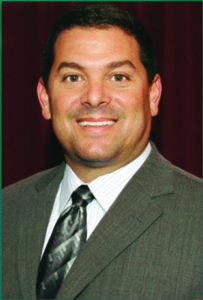 In part of a statement she read during a recent Commission meeting, Gardner-Young said: “During my tenure, the City has accomplished so much. We built a new and rebuilt an existing fire station, stations 109 and 42, we completed the last 30 acres at Pine Trails Park, we built a new dog park, Barkland, we created the largest farmer’s market in Broward County, we moved the county line from Palm Beach County to Broward County bringing 1,900 acres into Broward and potentially all into the City, and we opened and took over operations of the City’s Community Center just to name a few. The residents feel the City is going in the right direction by the high scores we have received in our citizen surveys, the City is in great financial condition having survived the 2008-2009 recession without a loss in level of service and we are preparing financially for the future.”

 by Glenn R. Swift
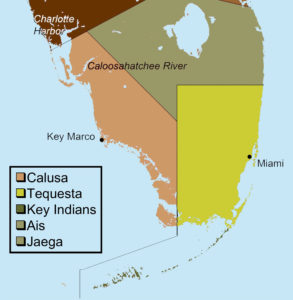 Most of what we know about the Ais and the Jaega comes to us from the writings of Jonathan Dickinson, an English Quaker on his way from Jamaica to Philadelphia who was shipwrecked in 1696, along with his family and the other passengers and crew members of the ship. The party was held captive by the Jaega for several days before being handed over to the Ais chief (cacique). Because one of the members of Dickinson’s group spoke Spanish, the group was able to persuade the Jaega and the Ais that they were Spanish and not English. As a result of this good fortune, the group was allowed to travel by small boat and on foot the 230 miles up the coast to Spanish-held St. Augustine. During the journey, the party was subjected to constant harassment and physical abuse with five members of the group succumbing to exposure and starvation.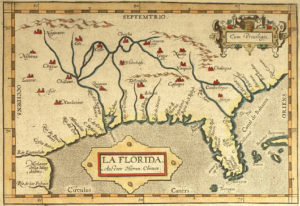

 who smoke may be at higher risk. Older people are also at greater risk.