Meet Big Poppa Farms: a Parkland animal sanctuary

Nestled on two and a half acres near the Parkland Equestrian Center is an animal sanctuary called Big Poppa Farms. When Jodi and Pete Sullivan first purchased the property in 2017, they had no idea that in a few years’ time, they would be running a 501(c)(3) nonprofit organization in their own backyard.

“It wasn’t something that was planned,” affirms Jodi. “It just kind of happened for us. It kind of rescued us.”

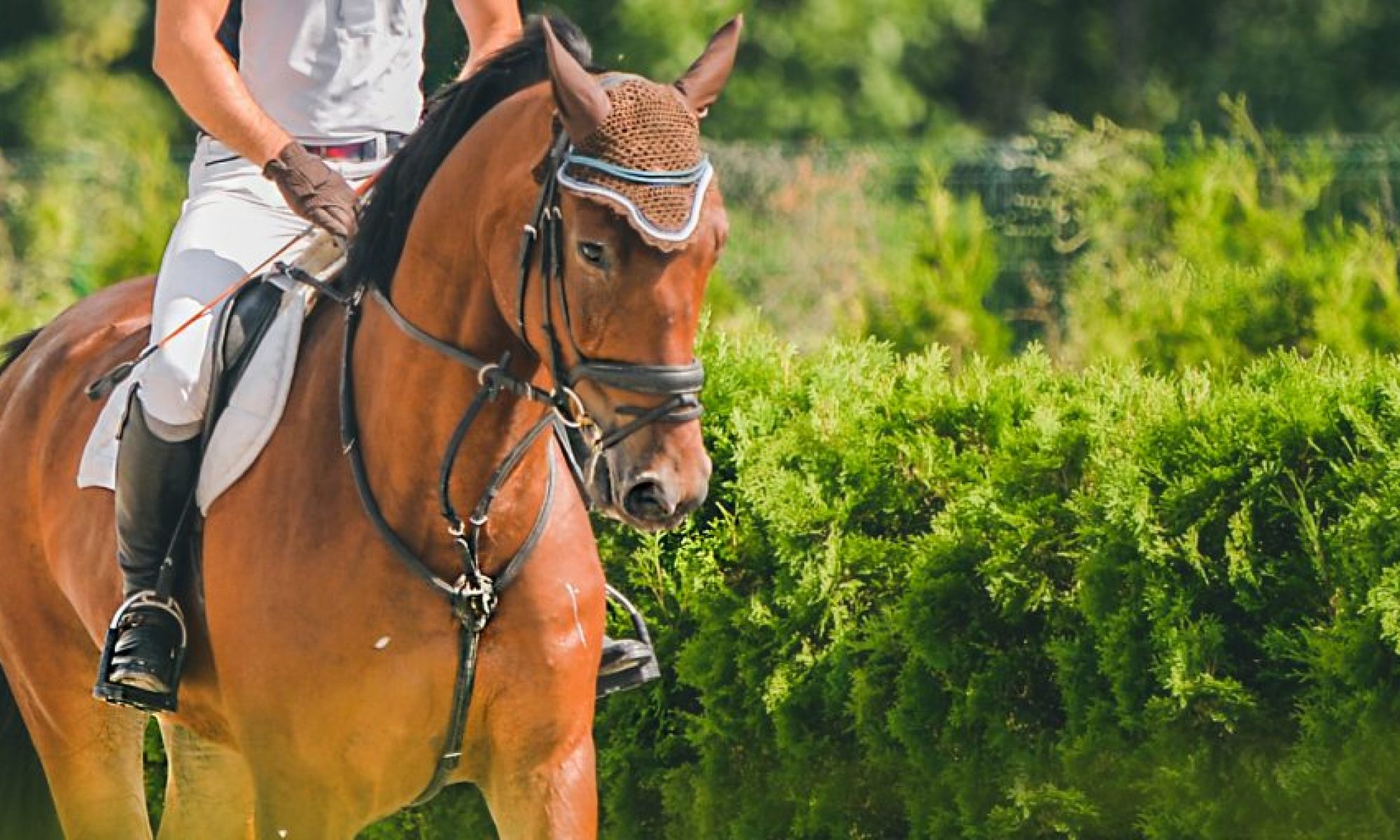
Pete had always wanted a Highland cow, but due to heat concerns, they decided that it wasn’t the best idea, so they opted for his second choice, a large draft horse. When Jodi began searching for one online, she found a Belgian draft horse in a kill pen up north and decided to rescue it.

Jodi’s research also led to a woman who frequents these auctions and acts as a buyer for rescuers, sending photos and videos of the animals and then bidding on the ones that rescuers choose to save. This woman secured the Sullivans’ first rescue horse, Samson.

While purchasing Samson may have been simple, getting him to Florida was not. “Any animal purchased at auction has to be vetted and quarantined,” explains Jodi. “You can’t just bring any animal in from another state. It has to have a health certificate and a negative Coggins test.” A Coggins test is done to ensure that a horse is not carrying equine infectious anemia.

Between health care and transportation, costs can run thousands of dollars per horse. Despite the hefty bills, Jodi and Pete continue to rescue animals from auctions. “She wants to help animals instead of just purchasing them,” says Pete of Jodi.

While some may not consider animals purchased from auctions as rescues, Jodi and Pete are quick to remind them what fate awaits many of the animals at these auctions. “You’re bidding against kill buyers,” explains Jodi. “Kill buyers go to these auctions and they ship these animals to Canada and Mexico to be slaughtered.”

When deciding which of the many animals at auction belong at Big Poppa Farms, Jodi relies on her intuition. “I have to feel it in my heart,” she says.

And when her intuition kicks in, there is no stopping Jodi, as evidenced by Red, a quarterhorse she purchased online from an auction on New Year’s Eve while at sea. “We were on a cruise ship and she’s on her phone watching an auction,” recalls Pete.

When Jodi saw Red, she knew he was the one. Pete didn’t want another horse at the time, but Jodi refused to take no for an answer. “I told him, you’re gonna gamble, I’m buying a horse,” laughs Jodi.

As Pete and Jodi acquired more animals, Jodi left her corporate job to focus on the farm full-time. “At that point, we were just doing stuff for us,” explains Pete. “Eventually, it evolved into a sanctuary.”

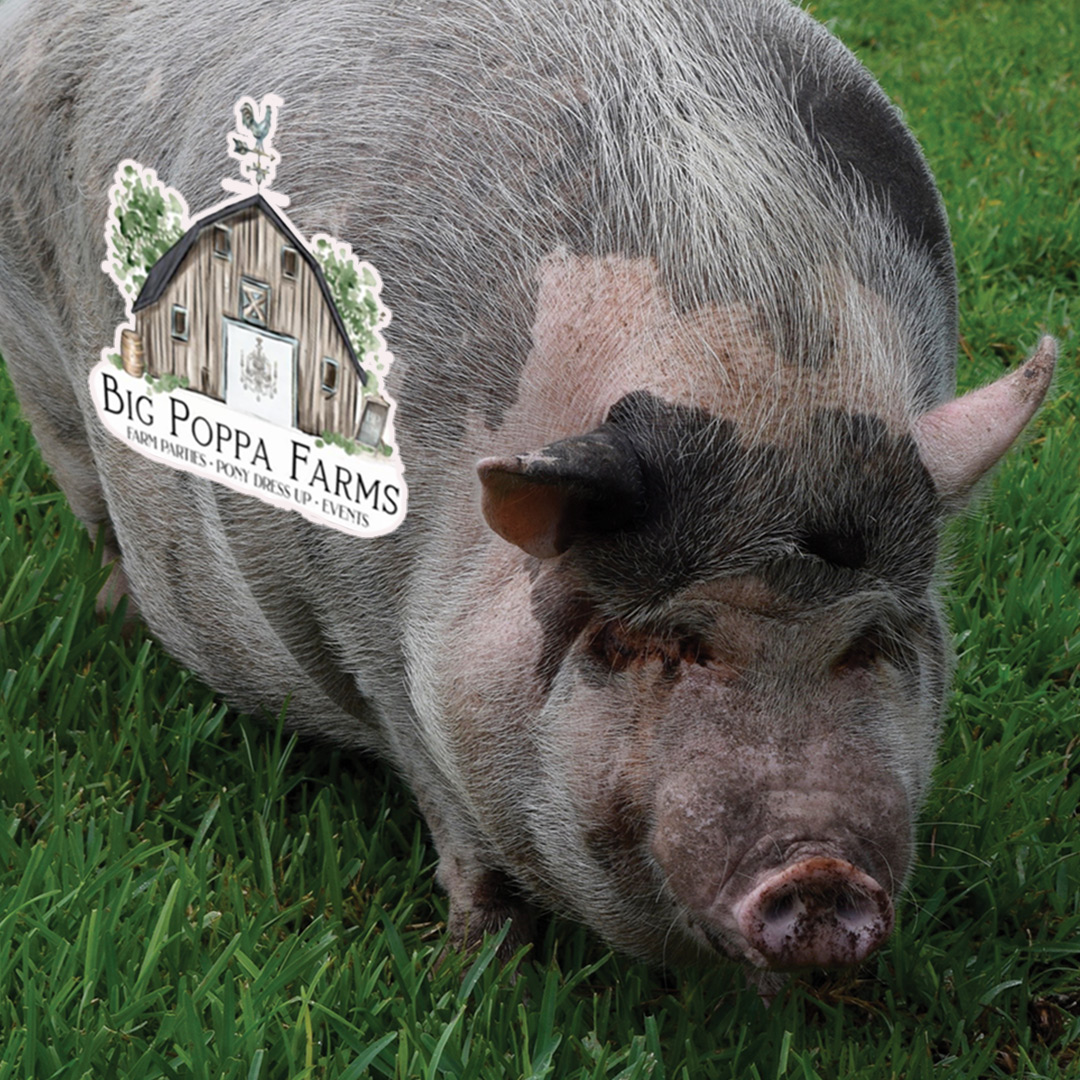
Among the animals that currently call Big Poppa Farms home are Cher, a miniature donkey so wild they had to hire a cowboy to help catch her, and Albert, another miniature donkey bonded to Cher. There’s also Zeus, the draft horse; Tortilla the tortoise who lives in a miniature replica of the main barn; and a black three-legged cat who underwent amputation after being shot in the leg but—incredibly—hasn’t lost her affection toward humans. There is also a lovable group of rabbits, pigs, dwarf ponies, miniature horses, and two bearded dragons.

Pete initially wanted the farm to remain private, but as the number of animals grew, so did the cost of running the farm. In order to keep their operation sustainable, Jodi and Pete decided to open their doors to the Parkland community in February of this year and filed for 501(c)(3) status, which was recently granted.

“I knew I wanted to do something with kids and the community and events,” exclaims Jodi, who was thrilled about opening Big Poppa Farms to the public.

This past summer, Jodi hosted her first summer learning experience for children. Instead of charging parents a fee, Jodi asked that the kids bring a food donation for the animals. “I think it’s more important that parents take the kids shopping and let them choose what food to bring from my list. Then they can see how we chop that food up and give it to the animals,” explains Jodi.

Despite their newfound nonprofit status, Jodi and Pete are not looking to become a huge entity. Instead, they are focused on making a positive impact in Parkland. “I want to become something for our community that people can enjoy, especially the children,” enthuses Jodi. “It’s so nice to see a child who may have been afraid of an animal eventually come up and hug it. You see a smile on their face they’re not going to get anywhere else in Parkland.”

For Pete, Big Poppa Farms is about compassion. “I don’t think there’s enough compassion in the world,” he reflects. “So if we can give a little bit of that here, that’s a good thing.”

Big Poppa Farms is open to the public by appointment only. They offer tours of the property, meet-and-greets with the animals, and seasonal events.

The farm is also available for private events, such as children’s birthday parties, and offers a unique venue in addition to an immaculate barn and menagerie of animals—an antique tearoom straight out of a little girl’s dream. The room, a nod to Jodi’s former antique business “She’s So Shabby,” comes complete with vintage costumes for dress-up, and a pair of bearded dragons with their own party outfits.

For more information about Big Poppa Farms, visit www.bigpoppafarms.com.

Everglades restoration brings back wading birds

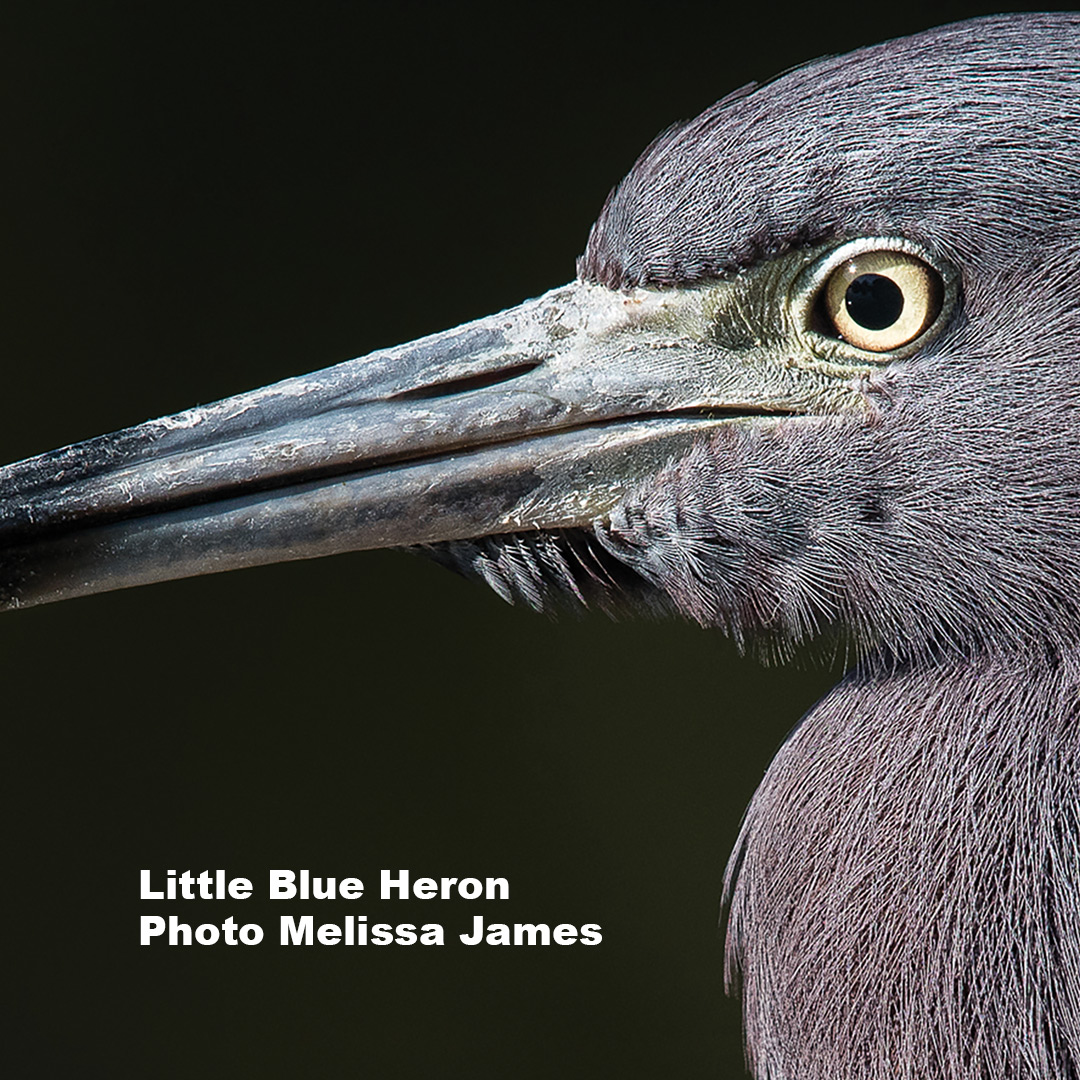
Florida is renowned for its striking wading birds. More than a dozen species make their home here, from the Snowy Egret to the pink-plumed Roseate Spoonbill to the Tricolored Heron. Beloved by locals, these birds also draw visitors from across the globe looking to get a glimpse of their colorful plumage.

Not only are these birds an important part of the economy, they’re also key indicators of ecological health. Wading birds depend on healthy wetlands, coastlines, and the Everglades for their survival.

“Wading birds tell us when the Everglades are healthy,” explains Kelly Cox, director of Everglades policy at Audubon Florida, a nonprofit organization dedicated to the preservation of birds. “When they’re in the right place at the right times of the year in the right numbers, we know that we’re getting the water right in the Everglades. If wading birds can successfully raise chicks, it’s likely that other species that depend on the Everglades are going to be healthy too.”

Wading bird populations have faced their fair share of challenges in Florida throughout history. In the 1800s, many species of wading birds were hunted almost to extinction for the sake of women’s fashion. The birds’ colorful feathers were collected and used as adornments for hats. “There was one point in U.S. history when feathers from wading birds were more valuable than gold per ounce,” says Cox. The decimation caused by the plume trade precipitated the creation of Audubon Florida.

In the 1900s, urban and agricultural development of the Everglades significantly impacted wading bird populations. Water control efforts drastically changed South Florida’s landscape, destroying their habitats. Dredging canals and plumbing out water from the Everglades eliminated floodplains and sloughs—foraging areas for wading birds—and interfered with the natural flow of water that the birds depended on for successful breeding conditions.

“Wading birds can’t wade in a 15-foot canal,” explains Cox. “They have no way to catch prey in that type of environment. As a result of that, we started to see their populations really decline.”

Everglades restoration projects, which began in full force around 2000, have helped many of Florida’s wading bird species recover. “We’ve already started to see measurable benefits from returning those water flows to as close to we can get to the way Mother Nature designed it,” affirms Cox.

A prime example of this success is the Kissimmee River Restoration Project. In the 1960s, the Kissimmee River was channelized by cutting and dredging a 30-foot-deep canal, which eliminated a floodplain and destroyed the ecosystem. Ninety percent of the area’s wading bird population disappeared. “We just wrapped up the restoration of that river, and the number of birds that have returned to that area is unbelievable,” enthuses Cox. “It confirms our theory that if you give the wading birds a chance, they will come back. But it has to be under the right ecological conditions.”

A recent initiative in Broward and Palm Beach counties will improve the habitat that these birds need while also safeguarding water quality for the people of South Florida.

In May of this year, the South Florida Water Management District and the Army Corps of Engineers broke ground on the North Phase of the Central Everglades Planning Project (CEPP), a restoration initiative that will restore water levels in the Central Everglades, bring more water south to replenish Everglades National Park, and send fresh water to Florida Bay.

“In general, we have really limited the ability of water to flow south into Everglades National Park, and subsequently Florida Bay,” explains Cox. “That water flow has been so stifled that in some parts of Florida Bay, we’ve seen hypersaline conditions because there’s not enough fresh water.” When water is hypersaline, it’s saltier than typical seawater, making it difficult for fish and seagrass—which wading birds feed on—to survive.

CEPP North will include the construction of seven new structures and one new canal as well as the improvement of 18 miles of canals already in operation. The North Phase is expected to be completed by 2029.

The other two phases of CEPP are the South and New Water phases, which are already underway. CEPP is a key part of the joint state-federal partnership to restore America’s Everglades, known as the Comprehensive Everglades Restoration Plan. “Everglades restoration is the largest ecosystem restoration project in the entire world,” confirms Cox.

Wading birds are the measure of success for these projects. Every year, the South Florida Water Management District—the primary agency charged with overseeing Everglades restoration—puts out a Wading Bird Report in collaboration with Audubon Florida. The report includes data on the birds’ nesting behavior throughout the Everglades. The greater the number of nests and hatchlings, the better the birds are doing. In 2021, the Everglades experienced its second-highest nesting effort for many wading bird species in 80 years.

“Conditions are improving for wading birds across the Everglades, which suggests that Everglades restoration is helping,” says Cox. “It’s improving foraging conditions for wading birds, which leads to increased nesting, but there’s still a lot to do.”

Currently in the planning stage is the Biscayne Bay Southeastern Everglades Ecosystem Restoration Project, which focuses on Broward and Miami Dade counties with the goal of restoring habitats and increasing treatment capacity to help move more water south. “Biscayne Bay, which has been plagued by algae blooms and hypersaline conditions, has a big opportunity to benefit from this project,” says Cox.

For more information on South Florida’s wading birds and Everglades restoration, check out fl.audubon.org/conservation/everglades.

Watercolorist celebrates nature

Growing up in Parkland in the 1990s, watercolor artist Kimberly Heise, 32, was enthralled with the natural beauty around her. She remembers an abundance of pine trees and wooded hammocks, and she gazed onto a forest of trees from her bedroom window. It was an idyllic time that resonates with her to this day.

“My love of nature comes from my childhood home in Parkland,” Heise says. “I spent a lot of time in nature as a kid.”

After graduating from Florida Atlantic University with a BFA in painting in 2016, Heise moved to Boca Raton, Delray Beach, and Miami and felt disconnected from nature. She discovered watercolors and decided to focus on scenes from nature as a way to reconnect to the natural world.

“Art became a way for me to feel connected with the natural world when access to habitats became sparse,” Heise says. Specializing in Florida native plants and animals, her style is a combination of hyper-realism with the accuracy of scientific illustration.

Now back in Parkland, Heise rides her bicycle through Covered Bridge Park, 6 Acre Wood Park, and other trails where she shoots photographs of flowers, plants, or wildlife that she later paints.

Collaborating with nonprofits, Heise creates original artwork for websites, trail signs, videos, guides, magazines, products, logos, and research presentations. “I’m partial to working with organizations that work to preserve our natural habitats and ecosystems,” she says.

Heise painted the Florida bonneted bat, a species of bat only found in South Florida and one of the most endangered mammals in North America, to bring awareness to conservation efforts.

She paints two hours each day in her home studio and devotes time to her newsletter and website, social media, emails, and other nonartistic, but necessary, tasks.

Heise says she is doing exactly what she envisioned. “Being able to sustain myself doing what I love is something I’ve wanted since my 20s,” she says. “Doing this full-time is amazing.

“I enjoy the process of painting,” Heise says “Envisioning beautiful things and bringing them to life is very satisfying.”

She became involved with the Florida Native Plant Society (FNPS), and its educational programs helped shape her work.

“Kim’s a wonderful woman, generous, friendly, and easy to work with,” says Mark Kateli, FNPS statewide president. “She’s a budding naturalist who showcases native plants and animals to raise awareness for our environment and has a bona fide talent and an astute hand in drawing animals and plants.”

For their conference, Heise donates a digital art piece and this year was featured on the front cover of The Palmetto, the group’s magazine.

Heise admires artists John James Audubon, Teagan White, and wildlife artist and illustrator Zoe Keller. “The more you learn about native species, the more exciting it becomes,” she says.

“Lawn weeds,” a native plant and host for butterflies, excite her. “Learning about these species helps me connect to Florida,” Heise says. “Florida is not just palm trees—there is so much joy and beauty here.

“It’s hard to see a native plant such as Chapman’s Cassia (a woody shrub) or Coreopsis (tickseed) and not get excited,” says Heise.

“Learning about these native habitats has made me a happier person,” she says.

Most recently, Heise completed a coloring book for the Everglades Foundation and has collaborated with the Miami nonprofit Bound by Beauty and created a field guide with 17 illustrations of native plants that host butterflies.

“This was one of my most enjoyable and meaningful projects,” the artist says.

“We have been fortunate to collaborate with Kim on our wildlife sanctuary, our field guide to wild plants that host butterflies, and others,” says Mary Benton, founding director of Bound by Beauty. “She has an affinity for the native flora and fauna and an extraordinary ability to bring them to life with watercolor.”

Benton notes, “Everybody who sees her posters is drawn to them more closely, which is our intent in educating people about the beauty and importance of nature—in this case, ‘lawn weeds.’”

Heise is also one of nine artists commissioned by West Palm Beach’s ArtLife Public Art program—”9 Artists 9 Spaces”—to create a temporary public work with the theme of play.

Titled “Birds at Play,” the mural features images of herons and egrets, whistling ducks, gallinule, kites and butterflies, painted buntings, and laughing and herring gulls. The artwork will be installed at the Mandel Library later this summer.

“I’m excited to be part of this project,” says Heise, who is creating the imagery in watercolor in separate panels, then Photoshopping them together. The finished image will be printed on vinyl and installed in the entranceway to the library by forklift.

Additionally, her exhibit “Florida Naturally Wild: Watercolor Painting by Kim Heise” runs through Aug. 26 at Kampong National Tropical Botanical Garden in Miami.

Going forward, Heise would love to have her work at Art Basel or a gallery and to have the ability to “cross-pollinate” (to use a nature term) between the fine art and conservation worlds. She says her best work is created with the intention of it being fine art.

“I’m thrilled when I set an intention for the work and the work rises to that intention,” she says.  “I’m most proud of having my art appreciated for the beauty of the art itself.”

To follow Heise’s latest works, sign up for her email newsletter at KimHeise.com/newsletter or follow her on Instagram and Facebook at KimHeiseArt. Original paintings and prints are also available for sale on her website.

 To learn more about the exhibit at Kampong National Tropical Botanical Garden, visit ntbg.org/events/florida-naturally-wild.

Nevelson’s Shadow Chord given new life at Boca museum

“I fell in love with black; it contained all color. It wasn’t a negation of color. It was an acceptance. Because black encompasses all colors. Black is the most aristocratic color of all. … You can be quiet, and it contains the whole thing.”
—Louise Nevelson

American sculptor Louise Nevelson (1899–1988), known for her large, three-dimensional, wooden structures, worked primarily in monochromatic black or white.

Born Leah Berliawsky to Jewish parents in the Soviet Empire in 1899, she emigrated to the U.S. with her family when she was a child.

Growing up in Rockland, Maine, Nevelson moved to New York City to attend high school, where, after graduation, she got a job as a stenographer in a law office and met her future husband, Charles Nevelson, owner of a shipping company.

Calling herself “the original recycler,” Nevelson combed the streets of New York salvaging found objects, wood pieces, and other discarded items to use in her sculptures.

During the mid-1950s, she produced her first series of all-black wood landscape structures, describing herself as the “Architect of Shadow.”

“Shadow and everything else on Earth actually is moving,” she said at the time. “Movement—that’s in color, that’s in form, that’s in almost everything. Shadow is fleeting. … I arrest it and I give it a solid substance.”

Her sculpture titled “Shadow Chord,” created in 1969 and now at the Boca Raton Museum of Art, where it was just restored, was created at the height of her artistic career and embodies the visual language of her work with complex wood assemblages and monochromatic color.

Consisting of stacked boxes completely covered by her signature flat black paint, the sculpture gives this installation the imposing presence of a cityscape that alters the viewer’s perception of light and space.

At the museum since 2001, the work was in need of repair. The restoration was funded by a grant from Bank of America’s Art Conservation Project, a global program providing grants to nonprofit cultural institutions to conserve historically or culturally significant works of art.

Since it began in 2010, the Art Conservation Project has funded the conservation of individual pieces of art through more than 237 projects in 40 countries across six continents.

Among the 13 museums in the U.S. that were awarded the grant this year, the Boca Raton museum is the only one in South Florida to be chosen.

“The Boca Raton Museum of Art is honored to receive this prestigious grant from the Bank of America Conservation Project,” says Irvin Lippman, the museum’s executive director. “Nevelson’s sculpture commands a singular position in our galleries, and we are grateful for this support for its restoration.

“With its engulfing, sensuous environment full of shadows and mystery, this artwork continues to be a favorite for our visitors,” Lippman says.

Nevelson studied painting, voice, and dance at the Art Students League in New York City and held her first solo exhibition in New York in 1941. Over the next several decades, she became a pioneer in large-scale installations, an uncommon achievement for women of her generation.

Nevelson, whose marriage to her husband ended when she was 42, struggled financially much of her life. It wasn’t until her early 70s that Nevelson focused on monumental outdoor sculptures, after being commissioned by Princeton University in 1969 to create a large-scale sculpture for them.

To this day, she is most known for her wooden, wall-like, collage-driven reliefs consisting of multiple boxes and compartments that hold abstract shapes and found objects from chair legs to balusters that she collected from items discarded on the streets.

Nevelson is also the first woman to gain fame in the U.S. for her public art. In 1978, New York City created a sculpture garden, titled Louise Nevelson Plaza and located in Lower Manhattan, to showcase her sculptures. It became the first public space in New York City to be named after an artist.

Her works are in the collections of major art institutions around the world, including the Metropolitan Museum of Art and the Museum of Modern Art in New York, the Hirschhorn Museum in Washington, D.C., the Tate in London, and the Centre Georges Pompidou in Paris.


The newly refurbished sculpture is currently on view on the second floor at the Boca Raton Museum of Art, 501 Plaza Real. Visit BocaMuseum.org.


Moving beyond autism awareness to autism acceptance

By Jennifer Villalobos

 April 2 is World Autism Day. This internationally recognized day was designated by the United Nations in 2007 in an attempt to “raise awareness about autistic individuals throughout the world.” During the month of April, many organizations and governmental agencies organize autism events in their community, including our very own city of Parkland, which is the first city in Broward County and the second city in the state of Florida to be designated autism-friendly.

In 2021, the CDC reported that an estimated 1 in 44 children in the U.S. are on the autism spectrum. Given that prevalence, it would be unlikely for any of us to be totally unaware of autism. Awareness is not enough, though. What is also needed is a deeper understanding of autism and more acceptance. More acceptance includes autistic individuals accepting themselves, caregivers accepting their children for who they are and not who they imagined them to be, and society at large accepting that autistic people deserve the same respect, understanding, and access as anyone else.

Although most people have a general understanding of autism, there are still a lot of misconceptions out there. Here are five of the most common ones:

Misconception 1: Autistic people are all one certain way.

Truth: Although autistic individuals share some common traits such as difficulty with communication and social interaction, as well as the presence of restricted and repetitive behaviors and interests, every autistic person is different. Some people with autism will be highly verbal and others will be nonspeaking. Some may require little support while others may require significant assistance with daily activities. This is why it is called a spectrum.

Misconception 2: Autism is an intellectual disability.

Truth: According to the CDC’s data, only 31% of autistic children have an intellectual disability (IQ < 70), 25% are in the borderline range (IQ = 71–85), and 44% exhibit average to above-average intelligence (IQ > 85). The media have a history of portraying autistic people as either significantly cognitively impaired or as a savant who is highly gifted. The truth is that most autistic people fall somewhere in between those two extremes.

Misconception 3: Autistic children have a lot of tantrums.

 Truth: People often mistake meltdowns for tantrums, but in actuality they are two very different things. Tantrums are very common in young children. They call it the “terrible twos” for a reason. This is a typical part of development that decreases as the child gets older. Children have some control over their tantrums, they usually don’t last for very long, and the child can be distracted or redirected.

Meltdowns are caused by feeling extremely overwhelmed and can happen in children and adults alike. They may be triggered by a variety of things, such as sensory sensitivities, pain, fear, changes to routines, or feeling out of control, among others. When your brain senses danger, the amygdala jumps in and activates the fight-or-flight response. This can result in the person lashing out, shutting down, or running away. Meltdowns can last a very long time and will only subside by a change in environment, a reduction of sensory input, or the person eventually wearing out.

Misconception 4: Autistic people aren’t empathetic.

Truth: Although autistic people can have trouble reading facial expressions or predicting and interpreting the behavior of others, there is no research to support that they lack empathy. In other words, it is not that they don’t care what others are thinking or feeling, it is that they may not be able to identify and understand it. In fact, many adults with autism report having an overabundance of empathy, to the point that it is paralyzing and affects their ability to function in daily life.

Misconception 5: Most autistic people are nonspeaking.

Truth: Studies have shown that 25% to 40% of autistic individuals are nonspeaking or minimal speakers (having fewer than 30 words). It is important to note that even highly verbal people with autism can have difficulty speaking when stressed or overwhelmed and may require accommodations for these situations. It was once thought that if a child did not speak by age 4, then he or she probably never would, but that has since been disproven.

The call for autism acceptance is a shift away from the traditional medical model of disability, where the goal is for autistic people to be taught how to behave or act more “neurotypical.” This model views autism (and other disabilities) as problems to be solved via medical interventions. It results in disabled individuals being passive recipients of treatment rather than active participants in their care. And it perpetuates the belief that there is something wrong with these individuals that needs to be “fixed.” Many adults with autism have spoken out against the use of this medical model for autism, reporting that it led them to lack acceptance of their own autism, as well as experience a lack of acceptance from their peers and even their own caregivers at times.

Others have reported that this approach caused them to engage in masking. Masking is when autistic individuals hide or suppress their traits to appear “less autistic” and “more neurotypical.” Some examples of masking include forcing eye contact, hiding or minimizing their special interests, pushing through sensory sensitivities, such as loud noises, and preventing themselves from stimming (repetitive movements or vocalizations). Research has shown that people who engage in masking have higher rates of anxiety, depression, and autistic burnout, and one study even showed a correlation between prolonged masking and suicidal ideation.

In recent years, the social model of disability has become more accepted as an alternative approach to the medical model. The focus is on providing the individual support and accommodations as well as removing social barriers by changing non-autistic people’s attitudes toward autism. This involves accepting autism as a different neurotype rather than a disorder that needs to be “cured.” The benefit of this model is that it can help reduce the stigma and discrimination that many autistic people face, and it can help create a more inclusive society for all neurodivergent individuals. However, although it is growing, it is not yet fully accepted by all healthcare systems or governmental agencies that are still tied to the traditional medical model.

As autistic adults share their experiences, we can gain a better understanding of how our actions have affected them. We should be listening to their voices. In 2021, the Autism Society of America did exactly that by formally changing their “Autism Awareness” campaign to “Autism Acceptance.” Many other advocacy groups have since followed suit. This is a big step in the right direction for the neurodiversity movement. The sooner that our society accepts autistic people for the unique and diverse individuals that they are, the sooner they will be able to live more authentic and fulfilling lives.

Jennifer Villalobos, OT, OT/L, is the owner of Just for Kidz Therapy and a doctor of occupational therapy. For more information, go to www.justforkidztherapy.com.

Touchdown An Easter message

The team takes the field fired up and ready to go. Their scouts have developed an innovative strategy that exploits the weaknesses of the opposition. Their coach has mapped it out carefully and in full detail. The team has practiced the plays over and over again. Everyone is on the same page, and there is a sense of quiet confidence.

But as the game progresses, nothing seems to be working. Their offense sputters and their defense gives up too many yards. At half-time it looks like they are on their way to a solid defeat. But in the locker room, the coach doesn’t change a thing. He just looks at the players, winded and discouraged, and says, “Trust me.”

 In the middle of the fourth quarter, the tide turns and the critics are silenced. And by the end of the game, what seemed impossible is now a victory.

 This is Easter. So often we get to that special day and forget how bad everything looked before the resurrection. From Adam and Eve’s transgressions to the idolatry of kings, from the opposition of the religious leaders to the faithlessness of the disciples, nothing about God’s plan through Jesus looked promising. Like a fumble on the one-yard line run back for a touchdown, the cross seemed to be the last ... nail … in the coffin.

But the plan was good. It just needed to be trusted. And that Sunday morning almost 2,000 years ago, the sun came up and the referees’ hands signaled “Touchdown.”

 When we celebrate Easter, we are celebrating one incredible truth: In God’s plan, “It’s not over until it’s over.” Go to church. Read the book. Say some prayers. Serve a neighbor. Love your enemies. And when you are winded and discouraged, listen to the words of the coach: “Trust me.”

Andy Hagen is pastor of Advent Life Ministries in Boca Raton.


Be strong and of good courage

Toward the end of the Hebrew Bible, in 1 Chronicles 28:20, we read, “Be strong and of good courage, and do it; do not be afraid or dismayed, for the Lord God my God is with you.” King David spoke these words of advice to his son Solomon. However, the words are equally true for each generation. The Jewish people’s existence is replete with individuals of such courage and faith.

At this time of year, we remember many of our brethren who displayed faith through the generations. We start this month with the celebration of Passover, our annual celebration of our people’s exodus from Egypt and freedom to serve God instead of the pharaoh. We move quickly from Passover to our annual commemoration of those who endured and withstood the horrors of the Shoah, as we mark Yom Ha-Shoah. Finally, we recognize with joy the modern miracle of those who fought for the modern state of Israel’s independence.

Each of these religious and modern observances reminds us to stand firm in the face of danger and remain proud of our heritage. Although antisemitism is on the rise, we still have so much to be grateful for in this country and time. This includes the many opportunities for communal gathering, such as our synagogue seder, Yom Ha-Shoah service, and Israel 75 celebration. Life is uncertain, but as King David said, “Stay strong and be of good courage.” Hope to see you soon.

Celebrate Israel’s 75th anniversary 

Temple Beth Am is throwing a party in honor of Israel’s 75th anniversary and the establishment of the Jewish state in 1948, on Sunday, April 30, at 5:15 p.m. This extravaganza will include a fully catered Glatt kosher Middle Eastern dinner; music by Randy Stevens Entertainment, including Israeli and jazz music, singing, and dancing; and many great raffle prizes and giveaways (see the full-page ad).

If you can only attend one party this year, this is the one you do not want to miss.

For more information, visit www.beth-am.org or call the office at (954) 968-4545, which is open Monday–Thursday from 9 a.m. to 5 p.m. and Friday from 9 a.m. to noon.

Delicious Dining: Get your craft beers here!

Our local guide to some of the best specialty foods in our area

The South Florida brewery scene has been growing. With dozens of breweries throughout the area, the craft beer scene has never been better. “Hop” on over to one of these local breweries for a fresh and flavorful glass of beer and delicious food.

World of Beer
4437 Lyons Road, Suite 101, Coconut Creek

World of Beer is the premier spot for beer enthusiasts and novices alike. Whether you have a beer cellar at home or hate how beer tastes, their staff will walk you through what’s available and allow you to try them before buying. With 40 craft beers on tap, 250 in the cooler, and a menu of mouthwatering tavern fare crafted to go perfectly with beer, you won’t be disappointed at World of Beer.

Big Bear Brewing Company
1800 N. University Drive, Coral Springs

Beer tastes best when it’s made fresh. Big Bear Brewing Co. beer is made fresh and in-house on a daily basis. They use only the finest ingredients, guaranteeing a fresh and natural glass of beer every time. Paired with their high-quality and creative food menu, you’ll enjoy every bite (and sip) in the warm and friendly atmosphere.


BJ’s Restaurant & Brewhouse
1580 N. University Drive, Coral Springs

Celebrate the joy of craft beer and good food at BJ’s Restaurant & Brewhouse, where they pride themselves in their craft and attention to detail. The innovative and broad menu features delicious entrees and, of course, their very own award-winning handcrafted beers on tap every day. In addition to their 11 signature beers and cider, they offer seasonal and local brews as well.

26º Brewing Co.
2600 E. Atlantic Blvd., Pompano Beach

26º Brewing Co. is a local craft beer brewer and tap room with friendly, helpful staff and fantastic beers. Within the over 21,000-square-foot facility, you’ll find their 4,600-square-foot taproom, which brews some of the best craft beers around. Check out their website and social media to learn about their upcoming events and fun themed nights.

Black Flamingo Brewery
3260 NW 23rd Ave., #400 E, Pompano Beach

Brewing up a wide variety of constantly rotating experimental ales, Black Flamingo Brewery crafts unique and delicious artisan beers that showcase the vibrant and diverse culture of South Florida. The brewery promotes local talent and offers entertaining theme nights and various entertainment throughout the week. Check out their website and social media to learn more.

Fun Facts

  • You can chill a beer in two minutes; just put ice and salt in a bowl and stir.
  • Frosty glasses will cause your beer to foam.
  • The sugar in beer is said to supercharge your plants.
  • You can use beer as a conditioner. Apparently, good-quality brews will leave your locks silky and soft.

If you would like your eatery to be featured in Delicious Dining, please email Local.Features@theparklander.com.

Delicious Dining – Coffee or tea, anyone?

Our local guide to some of the best specialty foods in our area

Coffee is clearly one of the world’s most popular drinks. A fresh cup is often just what we need to start the day. It wakes us up, gives us that extra jolt we may need in the afternoon, or simply provides a perfect excuse to meet a friend for a latte.

Whether you need a quick morning pick-me-up or a relaxing afternoon cup of tea, here’s where to go for delicious cappuccino, espresso, and more in Parkland or Coral Springs. 

Carmela Coffee Company

7967 N. University Drive, Parkland

Carmela is a coffee/wine bar dedicated to providing you with quality drinks curated in its own family-trade farms. It offers a wholesome, trendy menu including an array of avocado toasts, flatbreads, salads, and sandwiches. 

The Little Coffee Shoppe

10732 Wiles Road, Coral Springs

The Little Coffee Shoppe is a unique spot in west Coral Springs with an eccentric ambiance and a cozy, relaxed vibe. Its wide array of breakfast and lunch options are a perfect match for its many types of coffees, teas, juices, and blended drinks.

Lady and the Mug

3111 N. University Drive, Coral Springs

With a beautiful atmosphere and welcoming environment, Lady and the Mug offers plenty of options of both tea and coffee as well as delicious desserts and savory foods, including vegan and gluten-free options.


Fyr & Ice Asian Fusion and Drinks

10371 W. Sample Road, Coral Springs

Boba tea is a drink that includes tapioca or fruit-flavored pearls. Fyr & Ice in Coral Springs offers various flavors of boba milk tea and flavor fruit tea. The Asian restaurant is also known for its modern interpretation of classic dishes and its insistence on only using high-quality, fresh ingredients.

Surprising coffee fact that will perk you up:

Cream makes your coffee stay warm. If you prefer to keep your coffee as hot as possible for a longer time, try adding some cream into your drink. This will make your coffee stay warm for 20% longer.

When brewing coffee at home, save your leftover beans for a do-it-yourself scrub. Coffee grounds are physical exfoliators that can lift off dead skin cells, making skin feel smooth and look brighter.

If you would like your eatery to be featured in “Delicious Dining,” please email EricaLeigh2020@gmail.com.

Relax and take in music, scenery at Jazz Brunch

Next to the banks of the New River in downtown Fort Lauderdale on the first Sunday of each month, you can hear the catchy tunes of live jazz music in a beautiful setting at Esplanade Park. Sunday Jazz Brunch at the Riverwalk provides a free concert series performed by local jazz artists on three different stages from 11 a.m. to 2 p.m.

There is the large Esplanade Stage for big bands and orchestras, the Connie Hoffmann Stage for more intimate performances in a gazebo, and the Peck Courtyard Stage at the adjacent Broward Center for the Performing Arts. Around the area are park benches, picnic tables, and boat docks on the river, and you can meander all along the scenic, brick-lined walkway by the water and catch some boats gliding by. Some concertgoers set up chairs, tables, and picnic blankets to listen to the music, munching on picnic lunches they bring, or purchasing food from the vendors set up nearby. Local merchants also sell crafts and other wares in a designated area.

I got to experience this relaxing but fun event for the first time in early October with my boyfriend, Art. We didn’t know to bring our lawn chairs but snagged spots on a couple of benches where we could sit. There were almost as many dogs as humans there, it seemed, and we may bring our dogs to a future event. Everybody there was having a great time. We saw several groups camped out with enough food and beverages to feed a tailgate party for a day.

Soon after we arrived, we walked over to a restaurant just past the railroad tracks with outdoor tables overlooking the river for a delicious brunch before returning close to the music. But just walking along by the water and hearing the live music can lift anybody’s mood. There was joyful dancing in a couple of different places, and it was a low-key party atmosphere, with friendly people around us. We saw a woman walking around with shots on a tray, passing them out for free; and a little girl selling lemonade from her small chair and table on the grass facing the walkway.

This peaceful setting by the New River is nice and scenic, but also a great central location to be in. Besides the Broward Center, the area boasts the Museum of Discovery and Science, the Museum of Art, and Huizenga Plaza. There are also water shuttle and water taxi stops, along with the Community Shuttle and Tri-Rail stops. And the city’s Marine Facilities offer four docking stations along the river, all accessible to the jazzy sounds of the live music.

It was my first time at the Riverwalk, which runs from the Sailboat Bend neighborhood to near the Stranahan House. Art and I enjoyed walking back and forth along the pretty walkway near the music, although we didn’t do the full one-mile walk on this day. The Riverwalk has two main streets, Las Olas Boulevard and Himmarshee Street, running through the district. On a future trip there, we plan to take in the full Riverwalk experience.

If you like jazz music, both big bands and small, in a picturesque locale, the Sunday Jazz Brunch is a must-do. I’ll be going back for sure.

The next two Jazz Brunches are on Nov. 6 with entertainment from Davis and Dow, RD Project, and Peter Betan Trio, and Dec. 4 with music by Valerie Tyson Band, Jackson Bunn Group, and Mari Bell Quintet. For more information, go to www.parks.fortlauderdale.gov/special-events.

New York’s loss is Coral Springs’ gain: the story of Artbag

The year was 1959. Donald Moore, a 17-year-old living in rural North Carolina where he was born and raised, was newly married with a baby on the way. He needed a job to support his family but local opportunities were very limited. Knowing his situation, relatives in New York City urged him to come up north, stay with them, and look for a job in the Big Apple where there were more possibilities. “Why not give it a try?” he thought. So, he went up to New York City, went to an employment agency, and noticed an opening at Artbag.

Artbag, founded in 1932 by Hillel Tannenbaum, a former professor at the Fashion Institute of Technology, was a Madison Avenue shop that repaired, restored, and crafted handbags. They were known for their attention to detail and craftsmanship, and they had a loyal and illustrious clientele.

Moore interviewed and was offered a job on the spot. For his $1.00/hour pay, his duties included sweeping floors and dusting bags. He got to work before his boss and stayed late. Tannenbaum took notice of Moore’s work ethic, and Moore became Tannenbaum’s protégé, learning pattern-making and handbag construction and restoration. By the 1970s, Moore had a thorough knowledge of the business and craft, and he considered opening his own shop. But, realizing Artbag might soon lose Moore’s valuable talents, in 1976 the owners presented him with the opportunity to buy a small stake in the business from one of the three partners, and he took advantage of it. By 1993, he was the sole owner of Artbag. But there’s “Moore” to the story.

Enter Moore’s son Chris. When Chris was a young boy, he eagerly helped out when his father brought home bags to work on, but he had never entertained joining Artbag. Chris graduated from college in 1992, intending to buy a pizza franchise, but with the recession and a limited job market, that prospect looked less attractive.

“At that same time, unbeknownst to me, my dad was buying out his last partner, and asked if I wanted to come in,” Chris said. “My mother used to call me ‘Shadow’ because wherever Dad was, I wanted to be. He just has that type of personality, engaging and affable. He was my hero. So, I agreed to join the business.” And despite a former Artbag owner who was quite vocal in his belief that the business wouldn’t last with Donald and Chris Moore at the helm, Artbag thrived.

In 1999, Chris became the owner of Artbag, and he, Donald, and Chris’ wife, Estelle, worked together for the past 23 years at their Madison Avenue shop, taking in all kinds of bags, from those purchased on the street to prestigious bags from Hermès, Chanel, and Louis Vuitton, to name a few. Does a bag need a new silk lining? No problem. Does the zipper need to be replaced? Can do. A strap repaired? Of course. Want to add a compartment? Never say never. Leather repair or refurbishment? Yes.

All of Artbag’s work requires great attention to detail, and Chris Moore enjoys taking the time to explain the craft to customers, and they appreciate learning what goes into making a bag look as good as possible. “For example, the color of your bag is often custom-made. Say you have a black bag,” he said. “It’s probably not black that comes out of the bottle that you just pull off the shelf. There are times you have to painstakingly tint the black to be a great match to the existing bag.”

Artbag often takes in repair bags from other repair houses or shoemakers when the customer is dissatisfied with shoddy work. “We’ve been known to be fairly pricey, but you get what you pay for,” Chris Moore said. “Maybe you got a ’good’ price, but if the stitching is crooked, or the zipper is off line, what purpose did it serve?” Staffed by artisans committed to their craft, Artbag’s philosophy is that if a repair or refurbishment on a favorite bag is worth doing, it’s worth doing well.

The number of repair houses has decreased and the quality of workmanship has declined over the years, yet Artbag has always had a high level of workmanship, as evidenced by their many clients, be they everyday people or celebrities like Jackie Kennedy, Elizabeth Taylor, Cicely Tyson, and Whoopi Goldberg. Whether it’s maintaining an investment in an expensive, high-end bag, or a bag only rich in its sentimental value, the craftsmen at Artbag achieve results that few, if any, can match. “It’s not that we’re geniuses, it’s that we care,” Chris Moore said. “If a customer is not happy with a bag, even if it’s the most minute detail, I may not sleep that night.”

Artbag also does custom work. If it gets to the point that a bag can’t be repaired, Artbag will duplicate it. One of the first things that Artbag copied was a plastic travel bag from Eastern Airlines. A client loved the bag and couldn’t get it anymore, so Artbag recreated it.

New York was home to Artbag for 90 years, but Chris Moore and his wife decided it was time for a change. While they loved living and working in New York, when COVID-19 hit, they, like many people, reflected and reassessed. “Why are we paying the high Madison Avenue rent and subjecting ourselves to the long and often unpredictable New York City commute?” In contemplating where to move, they initially considered Fort Lauderdale because they vacationed there often, drawn to the area because “it’s a little bit of New York and a lot of Florida at the same time.” But as they thought more about it, they realized that a better demographic for their business was in the Coral Springs area, because it was close to Boca Raton, Miami, and Fort Lauderdale.

So, the Moores bought a house in Coral Springs in August 2021, anticipating that they would move the business close by, which they did, next to the Coral Square Mall. Expecting to open in their new location early this summer, they had to push back the opening until August because Artbag got so much press about leaving New York that local customers were inundating them with bags. As a result, they had to extend their Madison Avenue lease. Although New Yorkers may mourn the fact that they can no longer visit their trusted Madison Avenue shop, they can join the many customers nationwide who mail bags in for Artbag to repair.

Artbag in Coral Springs remains an intergenerational family business. Chris Moore oversees the business; Estelle works the front of the shop, handles administration, and takes bags apart. Donald, who is now 80, trains new hires in the craft. And while Artbag’s location has changed, the deep and long-standing family commitment to quality and craftsmanship has not.

“Joining this business was one of the best moves I’ve ever made in my life,” Chris Moore said. “The only pressure I’ve ever felt working in the family business is the need to not let my dad down. Artbag is his legacy.”

Artbag is open Monday to Friday, 10 a.m. to 5 p.m.; Saturday, 10 a.m. to 2 p.m. It’s located at 927 N. University Drive, Coral Springs. For more information: (212) 744-2720; www.artbag.com; Instagram @artbag1130.

Social media – When is it time for kids to take a break?

Social media is meant to make us feel connected to others by allowing us to share our world with friends and family. If used sparingly, it can help form meaningful relationships and complement our social life in a positive manner. However, platforms like Snapchat and Instagram are designed to be addictive, and too much use can be associated with anxiety, depression, and cyberbullying. When does social media use become too much, and how do you know when it’s too much for your children?

The Pew Research Center reports that 69% of adults and 81% of teenagers in the U.S. use social media on a regular basis. This isn’t surprising, given that social media activates the brain’s reward center by releasing dopamine, the “feel-good chemical” linked to pleasurable activities like food, sex, and social interaction. Social media can provide many benefits, such as helping people in remote areas find bigger communities of support or acting as a substance-free escape from daily stressors.

Today’s children and teenagers are growing up with social media; they have never seen a world without posts, likes, comments, shares, or 24/7 access to news. Even my 5-year-old daughter talks about “clicking like and subscribing to my content” when she’s playing. In some ways, online interaction can come easier to youngsters who struggle with real-world social dynamics. But of course, everything is good in moderation, and excessive involvement with the cyber world can be detrimental to people of all ages.

There is a slippery slope with social media. Since the pandemic, we have seen a surge in social anxiety, especially when kids started to get back to in-person school, activities, and playdates. Having gotten used to the online world during quarantine, some kids became uncomfortable and anxious when meeting people face to face. The anonymity that social media provides can be great for those who are anxious, but it could also make in-person events more difficult for them.

Research from the Journal of Adolescence demonstrated that adolescents who overused social media—especially at night—appeared more emotionally invested in it, as well as experiencing poorer sleep quality, lower self-esteem, and higher levels of anxiety and depression compared with teens whose social media was limited.

Social media can be detrimental when it becomes a way of life, or when kids (and adults) become obsessive about it. If you or your children find that social media is a constant focus of attention, or if you are judging your self-worth from your “likes,” “dislikes,” or followers, it is likely time to reconsider the levels of social media usage in your home.

How do you know you need a break? Teens or younger kids aren’t always able to self-regulate or know when they need to take a break from social media. Parents need to monitor accounts and screen time to ensure that children aren’t spending more than 2-3 hours a day on screens. Parents should get to know some of the accounts their kids follow to check that they are a positive influence and are not promoting poor body image or negative self-worth.

As a board-certified child psychiatrist, I always recommend asking children questions on a regular basis to see if they appear preoccupied with getting likes or follows on their posts or videos. I would also suggest following their YouTube channel to look for anyone “trolling,” or posting mean comments. Additionally, observe your kids to see if they appear sad or angry after checking social media. This can be a sign that it is problematic. If your child can’t put down the phone or iPad without getting anxious or upset, then a break is surely needed.

Here are some other recommendations:

  • Schedule tech-free times for the family—like during meals, homework, and bedtime.
  • Look up some app blockers and parental control devices.
  • Discuss and set designated time limits on access to social media.
  • Turn the Wi-Fi off overnight to ensure that teens are not using social media when they aren’t supposed to.

There are always ways to improve the family’s interactions with the online world. The more openly parents communicate with children, the better they will understand how social media affects the way young people think about others and feel about themselves.

http://PMBehavioralHealth.com

Dr. Nicole Mavrides is the Medical Director of Psychiatry for PM Pediatrics. Dr. Mavrides is quadruple board certified in pediatrics, adult/child psychiatry, and consultation liaison psychiatry. Previously, Dr. Mavrides was the training director for Child and Adolescent Psychiatry and the medical director of the Pediatric Psychiatry Consultation Liaison Program at the University of Miami. She is one of the premier specialists for children with medical and psychiatric issues in South Florida