Annuals/Bedding Plants: Dianthus and other cool-season annuals continue to flourish. Consider planting warm-season annuals such as angelonia, was begonia, and zinnia at the end of the month.
Bulbs: Plant dahlia, canna, and glorious bulbs for spring and summer flowering. Provide stakes as needed to support growth.
Herbs: Consider growing edible ginger. Plant rhizomes in well-drained soil in full to part sun.
Vegetables: Begin planting warm-season crops, such as beans, tomatoes, squash, and corn, early in the month for late spring harvest. Protect from frost.
What to Do
Azaleas: Prune azaleas when they have finished blooming to reduce their size and improve the form.
Shrubs and trees: Prune when the dormant season ends and new growth begins.
Palms and shrubs: Fertilize palms, azaleas, camellias, and other ornamental shrubs if needed. Choose a fertilizer in which at least 30% of its nitrogen is slow release.
Irrigation: Check your sprinkler system for problems such as broken or misaligned spray heads.
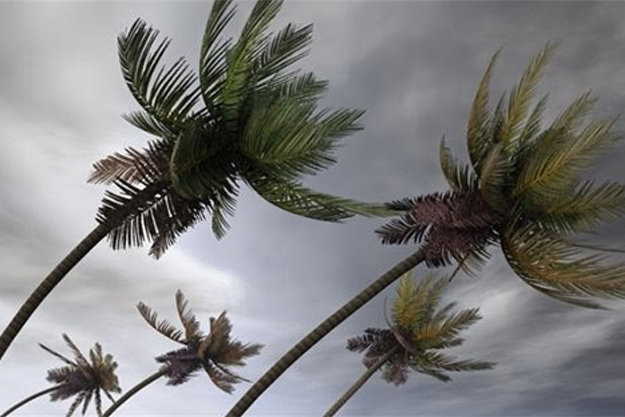
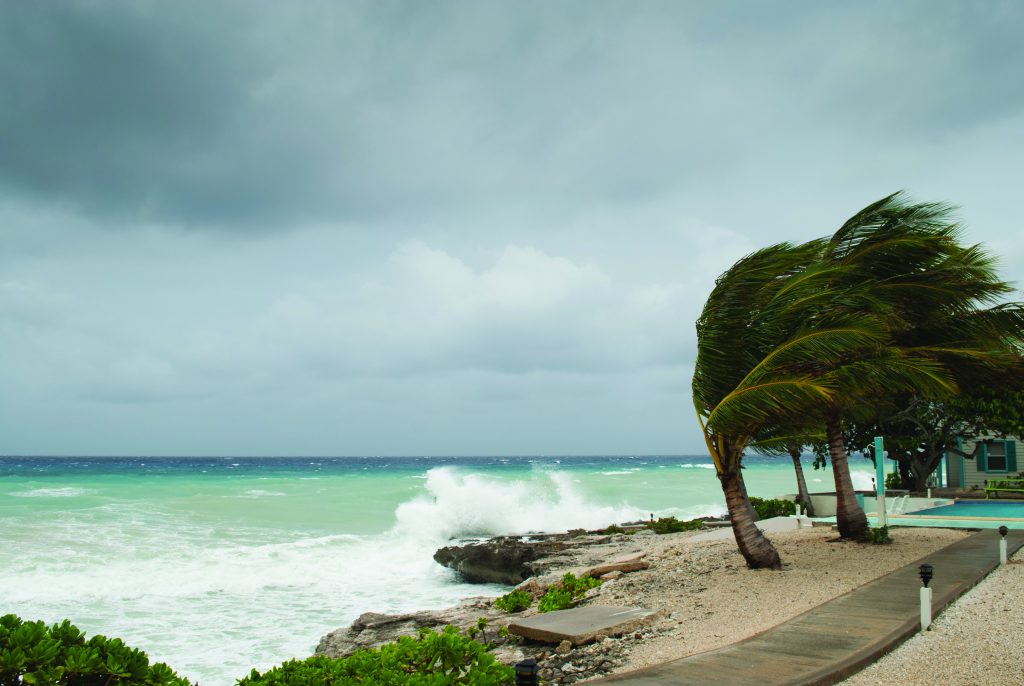
Living in South Florida, many of us become amateur meteorologists every summer. With each tropical wave that forms, we watch it casually until a few become a tropical system. Tropical cyclones are an awesome sight and a reminder of the power of nature.
Most tropical storms spawn from waves created by thunderstorms coming off the West African coast.
Just south of the Sahara, the wet season brings many storm systems that will eventually migrate west with the trade winds and cross the Atlantic. The systems traverse the tropics as a wave and create stormy weather. Slowly, due to the Earth’s curvature, the wave starts to gain momentum in its spin. The spin will cause some of these waves to curve around themselves, and create a self-contained circulation. The spin in the Northern Hemisphere is counter-clockwise and in the Southern Hemisphere, clockwise.
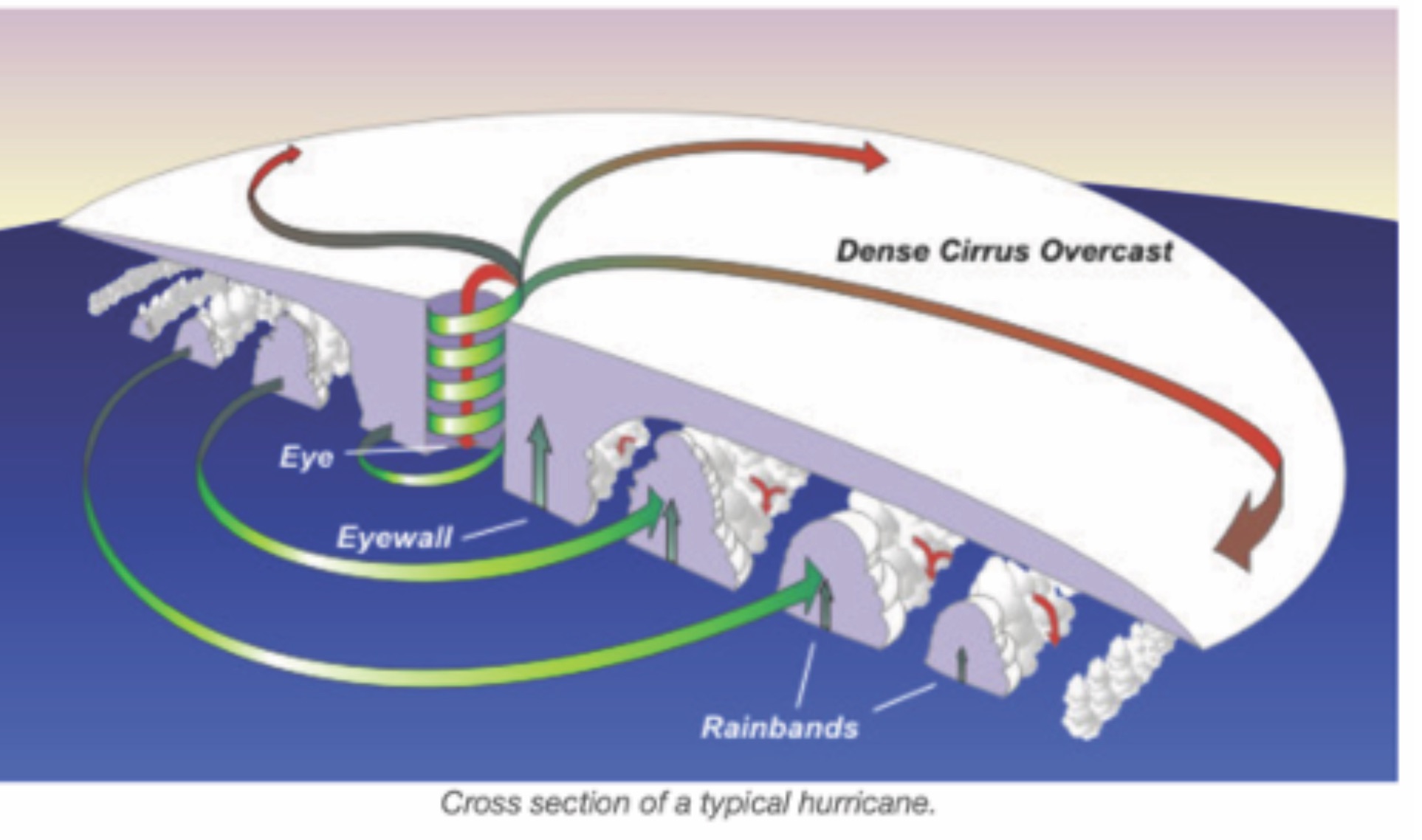
Like a giant vacuum, a tropical storm draws in the warm air underneath it. The warm air rises and energy is released as it cools in the upper atmosphere. Cooled air will either flow out of the core or fall back into the center of the core, the eye of the storm. The more efficiently this occurs, the stronger the storm tends to be. This is why you may notice a more defined circulation pattern and eye as the storm intensifies.
Wind shear is when the wind flows in different directions
for a short distance and can be either vertical or horizontal. Storm circulation can be sheared vertically by crosswinds at different altitudes, hindering the strengthening of the storm. Just recently, Hurricane Marco’s mid-level storm clouds were sheared off by its low-level core as it approached the gulf coast. Losing its vertical circulation, the storm quickly lost strength. Just a day later, Hurricane Laura, with no wind shear to disrupt the flow, was able to strengthen to a Category 4 hurricane.
Laura was able to take advantage of what the National Hurricane Center calls “conditions that are conducive to development,” which means you will often see the major strengthening of a storm. In other words, this is when a storm is undisturbed by crosswinds, often resulting in an explosive intensification of the storm.
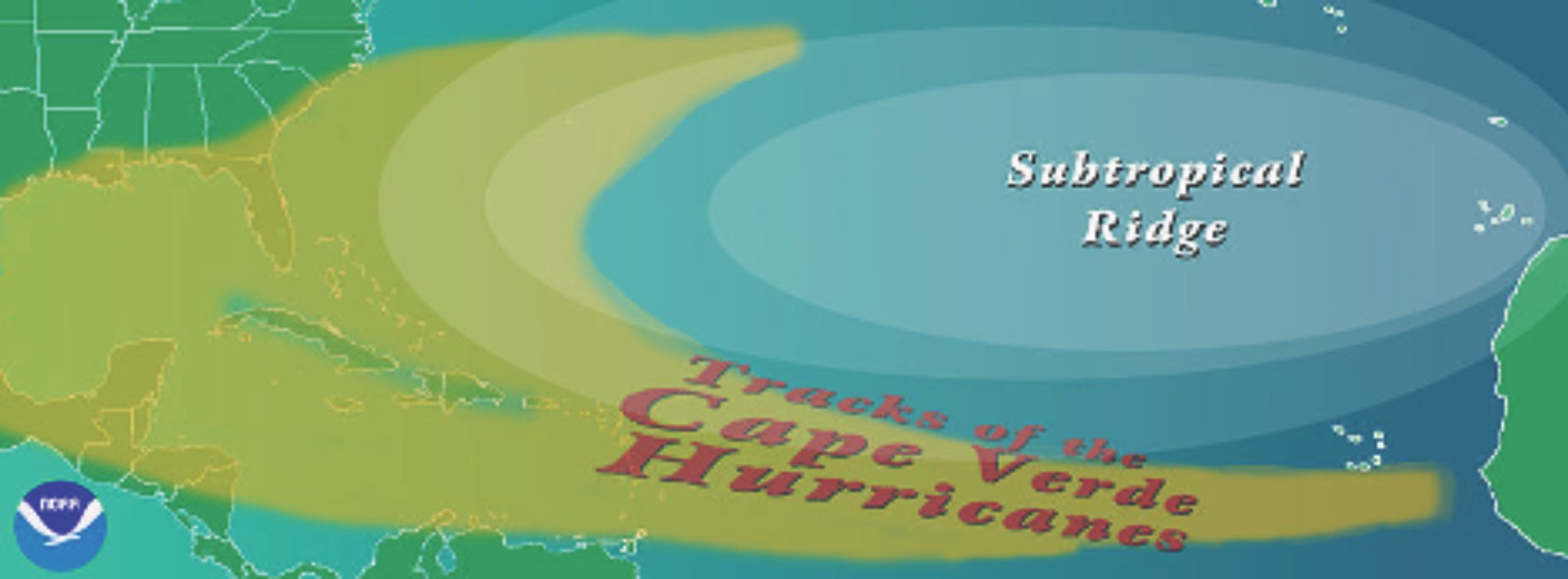
For South Florida, some of the strongest hurricanes coming our way tend to be Cape Verde hurricanes. They originate from tropical waves near Cape Verde, an island country in the central Atlantic, and slowly travel eastward as they gain latitude and strength. These hurricanes will typically form in August and September but can start as early as July, and continue well into October.
These Cape Verde hurricanes are often steered by a high- pressure (ridge) system that typically sits over Bermuda in the late summer. High-pressure systems create clockwise circulation that helps push the storms eastward until they get past the ridge. At this point, the storm typically begins moving north.
Because the wind currents that steer the storm are different at various altitudes, the net direction of the storm is often affected by its size and strength. For example, if there is a westerly wind at high altitude and easterly wind at low altitude, the storm will get pushed eastwards when the storm is weak; when the storm is strong, it will be affected by both and end up being almost static, as was the case with Hurricane Dorian in 2019.
So the next time you watch a forecast on TV or read an update from the National Hurricane Center analysis on http://nhc.noaa.org, you should be familiar with the terms used. If you are a weather junkie like me, I recommend the Youtube channel TropicalTidbits, along with its website https://tropicaltidbits.com for a detailed analysis of each storm threatening us.
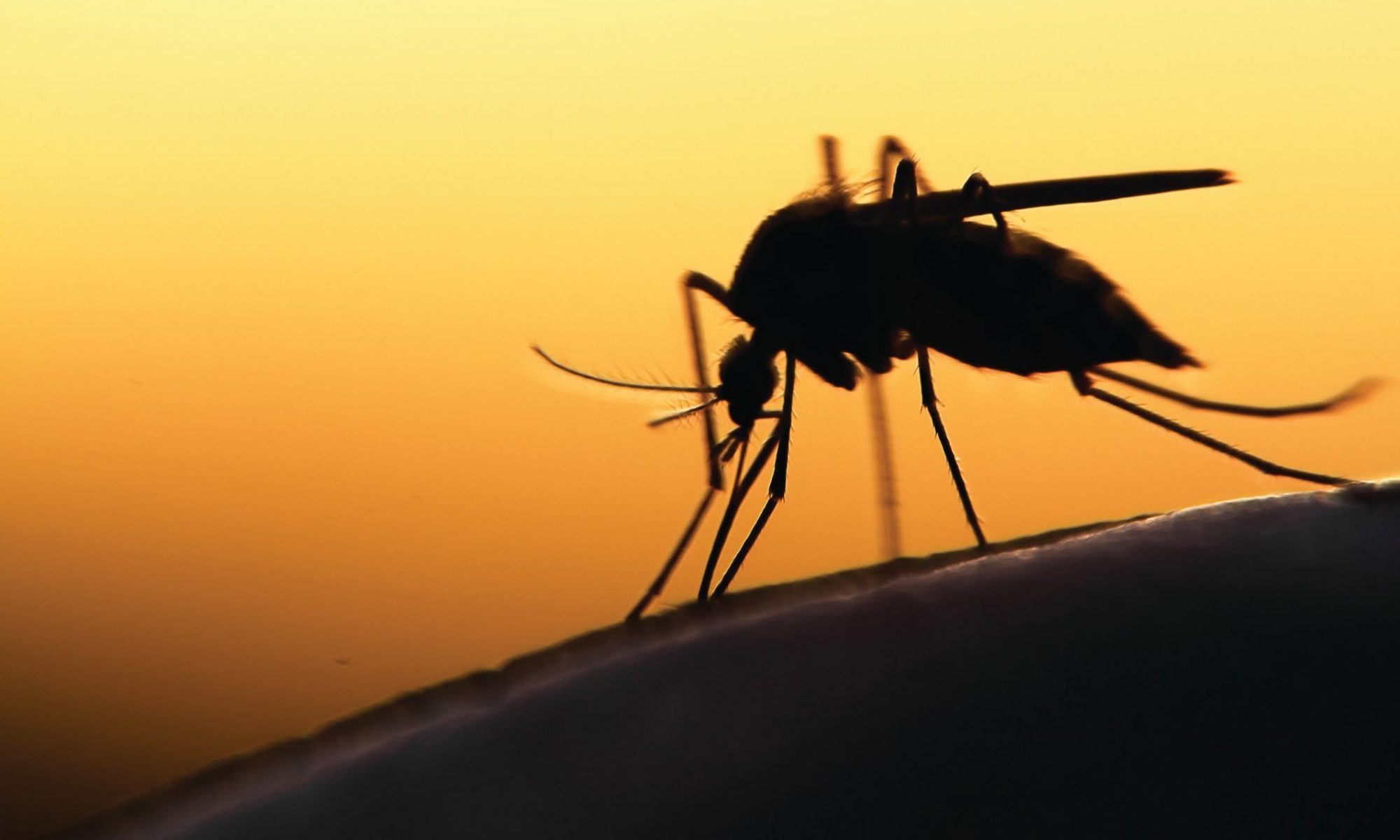
One fact might remove some of the sting from this year’s mosquito season: Health officials have no data to suggest that mosquitos transmit coronavirus to people. Still, mosquitos can transmit potentially deadly diseases to humans. And so, like every mosquito season, county officials are working to control the
population.
This year, Broward County has temporarily suspended mosquito home inspections as part of social distancing protocols. However, “we continue to provide truck-dispersed mosquito control products,” said Ahn Ton, director of the Broward County Highway and Bridge Maintenance Division and Mosquito Control.
The county’s seven inspectors apply products, collect traps, test water for larvae, and participate in public outreach. The county’s call center received about 50-80 calls per day in May, Ton said. By July that grew to 150-200 calls, County residents can call 311 or (954) 831-3940.
Ton said the mosquito problem this year is no greater or less than previous years. “Thankfully, we are not currently experiencing a mosquito-borne illness pandemic as we did with the Zika Virus,” Ton added.
However, from March 9 through July 28 of this year, as of press time, Palm Beach County had experienced one case of West Nile Virus in a human. In Miami-Dade County, that number is 24. Also, the Florida Department of Health has confirmed a case of West Nile in a horse in Northern Broward County.
West Nile Virus (WNV) is a mosquito-borne disease that affects birds, but mosquitos, through their bites, can also transmit the condition to humans. According to the Centers for Disease Control and Prevention, the virus is the leading cause of mosquito-borne disease in the continental United States.
Cases of WNV occur during mosquito season, which starts in the summer and continues through fall. There are no vaccines to prevent or medications to treat WNV in people. Most people infected with WNV do not feel sick. Roughly one in five people who are infected develop a fever and other symptoms. About one out of 150 infected people develop a serious, sometimes fatal, illness.
“Mosquitoes that transmit West Nile Virus bite during the day and night,” according to information on the county’s website. “People can avoid mosquito bites by using insect repellent (formulated with Permethrin, Picaridin, or DEET), by wearing long-sleeved shirts and pants, and by treating clothing and gear.” The website also advises people with horses to ensure the animal is vaccinated against the virus. “When possible, keep your horse stabled and spray it with a horse mosquito repellent.”
Broward County officials are educating people about methods to lower mosquito populations such as removing standing water from their properties. Also, the county is providing materials and non-toxic larvicide tablets at special events and doctors’ offices.
Trapping is another control method, said Ton.
“Traps are used for surveillance so that we know the quantity and species of mosquitos in an area so that we can tailor our treatment technique to maximize effectiveness and minimize any waste,” Ton said. “Traps have the added benefit of removing adult mosquitos from the environment.”
Officials place traps throughout Broward County and collect them weekly for “counts.” On a regular basis, the county biologist traps mosquitos, separates them by species, and detects any potential viruses. Findings determine the chemical application that county workers will use and the type of treatment required. Aerial spraying traps provide another control method. But under
Florida law, counties must show a 10-fold increase in their mosquito population before the state approves aerial spraying. Ton said the last time Broward County conducted aerial spraying was July 2019.
In Palm Beach County, mosquito control program supervisor Chris Reifinger said he deploys 17 traps around the county. This year, several traps caught more than 1,000 mosquitos in 24 hours. “That indicates a mosquito problem,” Reifinger said. Therefore, he’s had to conduct aerial spraying. Reifinger added the county usually uses a helicopter for that purpose an average of six times every year.
In early August, Reifinger said the mosquito problem in his county was “pretty calm.” By contrast, in June, mosquitos were a “big problem.” He’s had to conduct aerial spraying west of Military Trail on 270,000 acres of land which tends to flood. Reifinger said his team has also used a spray truck to try to kill West Nile Virus-carrying mosquitos.
For information on how you can avoid getting sick from viruses spread by mosquitos, visit cdc.gov/features/stopmosquitoes/index.html.
As the community of Parkland continues to urbanize, it can be easy to forget how close the wild, thriving world of nature is — until those plants or animals end up dominating your backyard.
Because of our close proximity to the Everglades, Parkland’s wildlife system is interconnected with the “river of grass” and all of its ecological complexity. In recent years, residents and scientists have noticed and studied the lingering effects that non-native plants and animals have on the delicate balance of the food chain here in South Florida.
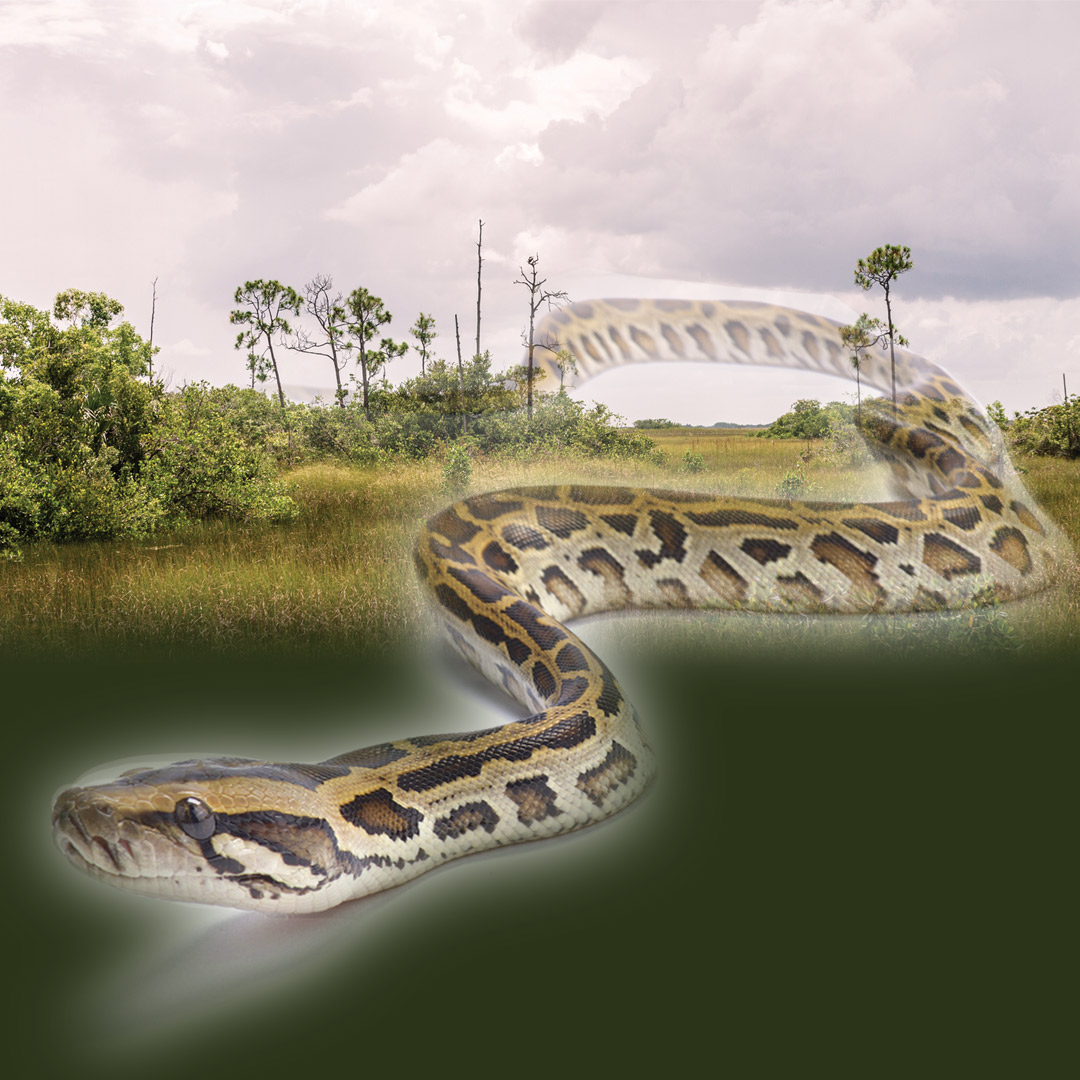
When a non-native plant or animal is introduced to an ecosystem, it often does not have any natural predators in the area. This may lead the species to become invasive, meaning it will cause ecological harm due to its rapid ability to reproduce. The Burmese python is one of the most notorious interlopers to our area, although not by its own choosing.
History.com reports that pythons, native to Southeast Asia, were first brought to the United States as exotic pets. “When the exotic pet trade boomed in the 1980s, Miami became host to thousands of such snakes,” the website reports.
“Because pythons can grow to such unmanageable sizes, it was inevitable that some irresponsible owners would release the snakes into the wild. But most experts believe the pythons established a reproducing population in the Everglades sometime after Hurricane Andrew—a category 5 storm that devastated the state in August 1992.
“It was during that storm that a python breeding facility was destroyed, releasing countless snakes into the nearby swamps.” History.com asserts.
The consequences of these human mistakes are alarmingly clear. As pythons continue to exist near the top of the food chain, the populations of small, warm- blooded animals have become noticeably absent. This disruption to the balance of animal populations is worrying because it can have disastrous effects on even more species if the pythons are left to wreak havoc.
What’s more, researchers recently discovered that Burmese pythons are responsible for spreading a parasite known as “tongue worm” to other native Floridian species of snakes.
The Palm Beach Post reports that “While pythons have developed defense mechanisms to keep the parasite in check, Florida snakes are naïve to the intruders’ methods with a biology unequipped to defend against them.”
As time has revealed that invasive species are capable of causing chaos which trickles down into many different aspects of the ecosystem, the call to eradicate and monitor the introduction of non- native species grows stronger across the media. However, what most residents aren’t aware of is the fact that non-native animals have also been used in a number of beneficial ways here in South Florida.
One non-native species that was introduced, ironically, to biologically combat another dangerous invasive species is the thrip bug. Thrip bugs, which are native to Brazil, can be used as a biological control to feed on the Brazilian pepper tree, which has invaded over 700 thousand acres of Florida and crowds out native hammocks, pinelands, and mangrove forests.
According to CBS Miami, officials specifically chose thrip bugs for this task because they were proven to not be of harm to Florida’s natural ecosystem, and are successful at weakening the invasive tree species.
What’s more interesting about this phenomenon is that scholars like Carey Minteer (assistant professor of entomology at the University of Florida), who spoke to Local 10 News, claim that they have “a very long and successful record of using biological controls in Florida,” which may come as a surprise to some who perhaps made up their mind that non-native species should never be introduced to a new habitat because of creatures like the python.
Researchers tend to argue that as long as the biological control is experimentally tested and proven not to be an invasive threat to its new environment, then the introduction of a non-native species is actually quite beneficial. Oxitec, a British biotechnology company, was just approved by the Florida department of agriculture and consumer services to release a swarm of genetically modified mosquitoes across the Florida keys in the fight against disease carrying mosquitoes, even with the outcry of over 200,000 petition signers that claim Oxitec has not done enough research on the effects the mosquitoes may have on such a fragile ecosystem.
“The distinction between native and non-native species does not disappear over time,” smithsonianmag.com reports.
At least two of Florida’s main agricultural products, for example, citrus and sugar cane, are and always will be non-native. Sugar cane was introduced in the 1760s and citrus between 1513 and 1565.
And since there is no time limit, there’s at least one more non-native and arguably invasive species that has had an overwhelming
impact on Florida: Us.
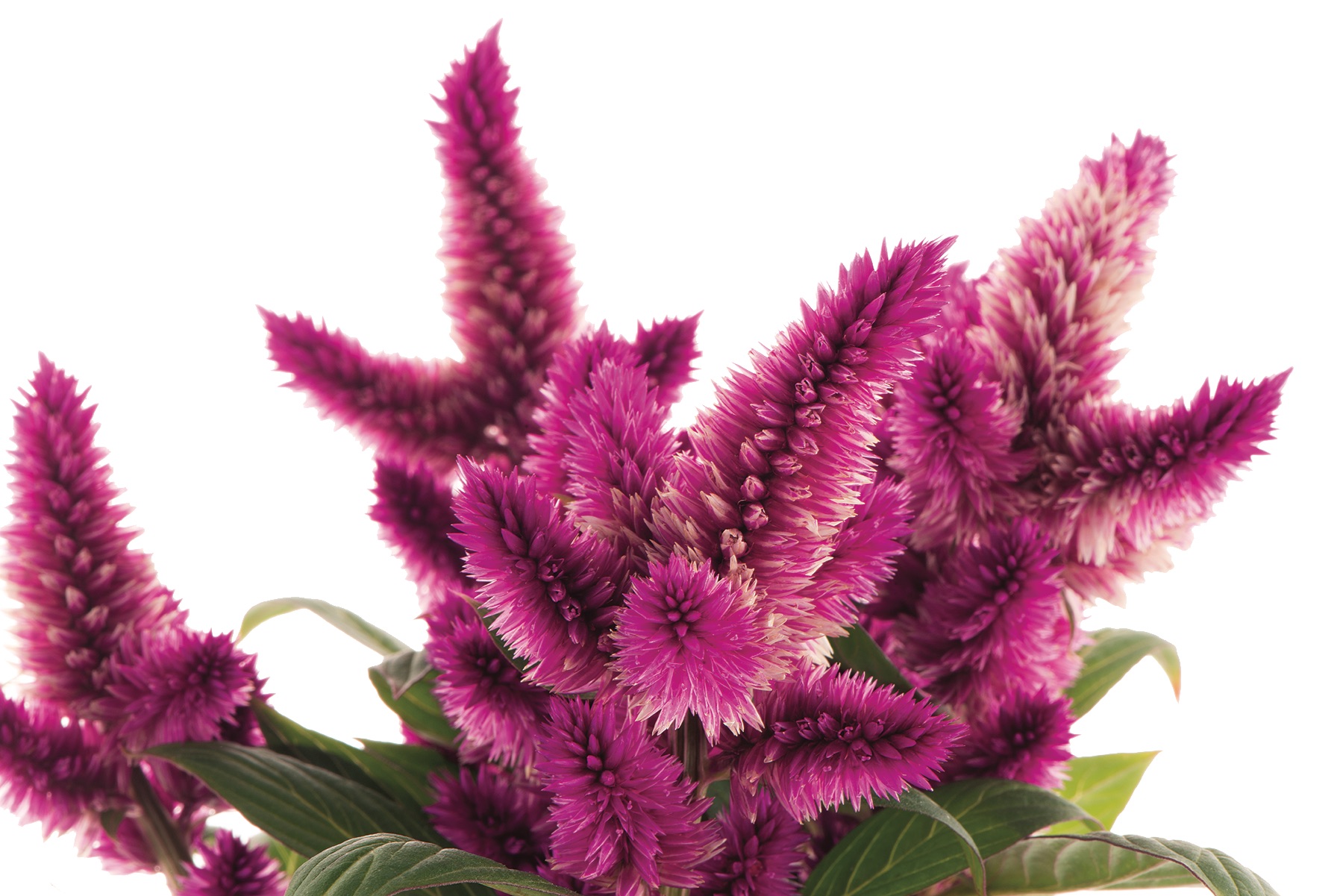
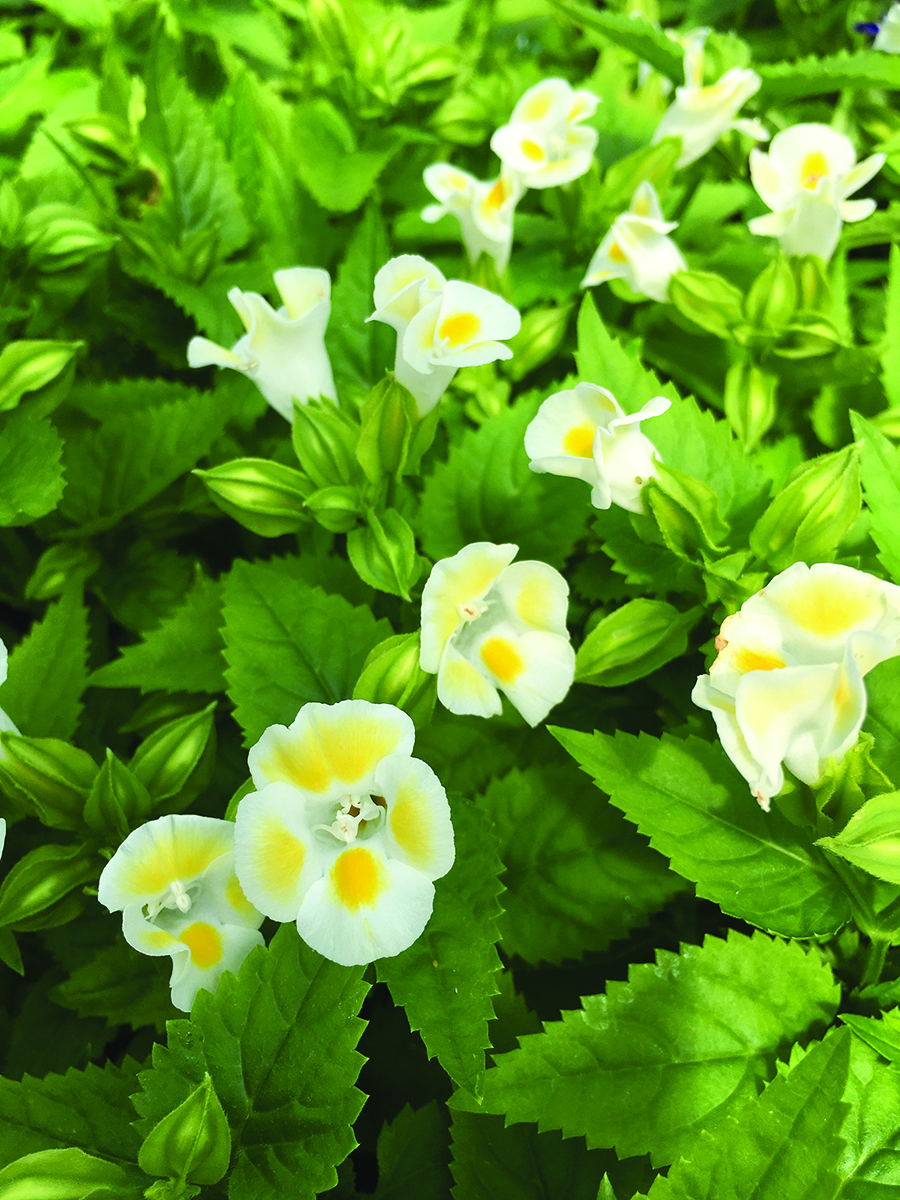
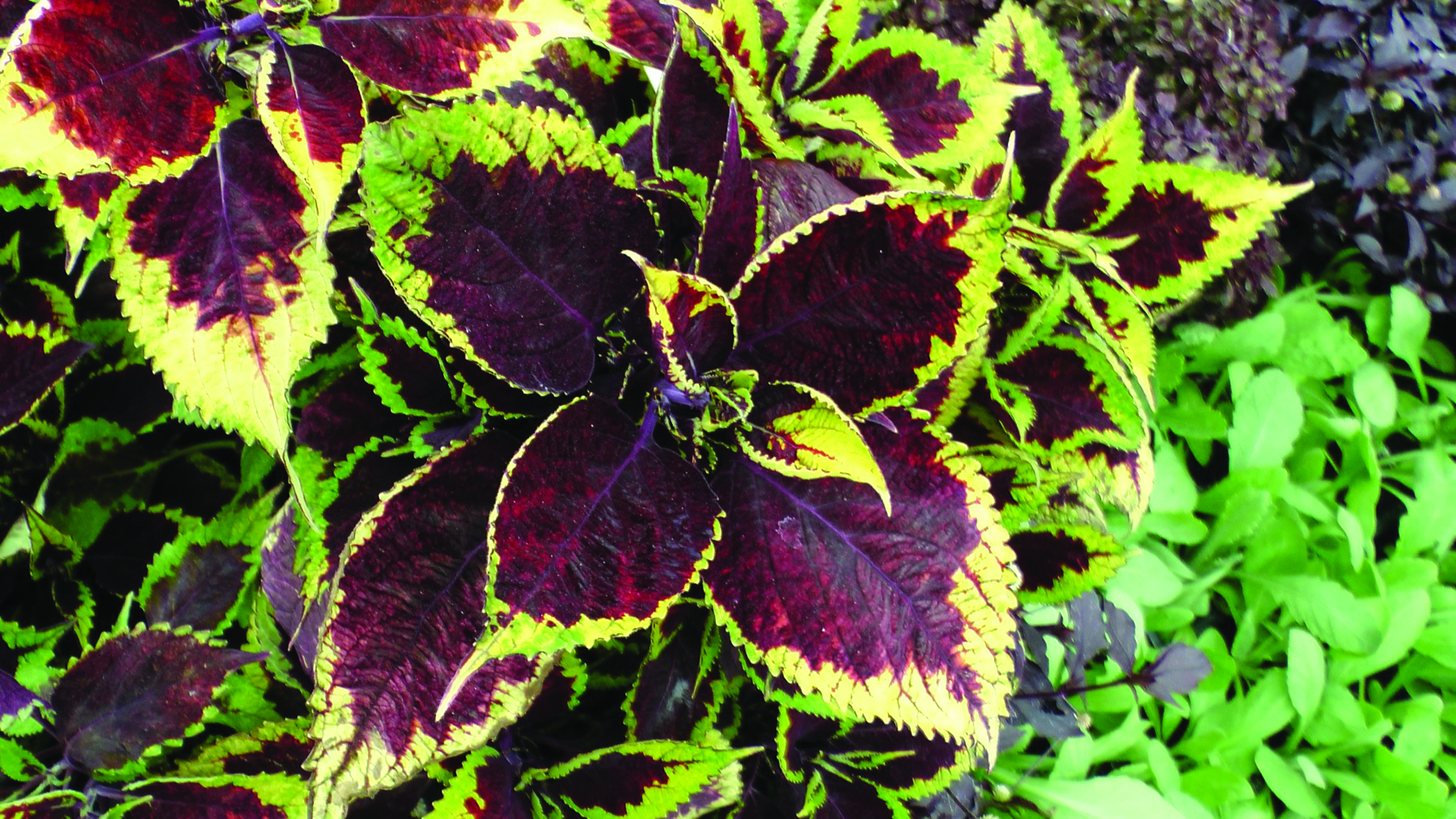
Annuals/Bedding Plants: Summer annuals to plant now include celosia, coleus, torenia, and ornamental peppers.
Bulbs: Butterfly lily and gladiolus are bulbs that can be planted during the middle of summer.
Herbs: While summer is too hot to start herbs from seeds, many, such as oregano and mint, do well if started from small plants.
Vegetables: Plant tropical vegetables, such as boniato, calabaza, and chayote this month.
Palms: Continue planting palms while the rainy season is in full swing. Support large palms with braces for 6–8 months after planting. Do not drive nails directly into a palm trunk.
What to Do
Pests on Lawns: Determine the cause of any lawn problems before taking action. If an insect is the culprit, treat only the affected area. Rule out disease or sprinkler malfunction.
Fertilizer Bans: Numerous municipalities in south Florida prohibit the application of fertilizer to lawns and/or landscape plants during the summer rainy season (June– September). See if such an ordinance exists in your area.
Vegetable garden: Use summer heat to solarize
the vegetable garden for fall planting. It takes 4–6 weeks to kill weeds, disease, and nematodes, so start now. See Soil Solarization: edis. ifas.ufl.edu/topic_soil_ solarization.
Pests on ornamental plants: Inspect the leaves of ornamental plants for small white dots that may indicate lace bugs at work. Spray forcefully with water to help control this pest.
Tropical fruit trees: Check for damage to fruit or leaves and take action to minimize the effect of insects and/or disease on developing fruit or the overall health of the tree.
South Florida divers always look forward to lobster
miniseason, which for them is the biggest unofficial holiday of the year.
Properly known as the two-day sport season, which is the
last consecutive Wednesday and Thursday in July, miniseason is the first chance
for recreational divers to catch lobsters since the regular season closed on
April 1. That usually means lobsters are abundant, as commercial traps have
been out of the water since that date, and the bugs, as they are known, haven’t
been netted or snared by divers.
In addition, the tasty crustaceans are less wary than usual,
which makes them easier to catch. Instead of retreating into a hole in a coral
reef or under a ledge, like they do during the regular season, which opens Aug.
6, bugs in late July tend to stand their ground when a diver approaches.
Another reason the miniseason attracts thousands of divers
to South Florida is the daily limit outside of the Florida Keys is 12 lobsters
per person, which is double the regular-season limit. (For regulation info,
visit MyFWC.com.)
To get their limit, a fair number of divers will be in the
water at 12:01 a.m. July 24, when the miniseason begins. Most boaters don’t
head offshore until five or six hours later. They’ll be back on July 25 to
hopefully get another limit of bugs and the makings of a lobster feast for them
and their families and their non-diving friends.
Divers prepare for the miniseason weeks before it arrives.
Dive gear such as regulators and BCs (buoyancy compensators) are taken to a
dive shop for service and air tanks are filled.
Doing some dives also is part of pre-miniseason prep, both to
locate areas with lobsters and to make sure all your equipment is working
properly. For lobster divers, few things are as disappointing as having the strap
on a mask or a fin break during miniseason. Unless you have a replacement
strap, you probably won’t be catching any lobsters.
Two years ago, I dove the Monday before miniseason with my
good friend Jim “Chiefy” Mathie of Deerfield Beach. We were on the bottom in
about 60 feet and my mask was taking on water. When I tried to clear it, the
lenses popped out into my hands.
Mathie escorted me back to the surface. As it turned out, the
mask’s frame had cracked. Fortunately, Mathie had another mask on his boat that
I used that day.
The author of the book Catching the BUG: The
Comprehensive Guide to Catching the Spiny Lobster, Mathie will have a free lobster-hunting
seminar on July 23 from 6-7 p.m. to begin Lauderdale-by-the-Sea’s eighth annual
BugFest, a celebration of miniseason and the town’s beach access to local
reefs.
Following the seminar is a free miniseason kickoff party —
both will be held at Plunge Beach Hotel — during which divers can register for
BugFest’s popular Great Florida Bug Hunt. For a $20 entry fee, divers receive a
goody bag and T-shirt and the opportunity to win cash and terrific prizes such
as regulators, dive computers, air tanks, dive boat trips, and hotel stays.
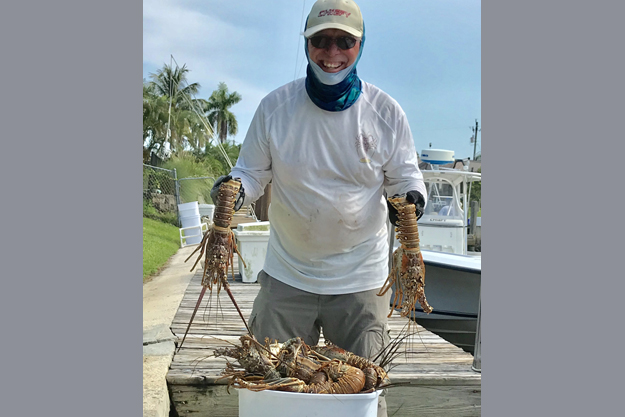
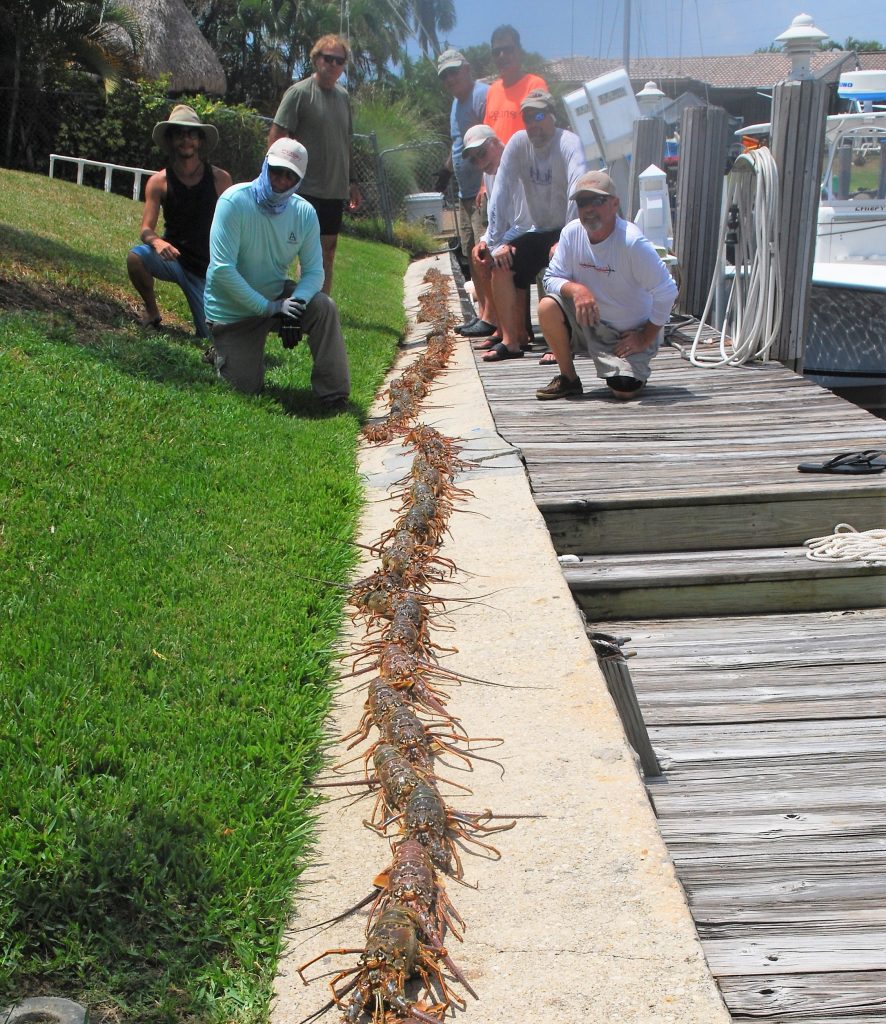
The Chiefy crew lined up its limit of lobsters caught during the first day of the 2018 miniseason. (Photo courtesy Steve Waters)
In the past, a $1,000 prize was awarded to the two-person team
catching the heaviest total weight of 12 bugs on Wednesday. This year, $500
goes to the team with the heaviest weight caught off Broward County and $500 to
the duo with the top weight caught off Miami-Dade or Palm Beach counties. Other
prizes include $400 for the biggest bug caught anywhere off a boat, $400 for
the biggest bug caught off the beach, and a Sherwood Oasis regulator valued at
$420 for the biggest bug caught on a midnight beach dive off
Lauderdale-by-the-Sea. There are also prizes for the biggest bugs caught
Wednesday on the 6 a.m. dives on the Aqua View and Black Pearl dive boats at
South Florida Diving Headquarters in Pompano Beach.
Divers don’t need to bag big bugs to win big. They receive a
raffle ticket for each lobster they weigh in on Wednesday and Thursday. Winning
tickets are drawn at 7:30 p.m. Thursday, following the lobster chef competition,
which starts at 6 at the Beach Pavilion at the end of Commercial Boulevard. So,
a diver who weighs 24 lobsters can win multiple prizes. Divers can register in
advance at Gold Coast Scuba in Lauderdale-by-the-Sea or South Florida Diving
Headquarters or online at DiscoverLBTS.com.
“It’s fun for the divers. It gives them more of an
incentive,” said Steve d’Oliveira, the town’s Public Information Officer. “The
town knows that BugFest is fun for divers and they get behind it, and everybody
has a good time.”
Other activities include a midnight beach dive on Tuesday, a fish
identification seminar on July 26, a free clean-up dive under and around
Anglin’s Pier at 8 a.m. July 27, and the third annual Diveheart Benefit Concert
from 6:30-10:30 that night.
The Atlantic hurricane and storm season officially starts on
June 1, and lasts through the end of November.
The 2019 hurricane season is projected to be relatively smaller,
with scientists from the Colorado State University Tropical Meteorology Project
predicting 13 named storms, five hurricanes and two major hurricanes this year —
fewer in number than in previous seasons, but just as dangerous to our region.
All it takes is one hard landfall to cause major damage here
— not only to our own homes and property, but to many of the essential services
and infrastructure we count on our local community governments for.
Given the widespread acceptance at the local, county, and even
state levels of the realities of climate change and the rising sea levels South
Florida is experiencing, are local city governments better prepared to respond
and recover from a major storm?
***
Most Florida cities have improved, even streamlined their
preparedness planning over the years. Planning, after all, the most important
aspect of facing a storm, surviving it, and recovering from it — and Florida’s
cities have had plenty of practice in preparing.
But in recent years, there are three key elements local
governments have been implementing with more regularity. It starts with
emergency operations preparation, coordination between departments, and public-safety
communications. With better training in place now and better planning from
responders, emergency supplies and materials are readily available before,
during, and after a hurricane.
Most city websites, if not all, have massively improved providing
essential information to citizens. Implementing mobile alerts and text messages
makes information and updates more frequently available for local residents.
Most of the time, these media play a supplementary role to the usual way we get
local info — either by email or snail mail from the utility company. But during
storms and hurricane situations, mobile alerts and texts are taking a more prominent
role in counties and municipalities getting official word out about basic facts
that save lives and help their residents stay safe: what plans and services are
in place if evacuation becomes necessary, and also when it’s not necessary, and
what is being done as a storm happens.
Government assistance has become more effective as well,
according to local officials. Funds are more available for relief and recovery
and for housing for those in need.
***
In these times of budget cuts and belt-tightening, is there
enough staffing for city departments?
Ideally, when threatened by a hurricane, the last thing we
expect are staffing shortages. Communities are supposed to provide safe havens,
and when it gets down to the nitty-gritty, there is indeed safety in numbers. But
some cities have struggled with having enough staff to assist with such
hands-on work as shelter operations, and probably will continue to struggle. Even
the American Red Cross, which used to staff all shelters in emergency
situations, said they are unable now to provide the same level of staffing.
Organization, especially the coordination of official
efforts, is key in making sure people are prepared for evacuation before a
major storm. Are people going to listen to their local leaders and depart in a
timely manner? Will shelter capacities be adequate for those who decide to
stay?
Valid questions, anyone would agree, as beachfront cities
like Deerfield Beach, Boca Raton, Pompano Beach, Delray Beach, and more are
trying to be proactive in their planning. But coordination among cities and
counties isn’t what it could be, and with state and federal officials wading in
along with nonprofit organizations, sometimes it seems as though the agencies
that are supposed to help are the most in need of it.
***
Beyond the immediacy of safeguarding human life, how are
cities managing sewer systems overburdened with rising sea levels, more intense
hurricanes, and worsening flooding?
South Florida’s sewage systems are already strained, given their
antiquated state, the ever-increasing population, and the slow and expensive progress
that’s been made both on shoring up the infrastructure in place and building
new treatment plants and storage wells. Many cities’ water and sewage treatment
plants are inadequately prepared to handle heavy rains, which often leads raw
sewage released into our streets and homes. That means maintenance is a must,
and some local infrastructure needs emergency upgrading.
But local communities, which have largely led the charge in figuring
out how climate change affects them and seek ways to address it, can’t afford
to wait until the wet season to prepare for disasters. Building construction
codes and regulations to prevent flooding are being toughened, with some local regulations
now requiring homes and buildings to be constructed to higher flood-protection
levels.
South Florida’s deteriorating infrastructure and restrained local
budgets will make it more difficult to cope with the many ways climate change
affects our area.
Still, however much more
intense storms and hurricanes are, however worse the flooding and other dangers
hurricanes bring, the story for South Floridians is the same every year: Be prepared,
stay alert, follow the news, and heed information provided by local officials.
If
you’re not up for braving the South Florida heat this summer, these local
venues offer family-friendly activities available during the quiet — and less
hot — afternoon and evening hours.
Gumbo
Limbo’s environmental complex in Boca Raton is an indoor / outdoor nature
center with several aquariums and exhibits. A variety of group programs,
including guided nature trail walks, sea turtle talks, and animal feedings, are
offered throughout the week. A popular activity that only takes place on summer
nights is the Turtle Walk and Hatchling Release, where participants have the
opportunity to learn about Florida’s native sea turtles, walk to the nearby
beach, and watch a nesting Loggerhead or see baby turtles race for the sea.
View
Gumbo Limbo’s calendar of events for information on how to register.
Where: 1801 N. Ocean Blvd, Boca Raton
When: Monday through Saturday, 9 a.m. to 4 p.m.; Sunday, noon to 4
p.m.
Cost: Free ($5 suggested donation); free parking
Details: GumboLimbo.org
Hugh Taylor Birch State Park
Hugh Taylor Birch State Park features a canoe-kayak launch in its long list of amenities. (Courtesy photo)
Favorite
activities at Birch State Park range from live animal presentations to guided
mangrove and trail walks, and all are excellent opportunities for families to
explore Florida’s natural ecosystems and wildlife, and learn about the history
behind this local state park. The two-mile loop surrounding the natural habitat
is bike- and rollerblade friendly, while the Intracoastal Waterway allows for
easy access to fishing and makes for a perfect sunset-viewing picnic spot.
Birch State Park offers paddleboard rentals for those looking to visit Fort
Lauderdale’s stretch of beaches along A1A. In addition, the park is home to
Camp Live Oak, an immersive nature program for children ages 5-13, as well as a
variety of scheduled tours, educational classes, and events.
Where: 3109 E. Sunrise Blvd, Fort Lauderdale
When: Every day, 8 a.m. to sunset
Cost: $6 per family/group vehicle
Details: FloridaStateParks.org/HughTaylorBirch
Bark Beach at Spanish River
Park
Release
the leash and let Fido roam free on the sands of Spanish River Park’s beach!
Bark Beach is sectioned off from the rest of the park to ensure dogs don’t run
too far and other park visitors remain unscathed by licks or wet paws. Summer
hours are conveniently scheduled in the early morning and late afternoon. Bark
Beach is open to all families of Boca Raton who have purchased a dog permit at
their nearest community center. A single weekend pass is also an option,
allowing unlimited access to Boca’s best dog-friendly beach from Friday through
Sunday.
Where: 3001 N. State Rd A1A, Boca Raton
When: Friday through Sunday, 7-9 a.m. and 5 p.m. to sunset
Cost: Bark Beach dog permit required; $11 weekend pass; parking
$17 weekdays, $19 weekends OR free with annual beach pass
Details: MyBoca.us
INDOOR DESTINATIONS
Children’s Science Explorium
Located
inside Boca’s Sugar Sand Park, the Children’s Science Explorium is a must-visit
attraction. Activities during the summer include a variety of interactive,
science-geared exhibits and exciting educational programs. The Grab ‘n’ Go Eco
Pack gives young children and their families the opportunity to embark on a
scavenger hunt throughout Sugar Sand’s nature trails and explore the park’s
plants, birds, and insects. Kids-only activities include the one-week Summer
Science Camp — open to youngsters in grades kindergarten through 5th — and the
after-hour Friday Nights @ the Museum, featuring a cool experiment and movie
night! Check the events calendar in early June for a list of summer exhibits
and more info on registering.
Where: 300 S. Military Trail, Boca Raton
When: Monday through Friday, 9 a.m. to 6 p.m.; Saturday and
Sunday, 10 a.m. to 5 p.m.
Cost: Free ($5 suggested donation); free parking
Details: ScienceExplorium.org
Young At Art Museum
Young At Art Museum’s ArtScapes features works that explore a child’s perspective on the world. (Photo courtesy Young At Art Museum)
What’s
one thing that makes the Young At Art Museum unique? Through its program YAA
for ALL: Access to Lifelong Learning, the museum has developed special programs
and events for children and adults with autism and other disabilities. In
addition to its pre-scheduled classes and exhibits, the YAA opens one hour
earlier every second Sunday of the month, giving exclusive access for families
with disabled children. Specialized activities include the Sensory Studio Art
Class, which creates a warm and friendly environment of hands-on art-making
alongside specially trained staff members.
Where: 751 SW 121st Ave, Davie
When: Monday through Thursday, 10 a.m. to 5 p.m.; Friday and
Saturday, 10 a.m. to 6 p.m.; Sunday, 11 a.m. to 6 p.m.
Cost: $14 for adults/children; $12 for seniors and Broward County
residents; $11 for military families. Membership and group rates available.
Details: YoungAtArtMuseum.org
Museum of Discovery and
Science
The Museum of Discovery and Science’s AutoNation IMAX and 3D Theater. (Courtesy photo)
In
addition to its array of science exhibits and children’s Discovery Camp, a
distinctive feature of the Museum of Discovery and Science is its in-house IMAX
3D theater, which presents a number of documentaries and Hollywood films. With
numerous showtimes throughout the day, as well as wheelchair-accessible and
sensory-friendly screenings, this theater is a great pick for families. This
summer, the Museum’s featured exhibit, Hall
of Heroes, immerses visitors in the superhero world of crime-catchers,
Batmobiles, spy gadgets, and more.
Where: 401 SW Second St, Fort Lauderdale
When: Monday through Saturday, 10 a.m. to 5 p.m.; Sunday, noon to
5 p.m.
Cost: $17 for adults; $16 for seniors; $14 for military families
and children ages 2-12; free for children ages 1 and under; parking $6-$10.
Museum membership rates available.
Details: MODS.org
(Note: The IMAX 3D Theater has its own hours and
admission fees. Please visit the MODS website for details.)
Most offshore anglers in South Florida are focused on
catching dolphin in the month of June. The colorful fish — not the mammal — are
popular because they fight hard and jump a lot, they can be caught on a variety
of baits and lures, and people love to eat them.
Although dolphin are caught year-round locally, this is the
time of year when they are plentiful. The bag limit is 10 fish, a minimum of 20-inches
long— per person per day or 60 fish per boat, whichever is less. Many anglers
keep only enough dolphin for a few meals — the fish are terrific fried,
blackened or in tacos — and safely release everything else back into the water.
Late spring and summer are when dolphin are often found in
schools ranging from half a dozen to dozens of fish. Locating those schools is
usually a matter of locating birds, weedlines, or floating debris.
Weedlines, patches of
grass and debris such as tree trunks and wooden pallets, attract baitfish,
which attract dolphin. Birds often hover over dolphin, hoping they’ll chase
bait to the surface. Like serious
bird-watchers hoping to spot a species they’ve never seen before, dolphin
fishermen are always on the lookout for frigate birds.
Also known as a man-o’-war bird, a frigate
bird has a forked tail and a wide wingspan that allows it to soar over the
ocean, then suddenly swoop down to catch a fish with its long, hooked bill. The
bird does not dive into the water. Instead, it waits for dolphin to send flying
fish and other small fish fleeing to the surface. When a baitfish goes
airborne, the frigate zips in and snags it. (A frigate also scores easy meals
by harassing other seabirds so that they drop their catch, which the frigate
grabs before it hits the water.)
When running offshore, some captains will stop every five
minutes or so to scan the horizon with binoculars in the hopes of spotting
birds or debris. Others will designate crew members to keep an eye on the sky.
If frigate birds are swooping, that’s a good sign. If birds
are sky-high, they’re looking for dolphin, so it might not be worthwhile to
race over to them.
“High birds, if they’re way up there, they’re taking
advantage of their eyesight to look for something to play with,” said Capt.
Bouncer Smith, a legendary charter fishing captain in Miami Beach. “If they’re
200 feet high, they’re probably into something. When they start to dive, then
they’re really in the game.”
Smith added that anglers must pay attention to the direction
a frigate bird is flying.
“If birds are working to the
north, they’re over smaller dolphin or tunas,” Smith said. “If a bird is on
good-sized fish, he’s going to be going south, because good-sized fish go
against the current. The big dolphin are swimming just fast enough to hold their
position in the current — the Gulf Stream is moving north at 3-4 mph — and eat
what comes by.”
Smith, who runs
charters out of Miami Beach Marina on Bouncer’s Dusky 33 (CaptBouncer.com),
said anglers need to get ahead of a frigate flying south to have a shot at
catching the dolphin the bird is following. If they stay to the north of a
south-flying bird, the fish have already passed their boat.
“A lot of times when you’re on frigate birds, you’ve got to
wind the lines in and get ahead of the frigate and let the dolphin catch up to
you,” Smith said.
Once his boat is in position, Smith rigs two
spinning outfits with live baits — pilchards, goggle-eyes, small blue runners,
or cigar minnows — hooked through the nose. He has his anglers cast the baits
50-100 feet behind the boat. They leave the reel bails open and control the
lines with their index fingers while Smith idles ahead of the bird.
“When a fish eats, give him a short drop-back,
close the bail and wind,” said Smith.
Once you’re hooked up, it’s not unusual for
the rest of the school to appear behind the boat. That’s when fishing can get
frantic, with multiple anglers fighting fish and trying to not tangle their
lines. Like a choreographer, Smith often has to tell anglers to go over or
under another angler’s line.
To keep dolphin around
the boat, many anglers leave one or more hooked fish in the water, which
attracts other dolphin. When the next fish is hooked, the first one
can be boated, and so on. If, after you’ve boated several dolphin, the school
disappears, try splashing the water with a gaff to get the fish to return
because it sounds like a feeding frenzy that they’re missing out on.
When the schoolies
are solid behind the boat, you can catch them on dead bait, jigs, topwater
plugs, and even flies. Smith recommends buying a 1-pound box of squid
and casting the 3- to 4-inch baits to the fish. A one-ounce kingfish jig
retrieved as fast as possible also entices strikes from dolphin. But Smith’s
favorite way to catch schoolies is on a fly rod.
“Better too small a fly than too big a fly,” said Smith, adding that
yellow is an effective color. It also helps to toss out a few glass minnows every
once in a while, to keep the fish turned on.
“We have a real Dr. Doolittle here,” is how Allan Rose,
executive director of Sawgrass Nature Center & Wildlife Hospital in Coral
Springs, describes Donna Fife, the hospital director. And with good reason.
His description reflects Fife’s dedication to saving wild
animals and her skill in treating them, although she is not a
veterinarian. On the day of my visit in
early February, about 50 animals were hospitalized at the center. Recent
arrivals included three doves, a gopher tortoise, and a blue jay suffering
spinal trauma. The blue jay was being given steroids and oxygen and fed through
a tube. Its chance for survival, Fife guessed, was about 50 percent.
The two doves had broken wings, which hospital staff set and
wrapped. Sometimes broken wings heal; sometimes they don’t. If a dove can’t fly
perfectly, it cannot be released into the wild and will have a permanent home
at the wildlife center. The gopher tortoise was treated for an eye infection.
As a “keystone” species, the tortoise is valuable in our eco-system because its
long tunnel-like burrows provide shelter for other endangered animals.
In addition to the hospital’s inpatient animals, Fife was
caring for nine orphaned baby raccoons in her home. The babies have to be fed
every few hours, so they couldn’t be left overnight at the hospital. “It’s like
having my own babies,” Fife said. The outlook for them is good, and she expects
they’ll eventually be released back into the wild.
Baby raccoon being bottle fed
One of the hospital’s patients hasn’t flown the coop. Ewok,
an Eastern Screech Owl, lives at the center and now serves as an educational
“ambassador” on school trips and events for wildlife education. When the owl
arrived, its head tilted to one side. An examination revealed a detached retina
in one of its eyes. Fife gave him a stuffed “mama owl” that he’d lean his head
against to try to straighten it. “He still loves it and grooms it,” she said.
Ewok is friendly enough that he also sometimes provides company for Rose,
sitting on the executive director’s desk.
Screech owl being fed with tweezer
Besides medical treatment, “we give the animals a lot of
TLC,” Rose said.
When injured animals arrive, Fife describes the work as
detective work. “We go by what we see, smell, and feel.” Among the wildlife
being treated during my visit was a possum found by the road about three weeks
earlier. It was in such bad shape that “it looked like an alien,” Fife said. It
was almost bald and had lost much of its muscle. The possum was treated with subcutaneous
(under the skin) fluid injections along with rounds of antibiotics and
nutritional supplements. At the time of my visit, the outlook for the possum
was promising.
Because possums eat rats, mice, ticks, and venomous snakes,
they’re great to have in your garden, Fife said. They happen to be the only
marsupial indigenous to North America. Even a dead possum is welcome at the
hospital, Rose said, because it could have babies in its pouch. (As a
marsupial, a possum’s very tiny babies crawl into the pouch after birth.)
The possum, along with Ewok the owl and the baby raccoons,
are just some of the nearly 1,000 injured or orphaned animals brought to the
center and hospital in a typical year. Some people make great efforts to save
wildlife simply because they love animals. Others, like Robin Reccasina, the
center’s operations and education director, believe every animal has an
important role in the ecosystem, and since humans are damaging it, we have a
responsibility to help.
Not all animals are welcome at the center. Animals of an
invasive species should not be brought to the hospital because they cannot be
released back into the environment. They include iguanas, Muscovy ducks, and
Egyptian geese.
Operating a non-profit organization almost always requires
two things: money and volunteers. The Sawgrass center and wildlife hospital
always needs the latter. The work isn’t easy, Fife said, and volunteers must be
committed. Some who don’t handle animals are needed in the busy kitchen, which
prepares meals for 100 or more animals of different species. Others transport
supplies.
Money also is always welcome. “We rely totally on donations,” Rose emphasized. “We are unique. If you love animals, this is a great place to donate.” To donate, volunteer, or learn more, call 954 752-WILD (9453), or visit SawgrassNatureCenter.org.
South
Florida anglers and divers look forward to the month of May because the grouper
and hogfish seasons open May 1.
“Opening
day is a Wednesday,” spearfishing expert Jim “Chiefy” Mathie said. “If you’re a
diver or underwater hunter, you may want to take that day off from work to get
out there and get an early jump on grouper and hogfish.”
The
grouper season in Atlantic waters has been closed since Jan. 1 and hogfish
season closed on Nov. 1 in local waters. Scuba divers like Mathie could only
look and stare at black, gag and red groupers and hogfish as they hunted for
other fish and lobsters. When the seasons open, they’ll be targeting what many
people consider to be the tastiest fish in the ocean.
The
same goes for offshore anglers, especially those who fish on local drift boats
like Capt. Skip Dana’s Fish City Pride at Hillsboro Inlet Marina in
Pompano Beach. Dana will run trips focused on grouper fishing the first few
days of the season. Until then, anglers on his boat and others have had to
release every grouper and hogfish they’ve caught.
“We’ve
been catching quite a few groupers,” Dana said. “We’ve also caught quite a few
hogfish this past winter using dead sardines or squid.”
In
addition to closed seasons, grouper and hogfish have restrictive bag limits.
Black and gag groupers must measure at least 24 inches and reds must be 20
inches. Anglers and divers can keep a total of three grouper per day, but only
one can be a black or a gag. The other two, or all three, can be red grouper.
The
limit on hogfish is one per person per day, a minimum of 16 inches long.
Previously, the season was open all year, the daily bag limit was five fish and
the size limit was 12 inches. Mathie, of Deerfield Beach, has seen an
improvement in the hogfish population from Pompano to Boca Raton since the regulations
were instituted in 2017.
“We
definitely are seeing a lot of big males,” Mathie said, explaining that male
hogfish that are big enough to shoot have a long snoot with a dark stripe down
the forehead. “Every dive, we’ve seen at least one big male, and in all depths
— shallow, medium, deep. Their typical behavior, in particular the big males,
is they’ll have a harem of females.”
Mathie
is the author of Catching the Spear-it!
The ABC’s of Spearfishing, which is sold by most area dive shops as well at
Chiefy.net and other online retailers. Among the many tips in the book is to
always keep in mind the 3 R’s — recognition, regulation, and range. In other
words, be able to identify the fish, know the size limit and be close enough to
shoot it with your speargun.
Spearfishers
must check off the 3 R’s relatively quickly with black and gag grouper. Unlike
hogfish and red grouper, which often try to hide behind a sea fan when a diver
approaches, blacks and gags don’t usually stick around.
“You
land a black grouper, you’ve done well, because they’re always on the move,”
Mathie said.
A
member of the South Florida Spearfishing Club (Spearfishing.org), Mathie and
his dive buddies start the season hunting the west-facing side of the third
reef. The top of the reef is about 50 feet below the surface and the bottom is
60-65 feet.
“The
structure holds a lot of fish, and that’s where you see the bigger fish,” said
Mathie, who also hunts for grouper and hogfish around wrecks at 65 feet. “Last
year we did those areas for almost the whole month of May because we were
finding big fish. We didn’t always get them, but we saw a lot of fish. After
that, we went to the deeper wrecks in 110, 120 feet.”
Dana
fishes wrecks from 75-240 feet for grouper. (GPS coordinates for Florida’s
artificial reefs are available on the Florida Fish and Wildlife Commission
website, MyFWC.com.) Dana said wrecks in 75-120 feet are good for gag grouper. Blacks
are on the same wrecks and deeper ones. Reds can be as shallow at 30-40 feet
around rockpiles, ledges, and grass patches, as well as on wrecks.
He
added that heavy tackle is needed to quickly get hooked grouper away from
wrecks. If the fish get into the ruins, odds are good your line will break.
“I’d
use at least 50- or 60-pound monofilament or braided line with an 80- to
100-pound leader and a 7/0 or 8/0 circle hook,” said Dana, adding that anglers
might use sinkers ranging from 2 to 16 ounces, depending on the strength of the
current, to get their baits to the bottom. “I really like live pinfish for bait
for grouper, but you can use two or three dead sardines on a hook, a goggle-eye
head or a fillet of bonito.
“Let the line spool out and feel for the bite. If
you’re fishing a wreck, you want to be up current and upwind of the wreck so
the bait will drop on the wreck. When you get the bite, there really is no drop-back
or feeding the grouper. Just lock up the reel and pull hard to get the fish off
the bottom and away from the wreck.”
Kermit the Frog had a different “green” in mind when he sang
the blues about the perils of his amphibian color on Sesame Street. But for many of us, “being Green” in an altogether
different way isn’t all that easy either.
These days, what exactly does “Green” mean?
Basically, it means leading more environmentally friendly
and ecologically responsible lives, so we protect natural resources, ourselves
and the planet. I’m sure by now, most of us have seen, heard, or read about the
many ways this can be accomplished: by recycling, using solar energy, electric
or hybrid cars, picking up trash, collecting plastics in our waterways, using
alternate energy sources instead of fossil fuels, etc.
The long list of “easy” fixes quickly becomes not-so-easy
when it comes to details. For example, in building and development, there is a
system called LEED, which stands for Leadership in Energy and Environmental
Design. It’s the most widely used green-building rating system in the world.
It’s also used for virtually all building projects, whether commercial,
community, or home.
But is it worth it? And does it really work, or matter? As I
have found out, most things in life have no clear-cut, black-and-white,
yes-or-no answers, and that is true here as well. To get a building or project
LEED-certified, there are courses to study, exams to take and proposals to be
shown and accepted. If all of that is completed, a building or project will
receive a plaque stating it is LEED-certified. The buildings must show certain
levels of efficiency in resource usage such as water and electric, and none of
this is cheap. The initial cost is $600 just to register and certification fees
can range from $2,250 to $22,500 based on the project size. On top of that,
complying with all the requirements necessary can add millions of dollars and
hours of paperwork to the projects. On the plus side, LEED certification can
mean tax breaks, grants, and the ability to charge higher rents.
Being LEED-certified sounds great on paper, but the bottom
line is this: as in many things, reality doesn’t always live up to theory’s
expectations. While some LEED buildings have shown lower resource usage rates,
others have shown rate increases. LEED certification, after all, is based on
proposals of anticipated resource use and not actual usage once a building
project is completed. Therefore, is it worth it to have your building or
project LEED-certified? A definitive answer remains elusive.
As another, more familiar example: Do hybrid cars produce
lower emissions than gas-only vehicles? Obviously. Do they get better gas
mileage? Sometimes. But it’s not always a significant difference when compared
to the price differential of similar models. Total electric cars use no fossil fuels
and produce no emissions, which are great assets. However, since there are not
enough of them on the road, there isn’t an accurate way to determine the
difference in electric consumption a nation of them might make. The same can be
said of solar panels. As for recyclables, there is absolutely no argument of
any sort that doing this is a bad thing.
Cleaning up our oceans, lakes, and waterways, plus keeping
our landfills limited to those items that decompose and can/will/might be used
to produce products that will go back into our soil is great. But what portion
of these post-consumer materials will be reused in manufacturing? Again, theory
is rosier than reality in answering this question. We have been recycling so
much and have shipped so much of it to foreign countries, China being the main
importer, that we now find ourselves without places to send these materials.
China has stopped importing “foreign garbage,” which includes many types of
plastics and paper. We also have run out of recycling plants and are now
depositing what is and might be recyclable back in landfills. Recycling,
however smart and necessary, remains shot through with problems, beginning with
the fact that a lot of us don’t understand whether what we throw in the recycling
bin is really recyclable.
So where are we in this quagmire? Does “being green” mean
there’s reason for hope and change? Or is it all hopey-changey bunk? What you
decide depends on your environmental outlook and what you want and expect of
and for future generations. It also depends on your pocketbook. The difference
in cost between hybrid cars and their gaseous counterparts can take years of
driving to recoup, let alone seem significant. The same with LEED-certified
buildings, electric cars and solar panels.
No,
being Green isn’t easy. But here’s my take in black and white: any steps
forward in making this planet more sustainable, keeping our precious natural
resources for generations to come, is worth whatever it takes.