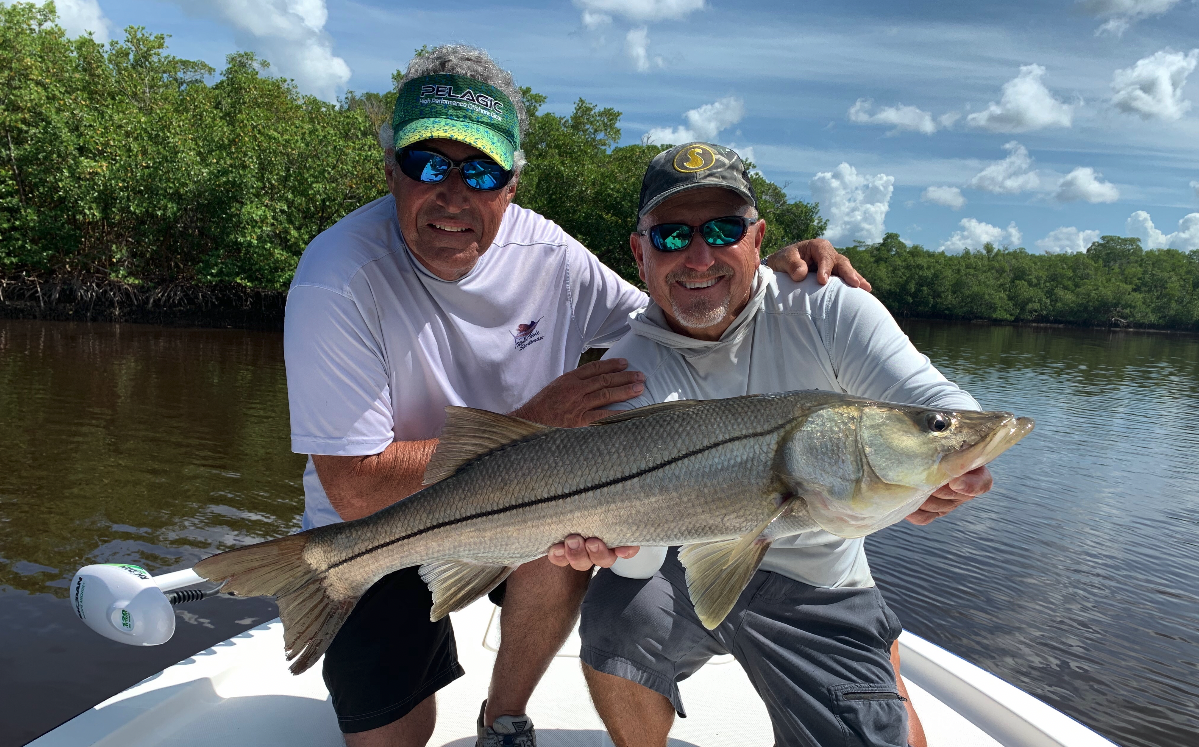
September 1 is a special day for many South Florida anglers because that’s when the snook season opens after being closed for most of the summer.
It’s also one of the best times to catch a snook because the fish are still congregated inside inlets, off beaches, and around bridges.
One of the best places to fish for the popular gamefish is in the 10,000 Islands on Florida’s southwest coast. The remote area, much of which is part of Everglades National Park, probably has the most boat traffic of the year during the first week of September, most of those fishermen hoping to catch a few good-tasting snook to bring home for dinner.
Capt. Brian Sanders, who fishes out of Chokoloskee Island for snook as well as redfish, sea trout, tripletail, cobia, and permit (visit www.sandersoutdoorguide.com) said he’s usually booked for the opening week of snook season 30-45 days in advance. Those with their own boats also invade the area, especially on the first weekend of the season, which this year is Sept. 5-6, followed by Labor Day on Sept. 7.
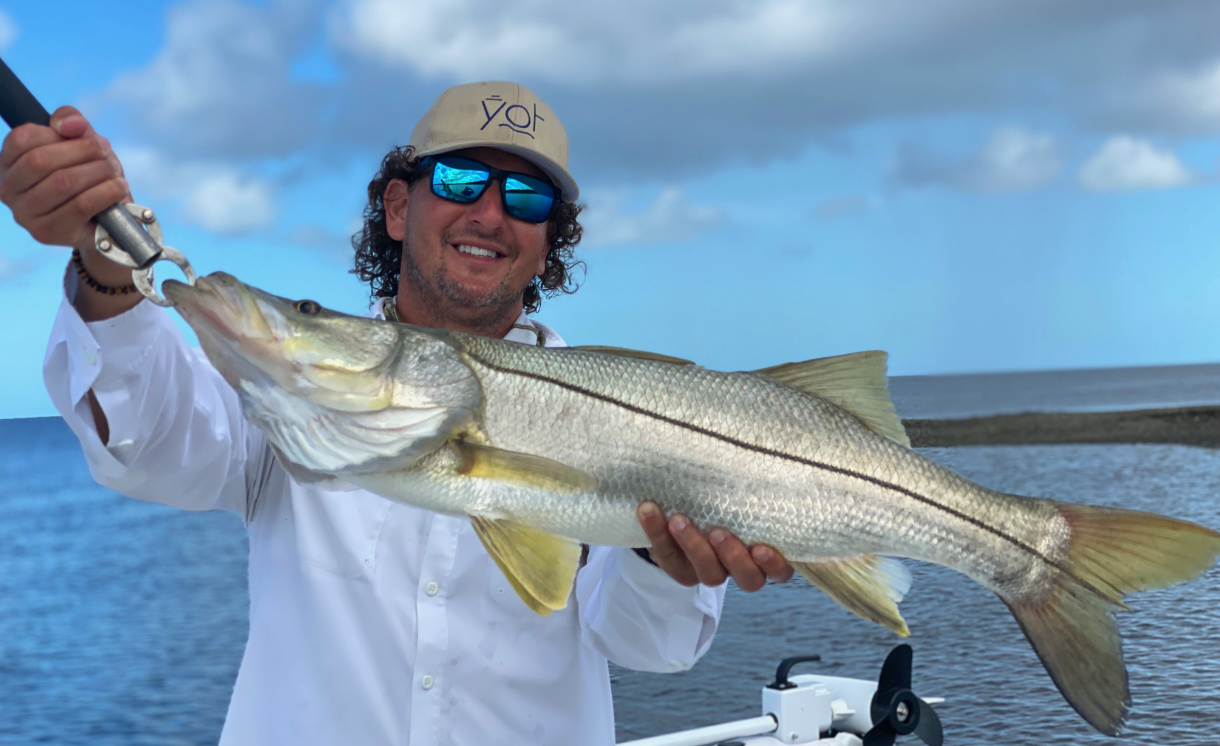
“This area solely relies on tourism and fishermen,” said Sanders, who has fished out of Chokoloskee for more than 50 years and ranks among the region’s top guides. “The fishermen come, they stay the weekend, they buy fuel, ice, and food. They all come down and descend into the Everglades.”
It’s easy to get turned around in the 10,000 Islands, where many of the mangrove islands look the same. In addition, water levels constantly change with the wind and tides, so a creek or bay that was easy to navigate at high tide could leave a boater stranded during low tide. If you haven’t fished the area before and aren’t going with someone who knows the 10,000 Islands, it makes sense to book an experienced guide such as Sanders.
He is especially good with youngsters and with adults who don’t have much fishing experience and coaches them so they can expertly land multiple species.
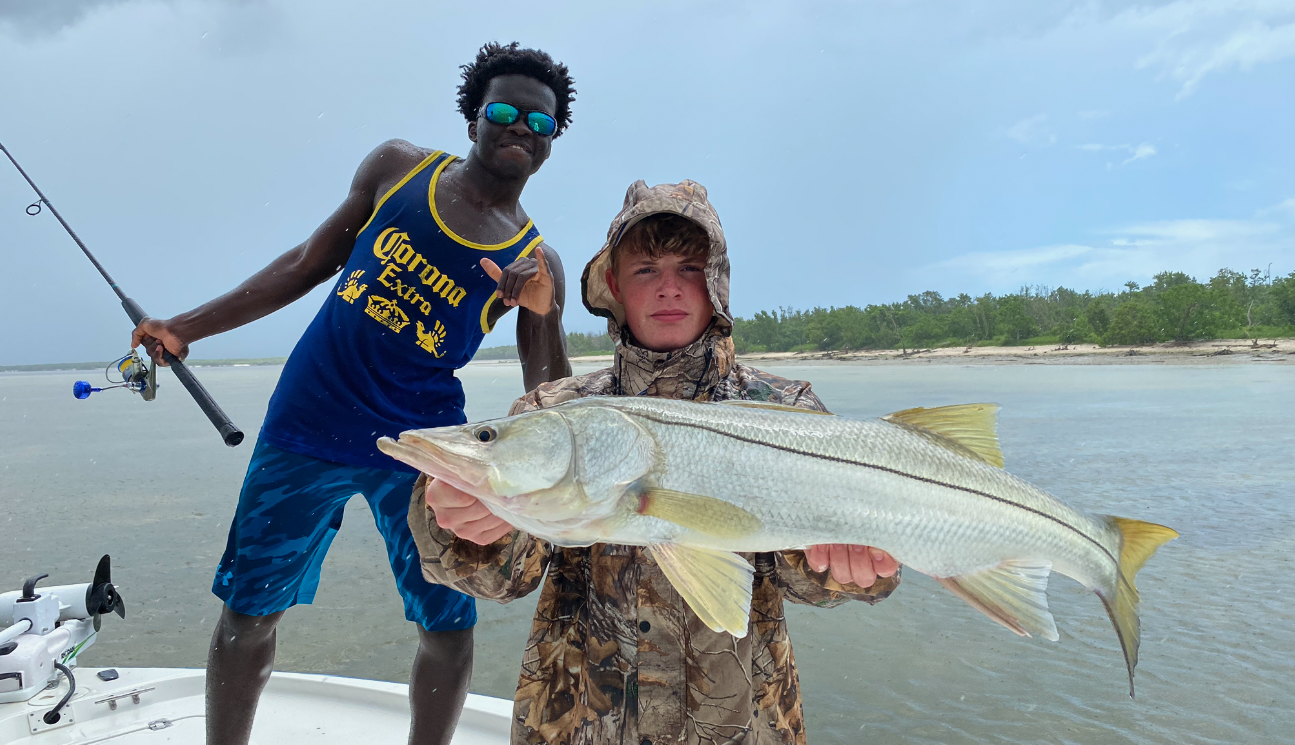
“I do a lot of family trips,” said Sanders, who lives in Davie and commutes across Alligator Alley to State Road 29 every day. “Lately it seems I’ve had a lot of husbands and wives and their 12-year-old kid. They let me take all of the guesswork out of fishing.”
On a recent trip, Sanders took his cousin’s 18-year-old son. He had just graduated high school, but because of COVID-19, he didn’t get to enjoy a proper graduation.
“She wanted to do something nice for him and asked if I’d take him and some of his buddies fishing,” Sanders said. “We had seven kids on two boats and we caught lots of redfish and some big snook. We had a great time and all the kids caught big fish.”
Big breeder snook are protected by the Florida Fish and Wildlife Conservation Commission to make sure that the state has a healthy population. Anglers are allowed to keep only one snook per day with a total length of 28 – 33 inches along the Gulf coast and in Everglades National Park and the Florida Keys, and one snook 28-32 inches on the Atlantic coast.
The Atlantic coast season is closed from June 1-August 31, which is when snook spawn. The open season is Sept. 1-Dec. 14, then it closes Dec. 15-Jan. 31. The season re-opens Feb. 1-May 31.
Regulations in Everglades National Park, the Florida Keys, and Gulf coast waters are more restrictive, with the season closed from Dec. 1 to the end of February and May 1-Aug. 31. Due to the adverse effects of red tide, the snook season is closed along the Gulf coast from north of Tampa to south of Naples through Aug. 31, 2021.
Snook can be caught and released during the closed seasons, and I’ve enjoyed many trips with Sanders where he pulled up to an island, told me to cast my bait to a downed tree or submerged oyster bar, and I immediately hooked a snook. That’s only half the battle with the hard-fighting fish because they have a knack for swimming to the nearest obstacle and tangling or breaking your fishing line.
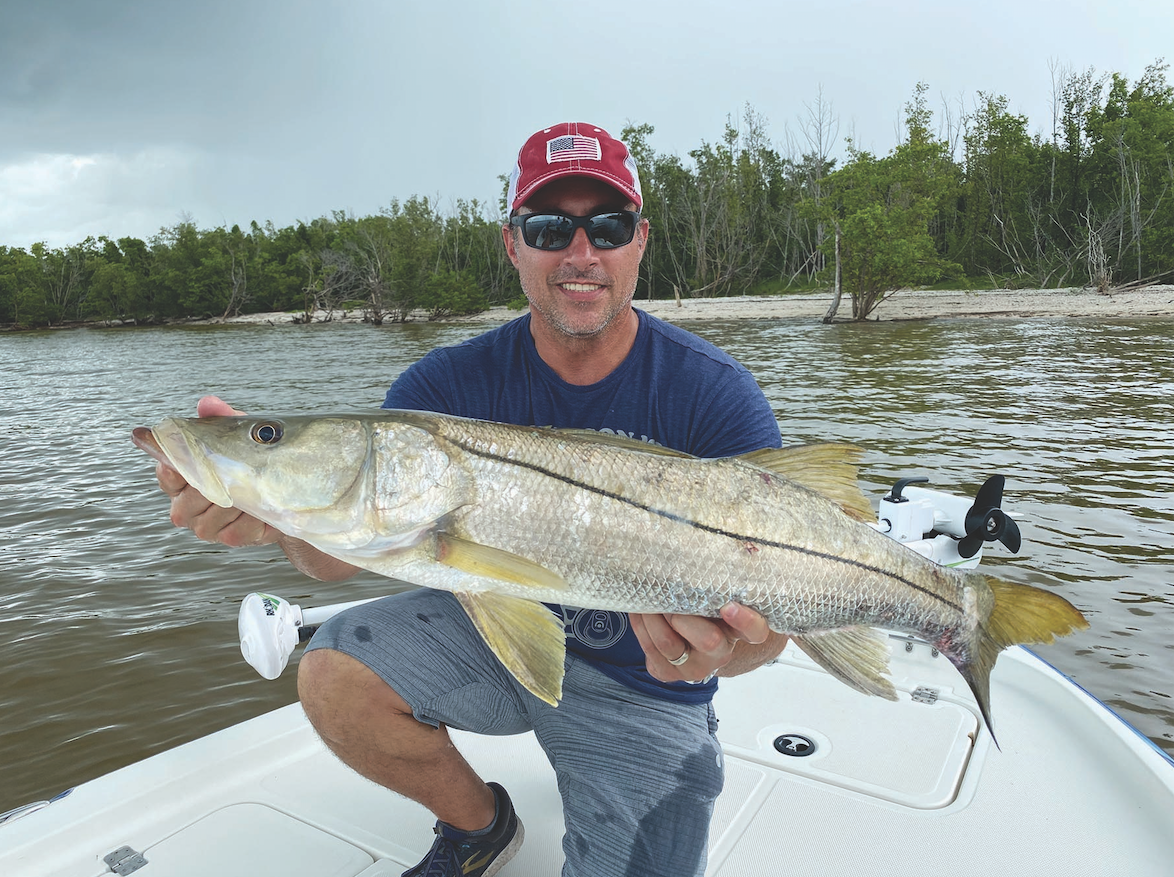
Sanders said that when you feel the “thump” of a snook inhaling your bait or lure, reel in the line until it comes tight, then set the hook. If you get excited and jerk the fishing rod with slack in the line, you won’t drive the hook into the snook’s mouth.
“Once the fish is under control and away from the structure, back off,” Sanders said. “Let the fish pull and then you pull. And it’s important to stay on top of your fish. You can’t fight a fish that goes to the back of the boat from the bow.”
Sanders recommended fairly stout tackle to wrestle snook away from rocks, oyster bars, and mangroves. He uses medium-heavy 7-foot spinning rods made by Fairbanks Customs Rods with a 3500 or 4000 series Canyon reel. His main line is a 20-pound braid tied to a 40-pound fluorocarbon leader attached to a 2/0 or 3/0 Mustad Big Gun hook if he’s using live pilchards, threadfin herring, or finger mullet for bait.
His favorite lures are a Live Target 3-inch scaled sardine, which imitates a pilchard, and A Band Of Anglers 3-inch Dartspin Pro, either white with a chartreuse blade or gold with a gold blade.
Whether his customers use live bait or the lures, it’s likely that they’ll be enjoying fried or blackened snook for dinner in September.
By Steve Waters