
Meet one of Florida’s Smallest Owls The Threatened Florida Burrowing Owl

The cute, brown and white speckled Florida burrowing owl, (Athene cunicularia) with its long legs and short tail, white eyebrows and big round yellow eyes, is the only own species out of 171 species worldwide, that lives and makes its nests underground.

Weighing in at a mere 6-oz., 9-in. tall with a 21-inch wingspan, the owls, listed as “threatened,” in the state of Florida, due to loss of habitat, can be found year-round in Florida, Mexico and parts of South America.

“The main threat (to the burrowing owl) is the continued loss of habitat,” the Florida Fish and Wildlife Commission says on its website. “Threats to habitat include construction activities, development and harassment by humans and domesticated animals.”

The burrows, owls and their eggs are protected from harassment and disturbance by Florida state law.

In addition to their loss of habitat, the owls are at risk from flooding and natural predators, especially iguanas, an invasive species in Florida.

“Once you see them, they capture your imagination,” says Kelly Heffernan, an avian biologist and the founder and director of Project Perch, a non-profit organization dedicated to the conservation of the Florida burrowing owl.

She founded Project Perch with the South Florida Audubon Society in 2008.

“They’re one of the only bird species with eyes in front of their face, like humans,” she says.  “This gives them an endearing quality.”

Typically, the Florida burrowing owl may dig its own nest or utilize the abandoned burrows of prairie dogs, armadillos, skunks, or pocket gophers.  Project Perch creates artificial burrows using inexpensive, 40-in. PVC sewer pipes which act as nesting chambers for the birds and irrigation control boxes, which become their home.

They get buried in the ground and covered by 6-in. of dirt and connected to the pipe which goes up to ground level.  In front, volunteers put a bed of white sand to attract the owls to the burrow.  When the birds fly out at night to hunt, they’re attracted to the white sand to burrow.

Breeding season is February 15 to July 10 and the owls live an average of six to eight years.  Both parents take care of their young until they are ready to fly the coop, about 40 days after hatching.

Females lay up to eight eggs within a one-week period, and they will incubate the eggs for up to 28 days.  Once the babies are born, they remain in their burrows for two weeks.  They begin learning how to fly at four weeks, but will not be able to fly well until they are six weeks old.  They continue to live with their parents until 12 weeks old.

Burrowing owls are different than other owls as they are active during the day time (diurnal) rather than at night.

Known as Florida’s “original homegrown pesticide,” the owls eat bugs, frogs, lizards, snakes, palmetto bugs, baby birds and mice and are a “holdover species,” from when Florida was (believe it or not!) a desert.

“They are an essential part of our environment,” Heffernan says.

As green spaces are developed, forests are cleared and wetlands are filled in, the owls turn to other open spaces, making their homes in parks, golf courses, school yards, vacant lots and airports.

Project Perch works with developers and other landowners to relocate the burrows and works to protect the owls by installing fencing around their burrows to keep power mowers away from the tunnels and by nurturing the birds by constructing artificial perches to give them a lift.

Perches help the owl see ground predators by increasing their field of vision and allowing them to spot nearby prey.

The non-profit’s artificial burrow design attracts the owls to high-dry ground instead of being susceptible to the burrows’ possible flooding and collapse.

Locally, both the Coral Springs Sportsplex and the Parkland Golf & Country Club, an Audubon certified gold community, have successful initiatives, led by Cooper City volunteer Paul Kragh (“Owl Man Paul”), a retired operations manager for McDonalds and the director of burrowing owl conservation for Project Perch.

Kragh worked with Joe Postel, director of agronomy for the Parkland Golf & Country Club, who reached out to the non-profit in 2023 when the golf course was undergoing an $8M renovation.

“A week before construction began, a burrowing owl showed up on the 18th hole,” remembers Postel.

Although the diminutive bird threw a potential monkey wrench into the club’s renovation timeline, Postel says members were captivated by the bird, they named Bunker.

“They  took a liking to the little guy,” he says, noting that a photograph of Bunker, taken by a member, hangs in the British consulate in Miami.

They set up a live stream camera in the burrow so members could observe Bunker, featured him in the community’s “Critters of Parkland Golf & Country Club” newsletter and created an artificial burrow to relocate him from the 18th hole.

“They’re an interesting species,” says Postel.  “This is a perfect example of how natural habitats are so important to our threatened wildlife and how we must act to protect them.”

“Bunker brought us so much joy and wonder,” he says, noting how otherwise busy members took time to rally around him and go out of their way to ensure his survival.

And, although Bunker left the golf course presumably to find a mate, Postel hopes another will take advantage of the artificial burrow they created.

Additionally, Kragh has implemented successful mitigation projects in the Florida Keyes at Radio Marti in Marathon, a government-owned island and radio towers known for broadcasting news and information to residents of Cuba during the Cold War.

Now, situated on acres of open field, Kragh and a crew of volunteers installed six pairs of artificial burrows.

Other mitigation projects include the Isle Casino in Pompano Beach and at the Fort Lauderdale-Hollywood International Airport, where due to runway construction, the owl colony diminished significantly.

If, however, you are fortunate to spot a burrowing owl, it’s best to leave them alone, advises Kragh.

“People love to look at these cute birds,” he says, “but it’s best to leave them be.”

“Observe them from a distance,” he says.  “Get a pair of binoculars or use a long camera lens when you go ‘owling’.”

Having survived since the late 1880s in South and Central Florida, this species needs some help from its human counterparts to better adapt and survive into the future.

“It’s up to us to save this native species,” says Heffernan. “They don’t fly or migrate anywhere else; they’re ours to keep or lose.”

What You Can Do To Help:

  • Add T-perches near a burrow being careful not to disturb/puncture the tunnel.  It is best to have Project Perch or a registered agent from the SFWC help with that.
  • Restrict the use of rodenticides and pesticides.  Burrowing owls also
    feed on mice.
  • Consider installing an artificial burrow.  Look at ProjectPerch.com to see if your home is a good location for owls and contact them if interested.  You can also create a starter burrow.
  • Report medically injured owls to the SFWC at (954) 524-4302.
  • Keep pets away from the owls’ burrow sites and put a bell on the collar of your outdoor cat to reduce the loss of birdlife.
  • Report malicious destruction or harassment of burrowing owls or their nests to (888) 404-3922.

Visit projectperch.org

southfloridawildlifecenter.org

Exercise safely in hot weather

Many people flock outside in warm weather to jog, play basketball, or do yard work. But when the temperatures rise, “easy” exercise becomes a huge physical undertaking, and intense exercise can be deadly. If your body’s temperature regulation system is overtaxed, you’re at risk of developing a heat-related illness. Here’s what you need to do to protect yourself in extreme summer heat.

Keep an Eye on the Weather

Exercise and warm weather increase your core body temperature. When you combine the two —for example, when you run on a hot, humid day—even seasoned athletes need to exercise caution. Your body cools itself by sweating, but cooling down is harder in humid weather because perspiration doesn’t evaporate as quickly from your skin. Your heart rate rises as your body works hard to keep itself cool.

Before you lace up your running shoes or head to the tennis courts, take a look at the weather report. If the temperature or humidity is high, scale back your workout. A workout that feels easy on a temperate day can be dangerously intense on a hot, humid afternoon. Respect your body and your own limitations. People with larger bodies, the elderly, kids, and those not accustomed to rigorous exercise should be extremely cautious in hot weather.

Dress Appropriately

When exercising in heat, what you wear matters. Light-colored, sweat-wicking clothing is best for hot weather; dark, heavy clothes can make you even hotter. Gear such as protective padding or a helmet also traps heat and raises your body temperature. If you have to suit up, shorten your workout intensity and duration.

Wear UV-blocking sunglasses and don’t forget the sunscreen. Choose water-resistant sunscreen with a minimum of SPF 30 or higher (the most effective products say “broad spectrum” or “UVA/UVB protection” on their labels), and apply it 30 minutes before going out. Continue to reapply sunscreen according to the package directions. Sunburn decreases your body’s ability to cool itself.

Hydrate, Hydrate, Hydrate

When the temperature heats up, make sure you drink enough fluids throughout the day to stay hydrated, and enjoy water-rich foods such as crisp lettuce, watermelon, grapefruit, broccoli, and tomatoes.

It’s surprisingly easy to lose a few pounds of water weight through sweating. Weigh yourself before and after working out, and replace each pound of weight lost with 2 to 3 cups of water. Water is a good choice because it moves quickly through your digestive tract and into your tissues. If you’re sweating heavily or exercising for more than 60 minutes, sports drinks can help your body rehydrate more efficiently.

Know the Warning Signs: Heat Exhaustion and Heatstroke

Dehydration is a serious medical condition. Exercising in hot, humid weather can rapidly raise your body’s core temperature, putting you at risk for heat exhaustion or heatstroke.

Heat exhaustion is a milder form of heat-related illness that can develop after several days of exposure to high temperatures, and inadequate or unbalanced replacement of fluids. The following are signs of heat exhaustion:

  • Heavy sweating
  • Muscle cramps
  • Fatigue
  • Weakness
  • Dizziness
  • Headache
  • Fainting
  • Nausea or vomiting
  • Dark urine
  • Cool, moist skin

If heat exhaustion is untreated, it may progress to heatstroke. Heatstroke is the most serious heat-related illness. Body temperature may rise to 103°F or higher within 10 to 15 minutes.

With heatstroke victims, look for the following symptoms:

  • Dry, hot skin (no sweating)
  • Rapid, weak pulse
  • Confusion
  • A body temperature of above 103°F
  • Seizures
  • Unconsciousness

If you see someone with any warning signs of heatstroke, call 911 immediately, then cool the victim however you can (for example, move them to a shady spot or an air-conditioned location, or wet their skin with a sponge or hose).

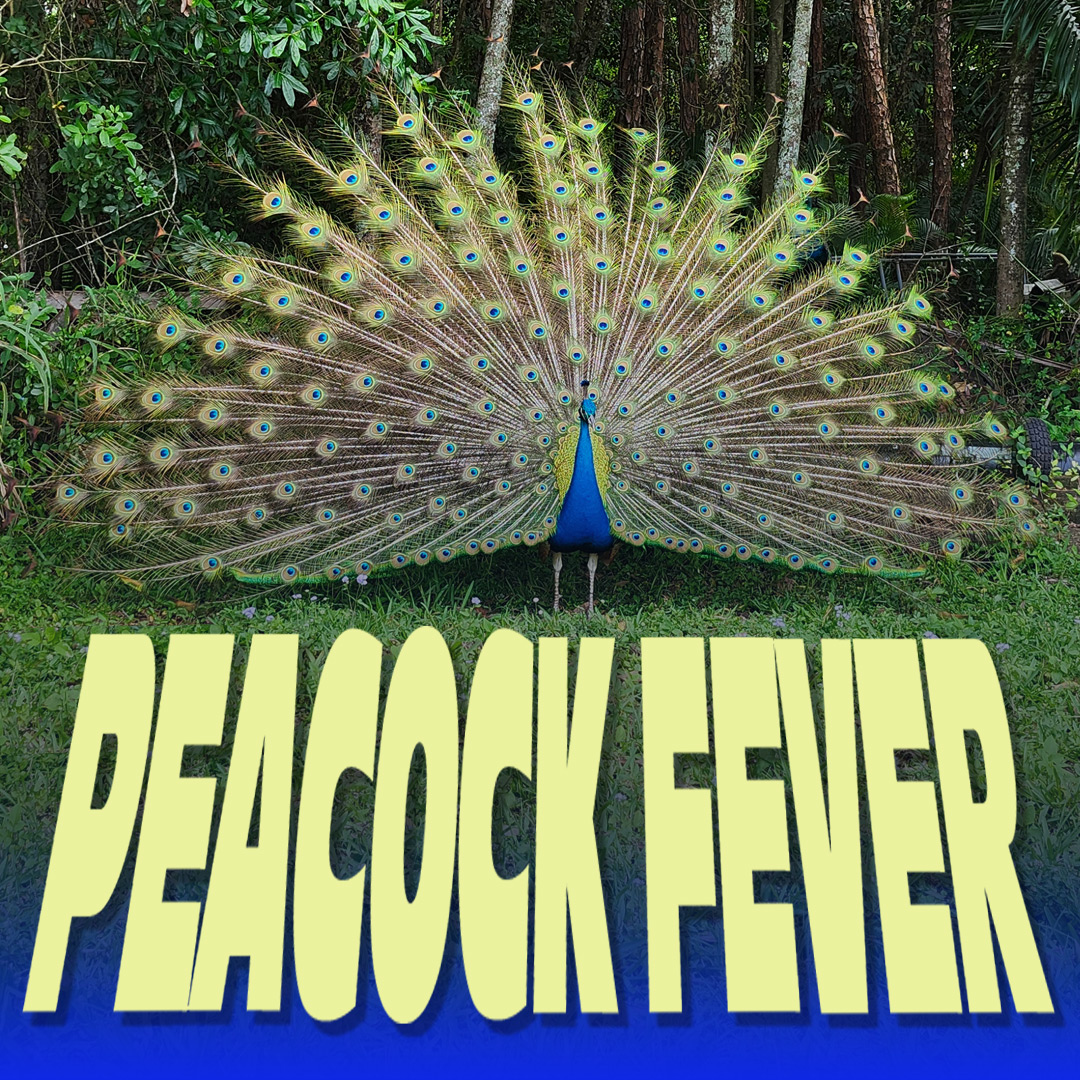
Peacock fever

You are not seeing things, that’s a peacock on the road.

Like occasional gator sightings, or seeing a turtle cross the street, seeing a peacock on a Parkland side street is another reminder of how close we live to nature.

Peacock sightings are also a legacy of the fact that the Parkland and Coral Springs area used to be farm and ranch land. In the past few decades, new developments were added, but small farms are still thriving in our area.

These large pheasants are not native to Florida, or even the Americas. The most memorable peacock with blue and green plumage comes from the Indian subcontinent. They first arrived as pets or for specialty farms, and over time they were released or escaped into the wild. They are omnivorous, and will eat plants, flowers, seeds, insects, even reptiles, and amphibians. So South Florida is paradise for them.

Technically, peacocks are the male peafowls, whereas the peahens are the females. But the brilliant display exhibited by the males during mating season makes them a more iconic image for the species.

Throughout scientific history, there is much speculation about why peacocks have such a vibrant display. Darwin speculated that the peahens, through a long line of descent, must have “appreciated this superiority.” But scientists are not sure if the large tail plumage, or the train, is due to natural selection as Darwin postulated.

A multiyear study in Japan concluded that peahens did not show a preference for large trains. In fact, peacocks with more symmetrical, or elaborate train (more eyespots) affect the peahen’s choice of mate.

The eyespots, or ocelli, do seem to affect peahens. The angle at which they are displayed seems important to holding the peahen’s attention. The dance and rattling of the tail seem to be an attention-grabbing aspect of their ritual. For most human observers, it’s the eyespots that are most mesmerizing.

The eyespots are composed of intermeshed features held together by microhooks. The eyespot’s structure keeps the spots stable when the peacock vibrates his tail to attract the peahens. The vibration usually has a frequency of 25.6Hz, which is audible for the peahens, and able to keep the attention of most observers looking at it.

While scientists continue their research into this area, we can all enjoy these displays when we find them on the street or at a local farm. However, some in the neighborhood with a peafowl population may be more concerned about their noise. The typical peacock sound has been described as a cross between a bird call and a baby crying out.

Before you consider harming these gorgeous birds, keep in mind that even though peacocks are not native, they are protected under a Florida statute, which may result in a fine of $5,000 and/or up to a year in prison if you are found guilty of shooting a peacock. The penalty is even more if one tortures or intentionally harms a peacock—up to 10 years in prison.

You may see them mostly wobble or hop around. Peafowls can fly around a mile in a single flight, so with an abundance of food locally, they can quickly become wild and adapt to our southern Florida climate.

So you may find yourself face to face with a peafowl, even if you are not next door to a farm or do not park where these birds reside.

You may also find leucistic variants, which is a natural loss of pigmentation, similar to white lions and tigers you have seen. These are prized by some, and bred locally for pets.

This spring, hopefully you will be lucky enough to see them in person. If not, enjoy the pictures we have collected of local peacocks!


Diving deeper with dolphins

Dolphins are known for their playful personalities. We love watching them leap into the air and swim alongside boats. Many of us even have swimming with these adorable mammals on our bucket lists. But dolphins aren’t all fun and games. Dolphins are highly intelligent creatures that can be aggressive, cunning, and remarkable, which explains why our NFL team is named after them!

Dolphins love to play games—sometimes at the expense of other animals. When it comes to game playing, dolphins are masters at having fun. In many instances, dolphins have been observed tossing fish or turtles to each other for sport. On an episode of BBC’s and PBS’s “Spy in the Wild,” a pod of dolphins is caught snatching a lone puffer fish and playing catch with it. The dolphins are careful not to bite the fish too hard, as they know the puffer fish are poisonous. But these cunning mammals also know that when they consume small amounts of puffer-fish poison, it acts as a narcotic, relaxing the dolphins and taking the game—and the dolphins—to new heights.

Male dolphins form gangs. A study published by the National Academy of Sciences found that young male dolphins form close bands of two to three dolphins to find females to mate with. These bands also work together to defend against other dolphins looking to take the females. In instances where backup is necessary, these small bands are linked to a larger network of male dolphins that serve as allies. These male gangs can form a network of up to 50 dolphins.

Dolphins are naval assets. According to the Whale and Dolphin Conservation Society, dolphins have an entire area of their brain dedicated to echolocation, meaning they can “see” with sonar, helping them navigate and hunt in deep and murky water. Considered one of the most sophisticated sonar systems known to nature, their echolocation skills have made bottlenose dolphins a naval asset. Since 1959, dolphins have been an important part of the Navy’s Marine Mammal Program, helping to identify and guard against mines and other underwater threats.

 Dolphins can stay awake for two weeks straight. Imagine going 14 days straight with no sleep and maintaining your health and mental acuity. Sounds completely impossible, right? For dolphins, it’s not a problem. The two halves of a dolphin’s brain can sleep in shifts so that dolphins are constantly half awake. This uncanny ability to literally sleep with one eye open helps dolphins guard against predators.

Dolphins are deep thinkers. Dolphin brains contain spindle neurons, which are associated with advanced abilities such as problem-solving, recognition, reasoning, communication, and even adapting to change. The presence of these neurons suggests that dolphins are actually deep thinkers. Many years ago, at the Institute for Marine Mammal Studies in Mississippi, a dolphin named Kelly astounded trainers with her cunning behavior. One day, when a gull flew into her pool, Kelly caught the gull and handed it over to her trainers, who rewarded her with lots of fish. Kelly quickly learned from this experience. The next time she was fed, she hid one of the fish at the bottom of her pool and later used it to lure more gulls to her pool. Then she would catch the birds and hand them over to her trainers, reaping the rewards of even more fish.

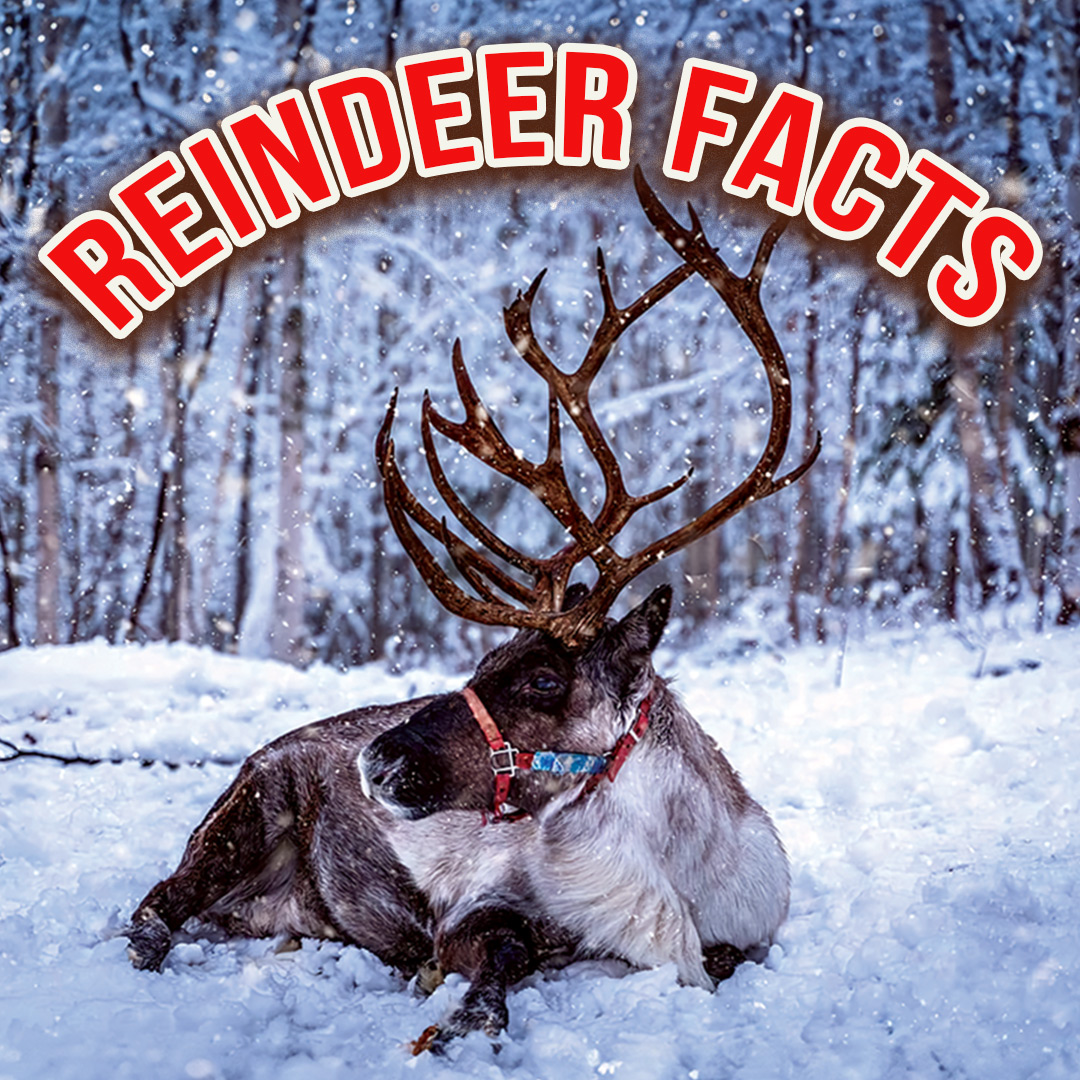
Seven surprising facts about reindeer

You know Dasher and Dancer and Prancer and Vixen, Comet, Cupid, Donner, and Blitzen, and—of course, Rudolph the iconic, red-nosed reindeer. But did you know that—if accurately depicted—all of Santa’s reindeer would be pregnant females? That is just one of the fascinating facts I learned about reindeer on a visit to Running Reindeer Ranch in Fairbanks, Alaska, earlier this year.

Fact #1: Both male and female reindeer grow antlers every year, but only pregnant females keep their antlers through the winter (it helps them forage for food in the snow). All other reindeer shed their antlers at the end of fall. Hence, Santa’s reindeer must be carrying more than just presents!

Fact #2: Because they only grow during spring through fall—which is a short period of time in Alaska, with spring and fall each lasting about two weeks—reindeer antlers grow about one to two inches per day. According to our reindeer wranglers, after they leave work on Friday and come back on Monday, some of the reindeer have added a whopping four inches to their antlers!

Fact #3: Female reindeer normally grow bigger antlers than males do, which is why the leader of the herd is usually a female, as was the case at Running Reindeer Ranch.

Fact #4: Reindeer antlers are made of bone, meaning these animals can inflict some serious damage when fighting or defending themselves.

Fact #5: While growing, reindeer antlers have a velvety outer layer that looks very inviting to touch. But there are nerve endings and blood in the growing antlers, so touching them makes the reindeer uncomfortable. It’s a big no-no on the ranch! Once the antlers are fully grown, this velvet layer dries up and itches, so the reindeer rub their antlers against trees to get it off.

Fact #6: Reindeer are the only species of deer that have been domesticated. People have been domesticating them for about 7,000 years now—longer than they’ve been domesticating horses.

Fact #7: Reindeer can see ultraviolet light, which helps them survive the harsh arctic winters. Their main winter food source is lichens, plant-like organisms that absorb ultraviolet light and appear black in the reflective snow. The ability to see ultraviolet light allows the reindeer to find the lichens and also helps them to spot predators.

Running Reindeer Ranch (pictured here) is owned and operated by Alaskan natives Jane Atkinson and Doug Torelle. They have a herd of 13 reindeer, with more on the way come spring. They offer visitors the opportunity to walk among their herd through a birch forest and learn all about these amazing creatures that—bonus fact—thrive at a temperature of 40 below zero!

Thinking about ditching the Florida heat to start a reindeer farm in Alaska? Think again! In Alaska, only those native to the state are allowed to own raindeer.

For more information, visit https://runningreindeer.com.

Immerse yourself in tropical Flamingo Gardens

There is a 60-acre botanical garden and wildlife sanctuary in Davie, featuring more than 3,000 species of tropical, subtropical, and native plants and trees, and home to the largest collection of Florida native wildlife. Their slogan: “We ask that you take nothing but pictures and leave nothing but footprints.”

My friend and I went there recently, and we adhered to their instructions. It’s a beautiful, natural setting. It’s called Flamingo Gardens, and yes, it does have many pink flamingos, but it also has a lot more.

Established in 1927, Flamingo Gardens is one of the oldest botanical gardens in South Florida. It was founded by Floyd and Jane Wray, originally as an orange grove. Specialized botanical gardens here include naturalized orchids, cycads, heliconias, and more. The arboretum contains some of the largest trees in Florida. The state began keeping the Florida Champion Tree Register in 1975, and Flamingo Gardens boasts 15 Champion Trees. One of them, the Indian jujube, is also a National Champion, the largest of its species in the country. We were quite impressed by the majestic scenery surrounding us as we toured the venue.

Flamingo Gardens is part of Long Key, a natural oak hammock containing an untouched hardwood forest. There is also the Wetlands Walkway, where visitors can take nature walks and see all kinds of birds. In addition, throughout the area, peacocks, iguanas, and cats roam around, as this is their home.

Flamingo Gardens is owned and operated by the Floyd L. Wray Memorial Foundation, started by Jane Wray in 1969 in honor of her late husband. She sold off much of the original property but kept 60 acres for the wildlife refuge, where animals from the site’s “backyard,” the Everglades, are cared for, as a guide informed us. Wray’s goal was “to preserve the core property for future generations and emphasize the flora, fauna, and history of the Florida Everglades.”

The Everglades Wildlife Sanctuary is a place that takes in injured or nonreleasable native wildlife, including black bears, bobcats, otters, hawks, bobcats, eagles, otters, panthers, peacocks, and, of course, flamingos. It also houses threatened species such as the American alligator, American snapping turtle, Florida burrowing owl, wood stork, bald eagle, and Florida panther, which now serve as animal ambassadors in educating the public about the Everglades.

Nestled in the hammock of 200-year-old oaks is the Wray Home Museum, which was built in 1933 as a weekend residence for the Wray family. It is now a cultural landmark and the oldest residence in Broward County west of University Drive. It has been restored to provide visitors “with a glimpse of life in South Florida in the 1930s.” My friend and I toured it and enjoyed the historical items from that period of time. We also were amused by the peacocks that hang around outside. One magnificent male kept strutting around in front of the museum building, showing his plumage and doing a little dance to woo the nearby peahens. He didn’t have any luck, but he put on a good show for us.

We ate lunch at the Flamingo Pond Snack Bar and then jumped on a tram at the nearby station, which picks up passengers throughout the day and takes us on a tour around the property. We had a very good tram tour guide who gave us lots of information about the cultural history, special features, and verdant nature all around us.

Flamingo Gardens has something for everyone, including the Wildlife Encounter (held at various times), a tropical rainforest, a butterfly pavilion, a pollinator garden, a tropical fern section, a cactus and succulent garden, and even a wedding gazebo. And, off the beaten track, there were lots of cool animals to see. We visited a variety of them in their enclosures and were thrilled when a parrot said “Hello!” to us when we walked by.

It’s a lovely place to spend some time. You won’t regret it.

Flamingo Gardens is open every day from 9:30 a.m. to 5 p.m., with last entry at 4 p.m. For information, go to FlamingoGardens.org.

Everglades restoration brings back wading birds

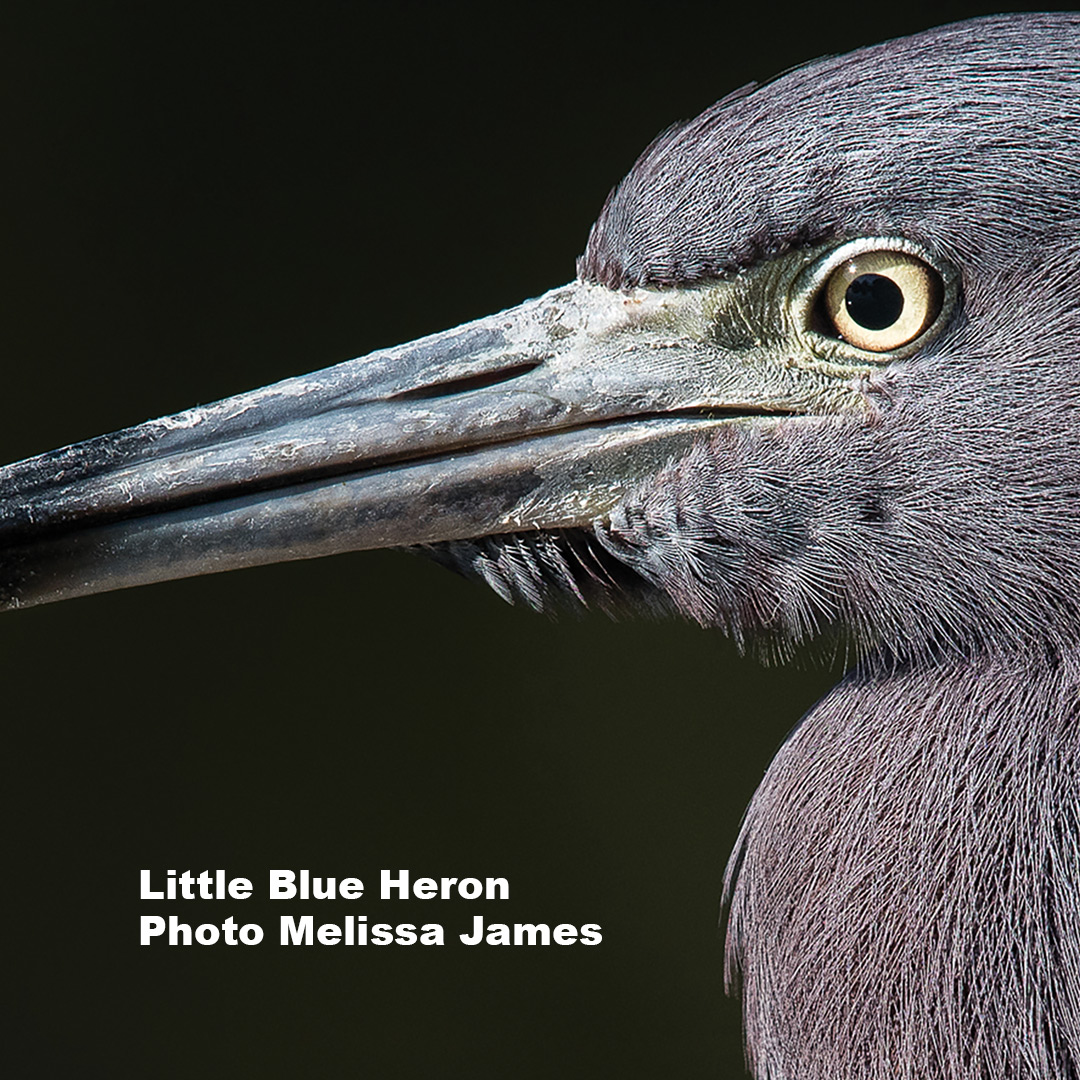
Florida is renowned for its striking wading birds. More than a dozen species make their home here, from the Snowy Egret to the pink-plumed Roseate Spoonbill to the Tricolored Heron. Beloved by locals, these birds also draw visitors from across the globe looking to get a glimpse of their colorful plumage.

Not only are these birds an important part of the economy, they’re also key indicators of ecological health. Wading birds depend on healthy wetlands, coastlines, and the Everglades for their survival.

“Wading birds tell us when the Everglades are healthy,” explains Kelly Cox, director of Everglades policy at Audubon Florida, a nonprofit organization dedicated to the preservation of birds. “When they’re in the right place at the right times of the year in the right numbers, we know that we’re getting the water right in the Everglades. If wading birds can successfully raise chicks, it’s likely that other species that depend on the Everglades are going to be healthy too.”

Wading bird populations have faced their fair share of challenges in Florida throughout history. In the 1800s, many species of wading birds were hunted almost to extinction for the sake of women’s fashion. The birds’ colorful feathers were collected and used as adornments for hats. “There was one point in U.S. history when feathers from wading birds were more valuable than gold per ounce,” says Cox. The decimation caused by the plume trade precipitated the creation of Audubon Florida.

In the 1900s, urban and agricultural development of the Everglades significantly impacted wading bird populations. Water control efforts drastically changed South Florida’s landscape, destroying their habitats. Dredging canals and plumbing out water from the Everglades eliminated floodplains and sloughs—foraging areas for wading birds—and interfered with the natural flow of water that the birds depended on for successful breeding conditions.

“Wading birds can’t wade in a 15-foot canal,” explains Cox. “They have no way to catch prey in that type of environment. As a result of that, we started to see their populations really decline.”

Everglades restoration projects, which began in full force around 2000, have helped many of Florida’s wading bird species recover. “We’ve already started to see measurable benefits from returning those water flows to as close to we can get to the way Mother Nature designed it,” affirms Cox.

A prime example of this success is the Kissimmee River Restoration Project. In the 1960s, the Kissimmee River was channelized by cutting and dredging a 30-foot-deep canal, which eliminated a floodplain and destroyed the ecosystem. Ninety percent of the area’s wading bird population disappeared. “We just wrapped up the restoration of that river, and the number of birds that have returned to that area is unbelievable,” enthuses Cox. “It confirms our theory that if you give the wading birds a chance, they will come back. But it has to be under the right ecological conditions.”

A recent initiative in Broward and Palm Beach counties will improve the habitat that these birds need while also safeguarding water quality for the people of South Florida.

In May of this year, the South Florida Water Management District and the Army Corps of Engineers broke ground on the North Phase of the Central Everglades Planning Project (CEPP), a restoration initiative that will restore water levels in the Central Everglades, bring more water south to replenish Everglades National Park, and send fresh water to Florida Bay.

“In general, we have really limited the ability of water to flow south into Everglades National Park, and subsequently Florida Bay,” explains Cox. “That water flow has been so stifled that in some parts of Florida Bay, we’ve seen hypersaline conditions because there’s not enough fresh water.” When water is hypersaline, it’s saltier than typical seawater, making it difficult for fish and seagrass—which wading birds feed on—to survive.

CEPP North will include the construction of seven new structures and one new canal as well as the improvement of 18 miles of canals already in operation. The North Phase is expected to be completed by 2029.

The other two phases of CEPP are the South and New Water phases, which are already underway. CEPP is a key part of the joint state-federal partnership to restore America’s Everglades, known as the Comprehensive Everglades Restoration Plan. “Everglades restoration is the largest ecosystem restoration project in the entire world,” confirms Cox.

Wading birds are the measure of success for these projects. Every year, the South Florida Water Management District—the primary agency charged with overseeing Everglades restoration—puts out a Wading Bird Report in collaboration with Audubon Florida. The report includes data on the birds’ nesting behavior throughout the Everglades. The greater the number of nests and hatchlings, the better the birds are doing. In 2021, the Everglades experienced its second-highest nesting effort for many wading bird species in 80 years.

“Conditions are improving for wading birds across the Everglades, which suggests that Everglades restoration is helping,” says Cox. “It’s improving foraging conditions for wading birds, which leads to increased nesting, but there’s still a lot to do.”

Currently in the planning stage is the Biscayne Bay Southeastern Everglades Ecosystem Restoration Project, which focuses on Broward and Miami Dade counties with the goal of restoring habitats and increasing treatment capacity to help move more water south. “Biscayne Bay, which has been plagued by algae blooms and hypersaline conditions, has a big opportunity to benefit from this project,” says Cox.

For more information on South Florida’s wading birds and Everglades restoration, check out fl.audubon.org/conservation/everglades.

El Niño is officially back. What will that mean?

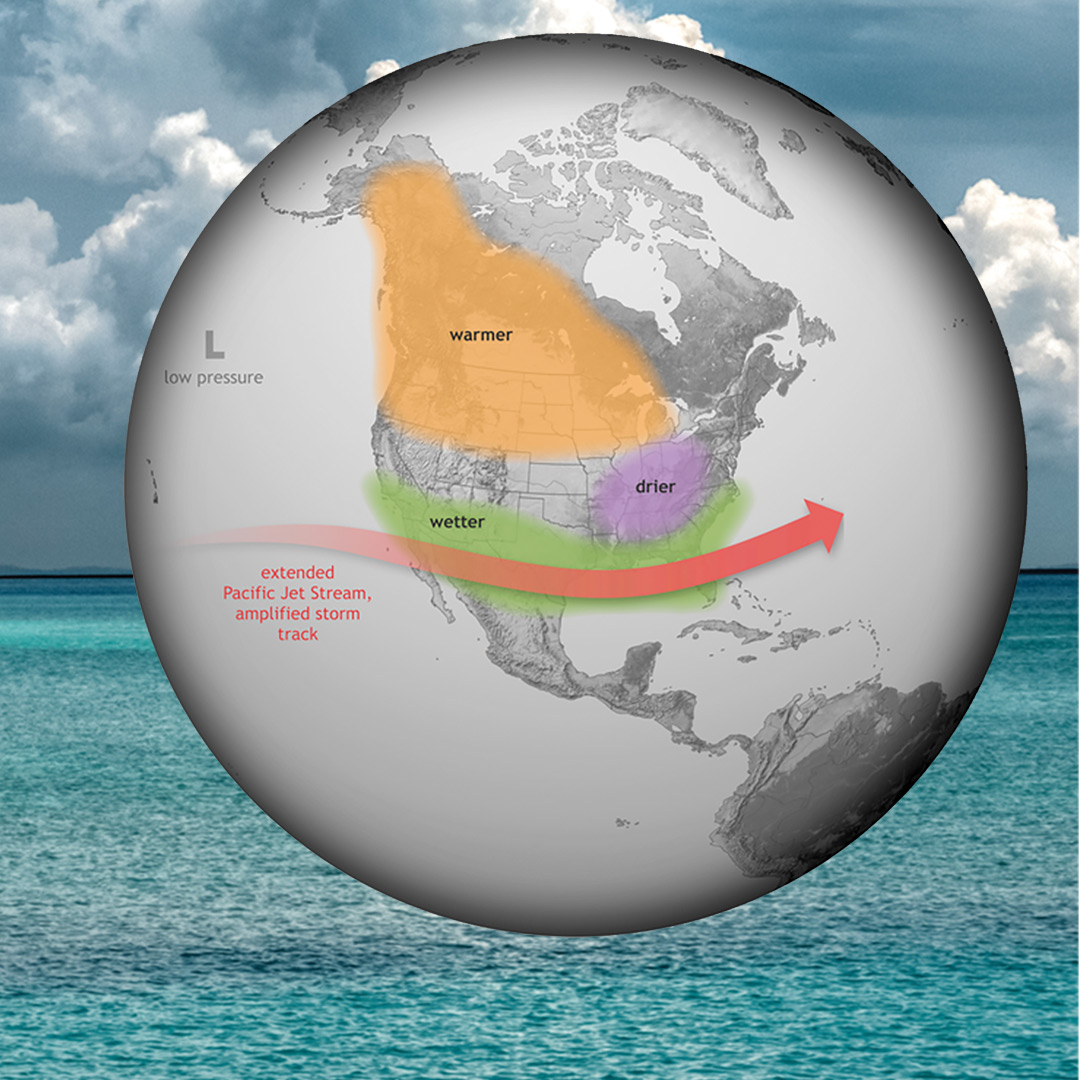
El Niño describes a phenomenon in which eastern Pacific waters are warmer than average. It has wide-ranging impacts across the world, and it has started.

It may not be obvious why weather patterns in the Pacific should impact us here on the coast of the Atlantic. But years of data show a consistent relationship that Floridians should be aware of.

For June, the average temperature along the eastern Pacific has risen to an average of 0.8C above normal; this is a relatively quick change from the La Niña conditions that were dominant for the past few years, which coincides with very active tropical storm seasons. Whereas, El Niño is expected to deter the formation of Atlantic tropical storms.

So why is that?

Traditionally, the very warm waters off the western Pacific, near the Philippines, are where the water vapor rises, then falls on the eastern Pacific. This was first identified by Gilbert Walker in 1904.

When El Niño happens, the Pacific waters off South America are warmer than average. This causes stronger rising air, which inverts the typical trade-wind patterns in the Pacific.

This new center of air rising on the eastern portions of the Pacific means that air will fall down from high in the atmosphere near the western U.S., and the tropic Atlantic waters.

One early indication of this is that it is drier than normal in Canada, where the wildfires have been flaring up. The warm air that rises falls down near western Canada, causing warmer temperatures there. El Niño is also contributing to this due to a lower jet stream, and it’s causing more storms to travel along the southern states. This impacts Florida, and we will likely see above-average rainfall near us. This will also mean drier conditions in the states along the Great Lakes.


The return of the flamingos

When folks visit South Florida, they expect to see flamingos. You see them in zoos, as well as other popular tourist attractions. Yet the local wild flamingos in Florida were wiped out by excessive hunting for their bright pink and crimson plumages, and by the 1990s, many believed them to be extinct in the Florida wild.

Either from birds escaping from captivity, or by flowing in from nearby Caribbean islands, the Florida flamingo population began a slow recovery. By 2014, there was a population of 147 flamingos in the STA2 water treatment facility in the Everglades just north and west of Parkland.

In a 2021 survey by the Florida Fish and Wildlife Commission, up to 1,000 birds are estimated to be in Florida. Near Parkland, the local population typically visits the area in the spring, and most leave for an undisclosed location later in the year. Researchers are still studying their behavior to understand their travel patterns or whether they are local all year round, along with working to classify them as “threatened” to qualify for stronger protection.

The American flamingo is one of the largest flamingo species, and it can grow up to 57 inches, which makes them hard to study. Frank Ridgley, a wildlife veterinarian and researcher at the Zoo Miami, is quoted as saying in an interview with the Audubon Society, “There’s a reason why no one’s studied adult flamingos before. They just fly off.” One flamingo in the Keys was successfully tagged and tracked in 2018, and it was found to have joined a local flock and stayed in Florida.

Researchers have also been observing the wild flamingos, to learn what they are doing in the area. “We noticed a lot of courtship behavior,” Ridgley says. “All seemed to be pair bonded and stayed close together.” Flamingoes are believed to mate for life, and they stay close together.

The STA2 water treatment area access is restricted, so bird watchers are asked to join a tour approved by the water district.

Hopefully with continual recovery of the flamingos in the nearby Everglades, local residents can get a peek at the wondrous birds in the wild, not just at zoos or in reruns of “Miami Vice.”

Cruising the water in a different kind of taxi

How can you tour the Intercoastal Waterway and the New River in Fort Lauderdale but on your own timetable? By buying an all-day pass on the Water Taxi!

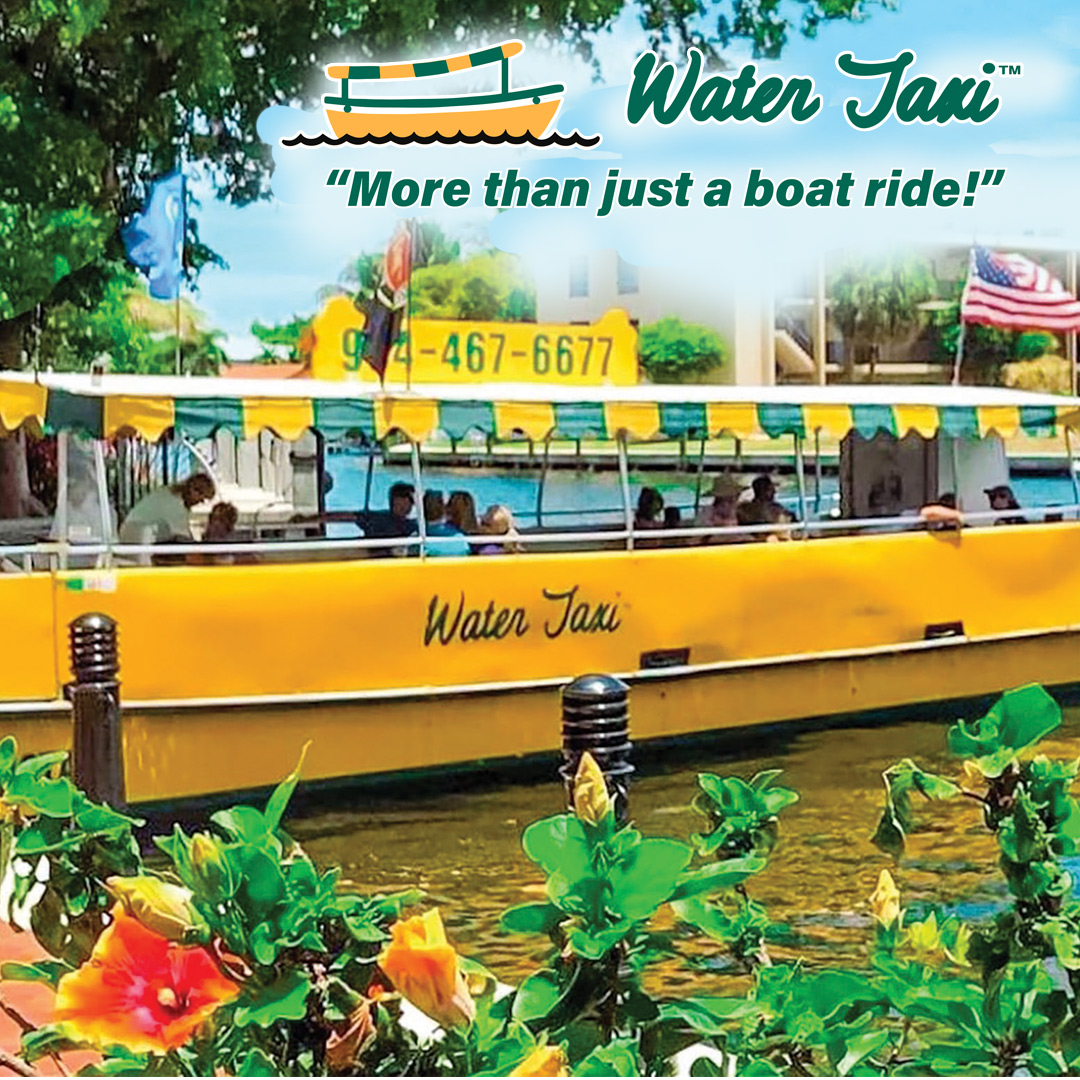
I recently did this on a beautiful Saturday with some friends. We started our waterside adventure by parking at 15th Street Fisheries (where we could do valet all day) and having a delicious seafood lunch there, overlooking the sparkling water, fish, and boats of the Intercoastal. Then we walked out on the pier located right there and boarded a yellow water taxi, at the Fort Lauderdale Route’s stop #3.

To get your Water Taxi passes, you go online for pre-purchase and then your ticket barcode appears on your phone; just show the phone to boat staff upon boarding each taxi. The various boats are scheduled to arrive and depart every 3540 minutes (though we never waited that long), between 10 a.m. and 10 p.m. It is a great way to see the many nice features and highlights of Fort Lauderdale.

Stops 1 and 2 are along the river: #1 is the Riverside Hotel and Stranahan House, where you can enjoy the picturesque Riverwalk, and #2 is just steps away from the famous Las Olas Boulevard with all its shops, restaurants, and bars. We disembarked there and walked over to have cocktails and window-shop on the boulevard for a bit.

The other locations are on the Intercoastal: You can go to stop #4, for the Hilton Marina and Convention Center (where you also can transfer to the Hollywood Express Route, which goes to Margaritaville Beach Resort and the Hollywood Broadwalk); #5, the south end of Bahia Mar (where you can view marinas of luxury yachts docked); #6, Beach Place and Fort Lauderdale Beach; #7, GalleryOne Double Tree and Galleria Mall; #8, Birch State Park; #9, Shooters Waterfront; and #10, Bokamper’s Sports Bar & Grill.

We spent our afternoon gliding up and down the water throughout the city, seeing celebrities’ mansions and yachts as well as all kinds of other boats, including tour vessels, barges, party boats, a floating tiki bar, and young sailing students soaring by in a line of little boats. We went past “Beer Can Island,” where people frolicked on boats clustered around the sand bars, with many milling around in the shallow water and socializing. It was a gorgeous day, so there was a lot of action on the Intercoastal.

Aboard the taxis were tourists, families, and bar-hopping friends, all seeming to enjoy being out on the water and the ease of the taxi system. There was staff at each stop answering questions and, on board over a microphone, narrating the sights as we went past them, providing some interesting history and funny anecdotes. Be sure to bring some cash for tipping, as they definitely appreciate that and work hard.

Later that afternoon, two of us went ashore for a nice walk alongside A1A and the ocean, at Fort Lauderdale Beach, where we saw large groups having beach parties and barbecues and a wedding getting set up on the sand overlooking the ocean. We went on a walking bridge above A1A to buy drinks from a small market, and then headed back to our water taxi stop. I enjoyed being able to explore the area at our leisure and return when we were ready.

We ended our water tour of Fort Lauderdale by disembarking at the same place where we first got on, at stop #3, and picking up our car at the 15th Street Fisheries valet lot. A very pleasant day!

The Water Taxi all-day pass costs $35 for adults, $30 for seniors and military, $15 for children 5–11, and free for children under 5. Evening-only passes are $20 and start at 5 p.m. You can also buy a month’s unlimited pass for $90. For tickets and information, go to WaterTaxi.com.

The skies of December

Here are the sky highlights this month:

  • 8. Full Moon. This phase occurs at 12:09 a.m. ET. This full moon was known by early Native American tribes as the Cold Moon because this is the time of year when the cold winter air settles in and the nights become long and dark. This moon has also been known as the Long Nights Moon and the Moon Before Yule.
  • 8. Mars at Opposition. The red planet will be at its closest approach to Earth and its face will be fully illuminated by the Sun. It will be brighter than any other time of the year and will be visible all night long. This is the best time to view and photograph Mars. A medium-sized telescope will allow you to see some of the dark details on the planet’s orange surface.
  • 13–14. Geminids Meteor Shower. The Geminids are the king of meteor showers. It is considered by many to be the best shower in the heavens, producing up to 120 multicolored meteors per hour at its peak. It is produced by debris left behind by an asteroid known as 3200 Phaethon, which was discovered in 1982. The shower runs annually from Dec. 7 to Dec. 17. It peaks this year on the night of the 13th and the morning of the 14th. The waning gibbous moon will block many of the fainter meteors this year. But the Geminids are so numerous and bright that this should still be a good show. The best viewing will be from a dark location after midnight. Meteors will radiate from the constellation Gemini but can appear anywhere in the sky.
  • 21. December Solstice. The December solstice occurs at 5:40 p.m. ET. The South Pole of the Earth will be tilted toward the Sun, which will have reached its southernmost position in the sky and will be directly over the Tropic of Capricorn at 23.44 degrees south latitude. This is the first day of winter (winter solstice) in the Northern Hemisphere and the first day of summer (summer solstice) in the Southern Hemisphere.
  • 21. Mercury at Greatest Eastern Elongation. The planet Mercury reaches its greatest eastern elongation of 20.1 degrees from the Sun. This is the best time to view Mercury as it will be at its highest point above the horizon in the evening sky. Look for the planet low in the western sky just after sunset.
  • 21–22. Ursids Meteor Shower. The Ursids is a minor meteor shower producing about 5-10 meteors per hour. It is produced by dust grains left behind by comet Tuttle, which was first discovered in 1790. The shower runs annually from Dec. 17 to Dec. 25. It peaks this year on the night of the 21st and the morning of the 22nd. This year, the nearly new moon will leave dark skies for what should be a really good show. The best viewing will be just after midnight from a dark location far away from city lights. Meteors will radiate from the constellation Ursa Minor but can appear anywhere in the sky.
  • 23. New Moon. This phase occurs at 6:17 a.m. ET. This is the best time of the month to observe faint objects such as galaxies and star clusters because there is no moonlight to interfere.

If you’d like to become more involved with astronomy in South Florida and meet like-minded people, the South Florida Amateur Astronomers Association (www.sfaaa.com) at Markham Park is fantastic, equipped with a state-of-the-art telescope, and the perfect way to take the next step in discovering our celestial sky. Happy exploring!

See wild horses and free-roaming bison in Florida

Mention wild horses and bison, and most people assume you have to venture out to the Midwest to see them roaming free across the plains. But it just so happens there’s one place right here in Florida where you can view these animals in the wild. That place is Paynes Prairie Preserve State Park, one of Florida’s national natural landmarks.

Located up north between Micanopy and Gainesville, Paynes Prairie Preserve State Park is a sprawling 21,000-acre savannah that is home to a herd of about 50 bison and a herd of 50-60 wild scrub horses, small horses originally brought over from Spain in the 1500s that were primarily used for herding cattle.

Today, bison are rarely found east of the Mississippi River, but according to the Florida Department of Environmental Protection (DEP), the bison’s range once extended this far south. In 1975, bison from Wichita Mountains Wildlife Refuge in Oklahoma were introduced at Paynes Prairie to honor that historical range, and they have been roaming the preserve ever since. Population control is not an issue as the herd is nonreproducing.

In the mid-1600s, the land that today makes up Paynes Prairie Preserve operated as a Spanish cattle ranch called “Hacienda de La Chua.” The DEP confirms that similar to the introduction of bison in the 1970s, scrub horses were also reintroduced to the preserve due to their historical presence in the area. In 1985, a small herd closely resembling the stock that was brought over by the Spanish was introduced and donated to the park by the Friends of Paynes Prairie.

For those looking to catch a glimpse of these free-roaming animals in their natural habitat, bring a pair of binoculars — or your hiking boots. These herds roam the prairie basin, which is not accessible by car. According to the DEP, the best place for viewing these animals is from the 50-foot-high observation tower. Located near the park’s visitor center, the observation tower offers expansive views of the preserve.

There are also a few hiking trails where you might be able to get a closer look, such as Cones Dike Trail, Bolen Bluff Trail, and La Chua Trail. The DEP notes that currently, due to high water levels, the horses and bison have been less likely to frequent the La Chua Trail at the north end of the park and have been seen most often between the Cones Dike and Bolen Bluff trails at the south end of the park.

For more information, visit www.floridastateparks.org/parks-and-trails/paynes-prairie-preserve-state-park.