
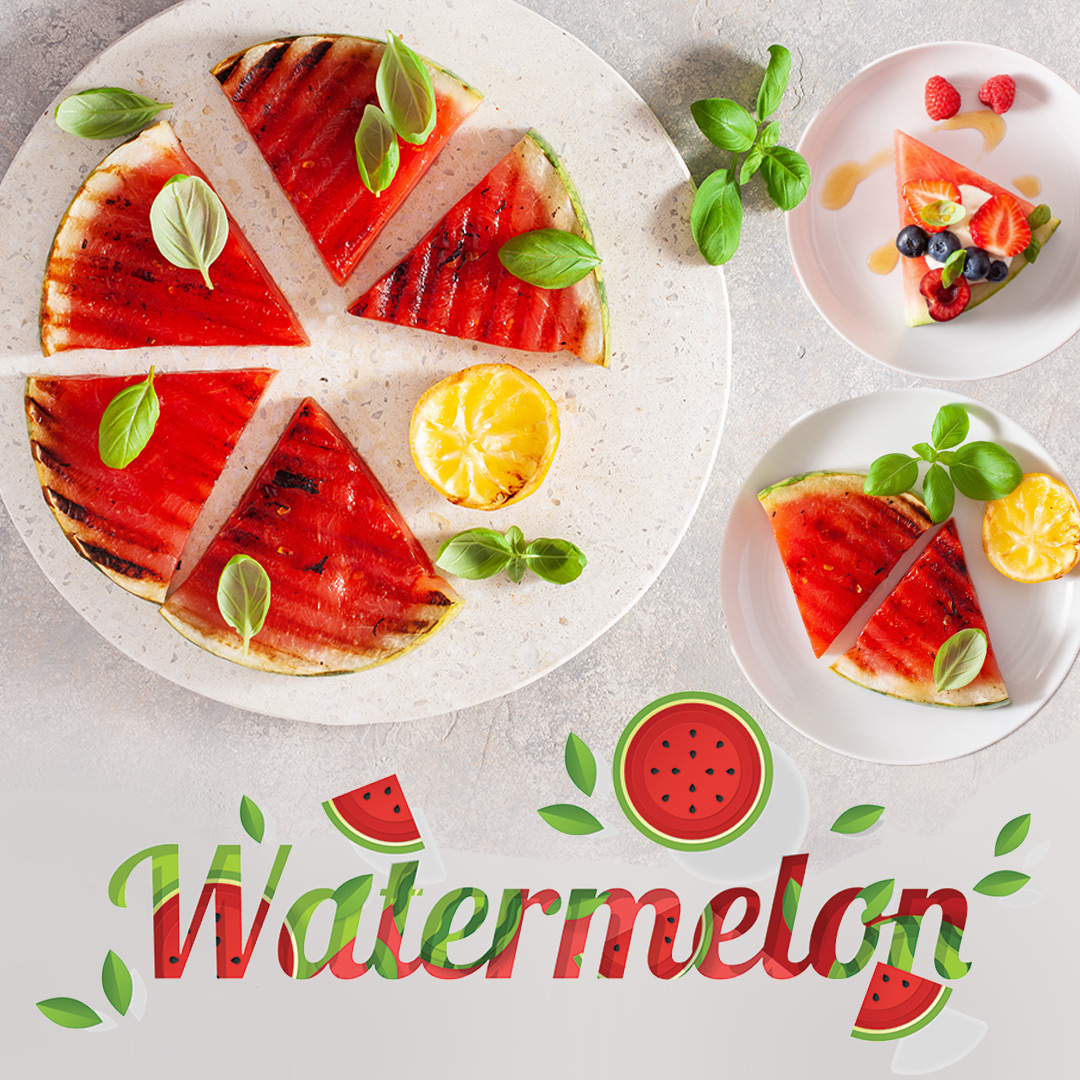
Few fruits remind us of the summer like the watermelon does. There is an active debate in the gardening community on whether this delicious treat is a fruit or a vegetable. Botanically speaking, it is definitely a fruit, developed from the fruiting body after flowering. But if you are from Oklahoma, where the watermelon is the official state vegetable, you would argue it’s a vegetable. In case you are wondering, Oklahoma has a state fruit, the strawberry, which botanically is not a berry, and botanists consider it a “false fruit.”
Why is watermelon a vegetable to the Sooner State? Because it hails from the same botanical family of cucumbers and gourds, which are classified as vegetables. In fact, the whole melon can be eaten, like a cucumber—even the rind. There are many cultures that pickle the rind, and once you try it, you will appreciate how similar it is to its cucumber cousins.
Originating from Africa, the watermelon plant loves the heat. Due to the warm weather, Florida’s watermelon season kicks off in late spring, around May, and extends through the summer months. You will often find local watermelons in area markets, and sometimes on the side of the road.
Florida leads the U.S. in terms of watermelons harvested. In a study by the University of Florida, between 2010 and 2021, an average of 22,616 acres of watermelon were harvested in Florida per year. Texas and Georgia follow as second and third, respectively.
Ancient civilizations in Africa and the Middle East were the first to appreciate the watermelon for both its high water content and its nutritional value. The melon is over 90% water, 6% sugar, and a good source of lycopene, the same strong antioxidant found in tomatoes, another botanical fruit that can be considered a vegetable.
The seeds of the watermelon were found in the Levant and North Africa over 5,000 years ago, before spreading to Asia. Evidence of watermelon cultivations was found in India by the 7th century, and in China by the 10th century. Initially only found in southern Europe, cultivars that adapted to the cooler weathers of northern Europe became common by the 1600s.
Nowadays, with more than 1,200 cultivars, you will find watermelons of all sizes, from 2-pounders to world-record 351-pound monsters (Carolina Cross cultivar). You will find flesh of all colors—red, pink, orange, yellow, even white.
There are many ways to enjoy watermelon this summer. It’s a must-have at picnics, pool parties, and barbecues. The most common way is to just open up the melon and devour its delicious, juicy flesh in slices, or cubes. Here are some other ways to enjoy watermelon.
Add Some Spice
Have you tried watermelon with some spice mixes? If not, you may want to give a try with a little lemon juice on the melon first. If you like that tangy-sweet combination, you might want to further venture into adding chili powder or cayenne. Maybe Tajin power, or a Dukkah blend of spices.
Watermelon Salads
Many cultures make a salad with watermelon and something salty. The simplest is adding salt to watermelon. Along the Mediterranean, you will often find watermelon paired with salty cheeses like feta.
In the southern U.S., you will also find watermelon being paired with salty country ham. Martha Stewart even recommends prosciutto-wrapped watermelon as an appetizer.
Juice It
Given that watermelon is 90% water, it’s simple to juice it at home. You don’t need any special juicer—just a blender will work. You may choose to strain the juice, or drink it as it is.
You can also blend the juice into your cocktails and mocktails. Fresh basil and mint can be muddled with the juice to add extra elements to the drink.
If you blend the juice with vinegar, extra-virgin olive oil, and a spoon of Dijon mustard, you will find it a sweet, refreshing dressing for your summer salads.
Cook It
Another popular trend is to grill the watermelon’s flesh. You can cut up the flesh into cubes, and barbecue it on a stick. Or you can pan-fry a slice of flesh in butter, and you will find it transformed. The grill will impart a smokey flavor, whereas the mixture of sugar and butter provides the pan-fried watermelon with sweet flesh that takes on a caramel taste.
Freeze It
You can also freeze watermelon. The frozen watermelon can be used later for juices or purees. Or if you have juiced the melon, you can make a fruity popsicle for cooling down in the hot Florida summer.
Don’t Forget the Rind
Most of us often just discard the rind. But remember, watermelon is also a vegetable in the gourd family. Take away its sweetness, and it’s not too different from a zucchini or a cucumber. So if you’d like, you can try to prepare the rind. One common use is pickling the rind. You remove the green outer layer with a vegetable peeler, then slice it up, and pickle it just like a cucumber.
You can also stir-fry the rind. The white inner part of the rind can be stir-fried with other ingredients in your favorite stir-fry. You will find that the rind easily absorbs the other flavors in the dish.
There are so many ways to enjoy this melon as a fruit or as a vegetable this summer. I will leave you with a cocktail idea from Martha Stewart.
〇 〇 〇
Watermelon Margaritas
(By Martha Stewart)
- ⅓ cup sugar
- Peeled zest of 2 limes, plus ⅓ cup fresh lime juice, plus lime wedges for making salt rim, plus thinly sliced rounds for serving (optional)
- ½ small, seedless yellow watermelon (about 2½ pounds), peeled and cut into cubes (about 6 cups)
- 6 ounces tequila blanco
- 1 ounce elderflower liqueur, such as St. Germain
- Coarse salt or Himalayan pink salt, for glasses
Bring sugar, ⅓ cup water, and lime peels to a boil, stirring, until sugar has dissolved. Remove from heat; let cool completely. Strain into a pitcher with lime juice.
Working in batches, purée watermelon in a food processor or blender; strain through a coarse-mesh sieve (you should have 3 cups). Add melon purée, tequila, and elderflower liqueur to the pitcher with lime syrup, and stir. Chill, covered, at least 2 hours and for up to 2 days.
When ready to serve, run a lime wedge around the rim of each glass, and dip the glasses in coarse salt. Fill the glasses with ice and 1 or 2 thin lime rounds. To make each drink, add more ice and ½ cup tequila mixture to a cocktail shaker. Shake for 15 seconds; strain into a glass. Repeat for the remaining drinks, and serve immediately.