
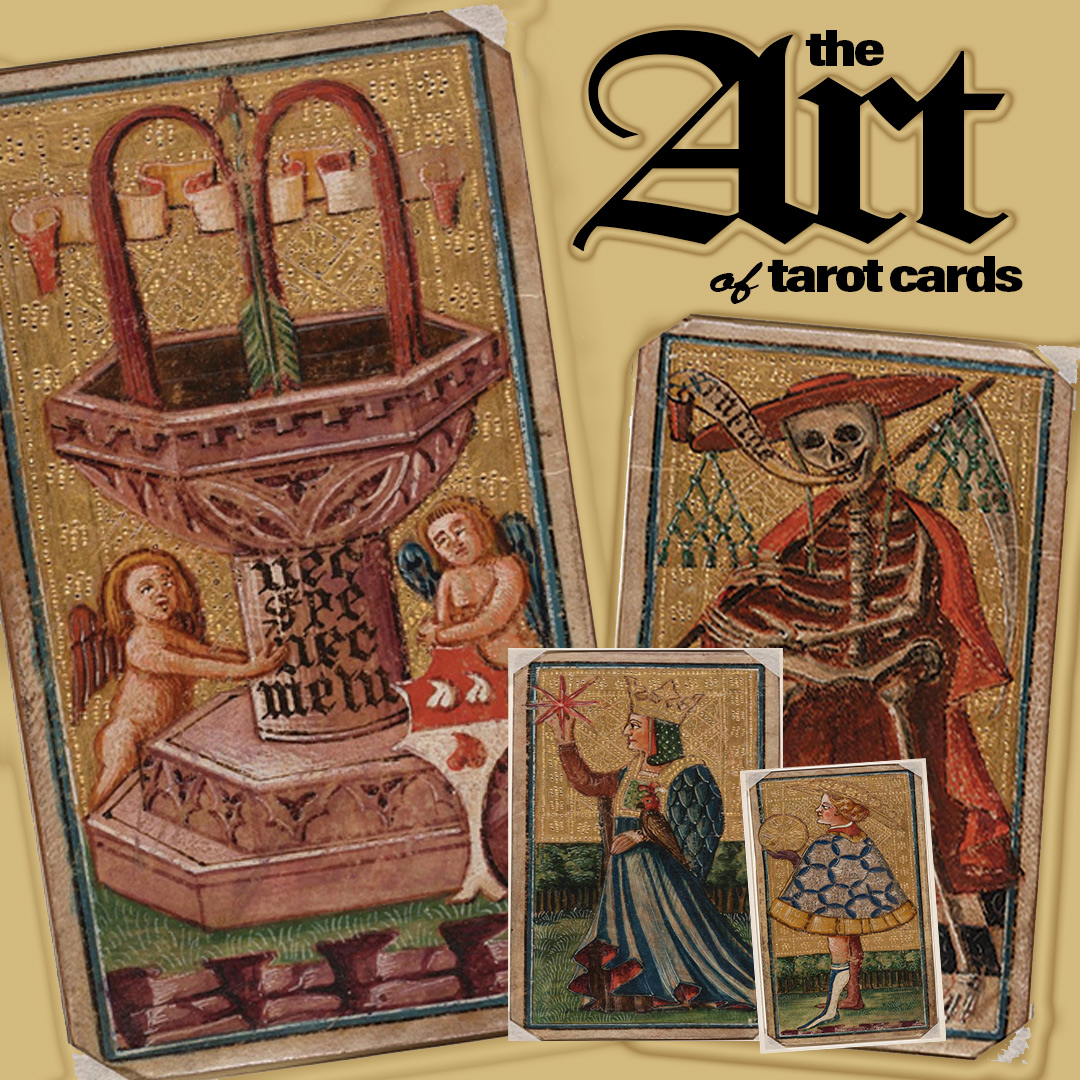
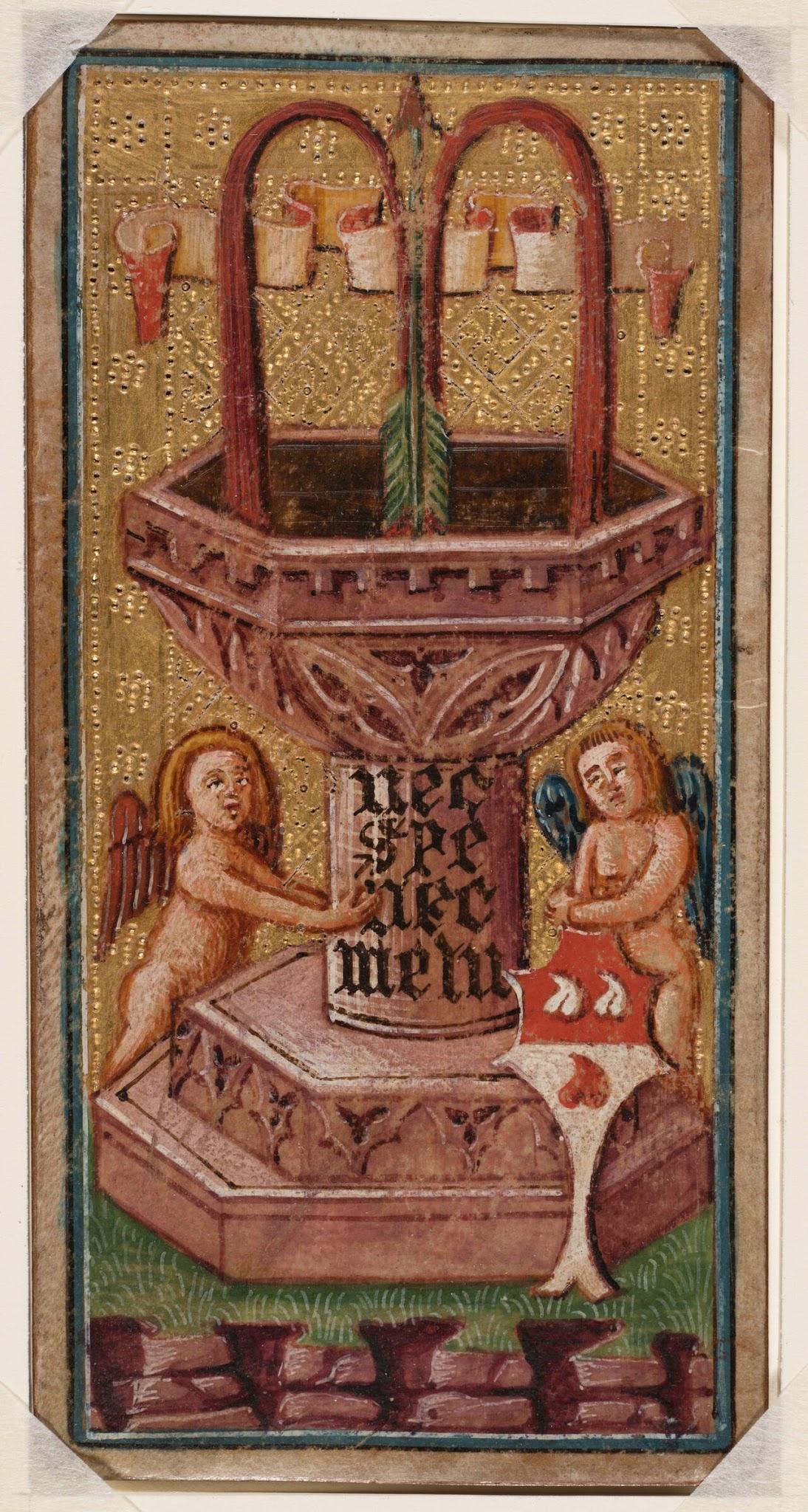
“Ace of Cups,” hand-painted and gilded tarot card, circa 1490, Italy. Formerly attributed to Antonio di Ciconagra. Victoria and Albert Museum, London.
Well, with Halloween coming this month, we will be traveling back to the ports of Venice at the height of its 15th-century maritime trade—and why not? After all, it is the All Saints’ Day festivities on Nov. 1, and accordingly, it was here in Venice that the tarot first arrived in Europe.
Venice was a threshold city, where goods, ideas, and symbols passed from east to west. At this age, the city was already a living stage: lanterns flickering on the water, merchants unloading cargo from Alexandria and Constantinople, and, on their day of festivities, costumed processions winding the streets. The tarot, elusive in origin and fluid in meaning, fit perfectly into this type of cultural bloodstream.
Still, the elusivity of the tarot goes even further back to the 12th century—where India and Egypt were traced to be its origins, and Chinese/Korean printmaking was its accents of geography rooting to its production.
The earliest tarot decks were hand‑painted originals, crafted with gesso, gold leaf, and mineral pigments. These cards were, of course, not yet mass-produced. Rather, they were miniature panel paintings. Each one was like a small, handcrafted delicacy. These cards were commissioned by noble families, often as wedding gifts or displays of dynastic prestige. In the courts, tarot was played as a trick‑taking game that was like a contest of hierarchy, where higher cards defeated lower ones. The game itself reflected society at the time of the Renaissance period. Each card was structured, symbolic, and deeply aware of rank.
The imagery of these cards would have been instantly recognizable to their players. Renaissance nobles lived in a world saturated with classical mythology, moral allegory, and heraldic symbolism. A celestial figure like the “Star” echoed the era’s fascination with astronomy and divine order. Her gilded surface would have shimmered in candlelight, turning gameplay into a visual performance. She was not yet a symbol of spiritual guidance at this point, but simply a reflection of Renaissance cosmology, where the heavens were both scientific and sacred.
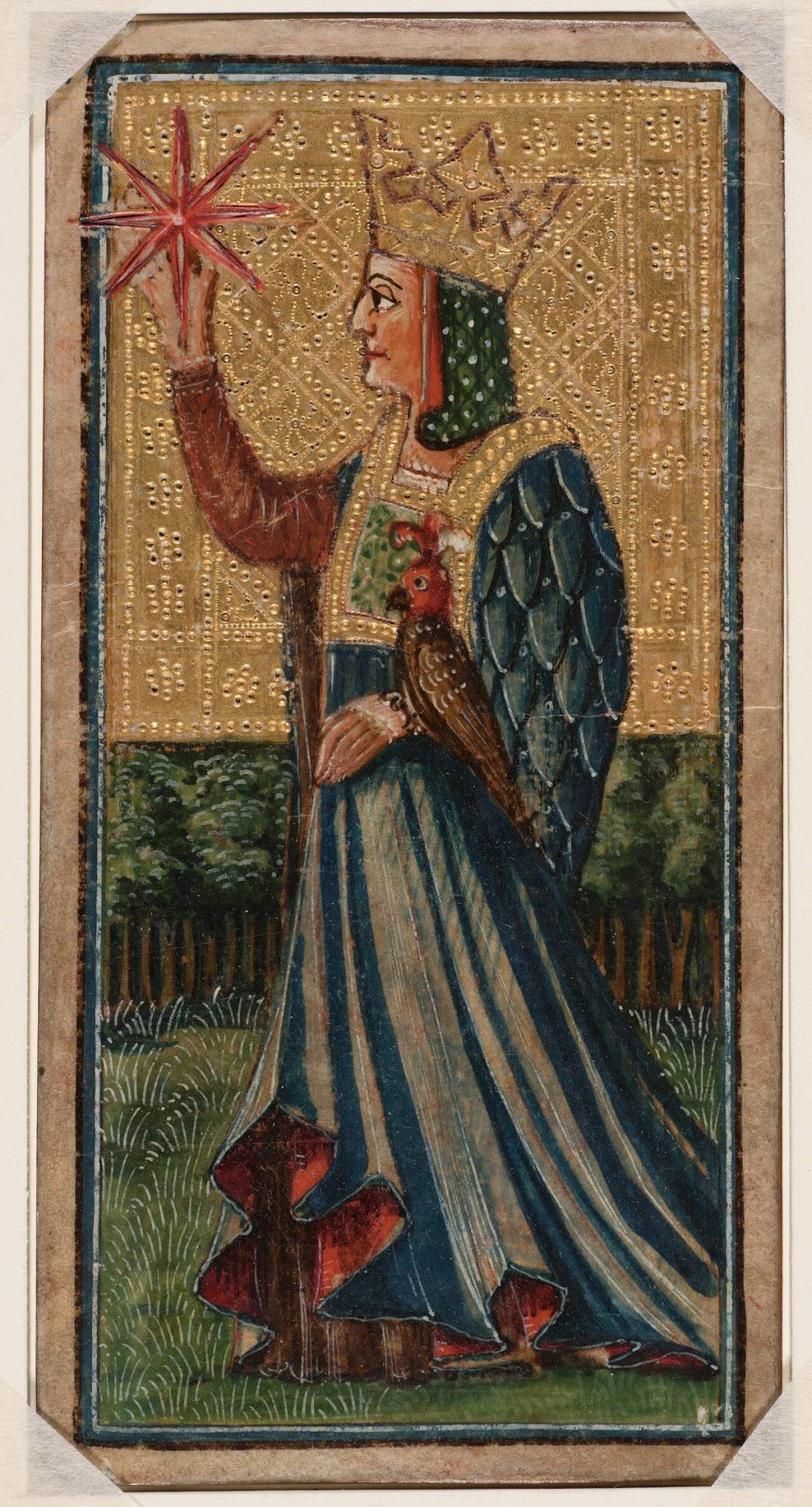
“Stella” (Star), hand-painted and gilded tarot card, circa 1490, Italy. Museum No. E, 1498–1926. Victoria and Albert Museum, London.
In this time of the world where many were illiterate, these sorts of visual literacy mattered. Color, gesture, and allegory carried moral weight. The tarot’s painted figures became a language of virtue vs. vice, fate vs. folly, and moral lessons shaped by historical classical ideology. The cards were not yet mystical but didactic art, teaching through symbolic expression what text could not always convey.
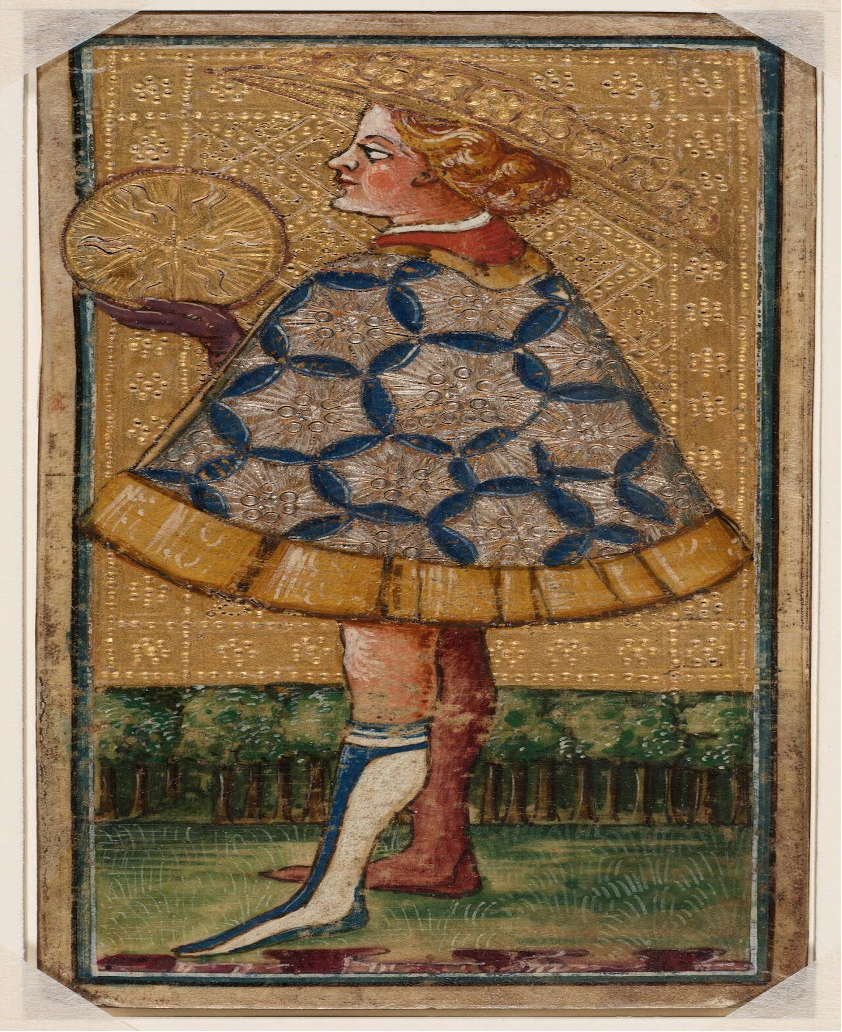
“The Knave of Coins,” hand-painted and gilded tarot card, circa 1490, Italy. Museum No. E, 1469–1926. Victoria and Albert Museum, London.
“The Knave of Coins” is a prime example of this. The young attendant is caught between the wealth he carries and the hierarchy he represents. His gilded coin is a symbol of economic fate, and of the precarious balance between privilege and dependence during this period. The knave was both subordinate and indispensable. This would have been immediately legible to Renaissance players as a reminder that fortune was relational, negotiated, and never guaranteed.
In fact, the Major Arcana became a gallery of Renaissance ideals: Strength, Fortune, Temperance, and Judgment. These were not abstract concepts, but characters the nobles recognized from frescoes, pageants, and family insignia.
The Minor Arcana were the everyday cards of the deck. In these suit cards, the Ace of Cups, for example, embodies the Renaissance belief that beauty itself was a form of devotion. The cup’s architectural detailing adopts the visual language of Italian churches and civic buildings. It is a reminder that tarot’s earliest imagery was borrowed from the same artistic vocabulary that shaped altarpieces, fresco cycles, and illuminated manuscripts.
It wasn’t until the late 18th century that the cards were considered tools for fortune‑telling. Cartomancy is said to have been first developed by a French artisan named Etteilla, who created the first deck designed specifically for divination. He published instructions, taught the art of reading, and reframed tarot as a metaphysical system. For the first time, the cards were interpreted not just as moral allegories, but as symbolic keys to personal insight.
Etteilla’s work coincided with the Enlightenment’s fascination with hidden knowledge of this time, its secret correspondences, and the idea that symbols could reveal inner truths. Tarot became a bridge between art and esotericism.
By the 19th century, tarot imagery evolved again. Artists and mystics blended Christian iconography, Kabbalah, alchemy, and Egyptian revival aesthetics. The cards became psychological, spiritual, and cosmological. The “trumps” shifted from moral allegories to archetypes of consciousness. The tarot wasn’t just art anymore, but a map of the human psyche.
The “Death” card from the early decks is a reflection of this. Rooted in medieval Christian teachings about mortality, the early versions are not sinister but sobering in their symbolic expressions. Renaissance viewers would have understood it as transformation, inevitability, and the moral reminder that earthly status was temporary. Its skeletal figure, rendered with delicate brushwork and gilded accents, acts as both warning and wisdom.
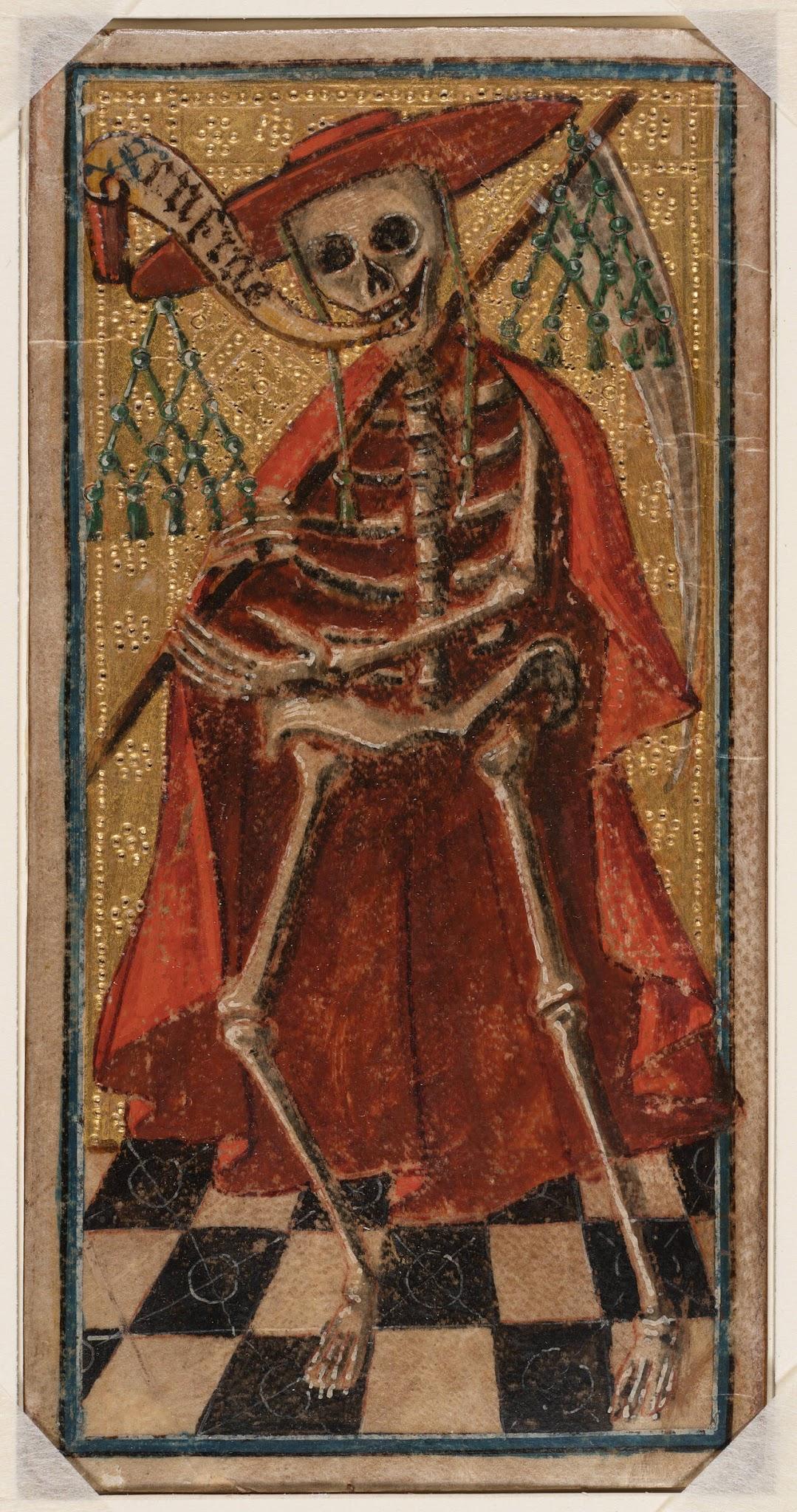
“Death,” hand-painted and gilded tarot card, circa 1490, Italy. Museum No. E, 1470–1926. Victoria and Albert Museum, London.
In its totality, tarot survives because it is fundamentally visual storytelling. This storytelling has evolved by absorbing myth, religion, psychology, and personal narrative. Today, the art of tarot reflects the human condition found in our ambitions, our anxieties, and our desire to find meaning in symbols.