It’s Ladies Night Out at Juvenile Diabetes Research Foundation

Last May, Parkland resident Janet McMahan chaired a Ladies Night Out to raise funds for the Juvenile Diabetes Research Foundation (JDRF), and she has been dancing to that beat ever since.

McMahan was introduced to type 1 diabetes eight years ago, when her son was diagnosed and eagerly got involved with the organization.

JDRF, which is headquartered in New York and has chapters throughout the U.S., as well as abroad, funds research and strives to help find ways to prevent, manage, and one day cure diabetes.

For McMahon and JDRF’s South Florida Chapter, based in Fort Lauderdale, the inaugural Ladies Night Out was a hit.

“We raised $22,000, which was more than I hoped,” McMahan, who has volunteered with the group for almost a decade, said.

The local chapter’s second annual Ladies Night Out is set for April 25, from 6 to 9 p.m., at Parkland Golf and Country Club. This year’s event will have food and drink, a DJ, and a silent auction that will feature more premium items. Tickets are $39 and all ladies of all ages are welcome.

“It is really important for young moms to attend because of the information we can make available to them about the warning signs,” McMahan said. “Unfortunately, a lot of kids do not get diagnosed early enough.”

You likely know someone who has been affected by diabetes, which can be diagnosed in people at any age. The condition leaves the body producing little to no of the hormone insulin, which it needs to process the sugar and fat from food. When insulin becomes too high, the consequences can be dangerous, even fatal, for sufferers when their blood sugar levels get too low or too high.

“You are always trying to find that balance, and there are factors that affect it, like stress hormones, and sometimes you do not know,” she said, “so it is a constant battle and there is never a minute off.”

Having a support network can make a difference. Families stay busy with JDRF events throughout the year. Every chapter has a JDRF charity walk in the spring, McMahan said, and then there is a gala in May. “I believe strongly in this particular organization,” McMahan said. “It is important to stay educated and involved so new developments can continue to benefit members of our community.”

Couple Pays Tribute to MSD Victims at Wedding

Memories of Marjory Stoneman Douglas and the tragic Valentine’s Day shooting last year are those of pain and heartbreak for many people. For former students Jason and Stephanie Hoffman, however, the school has a special place in their hearts because it was there that their love story began ten years ago.

The two Seniors did not know each other until they were paired up by their teacher, Ivy Schamis, for a project in their World Geography class. Schamis said she didn’t see any chemistry between them. “It was a big surprise being invited to the wedding,” Schamis said. She not only taught Jason but his two sisters as well. The connection with Schamis and the Hoffman family grew following the shooting. Schamis’ lost two of her students that day. Cheryl Hoffman, Jason’s mother, was instrumental in helping Schamis cope and restore her classroom supplies through various fundraising activities.

Schamis, who has been teaching at Marjory Stoneman Douglas for 18 years, said Jason and Stephanie are inspirational and she uses their story as an example when she pairs students for group projects. Schamis purposely does this to bring students together who might not connect otherwise.

Schamis shared the story of Lexi Gendron and Helena Ramsay, whom she paired for a project in her Holocaust class. The class was given old pictures from the Holocaust showing shoes, clothing, luggage, and other personal belongings of the victims. The assignment was to create stories of what their lives might have been like. Lexi and Helena fabricated a salacious story of a couple but when it came time to share the story, Helena was concerned that it was disrespectful. Helena would be one of the 17 victims on February 14. Following the shooting, Lexi tearfully went to Schamis thanking her for pairing the two for the project saying that “she would never have had that memory with her” otherwise.

On November 10, 2018, Jason and Stephanie came home to marry at the Parkland Golf and Country Club. A large Marjory Stoneman Douglas flag served as a backdrop for a photo opportunity to be shared with their Eagle family. The couple chose to remember those lost by donating a portion of their monetary wedding gifts as a tribute. They will be working closely with Schamis to determine where the need lies for extra resources.

Jason and Stephanie were deeply affected by the shooting. The two speak of how difficult the tragedy is to comprehend because of the number of friends and family who grew up in the school. The pair never imagined that during the wedding preparations they would be dealing with unimaginable events including the funeral of Jason’s football coach, Aaron Feis. “He was a big part of my life,” Jason said. As we continue to grieve for such a tragic loss, perhaps in healing we can all take a cue from Schamis and reach out to a stranger. You never know how much you might gain.

Change Starts With Us

One year ago, lives were changed forever. It was the day innocent lives were taken at Marjory Stoneman Douglas High School, for reasons which are still hard to understand. February 14 now has a different meaning to many people. A day always known for representing love is now associated with one of our nation’s worst tragedies.

Since then, a number of students transferred to different schools; others stayed. Some graduated; others went to Washington, D.C. and made historic moves. Several can be seen all over social media and even on our televisions. We thank each and every one of you because all of you represent change.

Change must start somewhere and it started at Marjory Stoneman Douglas High School. School safety has been the main priority here in Parkland; the name of a city people will never forget. Individuals from all over have come to help physically, emotionally, spiritually, and financially.

Money has been raised to assist those who have been affected. Fresh meals have been dropped off to those who could use a helping hand. Stores and restaurants raised money for those who couldn’t fathom going back to work after the tragedy. Bumper stickers saying “MSD Strong” can still be seen on people’s cars. 

A sense of community exists like never before. Acquaintances became friends; friends became family. When regular things like working, cooking, taking care of the house, etc. felt impossible, others came in to help. Thank you to everyone who made a gesture, big or small, because it undoubtedly made a difference in someone’s life.

For many, it is still a daily struggle to cope. Talking to a professional has helped countless individuals, some professionals even volunteering their services at no cost. Talking to those who were there during that time and who also experienced the trauma could be more of a fit for you, especially since they personally understand the lasting effects it can have on a person. You know yourself better than anyone else, so do what works best for you.

Self-care is also important. Trust how you are feeling and remember to go at a pace that you feel comfortable with. Try to rest mentally and physically, and taking time for yourself is never a negative thing. Grief, fear, anxiety, lack of sleep, sometimes even anger, will linger for some time. All should start to get better over time. You may be triggered at times, and that is okay too. Give yourselves a chance to heal.

Being in the “present” can be hard when you are in a state of mind you never thought you would be in. Keeping yourselves around those you love and those who make you happy can help make things more manageable. It will take time to move forward, but our community is making it clear – we are all in this together. Continue to soar high Eagles. We are all so proud of you! Celeste Catania-Opris, Ph.D., LMFT, offers therapeutic services to individuals, couples, and families. Visit www.TherapyForModernHousewives.com

Coral Springs PD Role Then and Now

The ripple effect of the shooting at Marjory Stoneman Douglas High School was tremendous. Not only were the kids in that particular building affected, but so were all of the MSD students, their families, their friends, and countless others across the country. However, people often neglect to realize the immense trauma that law enforcement officers have had to cope with since that fateful day. We, as residents, are accustomed to viewing our police officers as heroic figures who we count on to jump right in when disaster strikes. While our officers are indeed heroes, they are also human beings. On February 14, they witnessed a horrifying scene that undoubtedly left them with their own emotional scars.

They, too, have a perspective worth hearing about.

Due to the ongoing investigation of the events that happened that day, the Coral Springs Police Department could not have any face-to-face or telephone interviews to discuss the shooting, nor could they provide the names of any officers who offered insight into their experiences on that day. However, in a collective written response, the CSPD officers described their immediate reaction as they entered the 1200 building on February 14.

“Despite the emotional gravity of the situation, we immediately fell back on our active shooter training,” they said. “There was a lot going on. Cell phones ringing, students crying – it tested our resolve to focus on what we needed to do.”

While some officers were given the job of eliminating the threat, others were tasked with evacuating students and staff, and still others immediately began treating wounded victims. Prior to this incident, all Coral Springs police officers had been given a kit to provide emergency medical treatment – something which turned out to be extremely valuable while working on the scene.

“We are trained to use this kit containing combat gauze, tourniquets, and occlusive dressings. That training proved to be crucial in this incident,” the officers said. But it wasn’t only the Coral Springs Police that provided this aid: “Countless Broward County Sheriff’s deputies, officers from multiple jurisdictions, and Coral Springs – Parkland EMS personnel assisted in treating the victims of this tragedy.”

Granted, the CSPD officers are well aware of the controversy surrounding the law enforcement response on that day, and they continue to cooperate with all authorities that are investigating the incident. In their response, the officers affirmed their commitment to “learning from [their] experiences” and continuing to work with other agencies to ensure that tragedies like these don’t happen again. At the same time, they noted, they continue to have a “tremendous working relationship” with the officers of the Broward Sheriff’s Office.

“There were many courageous deputies and officers who responded on that fateful day, from multiple jurisdictions, whose actions were nothing short of heroic,” they said.

Of course, since the terrible tragedy, the CSPD officers have also had to take care of themselves and their emotional wellbeing. In the aftermath of the shooting, the police department offered both individual officers and their families counseling, and Critical Incident Stress Management team members from Coral Springs, Plantation, and Pembroke Pines were available at any time of day. But for the officers, what continues to be one of their greatest sources of comfort is spending time with their family and friends.

That and serving the people of the Parkland and Coral Springs community. The officers said that their favorite part of working in these cities is the support they get from the residents who live in them. After the shooting, they said they received countless letters, emails, and social media posts from residents expressing their gratitude and support.

To this day, they continue to feel that outpouring of love.

“The support we get from our community is unmatched,” they said. “We receive daily messages and phone calls from community members thanking us for our service.” When asked whether this event will continue to impact our community in the future, the officers said there is no way for it not to.

“You can’t be touched by tragedy without feeling the effects of it,” they said. “The victims of the MSD shooting… were our friends, our family, our neighbors whose lives were cut short by a violent act. There are empty chairs at the dinner table every night where children used to sit with their families in our community.”

At the same time, the officers shared their hope for the future and their commitment to continuing the healing process:

“What we’ll take away from this as we move forward is the chance to come together, to heal, and to learn, not just locally, but across the country.”

Moving in the Right Direction

It has been one year since the MSD shooting. We all know the toll it took on everyone and the damage left behind. We have also seen and heard the countless debates and protests both for and against gun control. A multitude of articles have been written for both sides, as well as methods of coping with the trauma from these horrific events. But what are some of the organizations that have emerged since then that give people a way to cope, to fight, and to carry on the message of NEVER AGAIN!

I’ve written articles on FAMSVARPAC (The Journey of a Thousand Miles, Nov. 2018) and a documentary video about Parkland (Bridging the Great Divide, Dec. 2018). But besides these two, who and/or what groups have come forward to help those in need, or to fight against these shootings in the future? While the list isn’t complete, it is a step in the right direction. In no particular order, we have:

PU4P Professionals United 4 Parkland. This is a group of highly qualified mental health professionals who provide many different forms of treatment for traumas such as those experienced by the shooting at MSD. Here is a link for the website: www.pu4p.org

CTR Change the Ref is an organization whose primary goal is to educate the newer generation of young people on how to best use what’s available to them to have their voices heard on the issues at hand. Manuel and Patricia Oliver whose son Joaquin, was one of the victims of the MSD shooting formed this group. The link to the website is www.changetheref.org.

Mobilizing MSD Alumni This is a national organization with more than 11,000 members, founded to help those involved in the MSD shooting. They have Outreach, Advocacy, and Community programs designed to cover all aspects of those in need. Their website is www.msdstrongalum.com.

These are a few local groups that have been formed not only to carry on the fight for better gun control and school safety but also to help those in need mentally, physically and spiritually. There are several national groups, such as DC Local Ambassadors (www.dcambs.org) founded by D.C. lawyer Elizabeth Andrews, Move On (www.front.moveon) and Everytown for Gun Safety (www.everytown.org) in case you feel the need to do more on a national level. But, as I have stated before, one of the best things we can all do, is be aware of those that surround our families, our friends, and us. Don’t be afraid to speak up or ask questions if you feel there is something not quite right. Encourage others to freely express themselves about their issues concerning these tragedies, regardless if they were directly involved. Last, but not least… don’t just depend on these and other organizations to get the job done concerning the political aspects of gun control and school safety. Write letters, make phone calls to your local, state, and federal officials and let them know your concerns and feelings. One voice, one vote alone may not make a difference but all of them together are a force not to be denied.

How do You Talk to Your Children About Grief and Loss?

When the mass shooting occurred at Marjory Stoneman Douglas High School, parents were lost as what to do and where to begin in efforts to support their grieving children. Many parents were just as traumatized as their children. Children can be silent sufferers and all have to have to learn how to deal with a roller coaster of emotions. As a licensed clinical social worker, I have a few helpful solutions to uncomfortable conversation easier.

Attempt to have an open discussion about the shootings with your child. Not talking about it can make the tragedy even more threatening in their mind. It is very likely that they’re having daily reminders of the tragedy from media, peers at school, and even by physically being at school. Initiating a conversation will allow the opportunity to voice their feelings and fears rather than hold them in. When communicating with them avoid clichés like, “I know how you feel” or, “Everything will be alright.” The goal is to ease the suffering by being compassionate and providing a sense of safety. Maintaining open communication is key. Persuade your children to ask questions, and try to answer those questions directly. In hard times, share one piece of good news a day and encourage them to do the same.   

Continue to remind your children that these are natural feelings, and they aren’t alone. Be a positive role model and consider sharing your feelings about the event, but at a level they can understand. Express sadness and empathy for the victims and their families. Suggest ways you and your children together can be helpful in the community by supporting local causes and advocating to make change. Role-model ways to be more in the moment. For example, enjoy a television show or game night together as a family, or even a fun outing. This will help alleviate anxiety and tension triggered by the tragedy. It also provides a sense of relief and family unity. Social media, cellphones, and gaming are just distractions. It takes our children away from facing the reality of the world around them, which suppresses the grief. If they hold in and suppress these painful feelings, it can come out in negative ways. Our jobs as parents are to provide them with a platform to grieve in order to help them heal and develop their own coping skills.  As the one year anniversary of the terrible tragedy at MSD approaches, it is essential that we reintroduce conversations. There is no right or wrong way or normal length of time for grieving. The family as a whole should understand that each person is going through a personal journey. Remind them that their deep-rooted feelings are normal reactions to an abnormal event. Be patient with your child as they may experience moodiness, anger, sadness, guilt, and/or irritable behaviors.  When attempting to bond with your child be mindful of their current feelings so that your tone of voice and demeanor can be more soothing. To support them in their sorrow and through the healing process, motivate them to attend local support groups and community outreach events. Encourage your child to attend memorials and vigils. These healing events offer the community a chance to come together and mourn as one and help them feel unified. If you or someone in your family is struggling with a painful loss, please call, First Call for Help of Broward(954) 537-0211 or dial 211 on your cellphone for community resources to assist your family.

The Doctor Is In

Pets have become an extremely significant piece of the standard school curriculum. Whether teachers are beginning to use them to help with peer counseling classes or to further enhance science courses, there is no mistake that our furry and scaly friends have become important teaching tools.

While animals have been cuddled, admired, and learned about in schools for many years, no one has offered a course on how to care for these animals… until now. Dr. Jeffrey Sands is a practicing veterinarian in Parkland and owner of the Parkland Animal Clinic. In the field for more than 35 years, his passion for animals is evident when speaking with him. His goal is to help instill his love of caring for animals to the next generation.

Dr. Sands wanted to help students who share his love for animals and learn what life as a veterinarian is like. He felt that an after-school club would be the best fit. He approached the principal of Westglades Middle School and proposed starting an after-school club for future veterinarians once a week. After the principal accepted the idea of the club, he needed to secure a sponsor. Ms. Hughes was happy to oblige and has been very supportive. The Future Vets Club of Westglades Middle was ready for business.

Dr. Sands did not want this club to be a show and tell. Students would not be bringing in their pets and demonstrating the tricks they do. This club was going to be informative, functional, productive, and fun. Students would be learning the medical side of their pets and discovering how and why animals act and react the way they do. The club would be accessible to all who want to participate and would be an eight to ten-week session.

Students have watched a video of an extraction, learned about parasitology, participated in role-play as a veterinarian explaining a diagnosis, and learned about the anatomy of a dog by examining its skeleton. These lessons have enriched each student and they are all gaining such an incredible compassion for animals and insight into the daily life of a veterinarian.

Dr. Sands is happy to come each week to Westglades and help educate the middle school students, but his hope is to expand his program to reach the students at Marjory Stoneman Douglas High School. His goal is to reach as many students as possible and help them develop a love for animal care with the ultimate goal of becoming a veterinarian.

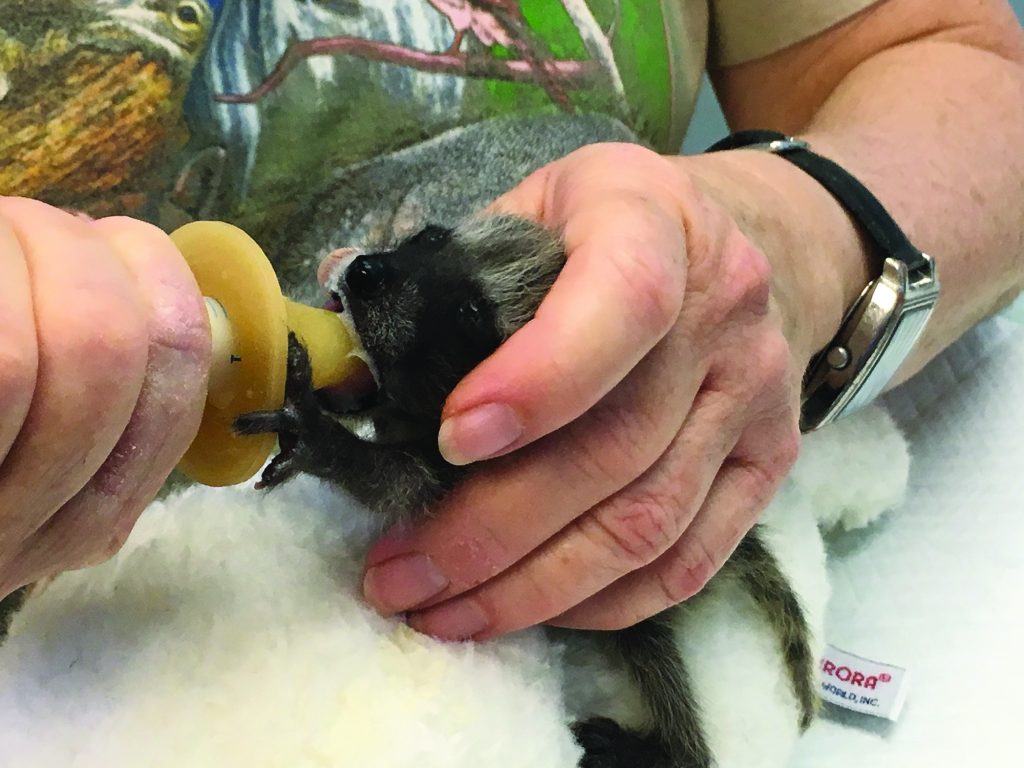
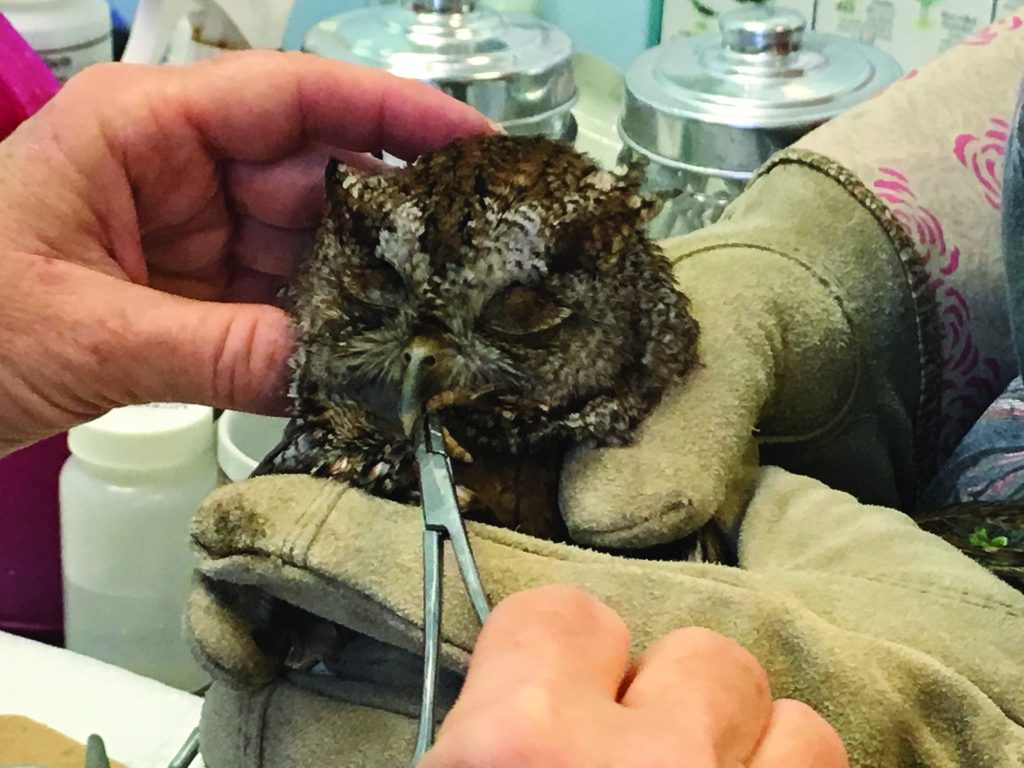
While most of the education has taken place on campus, Dr. Sands hopes to include field trips in his program. He would like to bring the students to the Wildlife Care Center and have them care for the injured animals. Each hands-on experience will help the students learn more about being a veterinarian more than any book could teach.

Students took the knowledge they gained and constructed projects, which were recently presented at the Pet Adoption Fair at Pine Trails Park. This was a great way for them to showcase what they learned while helping to educate local residents on animal adoption. Dr. Sands and his future veterinarians are spreading the love of animals, one class at a time.

A Book About Differences and Similarities

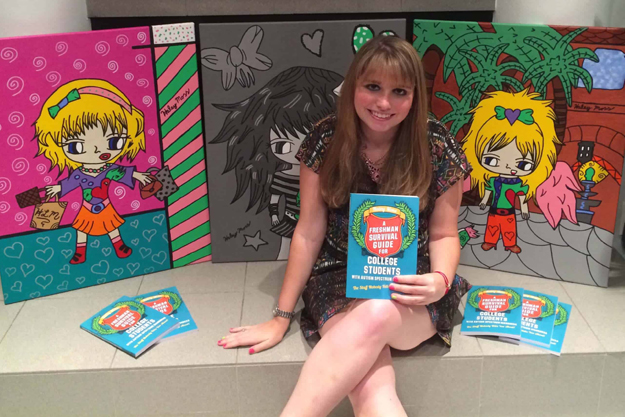
When Erica Bayes’ golden parrot, Noodle, escaped from her Wellington home last year, little did Bayes know that Noodle’s adventure would help spark the idea for Noodle Makes New Friends, an innovative children’s book about accepting each other’s differences.

That memorable incident occurred in May of 2017, when Bayes was at home playing with the golden parrot she had adopted as a very young bird. When Bayes’ Rhodesian Ridgeback jumped on a sliding glass door that was slightly ajar, the door opened. The dog trotted out, and Noodle flew out after him. Even though Bayes put up 500 posters with a picture of Noodle, posted on a neighborhood app, alerted The Palm Beach Post, and organized search parties to look for her beloved parrot, Noodle was missing for four days before she was rescued. When found, she was very ill. Fortunately, Noodle made a complete recovery.

The second inspiration behind the book derives from the author’s work doing yoga with children who have disabilities, including cerebral palsy, autism, and physical handicaps. A certified yoga instructor since 2009, Bayes found that making children comfortable with their bodies and providing them with the one-on-one acceptance and intimacy they don’t often get was a very moving experience. “With the muse being Noodle coming off her escape and her healing, and being so touched when I worked with these children, writing the book merged all sorts of passions for me,” recalled Bayes.

Noodle Makes New Friends is a colorful, happy-hearted book with the message that kids can learn from and celebrate each other’s individual distinctions instead of being afraid and shying away from them. “I have seen parents usher their children past a child or an adult in a wheelchair and say, ‘Don’t ask, don’t look,’” Bayes said. “I want the conversation to be open. Children are naturally curious. I think when you deny them answers; you’re actually invoking fear. They learn to be trepid of someone who’s different. Instead of, ‘Hey this person might look different from me, but we may actually have things in common and get along just fine.’”

In Noodle Makes New Friends, it’s the first week of school and Noodle feels shy about meeting new people until the teacher has students present a little bit about themselves. Olive Owl has a glittery eyepatch and loves to sing and dance. Lemon Leopard has a crumpled paw but enjoys painting. Mango the Macaw has a fake wing yet plays basketball. Sam the Frog has autism and likes to cook. Noodle learns that although her classmates have had accidents or were born with a disability and look a little different, they’re not scary at all. On the inside, they all have a lot in common and can have a wonderful time together. Available on Amazon, Noodle Makes New Friends is the first in the series of Noodle books. For more information, visit www.EricaBayes.com or email enbayes@gmail.com.

Slipping Through the Cracks

The issue of mental health care is one of the most ongoing, divisive, troubling topics in our country today. Included in that issue is the question of how it relates to gun control. But let’s start with the basics.

In several articles regarding studies done on mental health issues in this country in 2016, this startling fact comes to light: One in five people in this country suffer from some sort of mental illness. That means in 2016, there were 44.7 million people with some sort of affliction. Here are some of those mental health issues that are recognized: Autism, Major Depression, PTSD, Bipolar, OCD, Schizophrenia, Suicide, Eating Disorders, ADHD, and Personality Disorders. Substance Abuse and Mental Health Services states that out of that number, 9.3 million have serious issues and that most of them start at the age of 18 and move upward. Also, states that didn’t expand Medicaid under Obamacare, refused service to about 4 million people due to lack of insurance.

So, what is contributing to this problem? In corresponding with Dr. Julio Busciolano, PsyD he and his associates at the Partial Hospitalization Mental Health Program feel that the stigma or attitude towards mental health is a major roadblock. Cultural, religious, and family perceptions are at the forefront because of a lack of compassion and understanding. Of course, there is also the fact that those afflicted with mental health issues often feel that they don’t need help and are “strong enough” to combat this on their own. It’s what society has taught people over the years … that one must be “strong,” “no talking of such feelings,” or “forget it and move on,” that anything less is an admission of failure as a person when the opposite is the reality.

One of the major setbacks in correcting this is money, or more to the point, the lack thereof. Without proper financing, there are far too few professionals, causing burnout because of the hours worked, and paperwork required as some of the reasons. Also, the lack of resources and access to mental health professionals is worse than those for other types of doctors. Limited resources mean fewer outpatient programs, with our youth being primarily affected. It’s a Catch-22 with cost leading to financial distress, leading to more mental distress, leading to more financial stress … money spent, debt acquired, followed by financial hardships.

There is the option of Involuntary Commitment. In Florida, a state representative, Maxine Baker (1963-1972) sponsored a bill enabling involuntary admittance for mental health issues. This was titled the Florida Mental Health Act of 1971 but is commonly referred to as the Baker Act. To Baker Act, a judge, law enforcement official, doctor, or mental health professional must deem the individual to have a “substantial likelihood that without care or treatment, the person will cause severe bodily harm to themselves or others, in the near future.” One cannot be committed because of past behavior or actions and alcohol or drug abuse may not be considered but only a mental instability. However, after 72 hours (or before, depending on the circumstances) the patient will be released.

How does all this relate to gun control? It seems the sound byte of the day is that with better mental health background checks, gun control via the ability to buy a gun, will limit the sales of firearms. However, after doing research, it seems almost all our states have some sort of provision in their laws that say (and I’m paraphrasing) “if anyone is found to have had mental health issues of any sort, they will be prohibited from purchasing a firearm.” However, anyone that has had a problem will not list it on the application and health records aren’t allowed to be entered into national databases due to doctor/patient confidentiality, so there is no reliable way to detect such issues. Also, were we to be able to have mental health professionals doing exams, how would we know where they stand on gun control?

So, what are the answers? The bottom line, as I see it, is that some help is better than none. If, by getting someone in to counseling, getting them some sort of medication to balance them, giving them some time sort out emotions, showing them there are people who care and want to help, we may give them the chance to restore their lives to some semblance of normalcy, which is far better than what they had been living. Dr. Renae Lapin, a local psychologist, said: “stress is a major contributor to mental health problems and that our youth are being affected in far greater numbers these days.” Lapin said that research based on studies has shown there are several other ways that may help besides counseling. Some of these ways are nutrition, exercise, good sleep habits, and focusing on the positives in our lives.

One place that offers this type of program is the 9 Muses Art Center of The Mental Health Association of Southeast Florida. Dr. Julie Bruno, PsyD, feels there is a need for more long-term facilities for those with chronic mental illnesses. Insurance needs to be revamped to allow the ability to get into those facilities, state or private, and receive the proper medication. With all of that, many of those falling through the cracks might not.

The truth is, they aren’t cracks they are gaping chasms. Mental health isn’t considered a priority at the same level as general health. The money isn’t there to allow for proper help, the law doesn’t allow an indefinite commitment. Those who are committed (short term), may not really want help or recognize their need for such. What to do? First, we need to address this issue with our government officials. If enough people speak out, maybe a change can take place. Second, we all need to be more aware of those around us and pay attention to changes in personality or habits, no matter how small. If you see changes that alarm you, act on them by talking to the person. Hopefully, you can convince the person to seek help voluntarily. If not, then with the right circumstances, you can do it yourself. Just know that it is likely going to be a short-term solution, but any step forward is better than one going back.

Preventing Addiction and Other Calamities

Preventing Addiction

No parent wants to learn that their child is addicted to drugs, yet millions find themselves in this situation. No parent wants their child to be a victim of discrimination, bullying, child abuse, sexual harassment, and other dangerous situations, but it happens every day. Every parent should ask, “What must I do to protect my children? What can I do to prepare them for the future?”

Parents need to equip their children with the necessary knowledge and skills to handle situations of potential danger. From birth on, children and adults are constantly learning new and important life skills. For example, a toddler will master the art of using eating utensils and dressing oneself and over time will learn more needed life skills.

Spending quality time with children has been shown to be most advantageous. Many parents are overloaded because of work, family, and household commitments, but time must be put aside to spend with children in the family, even if it’s only 30 to 60 minutes a month. The infant and toddler can be exposed to lullabies, fairy tales, and stories of family members. As verbalization develops, encourage the child to give a simple analysis of what was presented. For example, after telling the fable of the Three Little Pigs you can ask the child, “What was the story about? What materials would you use to build a house and why?” The parent must be patient and ask age-appropriate questions. The atmosphere of their time spent together should be non-threatening and enjoyable.

After the age of six, life-protecting skills can be introduced, such as the dangers of addiction, how to manage relationships between friends, how to handle discrimination and prejudice, what to do when bullied, sexually molested, and so forth. The information should be repeated and reinforced as the child matures. Some topics may be uncomfortable to discuss and can be tabled to a future time if need be.

For a child from the ages of six to 11, it is easier to convey the necessary feelings and attitudes about a particular subject. An adolescent child may be less prone to have an in-depth discussion with the parent, especially if the teen is rebellious. Parents may initiate discussions on their own, doing basic research beforehand so as to have the correct information.

If giving important life-saving information to our children saves anyone from addiction, physical and sexual abuse, discrimination, bullying, and decreases the number of teenage pregnancies, then the art of parenting will have taken an important step forward and will place our children on the path of achieving a successful and rewarding life.Melvin S. Rosh, MD FAAP www.RewardingLifeInc@gmail.com.

The Loss of a Leader

Walter “Skip” Campbell
Coral Springs Mayor
1948 – 2018

We at theParklander were profoundly saddened when we received the news that Coral Springs mayor,Walter “Skip” Campbell, passed away recently at age 69.

Mayor Campbell had been a friend and long-time contributor to our magazine since his election in 2014. His monthly column reminded us of the ‘goings on’ in our community, keeping us abreast and raising public awareness for the issues he felt so compassionate about. Under his leadership, the City of Coral Springs achieved gold-level certification for its commitment to protect and conserve natural resources. Coral Springs is one of only three cities in Broward County to accomplish such a feat.

Campbell spoke about his vow to providing a safe environment for students and educators, and how this issue rose to the top of his agenda after the Marjory Stoneman Douglas tragedy. “I want you to know from those of us who serve you from the City of Coral Springs, that the safety of our children is our number one priority,” he said. Campbell worked diligently with the police department to increase the number of school resource officers assigned to each public school.

Throughout his time in office, he remained fervent on important issues, everything from recycling to hurricane preparedness to business development. He prided himself on running a cost-effective government that was connected to its residents. When the new Municipal Complex opened its doors early this year, Mayor Campbell described it as a “one-stop shop,” housing the Chamber of Commerce, local elected officials’ offices, and all city services under one roof… perfect timing as the City of Coral Springs celebrated its 55th anniversary.

Prior to becoming mayor, Skip was a distinguished trial attorney who brought respect and integrity to each case he worked on. Additionally, he spent ten years in the Florida Senate helping to pass more than 100 bills benefitting children, families, and other worthy causes. Moreover, you could find him on the weekends coaching youth soccer or little league. Even his spare time was used to help others.  

Michael Goodrum, Coral Springs city manager, said of Skip, “He was a dedicated public servant, a man of the people, and a pillar of our community. While his professional accomplishments should be applauded, it is the family that he raised in Coral Springs that he treasured most. Our heartfelt thoughts and prayers go out to his wife and children.”

Mayor Walter “Skip” Campbell is survived by his wife, two children, three grandchildren, two sisters, and a brother, as well as many extended family and friends.

Skip’s monthly column will be missed by all of us here at the Parklander. His impact has truly touched our community and brought about positive and much-needed change. Mayor Campbell created a legacy that will not soon be forgotten.

Parkland Hearts Project

In an effort to remember the victims of February’s massacre at Marjory Stoneman Douglas High School, an area nonprofit organization has partnered with family and friends to organize service projects based on the victims’passions.

HandsOn Broward has worked with loved ones and friends tocreate 17 unique service projects, one for each victim. While details about the projects are mostly private to protect the privacy of family and friends, thecommunity can play its own role in remembering those who did not survive.Specifically, people can participate in the Parkland Hearts Art Project. Thosewishing to become involved can create paper heart cutouts with thoughts,feelings, hopes, and messages. Those close to the victims will be able to readthese messages. For more details, visit handsonbroward.org/ParklandHearts.

Kristina DaSilva, HandsOn Broward’s chief operating officer, said immediately following the February 14 tragedy at MSD, people called the organization looking for ways to help in whatever capacity they could. It wasn’t long after calls came pouring in that the Parkland Hearts Art Project was born. HandsOn Broward began receiving paper hearts with messages from all over the country.

In creating the project, HandsOn Broward followed a model from one of its affiliates, HandsOn Orlando. The latter helped organize “ThePulse Scrolls,” in the aftermath of the June, 2016 massacre inside Pulse Night Club in Orlando. A gunman killed 49 people and wounded 53 in whatauthorities described as, “The deadliest mass shooting by a single gunman inthe country at the time.” Also, the Pulse attack was the deadliest terroristattack in the U.S. since the September 11 attacks in 2001. Meanwhile, the MSD massacre was the deadliest shooting at a high school in U.S. history. Itsurpassed the  Columbine High School mass shooting in 1999.

The mass shooting spawned an outpouring of gun control activism from our community and around the country. The Parkland Arts Project and the planned community service projects are among the many efforts at healing following the February rampage. DaSilva said, “The projects present opportunities for healing through service.”

Keeley McBee, marketing and events manager of HandsOnBroward, said that volunteers, the majority of whom are Parkland residents, have “selflessly given of their time” to see the projects through. “They are amazing and awesome,” she continued. “We are reaching out to the community to gather supplies that will be donated directly to each project.” Visit www.parklandhearts.org/contributeto see how you can help. A wish list exists of specific needs. Click the link on the aforementionedwebsite to see the list and shop. Those wishing to bring items in person cancall Zakiya Becca at 954-233-1300 to set a drop off time.