Potential Food-Drug Interactions


Medications can be affected by certain foods, caffeine, or alcohol. This is called a food-drug interaction. Some food-drug interactions can alter or prevent some medicines from working the way it should. They can cause side effects from medications to be altered or they can create a new side effect. Some medications can change the way your body uses some foods. Any of these interactions may be harmful so it is important to be aware of them. You should ask your doctor, pharmacist, dietitian, or nurse about any medications you are taking and the potential food-drug interactions. The Food and Drug Administration approves these interactions. These interactions should appear on the label when your medication is dispensed. Always follow the directions on your medications. This is one of the reasons why the pharmacist will always ask you if you have any questions about your medication. Pharmacists are armed with a wealth of valuable information and are there to help you.

Some other things that affect your medication include age, weight, sex, other medical conditions, and any vitamins, herbals, and dietary supplements that you may be taking. Also, whether you should take your medicine on a full or empty stomach is important. Some medications can work faster, slower, better, or worse when you take them properly or improperly. Some medications can cause a lot of stomach upset. If the label does not guide you, your pharmacist can explain to you how to take the medication so you can ease stomach upset.

Be aware of the caffeine content of your food and drinks. Caffeine can also impact how a medication works. Some food and drinks that contain caffeine include coffee, cola, chocolate, tea, some of the high energy drinks, and other soft drinks.


Alcohol use can add to the side effects of medications. The way your medication works can be altered when you take medication with alcohol, before, or after drinking alcohol. You should always speak to your doctor or pharmacist about the effects of combining alcohol with the medications that you are taking.

It is important to note that prescription medications can interact with each other and with over the counter medications. The same can be true for over the counter medications interacting with each other.

Here is a quick review for some of the more common medications.

Bisphosphonates (for osteoporosis) – only work on an empty stomach. Take with eight ounces of water in the morning without any other medication or food. Two common examples are alendondrate and cholecalciferol.

Sedatives and hypnotics (for sleep) – Do not take with a meal or right after a meal. No alcohol as it can add to the side effects of the medication. One example is zolpidem.

Antidepressants (for depression, general anxiety disorder, panic attacks, and some eating disorders) – Take on a full or empty stomach. No alcohol as it can add to the side effects such as drowsiness. Examples are fluoxetine and sertraline.

Proton Pump Inhibitors (for GERD) – Follow the directions carefully as different medications have different interactions. Examples are omeprazole and pantoprazole.

Diuretics (remove water and minerals from body) – Some raise or reduce potassium and other minerals so follow the directions carefully. Some require supplementation. One example is hydrochlorothiazide.

Narcotics (for pain) – Alcohol increases the dangerous side effects, such as coma or death. Be aware of addiction. Follow the advice carefully. Examples are morphine, hydrocodone or oxycodone with acetaminophen.

Always ask your doctor or pharmacist about any medication that you start taking and alert them to any herbal supplements, vitamins, or minerals that may impact how the medications are utilized.


A Big Performing Family

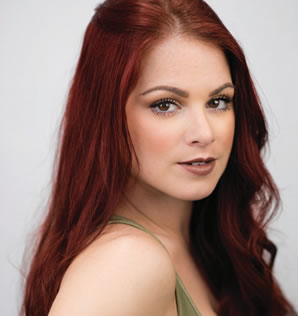
In the performing arts field, Emily Tarallo is considered a “triple threat,” that is, “a performer who excels at acting, singing and dancing.” The Manhattan-born, auburn-haired young woman who grew up and still lives in Davie, admits she’s part of “a big performing family.” But to say her parents are just entertainers is a minimization.

Her dad, Barry Tarallo, has spent 40 years on stages across the nation. An actor, singer and guitarist, he performed on and off Broadway in Grease and Joseph and the Amazing Technicolor Dreamcoat. He toured in Cotton Patch Gospel, a show featuring music and lyrics by Harry Chapin. He’s been in regional shows far away and just up the road, at Arts Garage in Delray Beach, the Maltz in Jupiter, FAU Summer Rep, and the Wick Theatre in Boca Raton among others.

Emily’s mom, Amy London, has also trod dramatic venues as an actor, but often works as an artistic or stage director or a stage manager, most recently at Slow Burn Theatre and the Wick. A voice talent and freelance artist, she has even directed her daughter in dance shows.

But Barry and Emily jointly lament the fact they’ve never appeared in the same show together.

They nearly shattered that bit of theatrical history last month when they performed at two locations in Boca Raton. Emily portrayed Babette in the Wick Theatre’s production of Beauty and the Beast. And Barry, for the third consecutive year, was one of four Equity actors who joined Master of Fine Arts students at Florida Atlantic University for their two Summer Repertory productions – Sense and Sensibility and Into the Woods.

Emily has learned from her parents’ on-stage skills and pronounces them “my biggest inspiration.”

“My mother is a brilliant director/stage manager and my father is an actor/musician with one of the best voices I’ve ever heard,” she said. “I remember growing up, watching them perform in various theaters. It’s all I’ve ever known. They are amazing. They always give me insight from their own work experience, but they encourage me to create by own voice and craft. They are my biggest fans,” Emily said.

Barry also acknowledges his daughter’s skills. “A few performers have that extra little spark, something innate and natural. I always say that Emily has that.”

“I feel I have that because of my Dad and Mom,” Emily responded.

Though no longer married, Barry and Amy “are still very good friends,” he said. “She has stage-managed me and directed shows that I have been in.  I run a lot of things by her.”

While Emily’s passion is definitely for dance, she has learned the full range of stage performance by observing her parents. Emily smiles with much pride about how she loves walking the rear stairway of the Actors Playhouse in Coral Gables and seeing photos of her father in various stage performances hanging along the wall.

Still in her mid-20s, Emily has performed in Cabaret, A Chorus Line, Peter Pan, West Side Story, Footloose, Hair and other shows throughout the area. A choreographer and dance instructor, she has often served as dance captain in productions. “I’m responsible for conducting brush-up rehearsals, teaching choreography and making sure all the dance numbers look clean and sharp.”

When she completed the run of Beauty and the Beast, Emily moved on to another Disney-inspired show Tarzan, the Musical, which opens in October at the Broward Center for the Performing Arts, in conjunction with Slow Burn Theater.

What’s the future hold for the young dancer/actress? “I have always dreamed of being on Broadway,” she said. “And I know that, one day, I will make it there.”


Social media … a new frontier for bullies?

There was a time when bullying took place on the playground. Now, it’s done through social media. In its intended form, social media is a tremendous platform of communications. The downside, however, is the ease in which it can be used to cause psychological and emotional distress to others.

It’s well documented that today’s tech savvy generation has posted disturbing messages, videos, and images, and used cell phones to send comments that revealed private or personally embarrassing information. This form of cyber-bullying causes depression, anger, embarrassment, and poor self-esteem—not to mention lack of production in the classroom.

Daphne Young, vice president of Communications and Prevention Education for ChildHelp, said a child’s life can be an open book, and social media puts them at risk to predators and cyber bullies. “Social media can be an insidious disease that leaves unsuspecting parents groping for answers about how to protect their children and who to trust,” she said. “Kids who go online are entering a portal that is a completely different mental and emotional world, one in which they unknowingly could be groomed for abuse and ridicule—or they could be the ones who are perpetuating mean, tough talk. This is a legitimate concern.”

“Speak Up and Be Safe” is an educational program offered by ChildHelp that provides information for both parents and children. “When the mind of a child is forming, it is easy to slip into a fantasy world,” Young said. “It is important to be your child’s parent, not a best friend. Parents need to be a part of their child’s life, and take control to make sure they are out of harm’s way.”

Dr. Mitch Spero, a licensed psychologist and director of Child & Family Psychologists in Sunrise, said the psychological issues associated with abusive messages are anxiety, depression, and vulnerability. “These are harmful, and can have long-lasting effects,” he said.

According to Sgt. Steve Feeley of the Broward County Sheriff’s Office, cyber-bullying is a law enforcement issue. “We have had calls about stalking, kids threatening bodily harm, and damaging property,” he said. “There is zero tolerance for such actions, and since it’s a public safety issue, we take each case very seriously.”

There is a fixation among all age groups to use social media to manage and maintain friendships. Unfortunately, it has also been used as a springboard to spew hatred and bitterness.

“When elected officials use social media to talk harshly about others, it is hard for kids to rise above that,” noted Young. “In effect, it’s saying to them this is the accepted norm. Bullying is a byproduct of this collective loss of decorum, and it’s unfortunate that no one puts the brakes on and says, ‘this is not how we react.’”

Understanding the positives and negatives of social media is an important discussion for every family. The medium has many positives, but it can also be hurtful when used improperly. Open communications are vital, and parents who choose to not properly supervise their child may never know the online life that he or she is leading.


Teachers

“Good teachers are the reason why ordinary students dream to do extraordinary things.” – Anonymous

It is back to school time, again. Parents are busy preparing their children for the academic year, while holding on to the last days of summer vacation.

It is a time of anxious anticipation and excitement. Parents are busy making sure their children have the supplies and academic preparation they need. Students are wondering: Will they be in classes with their best friends? Will they have a nice teacher?

Everyone is hoping for a good school year, and much of that will depend upon the teachers to which our students will be assigned. Although some parents feel they should not intervene or make special requests in terms of who is the best-fit teacher for their child, in recent times more parents are feeling the need to become involved in the process.

In many of our public schools, parent involvement is welcomed, especially when parents have helpful insight into their child’s learning style. Having a good or bad teacher can greatly impact the success of the student.

According Michelle Rhee, former schools’ superintendent in Washington, D.C., “Students who get two or three strong teachers in a row improve their performance despite their backgrounds, while those stuck with a series of weak teachers may never recover.”

It is no wonder why parents are making it their mission to become involved in their child’s public education. Specifically, parents are considering the experience level and background of their child’s teachers.

“It is important to me that my child’s teachers be well-qualified because teachers have a great deal of influence on their students,” said Paula Hyman, a teacher in South Palm Beach, as well as a mother of a 12-year-old. “What matters more than a teacher’s previous experience, is the teacher’s philosophy on education and their knowledge of the subjects they are teaching.”

Cultivating teacher-student compatibility is an involved process that takes months of collaboration between educators and school administrators. It is important that parents who want to be involved are also educated about their child’s learning style, because a favorite teacher for one student may not be the best match for another.

Overall, what is essential for student success in school is that everyone works together for common goals and is supportive of one another, parents, teachers and students.

“Parent involvement at school and encouragement at home help students feel motivated to learn in the classroom. If the parent, teacher and student are all on the same page, then the student will be able to thrive,” Paula said.

One fact everyone agrees on is that great teachers have a significant impact on a student’s attitude towards school and on his life long success.

Park Trails Elementary gets a new principal


If Park Trails Elementary School students are ready to help change the world through kindness, they share a goal with the Parkland school’s new principal.

Charles McCanna, who has worked for Broward County Schools for all 32 years of his educational career, plans to implement a spreading kindness theme for the upcoming school year. Kindness is what endeared McCanna to a fifth-grade boy at another school. He recalled the youngsters were walking to class when the boy stared at McCanna. He wasn’t annoyed, but wondered what the boy was thinking.

“Mr. McCanna, why are you so nice?” he recalled the student asking him. “I never expected that answer and it was really great to hear,” McCanna said. “It made me feel like I was doing something right. I really try to lead by example.”

McCanna said he explains to children that being kind to people all the time is hard. “It’s easy to lash back at somebody if he or she was mean to you. But in the end, being nice pays off,” the administrator said. “Being kind to people is really the way to go. It can change the world, actually.”

Since December 2002, McCanna served as principal of Nova Blanche Forman Elementary in Ft. Lauderdale. He said an atmosphere of peacefulness pervades the halls and classrooms. McCanna added he can only recall three or four fights in 15 years.

McCanna has won several accolades during his time at Nova Blanche. He was voted by his peers to represent 139 elementary schools as chairperson of The Elementary Principals’ Organization. Apple Computers honored McCanna with a Distinguished Program Award in 2012 and 2013 for serving on a discussion panel regarding Strategies for iPod Use in Schools.

As principal of that school, he “led one of the most diverse elementary schools in Broward County,” according to his résumé. The ethnic breakdown of the school’s 756 K-5 students is as follows: 23 percent White, 43 percent Black, 24 percent Hispanic, 7 percent Asian and 3 percent Multi-Racial. Among the student body, 7 percent are English language learners, 55 percent are on Free or Reduced Lunch and 10 percent are in an Exceptional Student Education program.

McCanna said having a diverse student body benefits them. “They have the chance to learn about other cultures, and while they may be different from one another, they can not only get along but become friends. A diverse environment offers many opportunities to practice acts of kindness,” he said.

McCanna said he accepted the opening at Park Trails Elementary because he was ready for a new challenge. He will be in a less-diverse, larger environment; Park Trails has 1,300 students. But the soft and pleasant-spoken McCanna didn’t sound fazed during a phone interview. “It’s going to be fine,” he said.

Throughout his career, McCanna has taught for about four years, served as mathematics supervisor for three years, assistant principal for 10 years, and principal for 15 years. He said he has no desire to become a district superintendent.

His decision to enter the education field was cemented in high school in his home state. The teacher handed out dittos and gave the class “busy work.” McCanna thought he could do better as a teacher. He received an elementary education degree for his bachelors and a graduate degree in science education. McCanna said he soon felt his heart belonged in elementary school.

“They’re very honest, usually,” he said, referring to students that age. “Some of them have very few filters. They’ll tell you exactly what they think about things, especially (the) youngest ones. It’s just hilarious. And they just want to make the teacher happy at that age.”


Circulation

theparklander_areaDominant Market Presence

Reach South Florida’s most desirable consumer – those with disposable income, the Parklander’s ® targeted distribution is direct mailed to businesses and the most affluent neighborhoods in Parkland, Heron Bay, and Coral Springs throughout South Florida.

Total distribution:            36,000

Total readership:              150,000

Direct Mail Distribution

For maximum visibility in the market, the Parklander ® uses a combination distribution strategy with over 55 percent of all publications direct mailed to homes valued from $435,000 to over $3 million.

Additional Distribution

the Parklander ® magazines are also delivered to more than 36,000 strategic distribution high traffic venues such as professional offices, hospitals, hotels, auto dealerships, country clubs, restaurants, spas and more!

Pediatric Occupational Therapy: Transitioning Children from Being Isolated to Being Included

“Nobody is superior, nobody is inferior, but nobody is equal either. People are simply unique. You are you, I am I.” Osho

Pediatric Occupational Therapists are life builders for children whose lives have been afflicted by disability, especially those with autism and cerebral palsy. OTs help these individuals to be free of their isolation, and help them to share their abilities with others. OTs do not attempt to make clients like everyone else. We embrace their strengths, and work on the areas that are weakened which affect their everyday functioning. If a child has difficulty controlling his or her self stimulating behaviors, we teach him or her how to satisfy that crave in supplementary ways so that it does not affect his or her functioning and those around them. We want him or her to share his or her uniqueness.

If a child with cerebral palsy demonstrates impairments with his or her motor control and coordination skills, which affect his or her activities of daily living including dressing, bathing, and social interaction skills, occupational therapist help remediate deficits and train clients and caregivers on compensatory techniques as needed to lead fulfilling lives.

Various children with autism may miss sensory information from the environment that provides signals about what is going on in their surroundings and may be referred to as having poor registration. The brain may not be getting what it needs to produce appropriate responses. Other children may be referred to as having “seeking behavior.” These individuals are characteristically active and continuously engaged in their environments. They add sensory input to every experience in daily life. They may seem impulsive and the consideration for safety when playing may be absent. Some children with autism may display hypersensitivity to sounds, sights, smells, tastes, and textures. These children may have sensitivity behavior. They have overreactive neural systems that make them aware of every stimulus that becomes available, and do not have the appropriate ability to adjust to these stimuli. Children may also present as having avoiding behavior, which represent those who may engage in disruptive behaviors, especially in situations where they know they are having difficulty. They avoid circumstances by either withdrawing or participating in emotional outbursts that enable them to get out of the situation. The child may appear stubborn and controlling and prefer routines without any sudden changes.

The child is creating a state to limit sensory input to those events that are known and therefore easy for the nervous system to interpret. There is not a cookie-cutter treatment plan for these exceptional children. OTs give the children and caregivers individualized recipes (treatment plans) called a sensory diet with ingredients (tools) to help the child regulate his or her sensory system for success at home, school, and in the community. Children with cerebral palsy characteristically demonstrate deficits with reflex, body movement, muscle tone, balance, posture, muscle coordination, and receiving and responding to information through the senses. These complications can considerably impair a child’s ability to successfully take part in daily living activities including, dressing, feeding, sitting, standing, socializing, and more. These limitations can lead to isolation.

Occupational therapists encompass the skills necessary to improve their posture, reduce muscle tone, and improve their range of motion. They will improve a child’s self-care skills, visual motor skills, handwriting skills, and the ability to navigate his environment. These skills are imperative to improve a child’s functional independence to replace isolation into inclusion. But treatment does not end in the therapy clinic. A comprehensive home exercise and activities program and family education are vital to this process. OTs are knowledgeable in many areas in pediatric care. The focus is on improving a child’s functional independence. Through individualized treatment strategies and taking a family centered approach, limitations can be altered into great expectations.


It’s Your Choice

The best wine in the world is the wine you like best. By reading the last statement you have just been liberated from any of the antiquated ideas about wine that you may have had. We are in the 21st century and if you have not noticed, it is a brand new world. The rules, regulations, habits, and snobbish traditions about wine and food pairing of the past are hereby declared null and void.

Let’s start by knocking out that “written in stone” commandment that red wine must be served at room temperature. The rooms in question were in Europe and centuries old. Think about it, no central heating, no artificial lighting, and no air conditioning, nothing but four walls, a fireplace, a couple of windows. and a door. Today, our homes have lots of light and a broad range of temperatures; so what the heck do they mean by room temperature? Have I made my point? Now that you have been liberated from the constrictions of the past, where do we go from here? Wine was developed as a safe beverage to accompany food in ancient times. In the past, water was a dangerous beverage to drink because of the diseases it often harbored, so it was wine or beer that became the mealtime beverages of preference.

The last statement certainly makes the legal requirement of the warning label on the back of a bottle of wine concerning the effects of wine on pregnant women seem a bit foolish. Wine was imbibed by one and all in past centuries, even pregnant women and children; there are not too many malformed individuals whose problem was caused by drinking wine in Europe today. In the immortal words of W.C. Fields, a film actor of the early days of movies noted for consuming copious amounts of alcohol, “I don’t drink water … fish urinate in it.” Now we come to what wine goes with what food. It is not an edict that came down from Mount Sinai with the Ten Commandments, “thou shall serve red wines with red meat, white wine with everything else.” I do not believe that sushi, sashimi, Cashew Chicken,

Big Mac’s and their ilk were very well known in the Europe of old, so there are no fixed rules about what to serve with them. The next time you go out to a better restaurant and the server asks you if you would want wine with your dinner, answer with “Moscato” or “blush Zinfandel” and watch his/her face distort. But, if that is your choice, who has any right to tell you that it is or is not the “proper” wine to go with the fare you have ordered. Look at it this way: who is going to drink the wine, you or them, and who is paying for it? Also, look at your plate … a meat, a vegetable, and a starch. By my count, there are two non-meat products to the one piece of meat.

Doing the math, that means that white wine wins two to one. Next time you order a steak, it’s OK to order a Chardonnay, Viognier, or Pinot Grigio, if that is what you like; it’s your choice. We are living in what will probably be among the greatest centuries of all time. We have cell phones, computers, and soon, maybe vacation trips to the Moon or Mars, so there is no reason to be living in the past, and there is also no wine police to punish you for your choice of a wine. We got where we are today by building on the past and not following it and by investigation, experimentation, and innovation. If you do not believe that, rent any one of the movies of the ’40s or ’50s and you will see how far we have come in our daily lives. We end this with the statement we began with … The best wine in the world is the wine you like best.

HALF-PAST NEW YEAR’S Whatever Happened to Those Resolutions?

Whether you followed my suggestions in the January issue for accomplishing goals or stuck to the traditional resolutions, how are you doing with that? At the halfway point – July – it’s time for mid-course corrections and a fresh start.

If you’re like most people, you made resolutions on January 1 regarding how you were going to change, how you were going to improve yourself, in the new year. And, again if you’re like most people, it didn’t take long at all before you gave up — stopped going to the gym, started smoking again, drank too much.

The three most common resolutions are usually:

  • I will stop smoking.
  • I will lose weight. I will go to the gym (or work out at home) regularly.
  • Other popular resolutions include: I will stop biting my nails.
  • I will stop eating junk food (or I will stop eating so much junk food).
  • I will be more helpful around the house (for men).
  • I will try to be gentler with my husband/wife.
  • I will try to spend more time with my kids.
  • I will drink less (or I will drink only on weekends).

But whether any of these were among your resolutions, or whether yours were different ones entirely, now that we’ve passed the halfway mark, how are you doing?

Many people who fail to keep up with their resolutions slough it off for another year. But that’s unfortunate. There is really nothing magical about January 1. There is no reason that new resolutions—or a renewed resolve of a failed resolution— can’t be made on February 5, October 12, or March 23—in other words, any random date.

Now, at the halfway point of the year, is as good a time as any. But let me ask you this: Do you really want to change—to stop the bad habit or start the good new habit—or is it only a case of your feeling you should? There is more motivation in the former than in the latter. If you really want to change, and you’re looking for that kick in the pants to spur you into doing it, consider that now, the “half-past New Year’s” point, is as good a time as any and perhaps a better time than most.

It will resonate with people who want a “meaningful” or auspicious start date…although, as I said earlier, there is no real reason to have to start on a particular date, whether that is January 1, July 1, or some other date. Now here are some helpful hints to aid you in sticking to your resolution(s). Don’t make too many resolutions. It’s easier to make one life change, or a couple, than to stick to a myriad of changes. Leave yourself visual encouragement, negative or positive or both. You can tape pictures to the fridge, the bathroom mirror, or any other place that works for you. For someone who wants to start running, a picture of a gold medal. For someone who wants to lose weight, a picture of you at your heaviest, next to a picture of that bathing suit you want to fit into.

For someone who needs to lower their cholesterol count, perhaps a print-out of a lab report or, if your doctor offers this as mine does, a print-out of the summary of your last office visit. Repeat your resolutions out loud daily, 10 times, in affirmation style, while looking into a mirror: “I will never have another cigarette.” “I will become a more thoughtful person.” “I will never drink and drive again.” Remember, the most powerful motivator is wanting to see this change in yourself. Doing it because you feel you ought to or, even worse, doing it to please someone else is not helpful


COMMUNICATION Breakdown

Everywhere you look you see someone using a cell phone. Whether it is a “snap chatting” millennial or an older adult searching Google for information, our attachment to the cell phone is evident.

Cell phones are now a major means of communication, and in the last six years, the demographics have skyrocketed. Moreover, cell phones are being introduced to children even earlier, the average age being between 10-12 years.

Whether for entertainment or emergency situations, cell phones play an important role in our daily lives. Nearly half of the millennial population owns a smart phone. Are they really making us smarter? Quite possibly, they are making us less thoughtful and diminishing the respect and common courtesy with which we treat one another.

Where have our manners gone when it comes to cell phone usage? There are times when using a cell phone is rude, inappropriate, and even harmful. We have become so accustomed to using the cell phone to communicate; we don’t even realize when we are offending those around us. It may seem like common sense, but looking at your phone rather than engaging in face-to-face interactions can make the person or persons you are with feel like they are not as important as your phone.

In order to combat the denigration of our social graces, some rules come into play for proper cell phone etiquette. Here are a few tips

  • Lower your voice when talking in a public place.
  • Allow for a distance of 10 feet from the nearest person when talking on your phone. • Ask to be excused from a face-to-face conversation, if you must take an urgent call.
  • Put your ringer on silent when in a public space.
  • Do not discuss personal matters within earshot of an innocent bystander.
  • Don’t use your phone in a theater or at a formal ceremony for talking or texting.
  • Most important of all, do not talk or text on the cell phone while driving. The National Safety Council reports that cell phone use while driving leads to 1.6 million crashes each year.

Other harmful effects of cell phone ownership include increased anxiety and stress. Many individuals unconsciously and compulsively check their cell phones dozens of times throughout the day. People are becoming so attached to these electronic devices, they find it nearly impossible to disconnect and relax.

July is Cell Phone Courtesy Month, so be mindful of the people around when using your cell phone. Why not put the phone away while visiting with friends and loved ones.

Enjoy time away from all electronic devices; disconnect, watch a sunset, or revel in the beauty of your natural surroundings.


My Haters Pinterest Page

Lately, I’ve been extremely weary of all these Facebook games that I’m seeing. The ones that start with “let’s have some fun…

” I’m like oh no, no fun please. I’m so grateful for the yellow face “eye roll” emoji which I am tempted to put in the comments. I don’t want to recall details in a “yes or no” format about the birth of my children. Or all the daredevil things I’ve ever done, which are basically a long list of “no’s” because I have an aversion to pain and early death. Seriously, no one cares. So I have no tattoos and have never been skydiving.

Recently, I did see a “let’s have fun” post asking me to list 10 things I hate that everyone else seems to love. Okay, finally now this is a useless waste that I can get behind.

So here’s my list:

  1. The Beatles
  2.  

    Summer/the beach

  3. Peep toe shoes/ flip flops
  4. Nutella
  5. Watermelon
  6. Pinterest
  7. Movies
  8. American Idol/The Voice
  9. Jeans
  10. Seinfeld

Of course, I can’t expand on all these. But I’ll hit a few of them.

The Beatles — They’re a bit before my time but they just seem very average. Four dorky, nondescript guys singing catchy tunes. Heck, the Osmond’s had more pizzazz than them. Or the Monkees! Maybe they weren’t really singing but gosh, their hijinks were entertaining.

Jeans — No matter how many pairs I buy and how great the fit is, they are just not comfortable. I long for the day they’re on the “don’t” page of a fashion magazine.

While we’re discussing fashion – peep toe shoes! Ugh. I guess you’re sensing a general theme here: I don’t like uncomfortable clothing and/or shoes. Wearing them is like shoving all your toes through a tiny hole that really could only accommodate one toe. And flip-flops, I just do not enjoy something stuck between my toes while I’m walking. It’s like feast or famine between the peep toe and the flip-flop, too much coverage or not enough, but they are both a source of walking woes to me.

Watermelon — It’s not really fair to single out the poor watermelon because it’s actually all fruit that I hate. I know it looks so tempting and colorful and I really want to like it. I want to like it but one bite and the consistency just does me in. People really get crazy though when you dislike watermelon – like you’re spitting on an American pastime.

Does anyone in the entire world not like Nutella besides me? I just don’t care for it. I love hazelnuts. I love peanut butter. The facts say I should love it. Try as I may, I just don’t.

Pinterest — This whole concept drives me crazy. I’ve been out of the frenzy for a while but when I was first trying to be all trendy with it and I tried to access the app, my request went into some type of holding status and I was told they would contact me when I was given access. Eventually, I got access. I became bored quickly, and it was clogging up my email box so I deactivated it.

Yet, it still haunts me because every single time I Google anything the answer is always on someone’s Pinterest page and guess what? I can’t see it because I am not an elite member of the Pinterest. Maybe I could make my hatred list into a Pinterest page? Seinfeld – just not funny. Singing shows and reality TV – redundant and boring. Movies – too much of an investment of my time to keep me caring. In closing, fortunately, our little quirks, dislikes, interests, fashion choices are what makes us different. You’ll probably never see me dressed in jeans and flip flops, hanging out at the beach eating watermelon but that’s what makes us all unique.

So, in the cheesy words of the Beatles, regardless of whether you agree or disagree with me, “Ob la di ob la da life goes on bra! La la how the life

The Hillsboro Pinelands Don’t pass it by

There’s a lengthy stretch of forested land just north of Hillsboro Boulevard on the east side of U.S. 441 that will transport you back to a time when wild rivers meandered here between the Everglades and what is now the Intracoastal Waterway.

Thanks to the county’s foresighted 1989 Environmentally Sensitive Lands Bond Acquisition program, the 56.3-acre Hillsboro Pineland Natural Area survives as the last remnant of what once was a vast landscape of marshes broken by wet prairies and upland pine flatwoods. It is one of the most diverse ecosystems left in northern Broward.

Once the location of the headwaters of the historic, meandering Hillsboro and Cypress Creek rivers, today water is pumped from the C-5 canal into the prairie, depression marsh, and cypress tree dome to keep them wet. Without this artificial rehydration to replicate natural seasonal flooding, these critical habitats would not be able to sustain plants and animals that have lived here for centuries.

The peaceful preserve is home to species including red-shouldered hawks, wood warblers, owls, woodpeckers, squirrel treefrogs, spotted skunks, gopher tortoises, wading birds, and multiple species of butterflies that feast on numerous native wildflow mixed vegetation includes towering old slash pines, saw palmetto, myrsine, gallberry, staggerbush, beautyberry, cypress trees, swamp fern, sword fern, wax myrtle, and muhly grass. Colorful flowers include yellowtop, coreopsis, firebush, starrush whitetop, and rarely seen tarflower.

Two trails and an elevated boardwalk totaling more than 2,000 feet were designed for hikers of all skill levels. A third trail – actually an old gravel and tar road – winds through pineland bordering a residential area. Admission is free and it is directly accessible on U.S. 441.

Pets are not allowed, as this is a passive use preserve for the study and appreciation of nature. No bicycles, inline skates, or skateboards are permitted on the two trails and boardwalk. But do bring your baby strollers.

Take an eNaturalist Tour

Photo signage on the walk provides fascinating information on the history of the Hillsboro River and identifies some of its myriad wild inhabitants.

The unique Broward County eNaturalist video- and audio-guided tour QR codes on other trail signs can be scanned with your smart phone to enhance your onemile loop walk. These signs also contain Braille for the visually impaired.

Other amenities include covered overlook shelters for respite and bird watching, restrooms, and benches.

Night Hiking

For children 8 years and older, these hikes led by a county naturalist awaken your senses to reveal the site’s distinctive wild nightlife such as owls. Sturdy shoes are recommended. The fee is $5 per person. Pre-registration and pre-payment are required. Call 954- 357-5100.

Environmental and Scouting Programs

Appreciation of nature is the focus of the programs at Hillsboro Pineland. Opportunities include activities for Boy Scouts and Girl Scouts, children’s programs, school group field trips, private group tours, and more. Call 954- 357-5113 for more details and to make reservations.

EcoAction Days

During October through May on the fourth Saturday of the month, from 9am until noon, volunteers clear Hillsboro Pineland of garbage and invasive plants. Children 13 to 17 must have a parent or guardian’s signature; children under 13 may participate if accompanied by an adult. Call 954-357-5100 or visit broward.org/parks for workdays registration form.