Forming a deeper bond with your pet

“We all have the ability to connect with our animals on a deep spiritual level,” says Elaine
McCarty, animal Reiki master teacher and animal empath. Known as “the Animal Reiki Lady,” McCarty is dedicated to helping people establish deeper connections with their animal companions. We asked her to share that wisdom.

Q. How do you help people build a deeper connection with their animal?

A. The secret to forming a deep connection is balance and harmony and peace and calm. I show people how to release stress so that they can be fully present for their animal.

Q. What does being fully present mean?

A. Animals pick up on stress. Being fully present means clearing your mind and putting your stress aside. You can do that by meditating, focusing on your breathing, focusing on what you love about your animal companion.

Q. And once our mind is clear?

A. Spend time that’s not for you, but for them. I think that’s especially important right now. A lot of pets were adopted during the pandemic and are used to having their human companions at home. But now many people are going back to work. When left alone, this causes stress for the animal. They need to know you’re still there for them.

Q. How do we do that?

A. If you have a dog, take him for a decompression walk — a walk where you take your time, letting him go where he wants, sniff what he wants, not making him heel. The walk has to be for him, not for you.

Q. You practice animal Reiki. What is that?

A. Reiki therapy is a relaxation practice that rebalances our pet’s energy. It helps reduce stress, promote healing, and create an amazing space of love and compassion for people and animals. It’s a complementary practice to veterinary care that supports our pets’ spiritual well-being.

Q. What is Reiki used for?

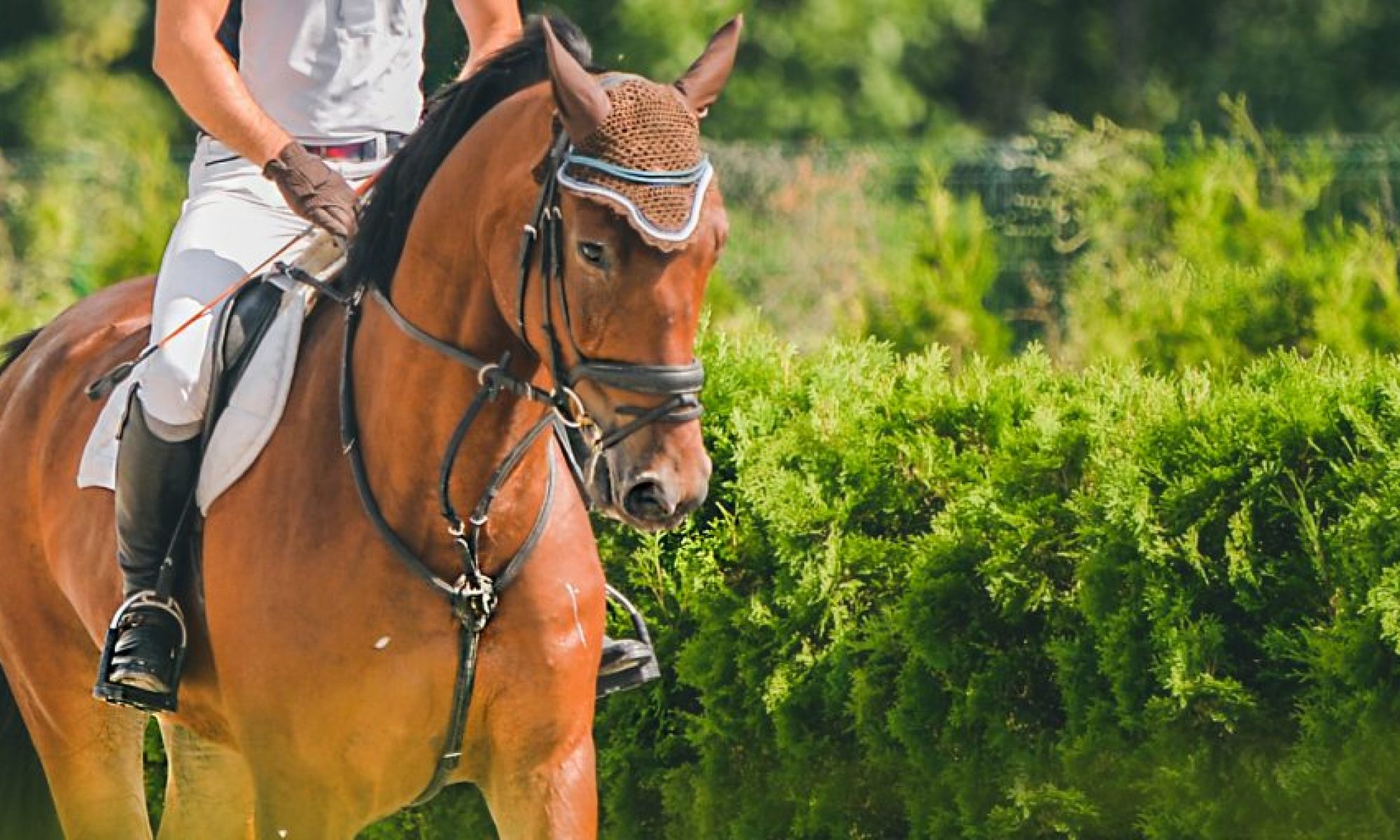
A. Connection, behavioral changes, healing, end-of-life transitions. For animals that are exhibiting a certain behavior — say a dog that always barks when it’s raining — Reiki can help change their behavior without punishing them. Animals cannot voice their discomfort or confusion. They can’t say “I don’t understand why I feel this way.” When a vet tells you your horse has cancer, your horse doesn’t freak out. It doesn’t know it has cancer, it only knows how much pain it’s in. But the horse can feel your stress when you hear that your horse has cancer. Reiki helps keep them calm and in a space that allows their bodies to heal.

The healing benefits of Reiki are not limited to animals. Both the Mayo and Cleveland Clinic incorporate Reiki into their holistic treatment for pain management.

Elaine McCarty lives in Colorado but frequents Parkland at least four times per year, teaching animal Reiki at Three 7s Animal Sanctuary and seeing private clients. If you’re interested in learning more, check out her informative videos on Instagram, YouTube, and Facebook, under the handle “The Animal Reiki Lady.” For additional resources, or to get in touch with McCarty, visit her website at theanimalreikilady.com.

Discovering December sky delights

The longest nights of the year, cooler weather, clearer skies, and a dearth of mosquitoes — what more can a South Florida stargazer ask for?

This month’s constellation challenge for beginners:  Taurus. Taurus is one of the most ancient constellations and one of the most easily recognizable. A V-shaped star cluster called the Hyades forms the face of the bull and a ruddy-hued star called Aldebaran represents his reddish eye. Two long, straight horns complete the picture.

There is a plethora of celestial highlights this month:

  • 4 New Moon. It’s the best time of the month to look for Deep Sky Objects. There will also be a Total Solar Eclipse … if you happen to be visiting Antarctica, the only place on Earth where it will be visible!
  • 6. A thin crescent Moon and Venus should make a gorgeous pair low in the western sky after sunset. This is the first of a triplet of “conjunctions” just a few days apart.
  • 7. The crescent Moon will be seen near Saturn in the early evening sky (though not as close as it was to Venus the previous evening).
  • 8/9. The final conjunction of the set will feature a wider crescent Moon appearing near Jupiter for a couple of nights in a row.
  • 13/14 Geminid Meteor Shower. This is always one of the most consistent and beautiful meteor showers on the calendar (my personal favorite). The best time to catch it this year will be in the predawn skies. A bright Gibbous Moon won’t set until 3 a.m., hampering observations earlier in the evening. But the brightest meteors may be visible all night long. As always, dark skies are far preferable.
  • 18. The James Webb Space Telescope will be launched from French Guiana onboard an Ariane 5 rocket. This mammoth infrared space telescope has been dubbed the “successor to the Hubble” for its importance to astronomy. The launch may not be visible from Florida, but astronomy enthusiasts everywhere will be watching the 7:10 a.m. EST liftoff with great anticipation!
  • 19 — Full Moon. Some early Native American tribes referred to this as the “Cold Moon.”
  • 21 — Winter Solstice. This is the shortest day of the year and the first day of winter in the Northern Hemisphere (and the first day of summer in the Southern Hemisphere).
  • 21. This is the date of the launch of a SpaceX Falcon 9 rocket and Dragon capsule to resupply the International Space Station.
  • 21/22 Ursid Meteor Shower. This isn’t one of the better meteor showers of the year, but it still might be worth a look under dark skies. The meteors will seem to originate from Ursa Minor (which includes the Little Dipper) but can be seen anywhere in the sky.

Enjoy the long nights of December, stargazers!

Look to November for fishing mutton snapper

After a cold front sweeps across South Florida in November, Capt. Abie Raymond knows that it’s time to fish for mutton snapper.

Now is when the tasty snappers gather on reefs in shallow water to take advantage of the reduced water clarity caused by the wind and waves. The limited visibility allows the sharp-eyed muttons to aggressively feed on ballyhoo, a baitfish that is plentiful this time of year.

“When you get a northwest wind, a little cold-front wind, and you get that north swell that creeps down and splits the gap between the coast of Florida and the Bahamas and agitates the bottom, all the way into the first reef especially, you’ll get this milky water in there,” Raymond says. “It’s just sediment in the water, and it makes the ballyhoo so much easier for the muttons to catch. Once that water gets dirty, they can ambush them way easier.

“You can catch muttons decent on the clear days, but when you’re sitting in a boat that’s anchored, it’s so much better when the water’s a little bit dirtier.”

The first step in catching mutton snapper for Raymond, whose Go Hard Fishing (gohardfishing.com and @abie_raymond) runs out of Bill Bird Marina in Miami Beach, is to catch ballyhoo. As he drives his 28-foot C-Hawk center console south from Haulover Inlet to Key Biscayne, he looks for the baitfish jumping out of the water.

When he spots “showering” ballyhoo, he anchors near a patch reef in 20 feet or ties up to a mooring ball on a reef and puts a block of frozen menhaden chum in a fine-mesh chum bag. That way he doesn’t “over-feed” the ballyhoo.

His preferred way to catch ballyhoo is with an 8-pound Shakespeare Ugly Stik rod with a 2500 Penn Spinfisher reel. To the end of the 8-pound monofilament line, he ties a tiny No. 20 gold hook baited with an even tinier piece of frozen shrimp, then he floats it back to the baitfish, which pick the offering off the surface. He uses a de-hooker to drop the ballyhoo into the livewell without touching the baitfish.

With plenty of bait, Raymond anchors near patch reefs in 10 to 30 feet of water from Cape Florida in Key Biscayne to North Key Largo. Then he puts the same ground menhaden he used for the ballyhoo in a chum bag with larger mesh and puts out two ballyhoo, one on each side of the boat.

The baits are hooked on ½- or ¾-ounce jigs. Raymond prefers Hookup Lures jigs — chartreuse is his favorite color, but pink and white also are effective — and says Troll Rite jigs work well. He breaks off the ballyhoo’s bill with an upward snap and runs the jig hook through both of the bait’s lips and through the front of its skull to keep the hook in place.

The ballyhoo are fished on 7-foot, 20-pound Ugly Stik rods with 7500 Penn Spinfisher reels spooled with 20-pound monofilament line and four-foot, 30-pound fluorocarbon leaders. (The dirty water and light mono allow Raymond to use shorter leaders compared with anglers who use 30-foot leaders for wary muttons.) He ties a four-wrap spider hitch in the main line and attaches that to the leader with an eight-wrap no-name or Yucatan knot. He attaches the jigs with an improved clinch knot.

Unless he has patient anglers, Raymond leaves the mutton outfits in the rod-holders.

“The reason I have them sit in the rod-holder is because they need to be real still,” he explains. “Customers have a tendency to want to wind and wind and wind. The rod-holder doesn’t have that tendency.”

Patience also is essential for letting the chum attract the snapper, as long as there is some current. As Raymond notes, “The longer you can sit on one of those patch reefs and wait to get a quality fish or two, the better. If you can allocate about two hours at one patch reef and let that chum really get established and let those fish really settle in and come running from all the other patch reefs, a lot of times you’ll do better. If you don’t have current, you give it half an hour, 40 minutes and you move on to the next one.”

While waiting for the muttons to show up, Raymond has his anglers fish some lighter spinning rods with strips of ballyhoo and drift the baits back in the chum slick for yellowtail snappers. Or he’ll have his anglers fish fresh dead shrimp on the bottom to catch porgies, hogfish, groupers, and yellowtails.

As good as the fishing can be this time of year, Raymond typically has the patch reefs to himself because so few anglers realize that mutton snapper can be caught in such shallow water.

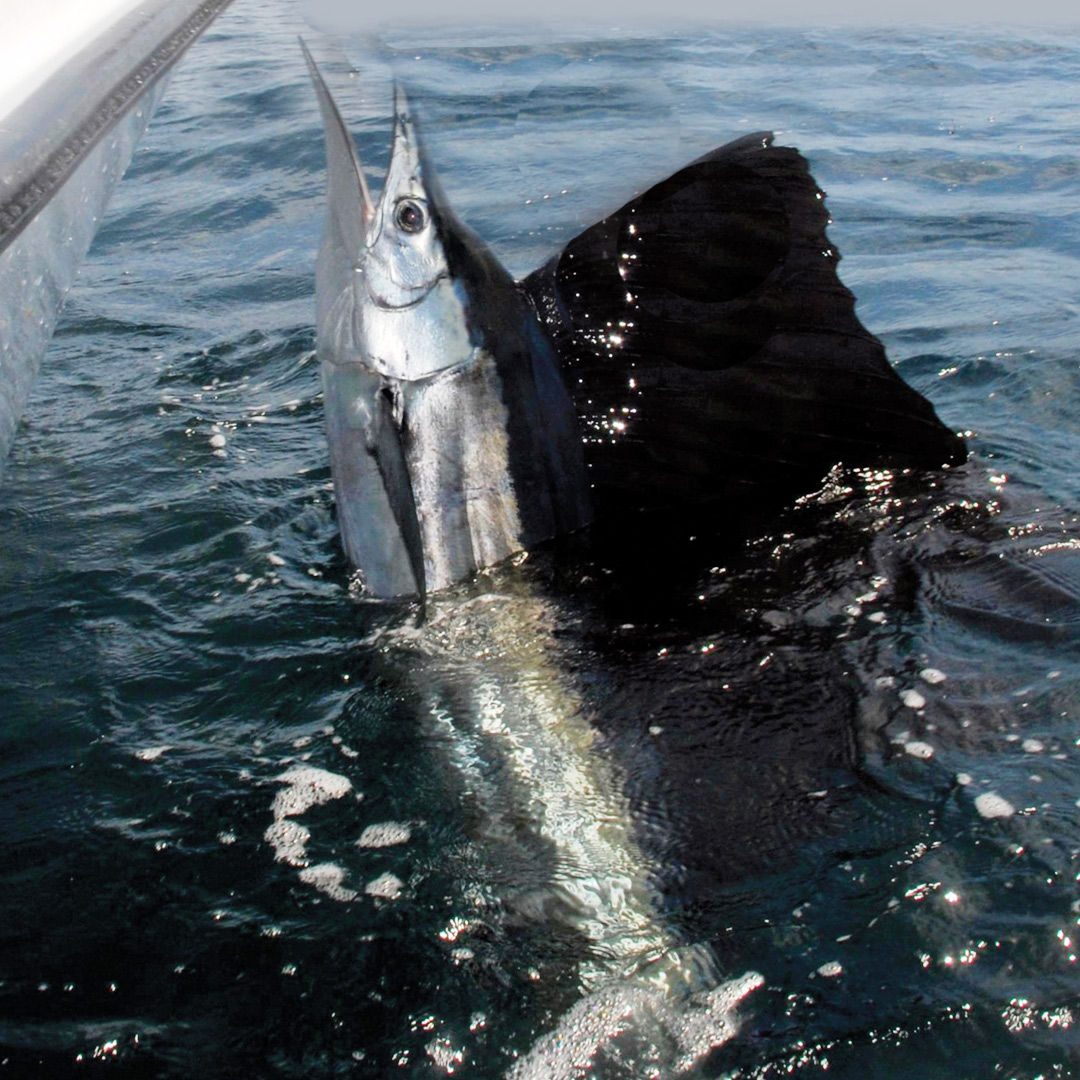
“Most people just run right past that stuff,” says Raymond of when schools of ballyhoo jump out of the water as they’re being chased by the snapper, along with hungry sailfish and dolphin. “It’s usually happening in 20 to 60 feet of water and most people think that’s probably bonitos in there, that’s probably mackerel in there. Not this time of year. Most of the big muttons I caught last year were in less than 70 feet of water.”

So instead of going deep for mutton snappers, follow Raymond’s game plan and you’ll come home with enough fish for several delicious dinners.

Different isn’t a disability – Helping young adults on the spectrum live authentic, independent lives

“We’re people who have goals and feelings and dreams. We can do anything.”—Haley Moss, neurodiversity expert

She was diagnosed with autism at 3 years old, and doctors told Haley Moss’s parents they would be lucky if she were to be able to hold a minimum-wage job or obtain her driver’s license. Not one to accept any limitations placed on her by others, she not only defied but obliterated those expectations.

At 27 years old, Moss has already reached a number of milestones that many people would be grateful to accomplish in a single lifetime. She graduated from the University of Miami School of Law and passed the Florida bar, becoming the first openly autistic attorney in Florida. A published author, Moss has written four books, her latest debuting this month. She’s also an advocate, public speaker, artist, adjunct professor, and leader on disability inclusion, autism, and neurodiversity in the workplace. Her op-eds have been published by NBC News, Fast Company, Insider, Teen Vogue, and The Washington Post.

Oh, and she did also manage to get her driver’s license.

Living on her own, Moss is busy loving life her way. And with her latest book, “The Young Autistic Adult’s Independence Handbook,” she is determined to empower others on the neurodiversity spectrum to do the same — to live fulfilling, independent lives their way.

“I really wanted to make the book as inclusive as possible, realizing that everyone on the spectrum is different,” explains Moss. “It’s not just autism. The neurodiversity spectrum includes people with learning disabilities, ADHD, mental health disabilities, intellectual disabilities, and even acquired differences like dementia, Alzheimer’s, or traumatic brain injuries.”

The inspiration for the book stemmed from the lack of available resources for young adults on the spectrum on transitioning to adulthood. “A lot of us are expected to be perpetual children, or we’re just expected to know how to be adults.”

Moss’s book provides advice and a framework for navigating situations many young adults struggle with that may present unique challenges for those on the spectrum — from relationships to maintaining a household, managing finances, and creating healthy habits.

The book is also a resource that can aid parents in preparing their children for adulthood. “There are all sorts of little things that you may not realize are stressful,” advises Moss, who uses grocery shopping as an example. “You’re not thinking maybe this is hard for them because there are so many options, or the lights are overwhelming, or it’s really crowded, or the carts are clattering. You’re not thinking like that because it’s not your experience. But it might be your child’s experience.”

Complete with advice from experts, personal experience, and practical ways to handle these challenges, the book emphasizes — as does Moss herself — the ability of people on the spectrum to make their own decisions and create their own lives.

“We might need more support in reaching those goals and dreams, but that doesn’t mean that they don’t exist. We all want to be happy. We all want to feel fulfilled. We all want to feel loved. That goes for anybody.”

“The Young Autistic Adult’s Independence Handbook” releases on Nov. 18 and is available for pre-order on Amazon.

Stargazing in the November sky

This month, be sure to check out the bright and beautiful Pleiades Cluster, easily seen with the naked eye and gorgeous through binoculars or small scopes. For newbies to stargazing, try to find the “W” of Cassiopeia or the Great Square of Pegasus — two very easily recognizable “asterisms” in the fall sky. Jupiter and Saturn will still be visible in the evening sky as well. It’s also a great time to view the Andromeda Galaxy through a telescope, which will be highly placed in the evening sky and is the closest large galaxy to our own Milky Way.

Here are some more highlights:

  • 4 — New Moon. This will be the best time of the month to look for Deep Sky Objects.
  • 4/5 — Taurid Meteor Shower. A minor shower, but it coincides with the New Moon, so it might be worth a look, especially late.
  • 5 — Uranus at Opposition. In most backyard telescopes, this distant planet will appear as just a tiny blue dot, but this is the closest approach it will have to Earth this year.
  • 17 — Leonid Meteor Shower. A bright, waxing Gibbous Moon will spoil this popular meteor shower through most of the night, except for a short time in the early morning hours before dawn.
  • 19 — Full Moon. This month’s Full Moon is nicknamed the “Beaver Moon.”
  • 19 — Partial Lunar Eclipse. The Moon will pass into the Earth’s shadow in the early hours of the morning, reaching maximum coverage around 4 a.m.

Possible rocket launches for the month include the launch of the Boeing Starliner capsule on an Atlas V rocket and NASA’s Space Launch System for Artemis I, but no firm dates have been set.

Enjoy your autumn stargazing, friends!

Another recycling day for Coral Springs

As we strong-arm another shipping box to collapse it for recycling each week, you may be surprised that for the city of Coral Springs residences, those boxes are not being recycled.

For many years, recycling benefited our local governments’ coffers, by returning surpluses from selling our recycled material on the wholesale market back to the community.

Until a couple of years ago, our recycled waste was often transported to another country where the sorting and processing occur. According to a Yale School of Environment analysis, China’s plastic imports dropped 99% from 2018 to 2019. Overall, China used to take 60% of recycled material, until the import market was shut down by regulation. This triggered a change in the economics of recycling.

The wholesale price of recycled materials dropped while the industry adjusted. According to Dawn McCormick, from Waste Management Inc. of Florida, the average price of a bale of recycled materials dropped almost 75% in value. This resulted in local contracts for recycling starting to cost cities money to operate, versus generating a profit. Due to the changing economics, many cities in Broward stopped recycling. This included Coral Springs, which saved the taxpayers $300,000.

As the commodity prices increased recently, the cities have revisited the decision. In a recent commission vote, the city of Coral Springs, which had stopped curbside recycling, decided to restart. Which is great news to local recycling advocates.

One metric that many residents may not be aware of is the contamination rate. This is the rate at which non-recyclable waste is included in your recycling. This includes batteries that start fires (like the one in a Pembroke Pines facility), plastic films that clog up recycling sorting machines, plastic toys/furniture, clothing, and more. In Broward County, the rate is 25-40%, and the latest Coral Springs rate before the program was halted was 36.5%!

This high contamination rate is due to a phenomenon referred to as “wish-cycling.” According to McCormick, a lot of folks hope that more things can be curbside recycled, which increases the cost to process it and decreases the value. She said the mantra for successful recycling is, “When in doubt, throw it out (in the garbage).” This will ensure that we get the most out of recycling and help fund our local city programs.

So, let’s all do our part and make our local recycling programs successful. Remember to sort carefully, and decrease that contamination rate.

Who wants to go vampire hunting?

So Hallowe’en is around the corner and you’ve decided to fight evil this year by being a vampire hunter. Where do you start?

John Loper of Antiques & More in Coral Springs had an idea rolling around in his head in 2016, but it wasn’t until COVID-19 showed up that he was able to really start digging into what a vampire hunting kit would require, how to make it with high-quality antiques and reproductions and look authentic.

Fast forward to 2021, and Loper has put together many kits of varying sizes containing everything one might think of, and some surprises too! He took one of his works and sold it through Sotheby’s Auction House in New York. Other interested parties are the Royal Armouries in Leeds and Ripley’s Believe It or Not! Pictured is one of his larger kits, which is made of a velvet-lined wooden chest with a padlock and key, containing two removable gilt metal sconces — in case you are hunting at night, obviously.

Also included are two replica pistols, a pocket Bible, a strand of rosary beads, six wooden stakes and a mallet, seven crucifixes including one with a carved bone handle, one silvered pendant, and 33 glass vials. Everything a want-to-be vampire hunter will need. The vials could be used for holy water, or garlic (Does garlic salt count? Do you want to take the chance?), or any number of potions that the many vampire legends claim will drive out, stun, injure, or perhaps even kill one of these children of the night.

Other kits contain mirrors, 19th-century documents from funeral parlors, and more curios and religious artifacts. So if you want to be the Winchester brothers (from CW’s “Supernatural”) this Halloween, you know where to get the gear.


Stocking up on fine red wines for winter

Don’t look now, but winter is approaching. It may not seem that way here in South Florida right now, but there is nothing stopping it and winter will be here whether we want it or not. Fortunately or unfortunately, depending on your point of view, the only way we know that winter has arrived here is by the plethora of out-of-state license plates on the automobiles of the “snowbirds,” the change in the color of women’s shoes from white to black or brown, and the desire to replace the white wines of summer with red.

While the red wines are usually more costly than the white wines, as it is said, “You get what you pay for.” My advice is to stock up on red wines now before the winter price increases or any other maladies that may befall Northern California.

Daou Family 2019 Pessimist ($30). A strange name but not a strange wine. The back label explains that it is a wine “that never disappoints.” That motto says a great deal, but does its name meet its character and quality? As a wine columnist, being a perpetual pessimist goes with the job, but this wine made that job easy: It is excellent. This wine can easily change a hard-core pessimist into a pussycat optimist.

At the first sip, you know that you are in for something very interesting, and very enjoyable. Everything about this wine is concentrated and very obvious. This dark ruby red, full-bodied wine displays the traditional cabernet aromas of cassis, plum, and oak with a hint of clove. Black cherry and cassis, in glorious amounts, firmly reside in the flavor along with a velvety mouthfeel, a sure sign of a better cab — and that is exactly what this wine is, a better cab and a fine starting place if you are a cabernet sauvignon newcomer.

Daou Family 2018 Bodyguard ($50). Since I grew up in Brooklyn, New York, to me a bodyguard is a big, burly guy with a broken nose and cauliflower ears who makes offers that “it’s best not to refuse.” Therefore, a wine so named definitely intrigued me. I will start by saying that no threats, bullying, or strong-arm tactics are needed for this wine, as it will capture and hold you with the first sip.

This wine is a blend of often not-seen varieties: 59% petite verdot and 41% petite sirah. The aroma is a fruit basket alive with the scents of blackberry, raspberry, pomegranate, chocolate, licorice, and cocoa. These fruit aromas and even more carry over to the flavor and then explode in the finish. Words cannot do justice to this wine, and I believe that it is one of the most interesting red wines that I have sampled in a long time. And remember, this wine was made by “the family.”

Hamel Family 2018 Isthmus ($90). The Hamel family, with all of their red wine experience, do full justice to the cabernet sauvignon grapes and from them have produced a very fine and, if I may, an exceptional example of the variety. The wine is full-bodied with a deep, almost violet color. This very dark wine is a true child of California, stressing fruit flavors over the usually austere and stiff character of the grape variety.

The aroma showcases black fruits, cedar spice, and vanilla. These carry over to the flavor, where they mingle with a cherry and plum element and the very discernable flavors of chocolate mint. This wine has a wonderful softness about it and reflects many of the flavors and aromas that are found only in well-aged wines. This is a wine that I believe rides the fine line between a California cabernet sauvignon and a French Bordeaux, and it is a pleasure to drink.

Eczema and food allergies: what parents need to know

Eczema is a dry rash and skin condition in any stage of life, but it can be very common in infancy. Also known as atopic dermatitis, its root cause is unknown, but those with at least one first-degree relative with eczema, asthma, or hay fever are predisposed to having drier skin.

Wendy Sue Swanson, MD, MBE, FAAP, a pediatric specialist and chief medical officer at SpoonfulONE, says one in five children have dry skin classified as eczema. It can appear as small, dry flakes or develop into cracks in the skin that may lead to bleeding. Pediatricians call it the “itch that rashes,” and if unchecked, eczema can be persistent, recurring, and long-lasting.

When the skin breaks down, cracks and fissures form, causing the body to become an entry point that consumes everything in the environment. “The skin is the largest organ in the body and serves as protection from the outside world,” says Dr. Swanson. “What we know from data over the last 20 years is that when an infant is first introduced to food through the skin, the immune system reacts to it as an irritant, versus when the child begins to eat solid foods at the four-to-six-month mark.” By that time, the immune system is more comfortable and recognizes harmful substances, but due to cracks, rashes, and the intake of food through the skin during the early months of infancy, babies are prone to eczema.

Food Diversity

“A child with eczema is 600 times more likely to develop a lifelong food allergy,” says Swanson. “Studies show that the tummy is dominant to the skin, so that is why it is so important to introduce a diversity of foods as early and as often as possible to help develop the immune system.”

Swanson continues, “When solid foods are consumed through the stomach and not the skin, the immune system becomes more comfortable, normalizing intake rather than overreacting to it. The immune system is unique in that it needs to be ‘taught’ protection, and that only happens with food diversity.”

The skin provides security from outside elements, but through food diversity, the immune system “learns” how to react and protect. “How babies are fed early in life can be life-changing, so a diversity of foods is highly recommended,” Swanson commented. “Introducing new foods is not the risk, it’s the delay in introducing the foods that is the risk.”

According to Swanson, 8% of American children have a food allergy, which equals six million kids, or two in every classroom. A diverse diet in infancy protects against the development of allergies. “The more diverse a diet is at infancy through toddlerhood, the less likely he or she will develop food allergies,” says Swanson.

“Peanuts, eggs, and milk are the most common allergens in infancy, and parents need to understand they can help their child avoid a food allergy by getting proper foods and nutrients into the stomach to refortify the skin’s barrier.”

Establishing good food diversity is essential to a baby’s well-being. Formulas are not recommended after 12 months, but breastfeeding and/or formula can be sufficient up to the four-to-six-month period. Usually, from six to 12 months, a baby should become accustomed to a standard solid diet.

Breastfeeding

If a mother breastfeeds her baby exclusively during the first three months, the chances of the child getting a food allergy will not decrease, but breastfeeding does decrease the risk of eczema because the nutrients in a mother’s milk provide a baby’s skin with an extra level of protection. Developing a firm, protective skin barrier is important to deter eczema, and this can be done if parents recognize the importance of various food groups.


Solid Food Diet

The best way to get proteins and nutrients into a baby is through the stomach. “All the things Mommy consumes goes into her breast milk, but not all of it contains the necessary proteins needed to fortify a baby’s immune system,” Swanson commented. “Breastfeeding is great, and it can reduce the risk of eczema, but the USDA has made it clear that by four to six months, parents should be introducing allergens such as fish, shellfish, peanuts, wheat, eggs, and so forth into a baby’s diet.”

During pregnancy, a woman will eat many different types of foods, and the diversity of what she eats is what feeds her baby. A diverse diet of foods introduces more allergens and that is important in a baby’s early life — particularly if a child has eczema. The more proteins in the body, the more stabilized and healthier the baby will be.

The Inca civilization rises again in Boca Raton

In a coup for the Boca Raton Museum of Art and South Florida, the Boca museum will be the first stop of a world tour of the exhibit “Machu Picchu and the Golden Empires of Peru,” opening to the public on Oct. 16.

Presented by Cityneon with support from the Government of Peru and the Peruvian Ministry of Culture, and in partnership with Inkaterra Asociación, the collection is on loan from Museo Larco in Lima, Peru, and Museo de Sitio Manuel Chávez Ballón in Aguas Calientes, Peru.

It is the first time many of these objects have been seen outside of Peru.

“As we get closer to launching the premiere engagement of this exhibit, our team is truly excited to share this world-class production with South Floridians,” said Anthony Tann, president of World Heritage Exhibitions.

The immersive and interactive exhibit features the history, artifacts, and culture of ancient Andean cultures and the Inca people, and many of the 192 priceless artifacts on display are from royal tombs, including spectacular objects that belonged to noble Andean lords, such as a fully intact gold attire of a Chimú emperor dating back to 1300 A.D.

In part of the exhibit, visitors will be guided by a mythical Andean hero, Ai Apaec, and gain an understanding of the forces of nature that led to his death and subsequent rebirth.

Historians consider the ancient Andean civilizations of Peru as one of the six “pristine” cradles of civilization in the world, on par with those in Egypt, Mesopotamia, the Indus Valley (present-day Pakistan and Afghanistan), China, and Mexico.

Rivaled only by ancient Egypt in longevity and by the Roman Empire in engineering, Andean societies dominated a substantial segment of South America for more than 3,000 years, straight through the reign of the Incan Empire.

The Inca civilization, the last and largest empire in the pre-Colombian Americas, flourished without written language, the wheel, money, steel, iron, or draft animals, and it was the last great society to emerge in that era.

The exhibit, which highlights both the Incan cultures (1438–1533) and earlier Andean empires dating back thousands of years to the Chavín empire in 900 BCE, will inhabit two floors of the museum and feature an immersive, virtual reality experience designed to recreate the ancient spiritual mountaintop empires that existed 7,000 feet up in the clouds of the Andean Mountains.

Subsequent to the Chavín empire, five additional empires flourished in Peru, ending in 1533 with the Incas’ reign. The Incas, who ruled for 100 years, were the last chapter in thousands of years of ancient Andean civilizations.

Nestled in a cloud forest, the Inca Empire’s enduring symbol of architectural prowess is protected by twin sacred mountaintops and is invisible from below. For the exhibit, the ancient city has been recreated complete with sounds of jaguars and macaws and other sounds of the Amazon’s rainforest.

In 2020, during the unprecedented closure of the site during the COVID-19 pandemic, the first-ever virtual reality expedition of Machu Picchu was shot using state-of-the-art drone virtual reality technology.

Titled “Machu Picchu and the Spirit of the Condor,” the virtual reality experience features the grand Inca emperor Pachacuti, who infuses viewers with the spirit of the condor and flies with them across the ancient landscape.

Viewers will encounter the city’s ancient inhabitants and experience some of its most iconic locations, from the Temple of the Sun to the heights of Huayna Picchu.

“It is an honor to be the home of the world premiere of ‘Machu Picchu and the Golden Empires of Peru’ and a privilege to work with such esteemed partners to bring this exhibition to our community,” said Irvin Lippman, executive director of the Boca Raton Museum of Art at the exhibit announcement last May.

“We look forward to introducing South Florida and the world to the wonders of Machu Picchu and the power and beauty of the Inca civilization for what promises to be a memorable exhibit,” he said.

October brings opportunity to fish the mullet run

People who complain that South Florida doesn’t have a change of seasons don’t fish the annual fall mullet run.

For local anglers, nothing signals that fall has arrived like the mullet run. That’s when schools of silver and black mullet migrate south along the Atlantic coast while being feasted on by a host of predators such as snook, tarpon, jacks, sharks, Spanish mackerel, and bluefish.

October is the prime time to fish the mullet run, both offshore and inshore. One of the attractions of the run is that anglers never know what they might catch from one cast to the next. Another attraction is that they don’t need live mullet to catch gamefish. Half of a mullet and a variety of lures such as topwater plugs and soft-plastic baitfish and shrimp imitations can be just as, if not more, effective.

Schools of mullet can appear suddenly and then disappear. Sometimes they linger inshore for several days before moving on. As Capt. Chris Murray of Stuart, who fishes offshore as well as in the Indian and St. Lucie rivers, said, “They come in in droves, and then they’ll pause and then there’ll be another drove.”

“They could be here for several weeks or a month,” added Capt. Mark Nichols of Stuart. “It just depends on whether the weather pushes them south.”

Murray usually cast-nets several dozen mullet wherever he sees the baitfish pushing water. After catching bait, he recommended that you cruise around until you spot another mullet school, then closely watch to see what the baitfish are doing and what’s feeding on them.

Tarpon often jump completely out of the water, then come crashing back into the middle of the school. Snook like to hang below the school and suck in mullet with an audible pop. Jacks will charge into the school and send mullet flying.

Murray likes to fish live mullet on a 7-foot light- to medium-action spinning rod with a 4000-size reel spooled with 20-pound braided line. He usually attaches a 40-pound fluorocarbon leader tied to a 3/0 Owner Mutu Light circle hook. He clips an indicator float to the leader, which allows him and his anglers to keep track of the bait.

“I vary my leaders. I like to actually start lighter,” Murray said. “Normally I rig up two that are 25-pound, two that are 30, two that are 40. When I know what kind of fish are there and what kind of heat I have to put on them, normally 40. If they’re small snook, 25 or 30 is fine.”

When drifting or slow-trolling, he hooks a mullet through the upper lip and has his angler cast it to the edge of a submerged oyster bar, which snook, tarpon, and other species use as ambush spots. Murray then has the angler open the bail of the reel and slowly let out the line.

Fishing in the St. Lucie River with Murray and Anthony Javarone, it wasn’t long before our mullet got nervous, then violent splashes appeared by the baits. Whatever went after my mullet missed, but a big fish nailed Javarone’s bait.

Following Murray’s instruction to let the fish swim for a few seconds before closing the bail and reeling the line tight, Javarone was hooked up to what turned out to be a 15-pound jack. The fish took Javarone from one end of Murray’s bay boat to the other before it finally tired. With a gloved hand, Murray lifted the jack out of the water by the tail, let Javarone pose with it for some photos, then released it to resume its mullet-marauding ways.

Big jacks also feed on schools of mullet traveling along the beaches and in and out of inlets. Tarpon and Spanish mackerel will crash into a mullet school, then they and snook, bluefish, and jacks lurking underneath gobble up the stunned and maimed mullet. That’s when fishing a mullet head on the bottom can be extremely effective.

Fishing around the rocks at the mouth of St. Lucie Inlet, Capt. Greg Snyder of Stuart uses a DOA plastic shrimp to catch snook ranging from under the minimum size limit of 28 inches to over the maximum size limit of 32 inches. He fishes the shrimp on a spinning outfit with 30-pound braided line and a 40-pound fluorocarbon leader.

“They use the rocks as a trap,” said Snyder of the snook. “The bait hits the rocks and gets confused and the snook take advantage of it.”

The key is to let the shrimp drift with the current and to be aware of any taps or hesitation in the drift, because that means a snook has taken the lure.

“Let the tide do the work and keep in contact with the shrimp,” Snyder said, “because you need to be able to set the hook when they eat.”

Why would a snook eat a shrimp when mullet are abundant? I posed that question to Nichols, the founder of DOA Lures.

“The first of the mullet run, the fish are all over the mullet,” Nichols said. “But after three weeks of eating mullet, they’re ready for something different.

“I think it’s just easy for them to eat a shrimp,” he added. “They have to work hard to catch a mullet. It doesn’t take anything for them to catch a shrimp.”

And when the mullet are running, it usually doesn’t take anything for anglers to catch a variety of gamefish.

This school year, the pressure is on

Many students are anxious this school year, and the COVID situation makes things even more tense. A lot of students were not in school last year and did classes virtually. This school year, they wonder: Mask or no mask? Is it safe? Is it uncomfortable?

In addition, there are the usual anxieties: Will my best friend still want to be my friend? Will I have nice teachers? Will I remember how to multiply fractions or read articles in Spanish?

If we adults feel stress and strain, so do young people. As a teacher and counselor, even before COVID, the number of tweens and teens with migraines, irritable bowel syndrome, and other stress-related symptoms disheartened me. One teen had hands that trembled as if she had Parkinson’s. Another developed sensitivity to socks and underwear and couldn’t attend school. The parents took her to an allergist, who determined there were no allergies, but rather an emotional reaction to school.

Students often told me they were terrified of getting a “B” as they were supposed to bring home “A”s. There would be severe repercussions if they brought home anything less. This was especially true with gifted students. And there were parents who would email within minutes of any quiz posted if there were a grade lower than expected.

Young people are especially sensitive. They will be devastated if their best friend makes friends with a new student, or someone decides not to speak to them for a day. As parents, there are things we can do to make life easier for our children and alleviate some of their angst.

Do not minimize their anxiety. Young people cringe at the thought “these are the best years of your life.” No, they are not. Any adult who believes middle school is the best of times has a poor memory. You are too short or too tall. Your skin breaks out. You are overweight and never get picked for teams. You are the only girl who doesn’t need a bra. You hate your braces. Your nose has suddenly grown. Your once-pretty hair is now frizzy. You question your gender identity. Your family doesn’t have the means to get you the latest styles. You cannot comprehend chemistry.

To be told that these are the best of times makes most teens think, “Please, that can’t be true.” Many of these young people are feeling unhappy, frightened, and unworthy. To be told that they should be happy, should appreciate being young and “free,” makes them feel angry and more anxious: “What is wrong with me?”

Parents can do things to help. First, find where students can get encouragement. For example, a student is dyslexic and feels bad. His handwriting is illegible and his reading needs improvement. Get him help with the reading, either an after-school program, a tutor, or with programs he can work on, like Study Island. Reading is vital for all subjects, but don’t overdo it. Half an hour a day can help. Don’t do more or they will resent it. If you use a tutor, make sure they are not doing the student’s work, but showing how to do the work.

Equally important: Find an activity where the student gets “positive strokes,” like sports, music, karate, art, astronomy, or chess. They gain confidence; there is something they are good at. They will make like-minded friends. This is a win-win situation, especially important for introverts.

Be warned, however, that often young people will try several things before finding one that fits. Don’t see this as them “quitting,” but rather trying things out. That is normal, and hopefully they will find something and stick with it.

One young man was so shy he didn’t speak with anyone in class. His breakthrough came when he mentioned he had six dogs. A club I sponsored, “Builders’ Club,” raised money for charities. He was encouraged to join. He raised money for the Humane Society and in this endeavor had to speak to people. He became president of the club and came out of his shell. He is now in college and is outgoing and friendly.

The greatest gift a parent can give a child having any type of difficulties, academic or social, is to listen and commiserate. Do not dismiss their unhappiness. Let them know you are there for them. But don’t immediately try to fix it. Instead, when they come home with a problem or a situation, listen. When they have finished expressing their feelings, and you have allowed them to vent without jumping in, ask, “What do you think you can do about this?” Allow them to think aloud and present various scenarios. Ask them “Which idea sounds best to you?” and “If that doesn’t work, what else might you do?” This is powerful. It allows people to “try on” different approaches and gives them the correct idea: They have the means to fix things, to meet life’s challenges.

To do this means that time is set aside in your day to allow them to share with you while you listen with undivided attention. In our house, it was dinner. No matter what, we ate as a family and heard the events of the day. “What went well? Was there a problem?” “What did you learn today?” “What happened that made you happy?” Perhaps cook or do the dishes together.

I used to pick up my son from school. On the walk home, our time to talk was stopping for pizza or a treat. With my daughter, Saturday mornings were our “girl time.” We had brunch out and she shared stories about friends, gymnastic class, and why she loved her music teacher.

There will be times when your child might tell you, “My teacher is still not calling on me,” “Johnny is bullying me,” or “Sandra called me fat,” which may require parent intervention. But these should be the rare times.

For most incidents and daily angst, encourage them to think through ways to alleviate situations. This is a great practice not just for dealing with school, but for dealing with life.