March Issue 2017
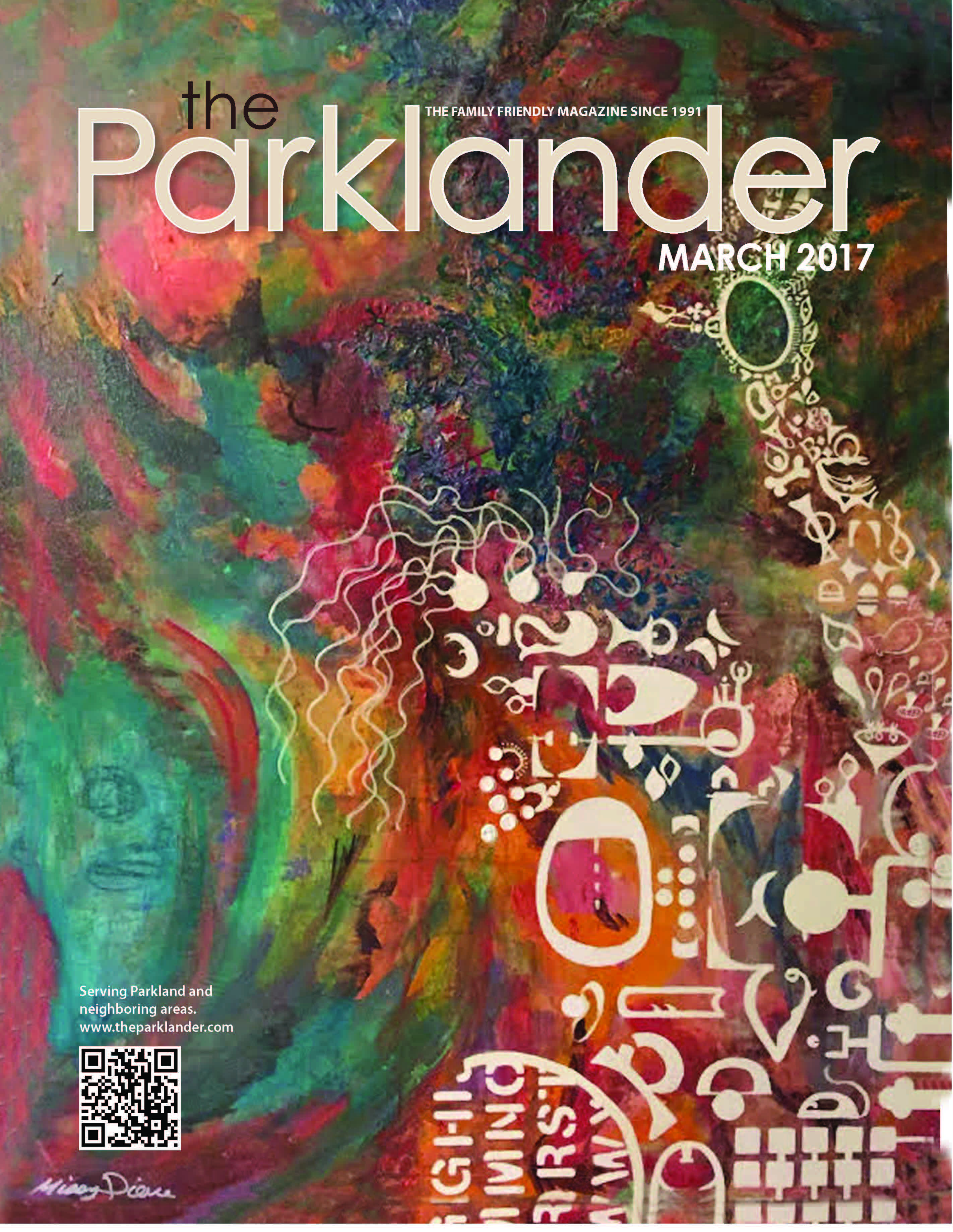
[YUMPU epaper_id=57423436 width=”512″ height=”384″]

The Parklander Magazine – Connecting you to our community
The family friendly magazine since 1991
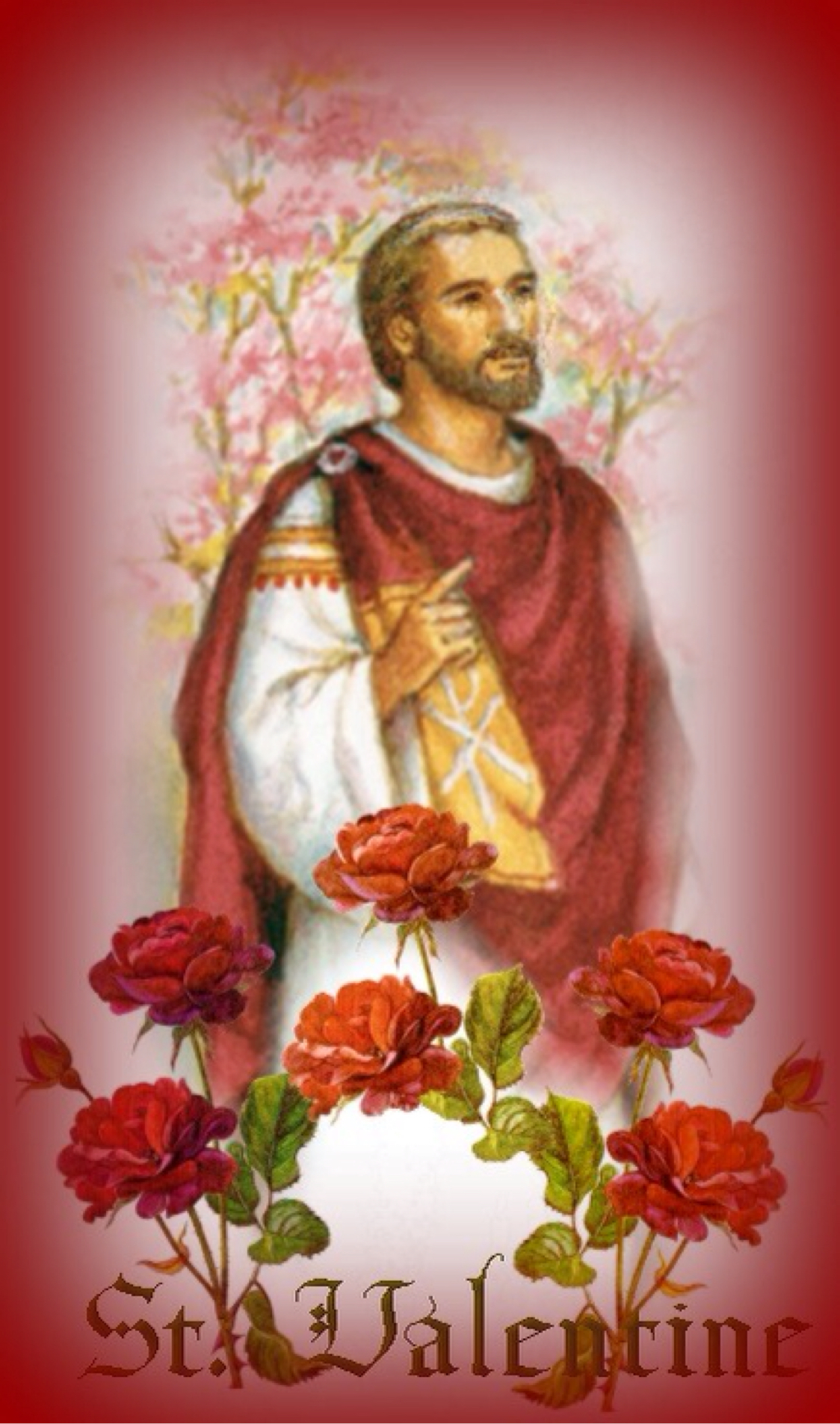
Valentine’s Day is usually associated with roses, the color red, chocolate, cards, heart shapes, and their associated symbol – love.
But little verifiable facts are known about the history behind Valentine’s Day and its namesake. “Somewhere along the way, Valentine’s Day came to represent romance,” according to americaslibrary.gov.
“Saint Valentine” started the celebration of love that falls every February. Valentine, however, might refer to more than one person. According to history.com, the Catholic Church recognizes no less than three saints named Valentine. Church officials martyred each of them.
One legend suggests Valentine was a priest who served during the third century in Rome. At that time, Emperor Claudius II decided that single men were better soldiers than those married and with families. Therefore, Claudius forbade marriage for young men. Valentine refused to obey Claudius’ decree; he continued performing marriages in secret, but was caught. Claudius sentenced Valentine to death.
Others suggest that Valentine was killed for trying to help Christians escape harsh Roman prisons, where authorities beat and tortured them. “According to history.com an imprisoned Valentine actually sent the first ‘valentine’ greeting himself after he fell in love with a young girl – possibly his jailor’s daughter – who visited him during his confinement. Before his death, it is alleged that he wrote her a letter signed “From your Valentine.”
Legends may differ, but the stories share at least one commonality: they stress Valentine’s appeal as a sympathetic, heroic and most importantly romantic figure. According to history.com “By the Middle Ages, Valentine would become one of the most popular saints in England and France.”
Why is love in the air in February, as opposed to the other 11 months? It depends who you ask. Some maintain Valentine’s Day falls in mid-February to commemorate the anniversary of Valentine’s death or burial, which likely took place about the year 270 A.D. Others believe the celebration falls in the middle of February to “Christianize” the pagan celebration of Lupercalia. This was a fertility festival to honor Faunus, the Roman god of agriculture. The festival was also dedicated to the Roman founders Romulus and Remus.
During the beginning of Christianity’s rise, Lupercalia continued, but was deemed “un-Christian” by the end of the fifth century. That is when Pope Gelasius declared February 14 Valentine’s Day. But the celebration wouldn’t become synonymous with love until the Middle Ages. During that time period, the French and English generally believed February 14 was the start of birds’ mating season. This reinforced the idea that the day should be set aside for romance.
It wasn’t until after 1400 that written Valentines began to appear. The oldest known valentine still exists in the form of a poem penned in 1415 by Charles, Duke of Orléans. The letter was intended for his wife while he was imprisoned in the Tower of London after his capture at a battle. Americans likely started exchanging hand-made valentines during the early 1700s.
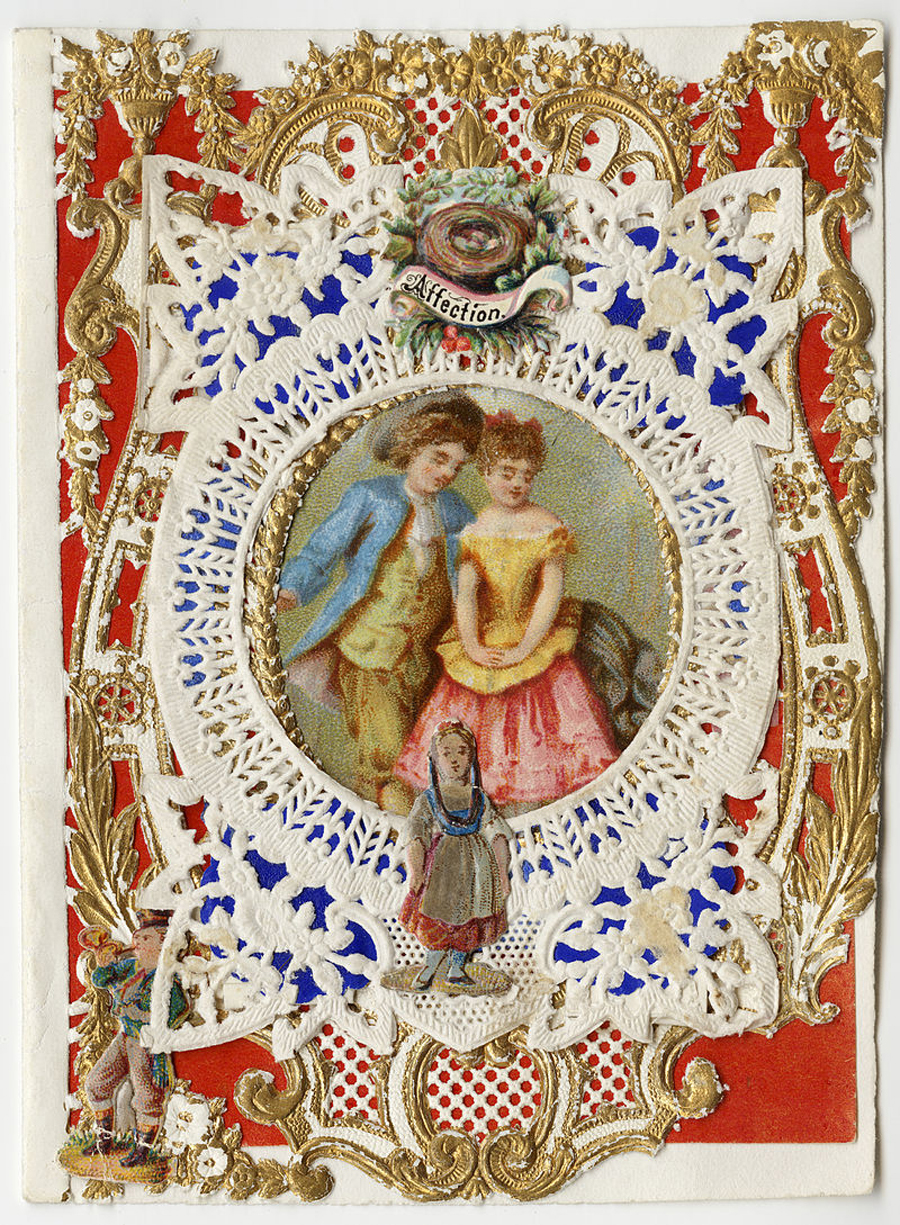
During the 1840s, Esther A. Howland began selling the first mass-produced valentines in America. She became known as the “Mother of the Valentine” and made “elaborate creations with real lace, ribbons and colorful pictures known as ‘scrap.”
According to the Greeting Card Association, Americans send roughly one billion Valentine’s Day cards each year. That makes the celebration the second largest card-sending holiday of the year behind only Christmas, when about 2.6 billion cards are sent.
If you’re hosting a Superbowl party this month, you know how much work goes into the preparation process. If the stress starts to feel overwhelming, just be thankful you’re not responsible for throwing a week-long Superbowl party for all South Florida that will be scrutinized by economic, sports and pop culture analysts and historians.
That’s the weight on the shoulders of Mike Zimmer, president of the Miami Super Bowl Host Committee. After a 10-year drought, South Florida will host Superbowl LIV (54) in 2020.
“Ninety-nine percent of residents in Miami-Dade, Broward, and Palm Beach counties won’t go to the game, so my primary goal is to bring the game to them,” Zimmer said. “We’ll hold events in their neighborhoods so they have the opportunity to celebrate with the players, NFL Hall of Famers, and team mascots. Every person in South Florida will have the opportunity to touch the Superbowl.”
Cities that want to enter the Super Bowl bid process must form a host committee to lead the presentation. After selecting Miami for Superbowl LIV, the committee – not the Miami Dolphins or any government organizations – enters a contract with the NFL and serves as the primary liaison between the league and the entire tri-county community.
Zimmer had the same position from 2008 to 2011, where he was directly responsible for overseeing and coordinating the daily operations and preparations for Super Bowl XLIV and the NFL’s Pro Bowl in 2010. That game was the 10th Miami hosted. When the ‘Big Game’ returns in 2020, it will make history for both the league and South Florida.
Although it will be the 54th Superbowl, 2020 will mark the NFL’s Centennial anniversary (dating back before the merger with the AFL). Miami will be the host city for a record-setting 11th time, breaking the current tie with New Orleans for the most ever. Both are significant milestones to add to the long sports and pop culture timelines that tie the NFL and South Florida together.
Miami played host to four of the first 10 Super Bowls, beginning in 1968 with Superbowl II. The Green Bay Packers beat the Oakland (later Los Angeles, then Oakland again, and soon-to-be Las Vegas) Raiders 33-14. That game was Vince Lombardi’s final game as the Packers’ head coach. The Superbowl trophy carries Lombardi’s name and he remains the icon that all other coaching greats like Shula, Knoll, Landry, Gibbs, Parcells, and Belichick are compared to.
The Pittsburgh Steelers and Dallas Cowboys teams of the 1970s, led by quarterbacks Terry Bradshaw and Roger Staubach, clashed in Superbowl X and XIII. The Steelers won both by a total of eight points.
The San Francisco 49ers quarterback Joe Montana helped cement his own Hall of Fame legacy in 1989 by leading the game-winning drive against the Cincinnati Bengals from his own eight-yard line with just over three minutes to play. The famous Montana to John Taylor touchdown pass with only with 34 seconds left on the clock remains a staple of any Superbowl all-time highlights reel.
Speaking of great quarterbacks, Steve Young, John Elway, Peyton Manning, and Drew Brees all won their first Super Bowls in Miami. Yet none of these games may be as famous as “The Guarantee” game – Superbowl III in 1969 between the Baltimore Colts and New York Jets.
Jets quarterback Joe Namath guaranteed his team would win the game in the days leading up to Superbowl Sunday. It was a seemingly ridiculous, arrogant statement to make considering the Colts were the heavy favorite and teams from the NFL had won the previous two Super Bowls against teams from the old AFL. But Namath led his team to a 16-7 victory in a game that not only made football history but also brought the NFL into popular culture.
Namath was as much a cultural icon as a great football player, lounging poolside before the game and making public appearances in full-length fur coats. Can you imagine how large his Broadway Joe image would have become if he had access to today’s social media platforms like Twitter, Facebook, and Instagram? He’d be bigger than the Kardashians.
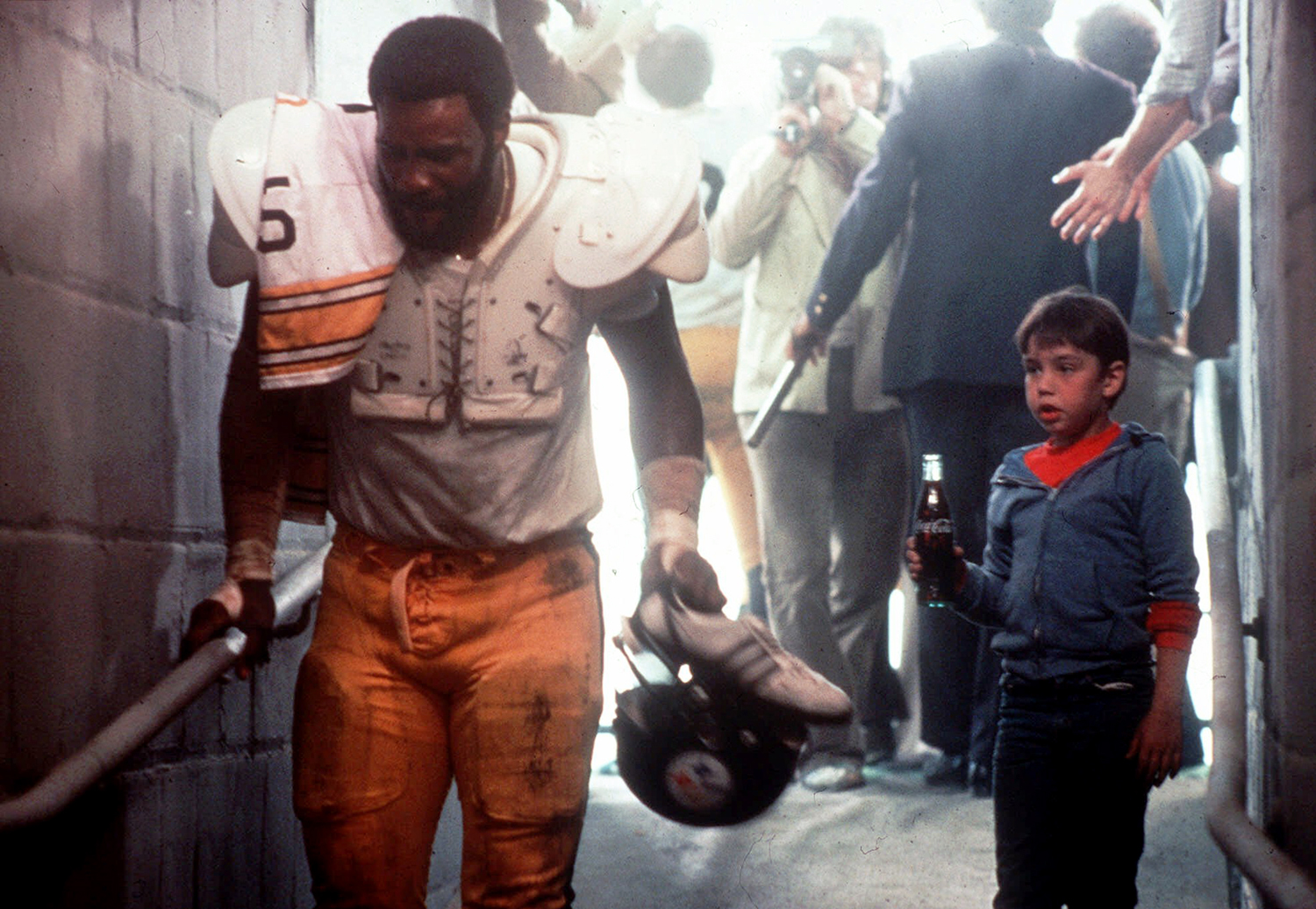
Remember the famous Coca-Cola commercial that first aired during Superbowl XIII in 1979 featuring the Pittsburgh Steelers’ Mean Joe Greene tossing a little boy his jersey? The halftime show for Superbowl XXIII in 1989 was broadcast in 3-D, including the first-ever 3D TV commercial for Diet Coke.
There have been some amazing Superbowl halftime shows featuring legendary artists such as Bruce Springsteen, The Who, and Beyoncé. Yet they were all eclipsed by Prince’s performance in Miami during Superbowl XLI in 2007. There was a steady rainstorm through the first half, and the downpour threatened to ruin the halftime show. But when a Superbowl official alerted Prince he’d have to sing and play his electric guitar, Rolling Stone magazine reports Prince simply asked, “can you make it rain harder?”
It may not be possible to make the Superbowl itself any bigger than it has become. Thirty-second TV commercial spots go for millions of dollars, and celebrities from all over the world will attend the game. So Zimmer and the Miami Superbowl Host Committee are going to make the days leading up to Superbowl Sunday bigger than ever. The centerpiece of events and celebrations that will take place across Miami-Dade, Broward, and Palm Beach counties will be the transformation of downtown Miami into Super Bowl Park.
“We’re going to take over 43 acres across 14 city blocks stretching between Bayfront Park and Museum Park,” Zimmer said. “Superbowl Park will be on a scale never done before. We’re partnering with the NFL, the Pro Football Hall of Fame, the Dolphins and countless other organizations to put on exhibitions, concerts, and activities for kids. Basically, we’re turning downtown into an enormous, family friendly tailgate party.”
Although the game is three years away, Zimmer and his team are already under a time crunch. The priorities are creating the sales and marketing teams that will raise the more than $20 million dollars necessary to put on such a massive undertaking.
Estimates for the economic impact to South Florida are expected to exceed $200 million. That does not include the publicity and future tourism dollars the event will generate.
“When you consider the media exposure our communities, businesses, and tourism destinations will receive for one week, you just can’t buy that kind of publicity,” Zimmer said.
The only thing that would make it crazier for the South Florida native? The Miami Dolphins becoming the first team to play for the Superbowl trophy in its hometown.
“That would be off the chart,” Zimmer said. “We’d have the combination of the NFL’s 100th anniversary and the team’s own rich history. I’m a big Dolphins fan, so I don’t fear that scenario. I’ll take the Dolphins in the Superbowl anytime, anywhere.”
PHOTOS:
SB3Namath: Joe Namath plays Super Bowl III.
Meanjoegreene: Diet Coke commercial featuring Mean Joe Greene.
Prince; Prince playing the halftime show in the rain at Superbowl XLI.
Women’s Health
As a practicing gynecologist in Coral Springs for many years, and as a menopause specialist (NAMS Menopause Practitioner), one of the most common conditions I diagnose and treat in the 50 to 90 age group is vulvovaginal atrophy, now known in more current terminology as Genitourinary Syndrome of Menopause. This condition encompasses a multitude of symptoms which are disruptive to menopausal women’s quality of life and relationships. The symptoms include vaginal dryness, irritation, itching, burning, and discomfort with intercourse. Urinary symptoms can occur as well, including discomfort during urination, urinary frequency and urgency, and some types of incontinence.
How do we treat women who have one or more of these symptoms? Many women will initially utilize over-the-counter lubricants and moisturizers. In most cases these are only minimally effective. Local vaginal estrogen therapies are available and are effective for some women. Many women fail to adhere to the regimen of inserting creams or tablets, and some are concerned about using a hormonal therapy, although the risks are minimal with local therapies. However many women who have had breast or uterine cancer are cautioned not to use estrogen therapy. There is an oral medication available for these symptoms which is effective for some women, but does have some minimal risks.
Enter a new player to the field of treating symptomatic menopausal women. There is an exciting new treatment available for the restoration of vaginal health. This therapy is known as the MonaLisa Touch laser procedure. This CO2 laser technology was developed in Europe where many women have been successfully treated. The procedure has been embraced by many female pelvic health experts in the United States. It has been performed in the U.S. for two years and is cleared by the FDA. It is backed by several scientific studies that have been published, and there are several studies ongoing. The initial study published in the U.S. was done by well known urogynecologists Dr. Eric Sokol and Dr. Mickey Karram from Stanford University and Christ Hospital in Cincinnati. Results of this study showed significant improvement in all symptoms, including vaginal pain, burning, itching, dryness, discomfort with intercourse, and discomfort with urination, at both three and 12 months post-treatment.
So how is this procedure done, and what should a patient expect? The procedure is performed in the physician’s office. It is considered to be minimally invasive. Only topical anesthetics are used. A CO2 laser is employed to deliver energy to the vaginal wall and on the external skin to remove damaged cells and create a mild thermal effect. The thermal effects promote the synthesis of new collagen and elastic fibers, as well as re-establishing normal blood flow to the area. The procedure takes a few minutes and has very minimal discomfort. The patient receives three treatments at six week intervals. One yearly maintenance treatment is recommended for continued vaginal health.
The MonaLisa Touch laser procedure is safe for women who have had breast or uterine cancer. No estrogen or topical steroids are involved. Besides the symptoms already mentioned, the procedure can be used for women with other vulvar skin conditions such as lichen sclerosus, with proven success. It can be used for women who have had a hysterectomy in the past, a group that typically has pronounced vaginal atrophy if the cervix and ovaries were removed. There are also applications for other types of skin damage in other areas of the body.
In summary, the MonaLisa Touch laser procedure for treatment of Genitourinary Syndrome of Menopause, is a very effective, minimally invasive and safe procedure, which has been scientifically proven to help women with restoration of vaginal health, improvement of sexual function, improvement of urinary symptoms, and overall restoration of quality of life in menopause.
WOULD YOU LIKE TO HAVE A FREE 1/4 PAGE AD IN THE PARKLANDER MAGAZINE IN EITHER THE MARCH OR APRIL ISSUE?
Let me explain how you secure this. We would like to hire 2 part-time inside sales employees. They would each work 4 hours a day and earn $10 an hour. They would be calling local, primarily new, businesses. For each business or professional contact they call that turns into an ad in the Parklander, they would earn an additional $50. This part-time job is perfect for a Mom with children in nursery school.
If we hire that person, we will be in touch with you to obtain information for your 1/4 page one time ad as our thank you.
This is a perfect example of ways that community businesses can join forces to help each other achieve goals. Don’t you think so?

The Parklander magazine is a full color, glossy monthly publication that is mailed monthly to over 21,000 homes in Parkland, Heron Bay and Coral Springs and heavily distributed in the surrounding areas (including west Boca Raton).
They are currently working on our Upcoming March issue, and work off of an editorial calendar with a different focus every month which offers many opportunities for artists’ interpretation of our features and focus. As you will see from past issues on our site, our covers, more and more, avoid the trite and expected for the season and our subject matter. They are particularly interested in exposing their readers to new ways of looking at things and our editorial reflects that mission.
Basic Information for Artist Submissions:
COLOR…eye catching – non-traditional artwork that inspires conversation about the theme for the month.
Imagery should be vertical in orientation (no horizontal pictures will be considered) and be able to fit within a 9″ x 12″ cover.
File resolution at that size should be at least 300 dpi for print reproduction.
Paintings, drawings, sculptures, photos, etc.
Images of proposed artwork should be emailed to Sharon Kornreich, sharonckornreich@gmail.com
Please include all of your pertinent contact information. Sharon can discuss the specifics with you.
The upcoming issues are already coming to a close, so submissions for that issue need to be sent ASAP.
Good Luck!

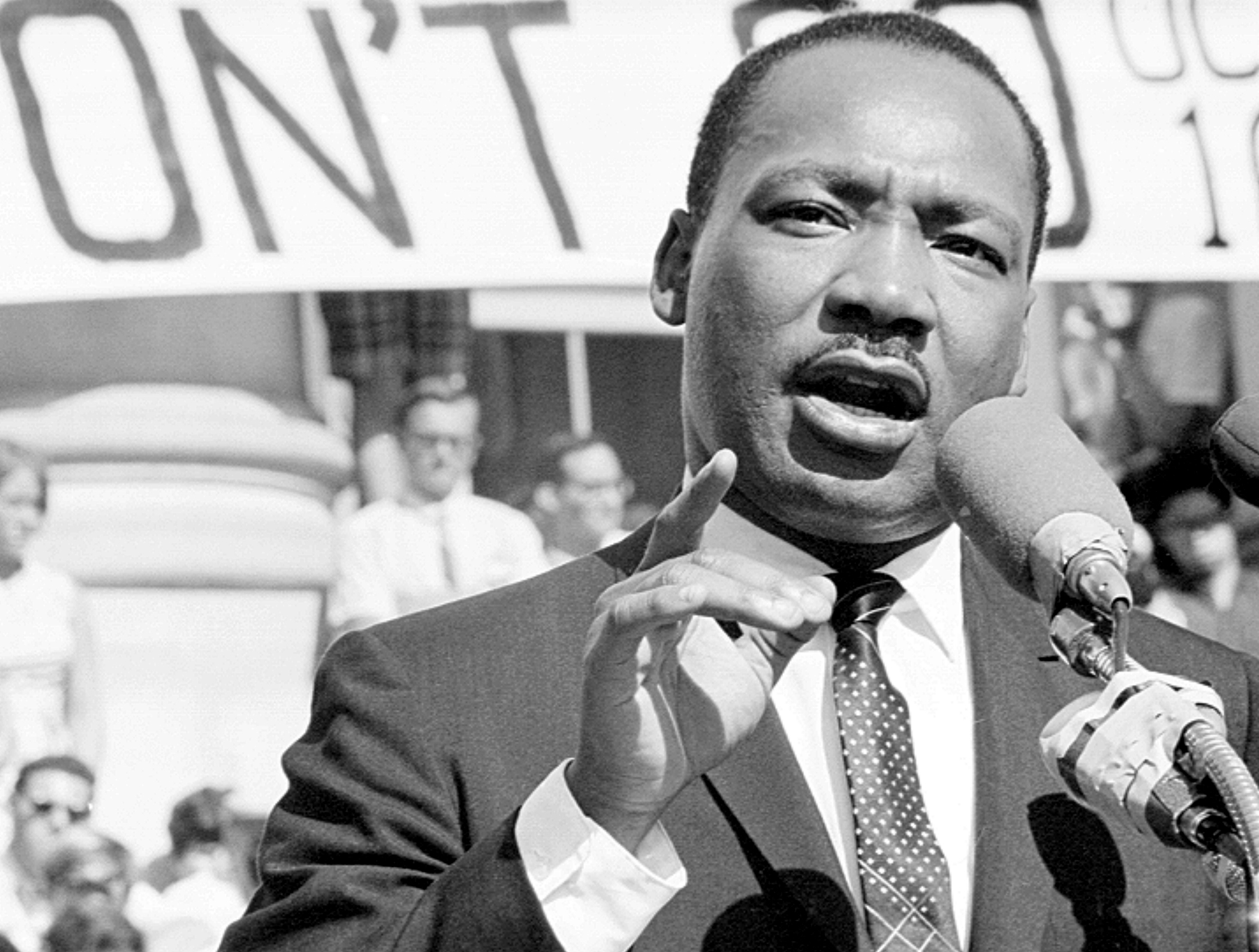 Much has been written about the Reverend Dr. Martin Luther King’s legacy in the Civil Rights Movement. But one aspect of that legacy that has been largely ignored is his philosophy based on the Greco-Roman and Judeo-Christian heritage, much of which inspired his work.
The March on Washington and King’s “I Have A Dream “ speech has rightfully drawn much attention, which most Americans are aware of. However, in the spring of 1963, Dr. King led massive, peaceful demonstrations in Birmingham, Alabama against the city’s white racist practices, only to be confronted by unyielding segregationists. Dr. King was criticized by white religious leaders for a being an outsider and a troublemaker. For defying the local laws, he was jailed and while there, composed the “Letter from Birmingham City Jail” justifying his reasons for demanding justice and for practicing civil disobedience. He based his arguments on traditional values of western civilization.
In this letter he stated that he was in Birmingham because injustice prevailed, emphasizing the interrelatedness of all communities, and pointing out that just as the “prophets of the eighth century B.C. left their villages” and “just as the Apostle Paul left his village of Tarsus to carry the gospel of Jesus Christ” to the ancient world, he was compelled to carry the “gospel of freedom.” He stressed the need for constructive non-violence and for understanding its underlying causes. He referred to Socrates who practiced creative tension in the mind so that people would rise above prejudice and achieve true brotherhood. Dr. King said blacks have waited 340 years for their constitutional and God-given rights” For years he was told to wait. But wait always meant never. Citing philosopher Reinhold Niebuhr, he stated privileged groups seldom relinquish power voluntarily.
Further, Dr. King responded to the Birmingham religious leaders who claimed he was breaking the law with sit-ins and other demonstrations. He urged them and others to obey the Supreme Court’s 1954 decision outlawing segregation in public schools. He insisted a just law must be obeyed because it is in harmony with the law of God. He agreed with St. Augustine that an “unjust law is no law at all.” He cited St. Thomas Aquinas who believed an unjust law is a human law that is not rooted in eternal law and natural law. Thus, all segregation laws are unjust.
Dr. King pointed out that civil disobedience was nothing new, having been practiced by the refusal of Shadrach, Meshach, and Abednego to obey the immoral laws of Nebuchadnezzar. Similarly, the early Christians faced hungry lions and other persecutions for not obeying the Roman Empire’s unjust laws. In modern times, what Hitler did in Nazi Germany was legal, while Communist countries also suppressed the Christian faith.
Dr. King warned that if white moderates did not fight to achieve civil rights for blacks, then various black-nationalist groups, such as Elijah Muhammad’s Muslim movement, would fill the void. He predicted continued racial discrimination will produce more violent extremists who lose faith in Christianity and America.
“Letter From Birmingham City Jail” summed up the true meaning in the universal search for freedom and equality as it applied to African Americans, as well as to all people of good will. It espoused principles that rested on traditional democratic values of western civilization. Dr. Martin Luther King, Jr. understood the relevance of the past and applied it to injustices that were challenging to the fulfillment of the American Dream.
by Victoria Landis
I love writing for the January issue. It’s a new year. An arbitrary date that really means nothing, yet it symbolizes a fresh beginning. The chance for everything to be washed clean, metaphorically speaking. We’ve been doing silly things in honor of the new year, ever since we invented calendars. Why should 2017 be any different? In honor of our being washed clean, starting anew, etc., let’s see how many of our planetary roommates celebrate.
First up – Throwing stuff away. In theory, I can see how getting rid of the old to make room for the new became a tradition. Somehow, the Italians embraced the idea a little too fervently, though, and began tossing old furniture out the window. One would imagine copious amounts of wine had something to do with it. Think about it. Okay, Maria and Antonio decide new chairs are in order. They want to get rid of the old nasty ones with 200 years’ worth of wear, sweat, wine, and god-knows-what-that-is stains from untold numbers of folks. Yeah, that would gross me out, too. Most people would simply carry them out the door. For some reason, on that particular New Year’s Eve, Maria and Antonio thought, Hey, let’s toss them from an upstairs window instead. With any luck, we’ll accidentally hit that annoying Fabrizio who’s been soused and camped out on the sidewalk for two days. Maybe they eliminated poor old Fabrizio, then all the neighbors agree it was a brilliant accident? And it caught on. That’s the best I can come up with. Honestly.
Not to be outdone, the South Africans apparently loved the Italian thing, so they go one better and earn bonus execution points for throwing old appliances out the windows. Do not get drunk and loiter under windows in Johannesburg, people.
Continuing with the destruction of property (and possibly people), the good citizens of Denmark have a strange belief that throwing old dishes at their friends’ front doors will bring luck. To whom, I’m not sure. But offhand, if I woke up on New Year’s Day with shattered china littering my stoop and cut marks in my door’s paint job, I’d be ticked off, but good.
Thailand has a bizarre way of cleansing for the new year. They throw buckets of water on anyone, anywhere. Water pistols the size of machine guns and hoses are also employed. No one is safe. Cars driving by with open windows? Target. Old ladies ambling by on the sidewalk? Target. You’re getting doused whether you like it or not. But the next part is the real puzzle. Step two is flinging talc at you until you look like you crawled through a white mud bog. How did this start?
In many countries, celebrants visit graveyards. Honoring ancestors. This, I understand. But some carry it too far and actually spend the night sleeping on the graves. I suppose if you’ve never seen a horror flick, you wouldn’t be creeped out by this, but for the rest of us? That would be a big, resounding hell no. One weird moan from a distant animal in the night, and I’d scramble over anything or anyone in my path. I’m pretty sure my ancestors wouldn’t approve of my accidentally crunching someone’s hand, foot, or head as I escaped.
Now we come to wardrobe choices. Especially in the unmentionables department. Yellow undies are all the rage in Venezuela to bring luck. Red underpants are supposed to bring romantic love in the new year. Green undies will lead to financial fortune. This might explain quite a bit in my life. I’m not sure I’ve ever owned private garments in any of those colors. So that’s what I’ve been doing wrong. Well, I’m correcting that immediately and will report back to you with my scientific results.
Rats. As usual, I’ve run out of space, just when I was getting warmed up. Happy New Year!