
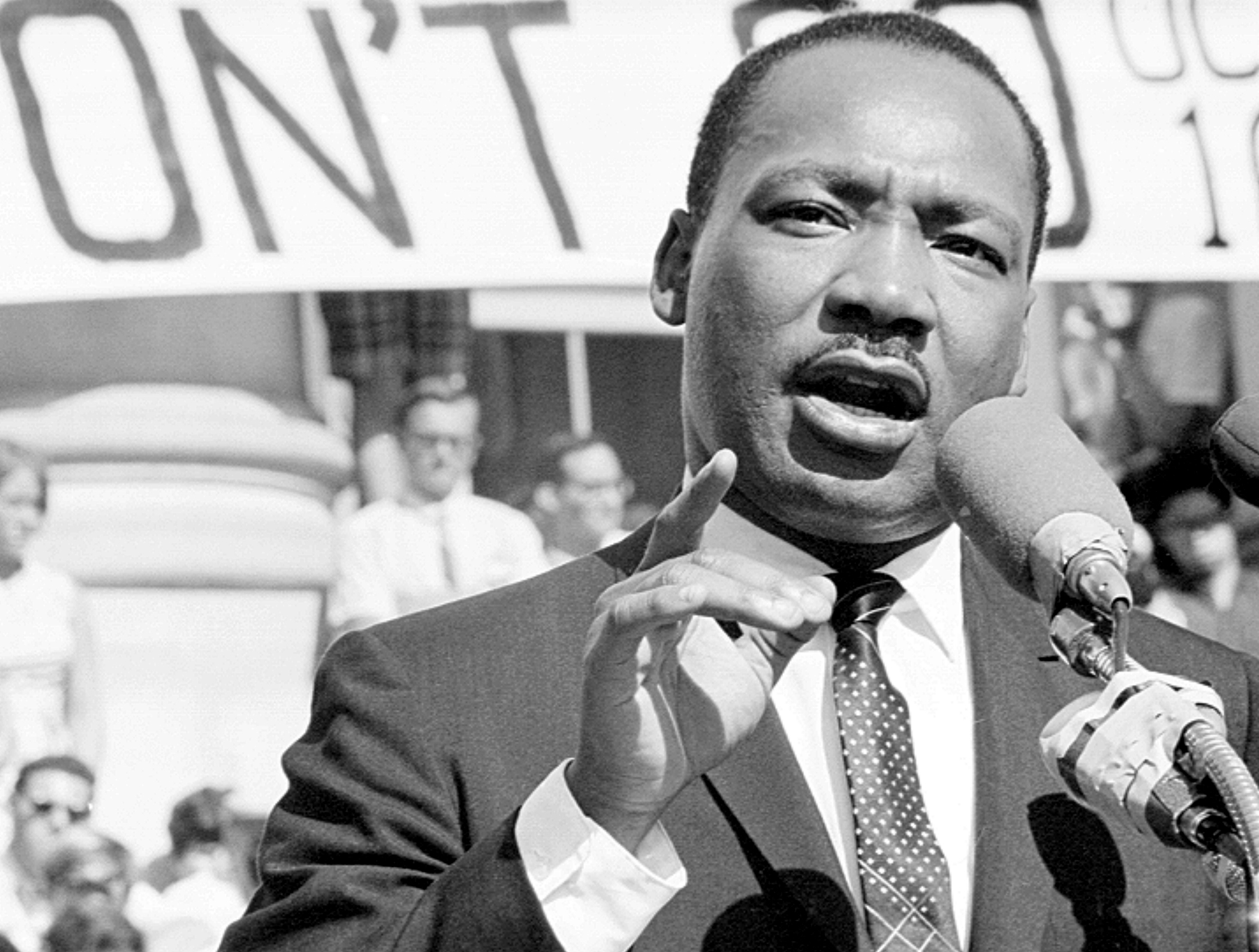
 Much has been written about the Reverend Dr. Martin Luther King’s legacy in the Civil Rights Movement. But one aspect of that legacy that has been largely ignored is his philosophy based on the Greco-Roman and Judeo-Christian heritage, much of which inspired his work.
The March on Washington and King’s “I Have A Dream “ speech has rightfully drawn much attention, which most Americans are aware of. However, in the spring of 1963, Dr. King led massive, peaceful demonstrations in Birmingham, Alabama against the city’s white racist practices, only to be confronted by unyielding segregationists. Dr. King was criticized by white religious leaders for a being an outsider and a troublemaker. For defying the local laws, he was jailed and while there, composed the “Letter from Birmingham City Jail” justifying his reasons for demanding justice and for practicing civil disobedience. He based his arguments on traditional values of western civilization.
In this letter he stated that he was in Birmingham because injustice prevailed, emphasizing the interrelatedness of all communities, and pointing out that just as the “prophets of the eighth century B.C. left their villages” and “just as the Apostle Paul left his village of Tarsus to carry the gospel of Jesus Christ” to the ancient world, he was compelled to carry the “gospel of freedom.” He stressed the need for constructive non-violence and for understanding its underlying causes. He referred to Socrates who practiced creative tension in the mind so that people would rise above prejudice and achieve true brotherhood. Dr. King said blacks have waited 340 years for their constitutional and God-given rights” For years he was told to wait. But wait always meant never. Citing philosopher Reinhold Niebuhr, he stated privileged groups seldom relinquish power voluntarily.
Further, Dr. King responded to the Birmingham religious leaders who claimed he was breaking the law with sit-ins and other demonstrations. He urged them and others to obey the Supreme Court’s 1954 decision outlawing segregation in public schools. He insisted a just law must be obeyed because it is in harmony with the law of God. He agreed with St. Augustine that an “unjust law is no law at all.” He cited St. Thomas Aquinas who believed an unjust law is a human law that is not rooted in eternal law and natural law. Thus, all segregation laws are unjust.
Dr. King pointed out that civil disobedience was nothing new, having been practiced by the refusal of Shadrach, Meshach, and Abednego to obey the immoral laws of Nebuchadnezzar. Similarly, the early Christians faced hungry lions and other persecutions for not obeying the Roman Empire’s unjust laws. In modern times, what Hitler did in Nazi Germany was legal, while Communist countries also suppressed the Christian faith.
Dr. King warned that if white moderates did not fight to achieve civil rights for blacks, then various black-nationalist groups, such as Elijah Muhammad’s Muslim movement, would fill the void. He predicted continued racial discrimination will produce more violent extremists who lose faith in Christianity and America.
“Letter From Birmingham City Jail” summed up the true meaning in the universal search for freedom and equality as it applied to African Americans, as well as to all people of good will. It espoused principles that rested on traditional democratic values of western civilization. Dr. Martin Luther King, Jr. understood the relevance of the past and applied it to injustices that were challenging to the fulfillment of the American Dream.
 The Stoneman Douglas Cross Country program has been very successful over the years. Team members are expected to put in long hours of training and be dedicated to the sport. This year the girl’s team has performed well in all its regular meets and invitational meets.



 by Glenn R. Swift
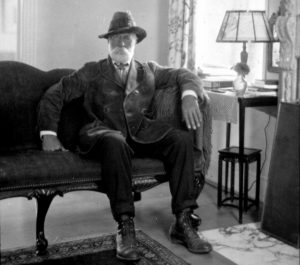
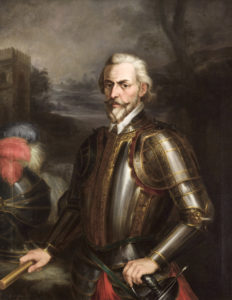
 Most of what we know about the Ais and the Jaega comes to us from the writings of Jonathan Dickinson, an English Quaker on his way from Jamaica to Philadelphia who was shipwrecked in 1696, along with his family and the other passengers and crew members of the ship. The party was held captive by the Jaega for several days before being handed over to the Ais chief (cacique). Because one of the members of Dickinson’s group spoke Spanish, the group was able to persuade the Jaega and the Ais that they were Spanish and not English. As a result of this good fortune, the group was allowed to travel by small boat and on foot the 230 miles up the coast to Spanish-held St. Augustine. During the journey, the party was subjected to constant harassment and physical abuse with five members of the group succumbing to exposure and starvation.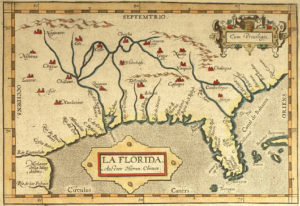


 Karina Benitez, 13, of Coral Springs, is a gold medal winner of a National Scholastic Art and Writing Award. Competing with others in the 7th to 12th grade category, she didn’t feel she was experienced enough as a poet to even enter the contest. But her teacher at Mary Help of Christians Catholic School and her mother, Yvette Benitez, strongly encouraged her to enter the contest.
 The museum is dedicated to the preservation of the history of the Packard Motor Car Company. There are 39 Packard cars on display, the oldest a 1909 model and the latest, a 1958 model. Most of the cars can still be driven. One can learn about each car on display and its unique features. You can see advertisements for the cars, and gain a sense of how the automobile industry developed.





 rebiotics are fresh produce and whole grains. Food sources of these carbohydrates is better than any over the counter supplement and you get all sorts of additional quality nutrition from these foods that you consume. So, steer clear of the supplement aisle and head to the grocery store to pick up the following fresh food choices to feed your healthy gut.